Celebrating the Staff of the Community Action Agency
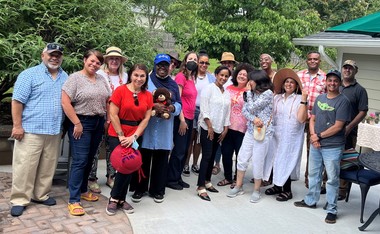
On Friday, June 24, over half of the Community Action Agency staff gathered in-person for the first time since Fall 2019! We were delighted to share food, games, and company with each other. We have served in many emergencies and kept the programs running, despite the many challenges we have faced in the past few years.
The Montgomery County Community Action Agency includes the Takoma-East Silver Spring (TESS) Community Action Center, the Volunteer Income Tax Assistance (VITA) program, Head Start, staff monitoring contracts with non-profit organizations serving the low-income community. The Community Action Board oversees Head Start and Community Services Block Grant funding, and delivers the Community Advocacy Institute program. We also have a CARES-funded service navigation team, including staff who provide case management when residents are displaced by emergencies.
Community Action was established in 1968 and continues the work of the Economic Opportunity Act, also known as the “War on Poverty.” Our mission is to advance social and economic mobility among communities and neighbors through services, partnerships, and advocacy using an equity lens.
The Montgomery County Community Action Agency is one of seventeen CAAs in Maryland, and a member of the Maryland Community Action Partnership, which includes CAAs in Delaware and the District of Columbia. It is also one of the three CAAs in Maryland that is part of local government. Across the nation, one-fifth of Community Action Agencies are public, and four-fifths (eighty percent) are non-profit organizations. The mission of Community Action Agencies across the country is known as the Community Action Promise:
Community Action changes people’s lives, embodies the spirit of hope, improves communities, and makes America a better place to live. We care about the entire community, and we are dedicated to helping people help themselves and each other.
 The Takoma-East Silver Spring (TESS) Community Action Center recently moved to 8703 Flower Avenue, Silver Spring, MD 20901. The TESS Center continues to be in the heart of the Long Branch community of Silver Spring. In fact, it’s around the corner from the old office! Staff is serving the community virtually and will open the new office to the public on Tuesday, July 5. The phone numbers remain the same for staff members and the main number: 240-773-8260 (TTY users, call 711).
TESS hours are Monday – Friday, 9:00 a.m. – 4:00 p.m. Walk-in hours are 9:00 – 11:30 a.m., and appointments are between 1:00 – 4:00 p.m. The office is closed daily for lunch, 12:00 – 1:00 p.m. See our website for more information on TESS services.
On June 3, for the first time since the start of the COVID-19 pandemic and TESS’s move, the Senior Social Group participants visited TESS staff and picked up their Groceries to Go food boxes from the Capital Area Food Bank on-site. The boxes contain food to help stretch the participants’ food budgets and support balanced meals. Package items include juice, milk, rice, canned meat, oats, fruits, vegetables, and cheese. Twenty-four participants enjoyed touring the new TESS site, seeing staff in person, and talking face-to-face. Each participant received a “welcome to our new center” token writing pad/booklet, pre-printed with the phone number for TESS and the new address. Staff and Navigators received the food boxes in the morning, set up the pickup area, and joyfully greeted & assisted the Seniors. The Seniors loved our new building and look forward to their continued participation in the program. During the pandemic, the Capital Area Food Bank was able to make special exceptions and find volunteers to deliver the food to their homes. Other times, TESS staff arranged for seniors to pick food up from the parking lot, for a touch of "in-person connection." At the new site, TESS will once again host events for Seniors in-person.
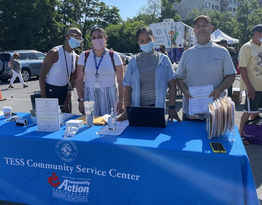
On June 15—a humid day with temperatures in the high 80s—our service navigation team joined our partners at the Clifton Park Baptist Church in providing community outreach. Our staff connected with over 400 people, helping with on-site questions, filling out applications, and collecting contact information to provide follow-up and appointments.
|

We checked the status of applications to the Supplemental Nutrition Assistance Program (SNAP) on-site and directed people with food insecurity to on-site providers. Navigators met residents in their cars and standing in line, sharing information about TESS, VITA, and Head Start.
TESS's reopening is going to be very busy, and we can't wait to help all of our new clients!
|
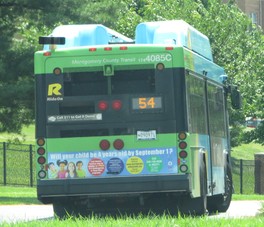
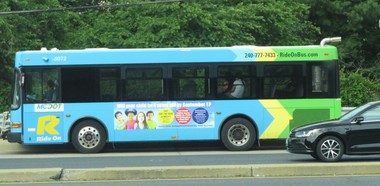 Head Start, a free pre-kindergarten and family support program serving three- and four-year-old children from low-income families, is registering for the 2022 - 2023 school year. You may spot our outreach banners on Ride-On buses throughout the County.
Register for Head Start and Pre-kindergarten:
In-person: Families can register their children for Head Start in-person at the Rocking Horse Road Center, 4910 Macon Road, Room 141, Rockville, MD, 20852.
Online: Montgomery County Public Schools has new QR codes to link families to the application process for Head Start and Pre-kindergarten. The QR code takes the parent or guardian to a portal and they can apply directly from their phone in their preferred language. Fliers in English and Spanish direct parents and guardians to one link if they are new to MCPS, and another if they already have a child attending MCPS. Children must be three or four years old by September 1, 2022 to apply for Head Start or Pre-kindergarten. Families must meet income guidelines. The programs help children thrive in school and link their parents to resources, including parenting support.
 The following is excerpted from IR-2022-121, published by the Internal Revenue Service on June 8, 2022.
The Internal Revenue Service warns everyone to be on the lookout for bogus calls, texts, emails and posts online to gain trust or steal.
Criminals have used these methods for years and they persist because these tricks work enough times to keep the scammers at it. Victims are tricked into providing sensitive personal financial information, money or other information. This can be used to file false tax returns and tap into financial accounts, among other schemes.
"If you are surprised or scared by a call or text, it's likely a scam so proceed with extreme caution," said IRS Commissioner Chuck Rettig. "I urge everyone to verify a suspicious email or other communication independently of the message in question."
The IRS has compiled the annual Dirty Dozen list for more than 20 years as a way of alerting taxpayers and the tax professional community about scams and schemes. The list is not a legal document or a literal listing of agency enforcement priorities. It is designed to raise awareness among a variety of audiences that may not always be aware of developments involving tax administration.
As part of the Security Summit effort with the states and the nation's tax industry, the IRS has made great strides in preventing and reducing tax-related identity theft. But it remains a serious threat to taxpayers and tax professionals who don't adequately protect Social Security numbers (SSN) and other personal information.
For example, criminals can quickly file a fake tax return using a stolen SSN in the hope that it has not already appeared on another filed return. People frequently don't know they are a victim of identity theft until they are notified by the IRS of a possible issue with their tax return or their return is rejected because the SSN appears on a return already filed.
Here are some common scams the IRS continues to see. Taxpayers should take extra caution with these schemes, which continue to evolve and change:
Text message scams: These scams are sent to taxpayers' smartphones and can reference things like COVID-19 and/or "stimulus payments." These messages often contain bogus links claiming to be IRS websites or other online tools. Other than IRS Secure Access, the IRS does not use text messages to discuss personal tax issues, such as those involving bills or refunds. The IRS also will not send taxpayers messages via social media platforms.
If a taxpayer receives an unsolicited SMS/text that appears to be from either the IRS or a program closely linked to the IRS, the taxpayer should take a screenshot of the text message and include the screenshot in an email to phishing@irs.gov with the following information:
- Date, time and time zone they received the text message
- Phone number that received the text message
- The IRS reminds everyone NOT to click links or open attachments in unsolicited, suspicious or unexpected text messages whether from the IRS, state tax agencies or others in the tax community.
Email phishing scams: The IRS does not initiate contact with taxpayers by email to request personal or financial information. The IRS initiates most contacts through regular mail. If a taxpayer receives an unsolicited fraudulent email that appears to be from either the IRS or a program closely linked to the IRS, report it by sending the email as an attachment to phishing@irs.gov. The Report Phishing and Online Scams page at IRS.gov provides complete details.
Phone scams: The IRS does not leave pre-recorded, urgent or threatening messages. In many variations of the phone scam, victims are told if they do not call back, a warrant will be issued for their arrest. Other verbal threats include law-enforcement agency intervention, deportation or revocation of licenses.
Criminals can fake or "spoof" caller ID numbers to appear to be anywhere in the country, including from an IRS office. This prevents taxpayers from being able to verify the caller's true number. Fraudsters also have spoofed local sheriff's offices, state departments of motor vehicles, federal agencies and others, to convince taxpayers the call is legitimate.
The IRS (and its authorized private collection agencies) will never:
- Call to demand immediate payment using a specific payment method such as a prepaid debit card, gift card or wire transfer. The IRS does not use these methods for tax payments.
- Threaten to immediately bring in local police or other law-enforcement groups to have the taxpayer arrested for not paying.
- Demand that taxes be paid without giving the taxpayer the opportunity to question or appeal the amount owed.
- Ask for credit or debit card numbers over the phone.
Generally, the IRS will first mail a bill to any taxpayer who owes taxes. All tax payments should only be made payable to the U.S. Treasury and checks should never be made payable to third parties. For anyone who doesn't owe taxes and has no reason to think they do: Do not give out any information. Hang up immediately. For more information, see IRS warning: Scammers work year-round; stay vigilant.
|