Get to Know the Community Action Board Members
This month we conclude our series of profiles of Community Action Board members--for now. We look forward to welcoming and introducing new Board members in the future.
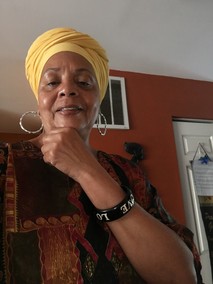
Valerie Chatfield-Smith represents Montgomery Village/Gaithersburg in the low-income sector of the board. She serves on the Community Advocacy Institute (CAI) Planning Committee and participates in all CAI programs (virtual and in-person). Professionally, Ms. Chatfield-Smith was part of the Jewish Council for the Aging (JCA) Senior Community Service Employment Program. Through this program, she interned at the Maryland Motor Vehicles Administration, the Montgomery County Department of Health and Human Services, and at the JCA Heyman Interages program. With the Interages Program, Ms. Chatfield-Smith enjoyed supporting the Reading and Educating to Advance Lives (REAL) program, Grand Readers, and other intergenerational program, and she continues to volunteer with the Interages Program.
My involvement with CAB has helped me realize the importance of having a seat at the table, the importance of “Unity in the Community,” and the importance of learning about and sharing needed information. - Valerie Chatfield-Smith
|

Tiffany Jones is the Chair of the Montgomery County Community Action Board where she serves in the low-income sector of the Board as a representative of the Head Start Parents Policy Council. She has testified for the CAB on numerous occasions and facilitated several workshops for the CAI. Ms. Jones is a current member of the Head Start Policy Council's Executive Committee, where she takes a leading role in advocating for the needs of Head Start parents and children. Professionally, Ms. Jones is the Director of a licensed, NAFCC Accredited, Level 6 Credentialed & Level 5 EXCELS family childcare program, Precious Moments Family Childcare. Ms. Jones is a mother to three wonderful children who are her inspiration.
What I have learned from my participation on the CAB is that as an advocate it is important to have authentic community voice included in decision making. Hearing directly from community members who will participate in programming should be involved in the design and implementation so that it meets their needs. We shouldn’t be designing a program and trying to fit people into it – programs should start with hearing the needs of the people! – Tiffany Jones
|
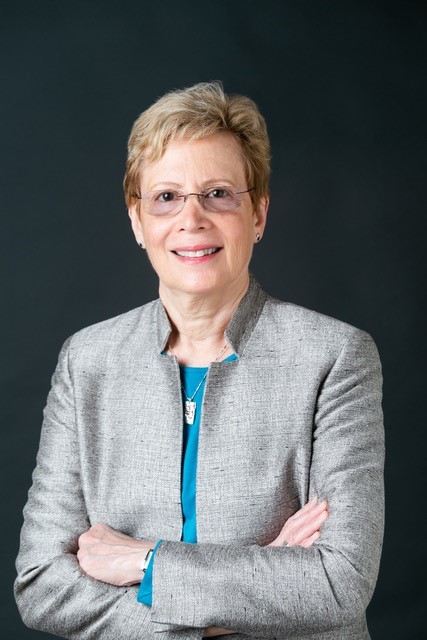
Candace Groudine serves in the public sector of the Community Action Board as a representative of the Human Rights Commission. Ms. Groudine retired as Senior Regulatory and Policy Specialist for the Federal Highway Administration’s Office of Civil Rights several years ago. She is an Adjunct Senior Lecturer in Political Science at the University of Maryland, Baltimore County, where she teaches law-related courses. She earned her Ph.D. in Educational Administration and Policy Studies from SUNY Albany and her J.D. from Georgetown University Law Center. Ms. Groudine is a licensed attorney and a member of the Bar of the State of Maryland. She lives with her partner and two small terriers in Silver Spring and is an active member of Temple Emanuel in Kensington and its social justice initiatives.
I've learned that Montgomery County is not only one of the most progressive counties in the country with respect to an impressive network of social safety-net services (most of which I was unaware of before joining the CAB), but also, an impressive number of knowledgeable, dedicated, and passionate volunteers who make the delivery of such services possible. – Candace Groudine
|
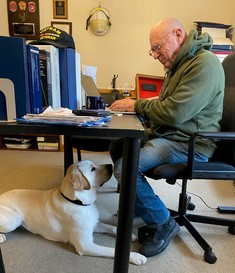
Mike Subin serves in the public sector of the board as the County Executive’s representative. He also serves on the Executive Committee and the Community Advocacy Institute Planning Committee. Mr. Subin is a retired Navy Captain and served on the County Council for five terms, Chairing the Education Committee and serving as a member of the Public Safety Committee. Mr. Subin created the highly successful Linkages to Learning Program and Safe Start Kids, a program to provide assistance to Child Witnesses to Domestic Violence. He also co-sponsored legislation creating the Domestic Violence Coordinating Commission. Mr. Subin is past Executive Director of the Montgomery County Criminal Justice Coordinating Commission, and a past member of several Boards, Committees, and Commissions, and served as the County Executive’s liaison to numerous groups.
My membership on the CAB and the Community Advocacy Initiative have given me a much broader perspective about the issues facing our communities in need. Working with and discussing those issues with representatives of those communities has opened my eyes to problems I was not aware of from a personal, rather than theoretical perspective. Discussing possible solutions with them from a public policy viewpoint has been a very rewarding experience. – Mike Subin
|
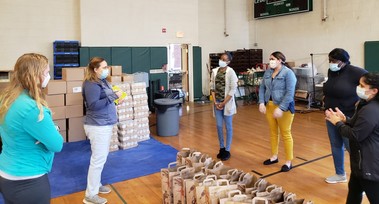 Community Action is excited to welcome four Navigators—Sade Allen, Sulma Iglesias, Adrienne Jeremiah, and Gabriella Salazar. A fifth position is in the hiring process. Navigators assist customers in identifying their needs for a range of human service needs and reduce the barriers customers’ face in accessing services for which they are eligible. Navigation planning is guided by the Navigators’ experience with the “ecosystem”—the network of services provided by the Montgomery County Department of Health and Human Services (DHHS) and its community partners—and whole-family, or multi-generational, approaches that are designed to address the needs of entire households. The need for Navigators emerged with the pandemic, along with opportunities to connect them with our partners, including the food distribution and service consolidation hubs which emerged to provide emergency food and hygiene supplies. In response, the county allocated additional funding to support the community service providers to assist residents to access other services, such as rent relief, the Supplemental Nutrition Assistance Program (SNAP), case management, unemployment benefits, and more.
Amidst the COVID-19 pandemic, the County’s information line, MC311 (240-777-0311), enhanced its capacity to assist County residents with accessing DHHS services to address the impact of the swiftly changing economy on families’ financial stability. The County used data from the calls for assistance to map which communities have been hardest hit by the pandemic, and to identify DHHS and community partners’ resources in those areas to integrate services.
National consultants worked with the Community Action Agency team, especially the staff at the Takoma-East Silver Spring (TESS) Community Action Center, to identify best practices to expand the model, utilizing CAA's federal CSBG CARES (Coronavirus Aid, Relief, and Economic Security Act) funding to support these navigators through September 2022. Based on a number of recovery recommendations, a new DHHS Navigation Practice Workgroup is enhancing the effort, connecting a number of navigation models within DHHS. Led by Betty Lam, Chief of the Office of Community Affairs, the design of the Navigation program includes the development of core training from each DHHS service area to enhance navigators capacity to learn about the wide array of County services available to residents, from transportation programs for seniors and people with disabilities, to behavioral health, programs for newly arriving families, expecting mothers, and more, as well as designing technology to support easier access to resources. This approach aligns with the findings from a Community Needs Assessment conducted by the Capital Area Food Bank, endorsed by the Community Action Board.
The five Navigator positions, hired through Athena Consulting, are designated to serve East County, Gaithersburg. Germantown, Long Branch, and Wheaton. Together the Navigators bring a wide range of skills and experiences, including speaking multiple languages and prior experience working with DHHS programs. Once their training is completed, Navigators will use the DHHS electronic Integrated Case Management, or eICM, data system to assess needs, initiate applications, and provide referrals to assure residents’ access to public and private resources.
We welcome our new team members!
On Monday, November 15, Community Action hosted our annual meeting with our Contract Partners. Program Manager Aizat Oladapo and Program Specialist Melissa Ferguson monitor fifty-one contracts for services provided, with County support, by thirty-one non-profit organizations. As it was last year, this year's meeting was held on Zoom. In light of the rapid changes across both the public and non-profit service sectors over the past year, this year the focus was on Community Action programs. Sharon Strauss, Executive Director, welcomed over forty participants.
Leah Goldfine, CAA liaison to the Community Action Board (CAB), introduced Board Vice-President Lisette Engel, who provided an overview of the CAB’s role in advocating for Montgomery County’s low- and moderate-income families, including sharing the CAB’s FY21 Accomplishments. Meeting participants were polled for their input into CAB priorities. Their top interests were access to services, navigation, and delivering holistic services in one location; and employment with self-sufficient wages and work supports (i.e., benefits, paid sick leave, etc.). These two priorities were closely followed by participants’ interest in immigration, affordable housing, food and nutrition programs, early child care and education, and earned income and child tax credits.
Representing alumni of the Community Advocacy Institute (CAI), Vanessa Pierre shared an overview of the CAI and how her new advocacy skills have led her to establish a community garden in East County and her organization, Homestead Hustle and Healing, which addresses food insecurity through garden coaching, advocacy, and self-care.
Taunya Johnson leads the CAA Volunteer Income Tax Assistance (VITA) program and shared updates on in-person and online services and Child Tax Credit information. Ms. Johnson also provided updates to the Earned Income Tax Credit, which has been expanded to include people with Individual Tax Identification Numbers (ITINs) through 2022. Information on the VITA program can be found on the CASHBACK website.
Charlene Muhammad provided an overview of the Head Start program, a federally supported pre-kindergarten program for low-income families. In Montgomery County, CAA is the Head Start grantee and Montgomery County Public Schools is the delegate. Additional Montgomery County Department of Health and Human Services (DHHS) partners include School Health Services, Early Childhood Services, and the Dental program. Lisa Conlon, Social Services Specialist, also joined in the presentation. Ms. Conlon works in MCPS Parent, Family, and Community Engagement and serves as the delegate to the Community Action Board. In Montgomery County, there are 648 children enrolled in Head Start in 34 classrooms. Ms. Muhammad shared that 31 per cent of local Head Start families are in immediate need of food, clothing, and/or shelter. For more information, visit Montgomery County Head Start’s webpage.
Sharon Strauss, Executive Director, provided an overview of DHHS navigation services. Community Action is currently on-boarding four Navigators. The navigation system supports DHHS Director Dr. Raymond Crowel’s priorities for coordinated care, including equity-infused work, ready access and painless navigation of services, and an effective and supported workforce. The Navigators will bolster services available at the COVID-19 food distribution and service consolidation hubs, which includes the Takoma-East Silver Spring (TESS) Community Action Center, a walk-in site in the Long Branch area.
Takoma-East Silver Spring (TESS) Community Action Center staff, led by Maureen Larenas-Rivas, provide community assistance with everything from emergency responses, such as to families’ displaced by fires and floods, to enrollment in food assistance programs, case management, referrals to health care, legal services, and housing services, and more. When TESS staff work with community members, they often find many services are needed beyond the initial request for assistance. More information on TESS services to Montgomery County families can be found in a recent flier.
Meeting participants also shared new programs and partnerships they have developed over the past year. Ideas shared included partnering with Unite Us to discover health and social services available (Manna Food Center), contributing to establishing new homes and provisions for families newly arriving from Afghanistan (KindWorks), developing economic opportunities for immigrant families through cooperatives (IMPACT Silver Spring), and contributing to food distribution through the service consolidation hubs (CHEER). To find out more about all CAA Contract Partners, please visit our site.
 IRS COVID Tax Tip 2021-167, November 10, 2021
The IRS recently launched a new feature in its Child Tax Credit Update Portal, allowing families receiving monthly advance child tax credit payments to update their income.
Families should enter changes by November 29, so the changes are reflected in the December payment. Once the update is made, the IRS will adjust the payment amount to ensure people receive their total advance payment for the year. For married couples, if one spouse makes the income update, it will apply to both spouses and could impact both spouses' future monthly advance payments of the child tax credit.
Who should use the income feature The new income feature can help families make sure they are getting the right amount of advance child tax credit payments during 2021. It is especially useful to any family who wants to raise or lower their monthly payments because their 2021 income changed substantially from 2020.
In many cases a big income swing can raise or lower a family's monthly payments. Normally, this means that small changes in income will not impact the payment amount and need not be entered into the CTC UP.
Changes made before midnight on November 29 will only impact the December 15 payment, which is the last scheduled monthly payment for 2021. Payments in 2021 could be up to $1,800 for each child under age 6 and up to $1,500 for each child ages 6 through 17.
Families need to claim the remaining portion of their child tax credit on their 2021 tax return.
Who may qualify for a bigger payment In some cases, families currently receiving monthly payments that are below the maximum may qualify to have their payments increased. For example, they experienced job loss during 2021, or for some other reason are receiving substantially less income this year. If the reduction in income is large enough, reporting that change now may increase the amount of their advance CTC payments for the rest of this year.
For any family already receiving the maximum payment, a drop in income will not increase the payment amount.
Most families are receiving half of the total CTC through monthly payments. This means any changes they enter in the CTC UP will increase or decrease their monthly payments to ensure they receive half of their total expected credit before the end of 2021.
Who should have their payments reduced Any family whose income rose substantially in 2021 should consider using the Child Tax Credit Update Portal to update their income and have their payments reduced. This is especially true if they are now receiving the maximum monthly payment, and they expect to qualify for less than the full credit when they file their 2021 federal income tax return. For more information on calculating the CTC, see Topic C of the agency's frequently asked questions. Families who qualify for less than the full amount should see QC 4 and QC 5.
Using the portal to report income changes Only families who are already eligible for and receiving advance CTC payments based on their 2020 tax return can use the CTC UP to update their income. Someone who filed a joint return for 2020 can only update their income if they plan to file a joint return for 2021 with the same spouse. IRS representatives cannot process income changes over the phone or at Taxpayer Assistance Centers.
After a family completes an income update, the CTC UP will acknowledge the change but will not display the change. Likewise, IRS representatives won't be able to confirm an update.
More information Advance Child Tax Credit 2021
|