Greetings from the Lieutenant Governor
Dear Friends,
It’s graduation season, budget season, construction season — and everything-all-at-once season.
Earlier this month, my family and I had the joy of celebrating my daughter’s college graduation. I know many other families across Maryland are celebrating similar milestones, and to each of you: congratulations.
Wherever these graduates’ journeys may lead — whether they build, create, heal, lead, teach, or discover — may service be a central part of their lives. A life rooted in service doesn’t just change the world around us — it changes the world within us. It gives our work meaning, our days direction, and our success a deeper purpose.
This month’s newsletter reflects the spirit of service—honoring those we've lost and highlighting the work we're doing to build a stronger, more caring Maryland.
In Service,

Honoring Our Fallen Heroes
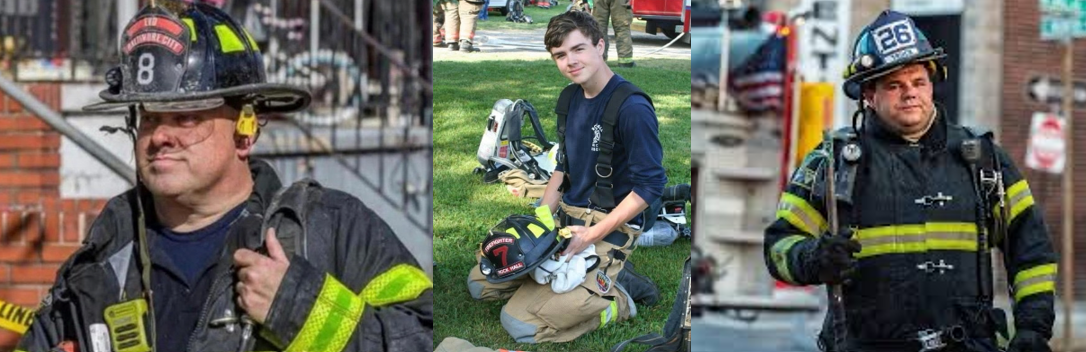
Emergency Vehicle Driver Charles Mudra (left) and Lieutenant Mark Dranbauer Jr. (right) served in the Baltimore City Fire Department for a combined 40 years. Petty Officer First Class Dakota Collison (center) served as a Rock Hall firefighter and U.S. Navy veteran. Photos provided by the families.
Memorial Day is a time to remember the brave service members who made the ultimate sacrifice for our country — and to honor all public servants who lost their lives in the line of duty.
From the soldiers who never came home, to the firefighters who ran toward danger, to the law enforcement officers, paramedics, and frontline workers who gave everything to protect their communities — Maryland remembers you.
Governor Moore Signs Key Bills Into Law
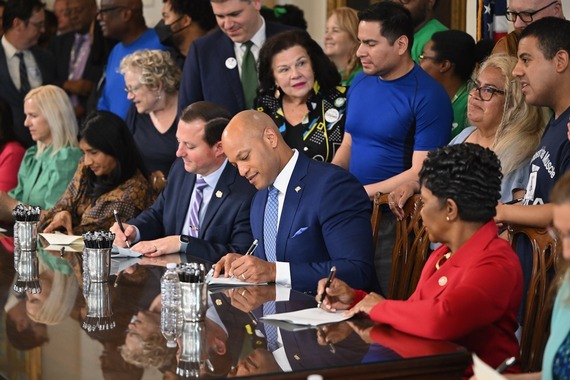
Governor Moore, legislative leaders, and advocates united at the bill signing ceremony—putting people first and progress into law.
Governor Moore signed more than 180 bills into law this May, advancing Maryland’s priorities on public safety, equity, and economic strength.
Highlights include: Eric’s ID Law to support residents with nonapparent disabilities to voluntarily add a butterfly symbol and the words “hidden disability” to their state ID or driver’s license; the Extended Producer Responsibility Act for sustainable packaging; new protections for veterans and first responders; and a bold FY26 budget closing the deficit while investing in schools, transit, and jobs.
These laws reflect our commitment to building a Maryland that leaves no one behind.
What Maryland's Credit Rating Really Means
There are three major credit rating agencies — Moody’s, S&P, and Fitch. Maryland continues to earn top marks for fiscal responsibility. Two of the three major credit rating agencies — S&P and Fitch — have reaffirmed our AAA rating, their highest possible. While Moody’s made a slight adjustment to Aa1, the overall message is clear: Maryland remains one of the most financially sound states in the nation.
When faced with historic fiscal challenges, we turned a deficit into a surplus, delivered middle-class tax relief, and cut spending by over $2 billion — all while continuing to invest in our people.
Maryland’s close connection to the federal government has long been a strength, not a risk. But reckless federal workforce cuts in recent months displaced thousands of Marylanders. That’s why we’re taking action — investing in innovation, expanding private-sector opportunities, and assisting displaced federal workers.
Fighting Cancer, Fueling Growth
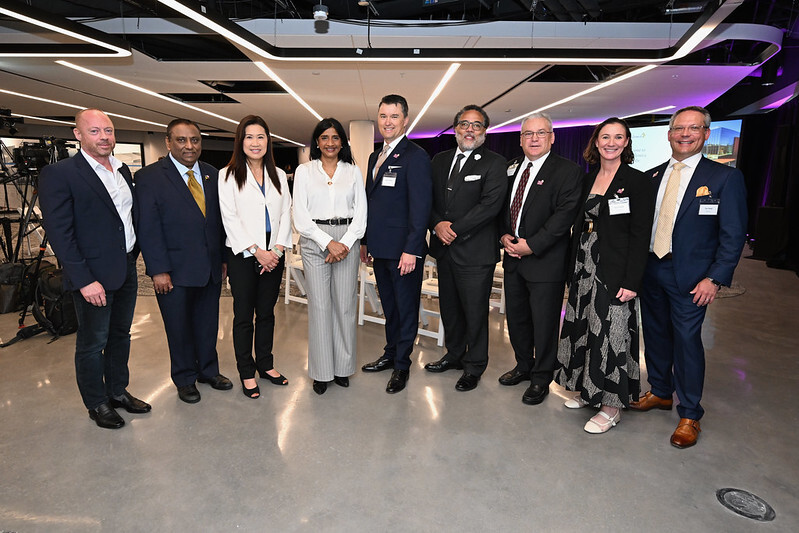
At AstraZeneca’s new Rockville facility—where innovation meets impact for Maryland’s economy and families.
Maryland has one of the highest concentrations of PhD scientists and engineers in the country. With nearly 5,000 life sciences companies — from NIH, to startups, to global leaders like AstraZeneca — this industry generates over $41 billion in economic activity and supports more than 54,000 jobs.
AstraZeneca’s new $300 million Rockville facility will produce life-saving CAR-T cancer treatments and create over 150 skilled jobs. Cancer touches nearly every family — this investment brings hope home and strengthens Maryland’s leadership in life sciences and real-world innovation.
Statewide Summit on Behavioral Health
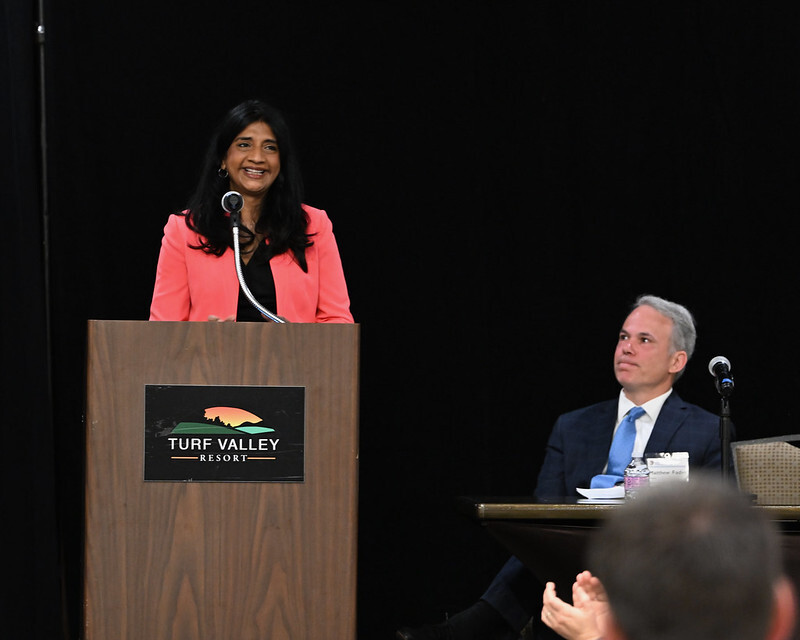
I was proud to stand with Chief Justice Fader and over 350 dedicated leaders across the state to build a more just, compassionate response to behavioral health.
At the Behavioral Health and Public Safety Summit, I was honored to join Chief Justice Matthew Fader, Dorothy Lennig of the Governor’s Office of Crime Prevention and Policy, Health Secretary Meena Seshamani, and Attorney General Anthony Brown, along with leaders from all 24 jurisdictions. The Summit focused on building coordinated, community-based responses to behavioral health challenges.
In the Lieutenant Governor’s office, we house the Maryland Office of Overdose Response, led by Secretary Emily Keller, to drive a whole-of-government approach to tackling overdoses. And it’s working — Maryland saw a 38 percent decline in fatal overdoses in 2024. The recent summit strengthened our resolve to take action, collaborate, and provide compassionate care in addressing this public health crisis.
Preakness Tradition, Pimlico Transformation
Joining WBAL during coverage of the 150th Preakness.
I had the honor of attending this year’s Preakness Stakes at Pimlico — home to the iconic “middle jewel” of the Triple Crown and a proud part of Maryland’s heritage. After 150 years of tradition, Pimlico is preparing for a bold transformation.
With the racetrack’s ownership now transferred to the State of Maryland, a brand-new facility is set to open in 2027. Our equine industry contributes nearly $3 billion annually and supports over 28,000 jobs. With expanded race days and new amenities, Pimlico is poised to become a world-class destination for racing, community, and economic growth.
Rescue. Recover. Rebuild: Key Bridge
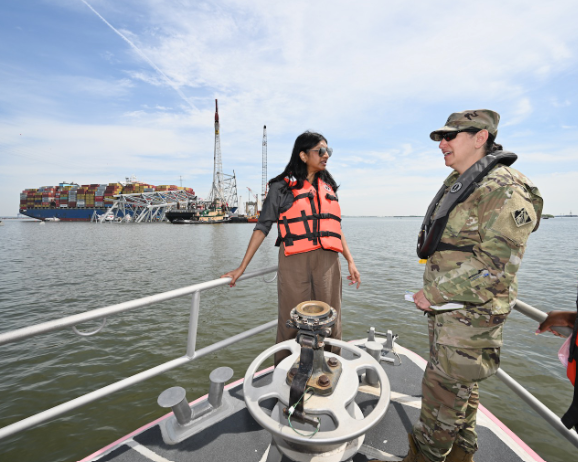
Assessing the Key Bridge site with the US Army Corps of Engineers, Col. Estee Pinchasin.
At this year’s Transforming Infrastructure Performance (TIP) Summit, public, private, and technology leaders came together to rethink how we deliver infrastructure — through collaboration, systems thinking, and shared solutions that make our future more efficient, resilient, and connected. I had the opportunity to share Maryland’s response to the Francis Scott Key Bridge tragedy — from rescue, to recovery, to rebuild. Through every phase, our approach was grounded in compassion, collaboration, and communication.
Infrastructure isn’t just built with concrete — it’s built with purpose — it’s how we connect communities, protect lives, and empower people.
Affordable Housing, Equity, and Smart Growth
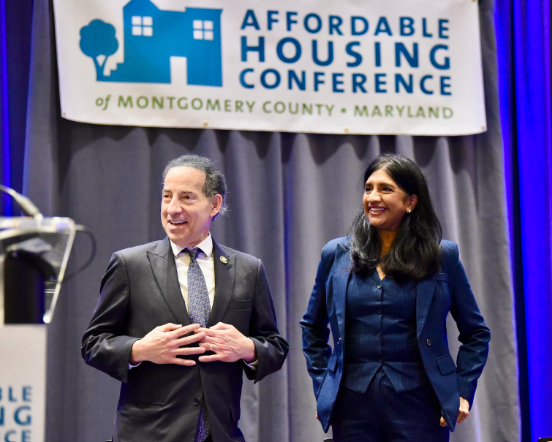
Standing alongside Congressman Jamie Raskin at the 34th Annual Affordable Housing Conference—where policymakers and advocates came together to tackle one of Maryland’s most urgent challenges.
In 2024, the Moore Miller Administration passed a historic housing package to expand supply, protect renters, and invest in underserved communities — but there’s more work to do. At the 34th Annual Affordable Housing Conference, I joined Congressman Raskin and spoke about the urgent need to close Maryland’s housing gap.
In 2025, we introduced the Housing for Jobs Act to streamline development in areas where housing lags job growth. While it didn’t pass, our commitment remains clear: smart, transit-oriented growth and clear standards to build the homes Marylanders need. To learn more about affordable housing, Click Here.
May 2025 Poll
|
If you are looking for housing
in Maryland, what are your top concerns?
|
|
April 2025 Poll Results
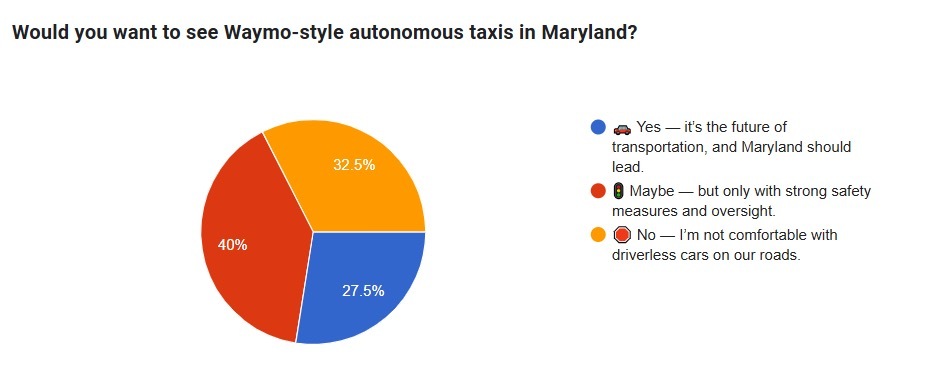
In one of our closest polls yet, 40 percent of you said ‘Maybe, but only with strong safety measures and oversight,’ followed by 32.5 percent and 27.5 percent, respectively, for ‘No, I’m not comfortable with driverless cars on our roads,’ and ‘Yes, it’s the future of transportation, and Maryland should lead.’
If you have any feedback or concerns you'd like to share,
please email our team at ArunaK.Miller@Maryland.Gov
   
|