|
The Justice Reinvestment Team at the Governor's Office of Crime Prevention and Policy (GOCPP) aims to increase information and resource-sharing, while creating and fostering a statewide, online community Newsletter.
- Reentry Programming and Services
- Behavioral Health Treatment and Services
- Support for Victims and Restitution Enhancements
- Training and Education
- Safe Alternatives to Incarceration
- Pretrial Services and Programs
Please note that the Newsletter organizes all updates in chronological order under its subsections: Grants, Upcoming Events and Conferences, Meetings, Programs, and Other Information.
In September 2025, the Maryland Crime Research and Innovation Center (MCRIC) and the Center for Substance Use, Addiction & Health Research (CESAR) released an evaluation of seven sites funded under GOCPP's COSSUP grant (formerly known as COAP) initiated in 2022. The findings were striking: fatal overdoses in the seven COSSUP-funded counties evaluated were reported to be 70% lower compared to jurisdictions without COSSUP funding. This underscores the critical role these programs play in saving lives and reducing harm.
The evaluation’s findings are further illustrated by trend data on fatal overdoses and overdose-related ER visits. From 2019 to 2024, fatal overdose rates in COSSUP-funded sites declined sharply—nearly 50%—while non-funded jurisdictions saw only modest reductions. Similarly, ER visits for overdoses decreased more significantly in COSSUP sites compared to state averages. These trends highlight the sustained impact of deflection and case management strategies in reducing both fatal and nonfatal overdoses.
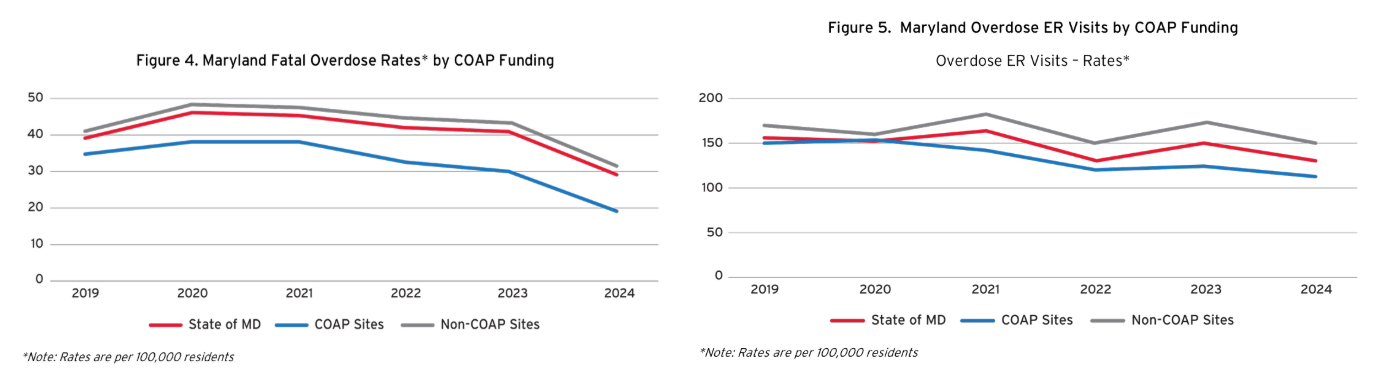 COSSUP-funded sites evaluated by MCRIC and CESAR (seven) show a sharper decline in fatal overdoses and ER visits compared to non-funded jurisdictions.
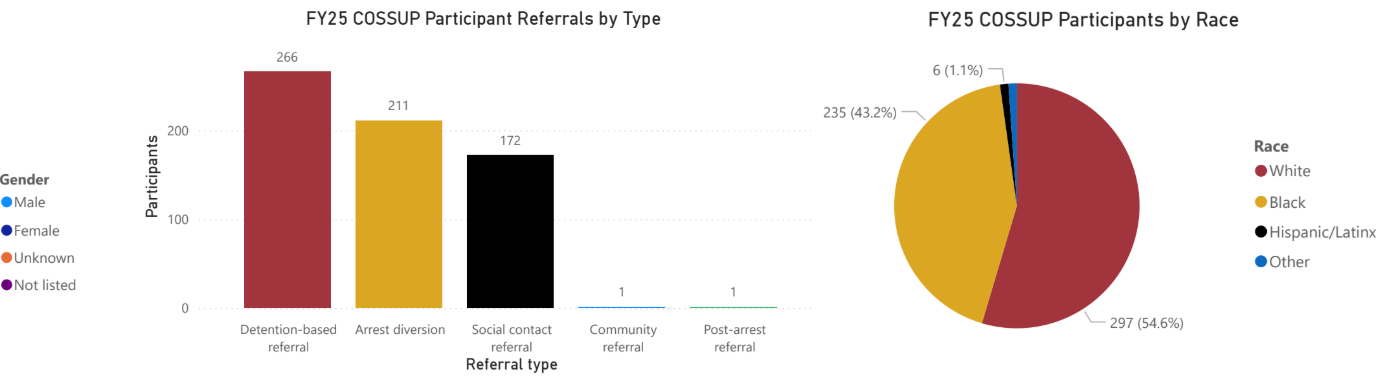
The impact goes beyond overdose prevention. In 2025, nine COSSUP sites served more than 600 clients, reaching individuals at multiple points of contact—those incarcerated, at the point of arrest, and in the community at risk of incarceration. These clients were connected to intensive case management services, primarily through local health departments. The data reveal important trends: 55% of clients reported fentanyl use, and behavioral health services emerged as the most pressing need for 88% of participants. Encouragingly, over 70% of clients enrolled in services after referral, and more than 95% did not experience an overdose or arrest while in the program.
The above graphs illustrate the breakdown in racial makeup and referral type of each participant across our nine (9) programs in 2025.
Looking ahead, GOCPP now funds 10 sites under the FY26 COSSUP grant, six of which implement the Law Enforcement Assisted Diversion (LEAD) model. Other sites focus on clients in hospitals following an overdose, individuals in the pre-trial stage, and those in jail. To strengthen these efforts, the Office plans to adopt MCRIC and CESAR’s recommendation to enhance data collection and provide clearer guidance for deflection program implementation over the next year.
To view the final report done by MCRIC and CESAR, please click here.
1. JCOIN Rapid Innovation Grants (J-RIG)
Technical Assistance Request Deadline: February 9, 2026
Application Deadline: April 1, 2026, at 11:59 PM
The JCOIN Rapid Innovation Grant (J-RIG) program is a rapid funding mechanism to support small research grants to study newly emerging policies, practices, or interventions that address prevention and treatment of addiction in criminal legal settings.
Applications should focus on substances associated with overdose and overdose mortality. Projects should have direct relevance to individuals who are involved in the criminal legal system but need not take place within criminal legal settings.
J-RIG is intended to facilitate short-term projects that are not compatible with traditional National Institutes of Health (NIH) funding mechanisms for a variety of reasons, including, but not limited to, time sensitivity or pilot data collection for early-stage research or evaluation ideas. During its initial five years, J-RIG funded 13 small grants for a total of $1.4M across 8 funding cycles.
Click here for more information.
2. Reducing Gun Violence in Maryland Through Prevention, Assessment, Intervention, and Response (Grant # CFVPI-0004)
Application Deadline: February 20, 2026, at 2:00 PM
The Maryland Department of Health (MDH or the Department), Center for Firearm Violence Prevention and Intervention (the Center), is issuing this Request for Applications (RFA) for a nonprofit organization or government agency to implement evidence-informed strategies to reduce gun deaths and injuries by implementing a project or program aligned with the Center’s priorities, which are organized within a Three Pillar framework (Prevention and Assessment, Intervention and Response, Community Resilience and Healing).
The anticipated duration of services to be provided under this Agreement is July 1, 2026 - June 30, 2027. The Department intends to make multiple awards as a result of this RFA (see details in RFA link). Proposals are due Friday, February 20, 2026 at 2 PM EST.
This funding is dependent on available FY 2027 State funding.
Click here for more information.
3. MOOR Competitive Grant Program
Application Deadline: March 6, 2026, at 4:59 PM
Maryland’s Office of Overdose Response is pleased to announce our Competitive Grant Program for fiscal year 2027!
About
The purpose of our Competitive Grant Program is to distribute funding to the highest-scoring proposals received from state and local governments, as well as from private and not-for-profit community-based partners, that align with Maryland’s Overdose Response Strategy and address the greatest needs around the state. The funding available for MOOR’s Competitive Grant Program is approximately $6 million.
Eligibility and Requirements
The following entities are eligible to apply:
- state agencies;
- local government entities (including local school systems); and
- non-profit community-based partners.
- must be a Maryland-based organization benefitting Maryland residents
Recovery residences must admit consumers who are receiving Medications for Opioid Use Disorder (MOUD) in order to be considered for funding. All project proposals must align with the goals outlined in Maryland’s Overdose Response Strategy. Additionally, funding will be prioritized for projects that fall within MOOR’s priority projects.
For more information, visit https://stopoverdose.maryland.gov/grants/.
4. SFY 2027 Performance Incentive Grant Fund (PIGF/PJRA)
Technical Assistance Call: March 12, 2026, from 11:00 AM to 12:30 PM
Application Deadline: April 3, 2026, at 11:59 PM
The primary purpose of PIGF funding is to reduce Maryland’s state and local incarcerated population through appropriate diversion, deflection, service provision, and recidivism reduction resources. The fund was established through savings generated from Maryland’s Justice Reinvestment Act (JRA) to provide for county-led innovations and state expansions of programming that were prioritized by Maryland’s Justice Reinvestment Coordinating Council (JRCC).
The JRA reforms are centered on safely reducing Maryland’s prison population by incorporating evidence-based programming, improving reentry outcomes, reducing collateral consequences of incarceration, and establishing connections to community treatment and support for nonviolent offenders with behavioral health needs. This supports the Office’s objective of reducing the prison population and reinvesting savings. For background on how potential grant applications fit the JRA Initiatives, click here.
For more information, please visit https://gocpp.maryland.gov/grants/programs/pigf/.
** If you are interested in serving as an external reviewer for the PIGF/PJRA applications, please reach out to Lindsey McCullough, Justice Reinvestment Coordinator, at Lindsey.McCullough@maryland.gov. **
5. SFY 2027 Adult Day Reporting Center Grant Program (DRCE)
Technical Assistance Call: March 17, 2026, from 10:00 AM to 11:00 AM
Application Deadline: April 10, 2026, at 11:59 PM
The primary purpose of this program is to enable a local jurisdiction to implement or support an established Day Reporting Center to provide community-based services and treatment to individuals under pretrial or probation supervision to reduce recidivism, jail and prison populations, and corrections-related costs.
For more information, please visit https://gocpp.maryland.gov/grants/programs/drce/.
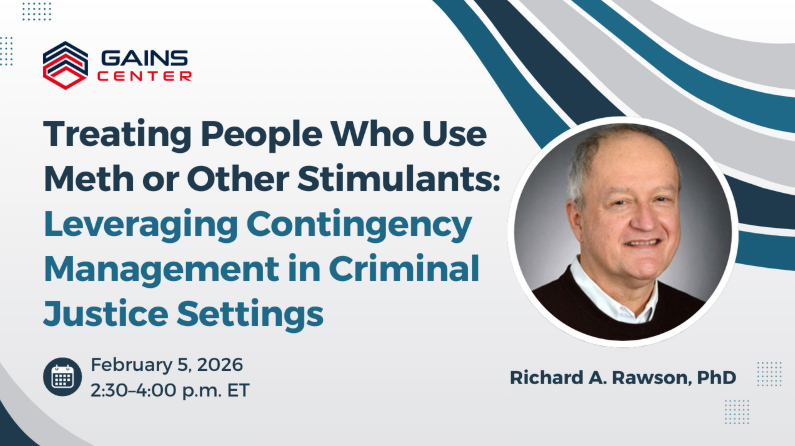
1. Leveraging Contingency Management in Criminal Justice Settings - Virtual Webinar
February 5, 2026, from 2:30 PM to 4:00 PM
Contingency management (CM) is an evidence-based behavioral intervention proven effective in treating individuals with stimulant use disorders. This method leverages positive reinforcement to encourage specific target behaviors that reflect progress in treatment, such as attending sessions or maintaining abstinence. The webinar will address the scientific foundation of contingency management, common challenges associated with its implementation in criminal justice settings, and strategies for overcoming these barriers. Sustainable solutions for integrating contingency management into drug court and reentry programs, emphasizing its long-term benefits for individuals in recovery and the community, will also be discussed.
Click here to register.
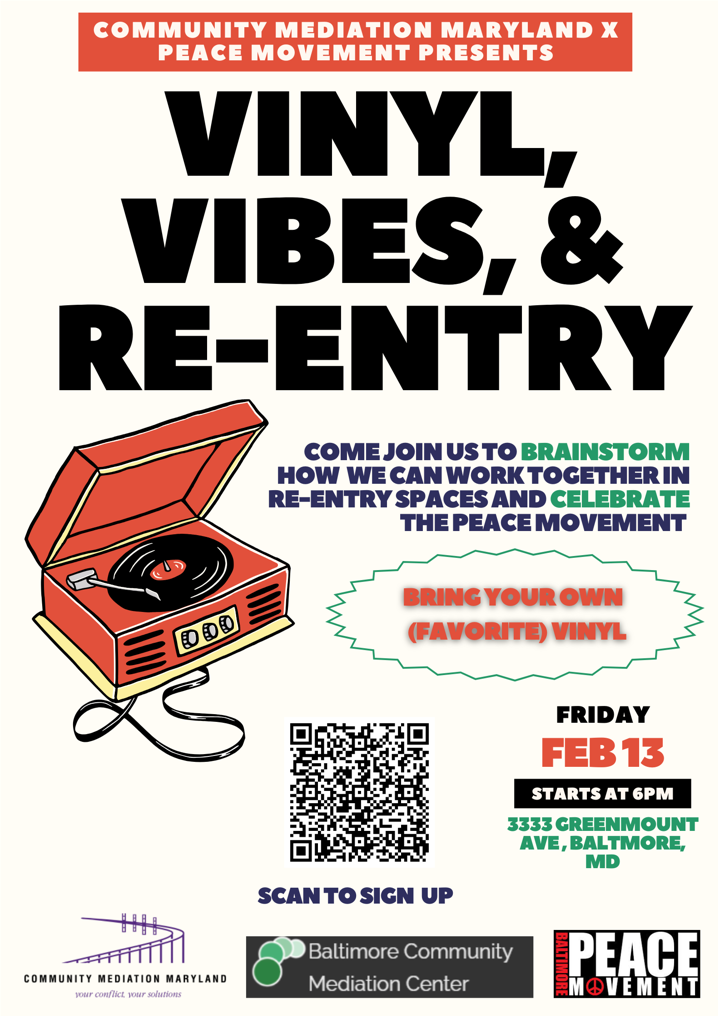
2. Vinyls, Vibes, & Reentry - Baltimore, Maryland
February 13, 2026, at 6:00 PM
This event is intentionally designed to bring together reentry-focused community-based organizations, service providers, advocates, and community members for meaningful conversation and collaboration around how we can better support individuals returning home from incarceration. Together, we hope to strengthen relationships, share resources more effectively, and identify opportunities to close gaps across Baltimore’s reentry network. While this first event will be held in Baltimore, we hope to continue these conversations in other counties following this event.
The Reentry team will facilitate a guided discussion centered on shared priorities, including:
- Funding and sustainability for reentry programs
- Housing and family reunification services
- Opportunities to collaborate on events and programming
- Developing referral systems that streamline access to resources
- Creating spaces for self-care and restoration for reentry nonprofit providers
All of this will take place in a welcoming, relaxed environment—grounded in good music, shared stories, and community connection.
In collaboration with mediation centers already serving counties with correctional facilities, we are also building a coordinated strategy to create inclusive, facilitated spaces that extend beyond a single location and reach communities across Maryland. With continued support, we envision transforming this gathering into a sustainable, statewide initiative that deepens collaboration, expands access, and ensures these critical spaces are available wherever they are needed most.
Your perspective and experience would add meaningful value to the conversation. We truly see this event as an opportunity to learn from one another and explore how we can collectively strengthen support for returning citizens in Baltimore.
Light food and refreshments will be provided, and we’ll have a record player on hand to set the tone. If you have a favorite vinyl, we’d love for you to bring it along and share the vibes.
Click here to register.
1. The Maryland Statewide Alliance for Returning Citizens (MSARC)
February 24, 2026, at 9:30 AM; Recurring, every fourth Tuesday of the month via Zoom
MSARC comprises reentry service providers, returning citizens, advocates, government, corrections, and law enforcement staff working in reentry, and others who support increasing reentry resources. Meetings primarily consist of information sharing, guest speakers, and announcements about upcoming events of interest, aiming to break down silos. The next meeting will take place on February 24th, 2026 at 9:30 AM. The meetings are open to all with an interest in reentry. Please email Dawna Cobb, MSARC Co-Chair, at marylandreentry@outlook.com to be added to the MSARC email list and to receive the Zoom link for meetings.
DPSCS is proud to partner with 211 MD to bring to Marylanders information about reentry services that are available in all 24 jurisdictions that exist to help the incarcerated and formerly incarcerated, along with resources for family members. This partnership supports our goal to increase public safety and wellness, reducing recidivism.
211 MD is a first-of-its-kind statewide reentry resource database. Dial 211 to get connected to employment and community resources 24/7/365. Additionally, you can search for reentry resources from trusted organizations by ZIP code via https://211md.org/resources/mdreentry/.
You can also sign up to receive text message updates for reentry information, services, programs, and events. Subscribe by texting reentry to 898-211.
CORE Program
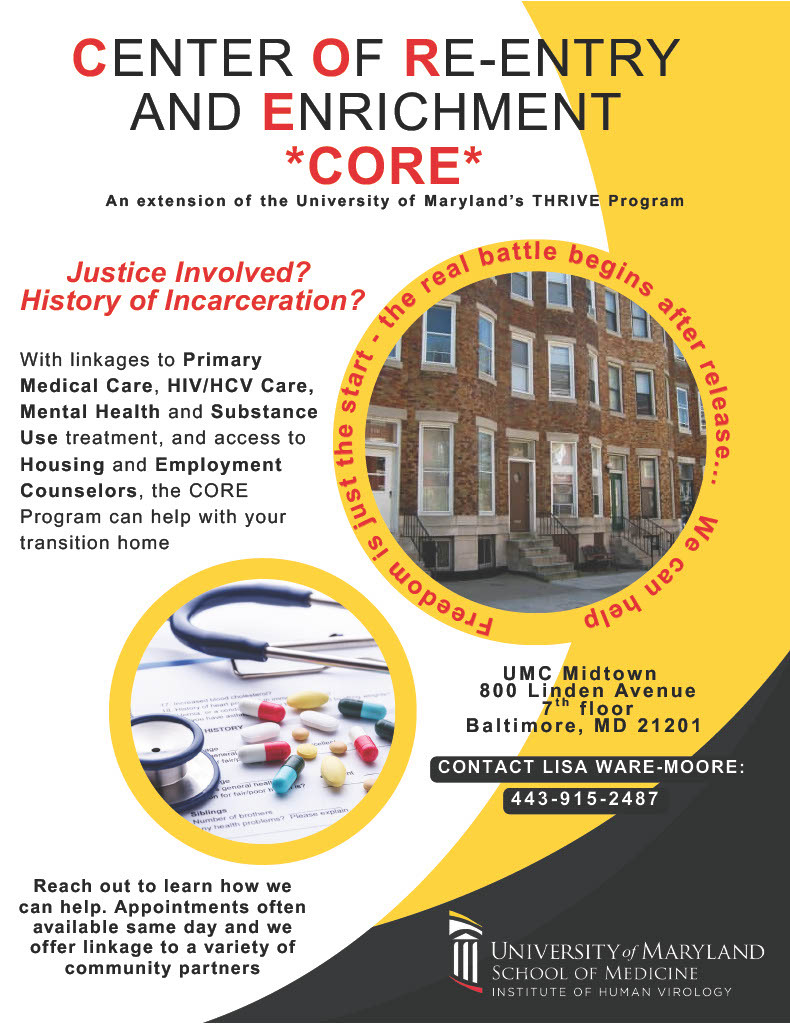
The CORE Program aims to provide immediate/same day access to quality medical care, including primary care and infectious disease care (including HIV and Hepatitis C treatment) on site at THRIVE. Additionally, on-site mental health and substance use assessments/screenings, triage and treatment are also available as well as access to Employment counseling and Housing services. Financial Assistance for things like rental assistance, food, and clothing also help to make community transitions easier. Community referrals to services not offered at THRIVE by a designated Re-entry Case Manager are a large part of our patient centered approach to re-entry services. These wraparound services are intended to address the social factors that most heavily impact recidivism rates. In addition to the tangible services CORE offers, the multi-disciplinary team approach enhances social support for those returning home and to their communities and families.
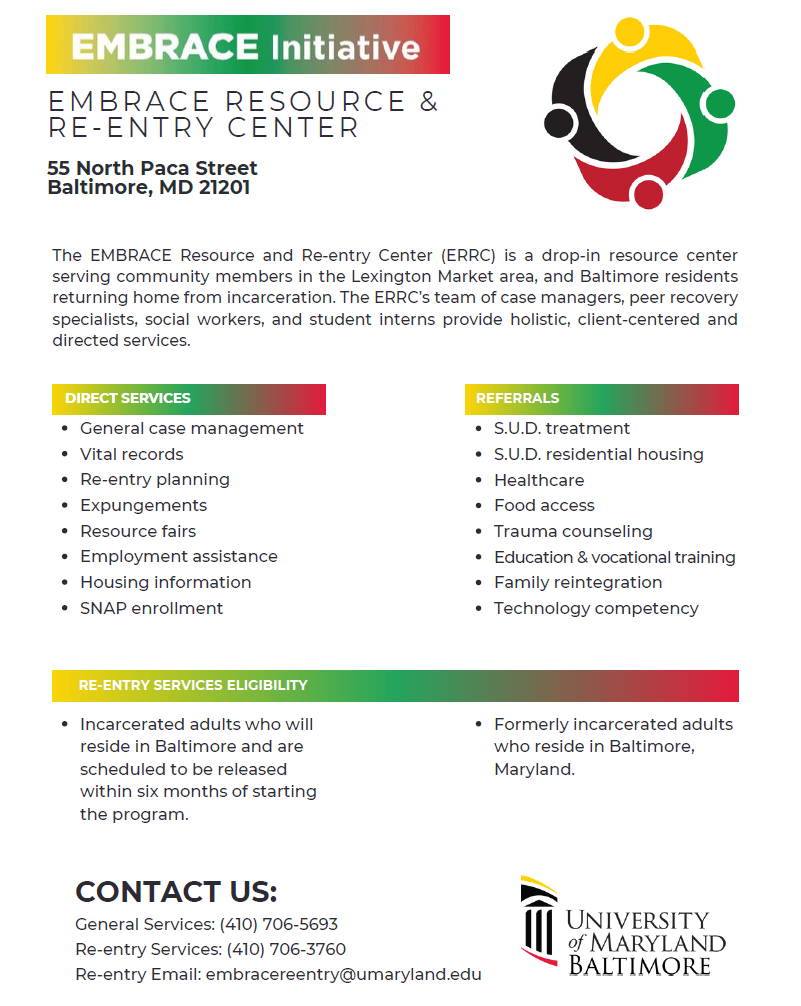
EMBRACE Resource and Reentry Center
Our Mission
Empowering individuals to overcome challenges and embrace purpose, we provide holistic care that fosters recovery, personal growth, and stability. With a focus on emotional well-being, resilience, and self-expression, our services support healing and the development of new skills. Through compassionate support and essential resources, we help create the foundation for a healthier, more fulfilling life.
Our Services
For more information please click here.
Live Benevolent Behavioral Health
Our Mission
At Live Benevolent, we provide aid and comfort to individuals, groups, and communities impacted by substance abuse, violence, tragedy, and traumatic events. We assist clients with life’s challenges including substance use disorders, relationship and behavioral issues, depression, anxiety, trauma, and daily living needs.
Our Services
Live Benevolent offers a wide range of support to young adults and their families, and men who battle mental illness and substance abuse disorders.
-
Outpatient Mental Health – Assessments & evaluations, individual, family, and group therapy, medication management, and therapeutic mentoring.
-
Substance Use Disorder – Prevention, professional assessments & treatment planning, individual counseling, peer-led group discussions, recovery support, and referrals. Services available short-term, intermediate, and long-term. We also offer MCORR Housing, supportive housing that provides safe, stable housing paired with recovery focused services to help individuals maintain sobriety, access resources, and build independence.
-
Psychiatric Rehabilitation – Evidence-based support for individuals with persistent mental health conditions, focusing on self-care, financial literacy, anger management, and independent living skills.
For more information please click here.
Our Commitment
At Live Benevolent, we are dedicated to strengthening lives, restoring hope, and supporting mental health and wellness across our community with compassion and care.
📢 We’re Hiring!
Mental Health Therapist
Provide assessments and therapy for adults and children navigating mental health and co-occurring challenges.
[Apply Today]
Updates to Dorchester County Health Resources
- Dorchester County Health Department has a new address: 627 Race Street, Cambridge, MD 21613
- Dorchester County Behavioral Health has a new address: 401 Academy Street, Cambridge, MD 21613
- DRI Dock Recovery & Wellness Center has a new address: 103 Maryland Avenue, Cambridge, MD 21613
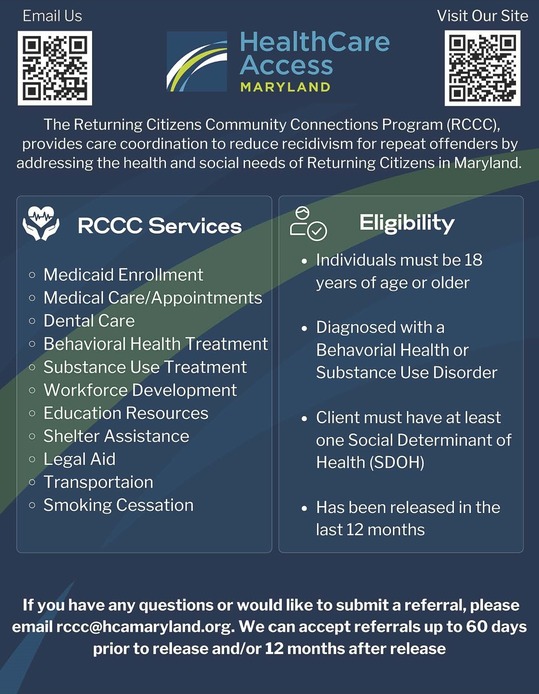
HealthCare Access Maryland Returning Citizens Community Connections Program (RCCC)
The RCCC program is designed to reduce recidivism by addressing the health and social needs of Returning Citizens in Maryland. The RCCC program works with repeat offenders that are residing or returning to Anne Arundel County, Baltimore City or Baltimore County up to one year post release.
Gatekeepers
Gatekeepers is an organization that focuses on re-entry. Our mission is to motivate, empower, and encourage both current and ex-offenders through mentoring services by challenging them to make positive decisions and ultimately help facilitate the process of a successful transition back to their communities. These individuals often do not have positive role models in their life to aid them in their efforts. At Gatekeepers, our team is dedicated to helping people overcome obstacles standing in their way to achieving success and reaching their life goals.
Business of Living Workbook and Program: The Business of Living is the heart of what we do. It focuses on the Personal, Occupational, Educational, and Spiritual areas of your life. Under the supervision of our Director of Operations Keith Roys, Gatekeepers has created the Business of Living Workbook and uses it to help current and former inmates chart their re-entry path to success. Gatekeepers works with men and women currently incarcerated to get them started on their re-entry planning. Gatekeepers will then meet them at the gate on their day of release (if needed) and get them immediately started on implementing their re-entry plan.
Resource Club: The Saturday morning Gatekeepers Resource Club, held in the Fellowship Hall at Trinity Lutheran Church (15 Randolph Ave.), is where community resources get to connect with returning citizens. The doors open at 9:30 am for networking and coffee. The meeting starts at 10:00 am and runs until 11:00 am. Many people stay afterwards to continue networking and connecting with resource providers that were present. Organizations including the Maryland Motor Vehicle Administration, the Area Health Education Center - West (AHEC-W), the Washington County Health Department, CASA, and many more provide a wide array of assistance to meeting attendees.
For more information about the Business of Living program, the Resource Club, Gatekeepers’ community partners, and more, visit https://www.gatekeepersmd.org/ or email gatekeepers.wcmd@gmail.com
Maryland Administrative Office of the Courts - Victims of Crime Video Series
The Maryland Judiciary has produced a two-part video series on the rights and roles of victims of crime. The first video covers the role of victims in bringing criminal charges and in criminal cases, and the second video addresses the rights of victims of crime, hiring legal representation, receiving information about the criminal case, financial compensation, and the rights of sexual assault victims. Each video has Spanish captioning available and has an accompanying tip sheet that summarizes the key points of the videos and provides a list of resources. The videos and tip sheets are available at mdcourts.gov and are part of a wider Court Help Video Library at mdcourts.gov/videos.
Saved2Serve Educational Services
Mission Statement: To teach, empower, improve, and transform the lives of returning citizens through education; specifically, by obtaining the General Educational Development (GED) to enter the workforce with 21st Century Skills.
Delta Sigma Theta Sorority, Inc.
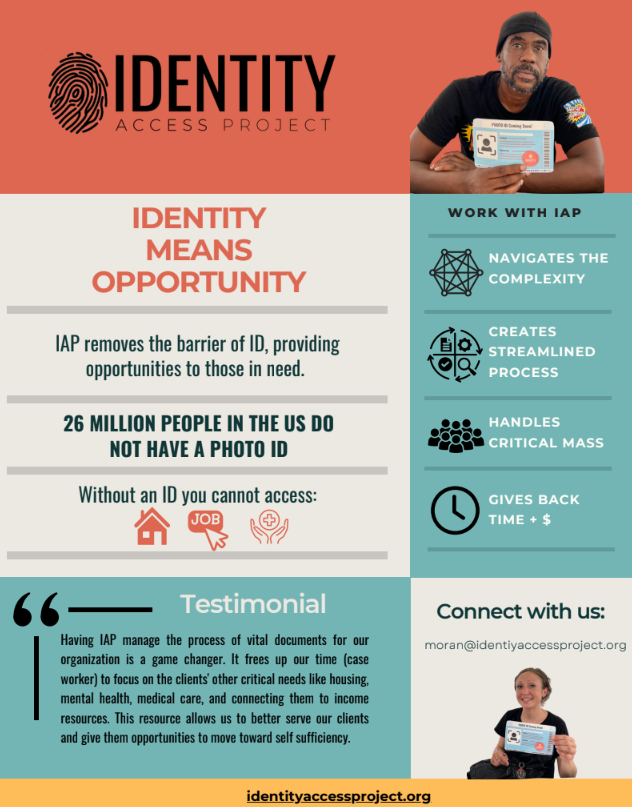
Identity Access Project
Flikshop
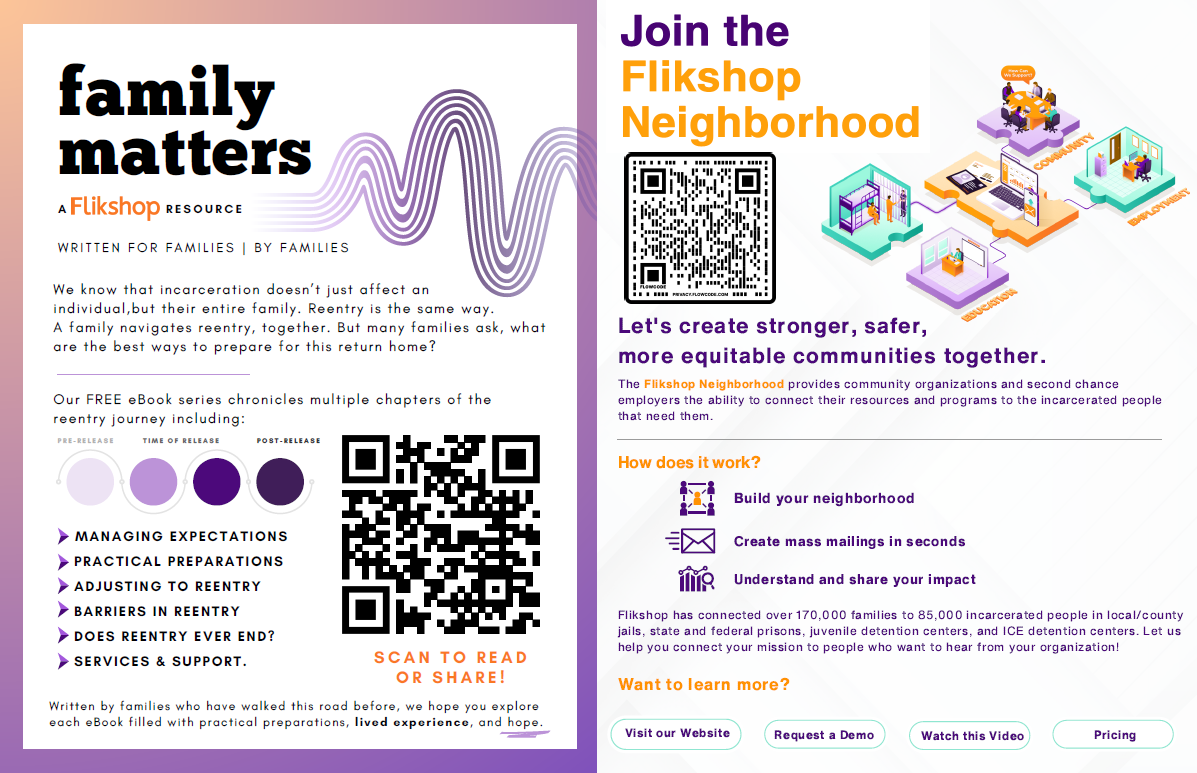
Flikshop aims to ease the process of sending postcards to incarcerated individuals. Founded by Marcus Bullock, a formerly incarcerated individual himself, the company fights recidivism by keeping families connected, so that individuals foster successful reentry, once released. We focus on families and their loved ones affected by incarceration, and assist them with technology that helps to leverage their relationships. Likewise, Flikshop has grown to connect businesses that work to build social impact strategies and community engagement teams that work to combat mass incarceration.
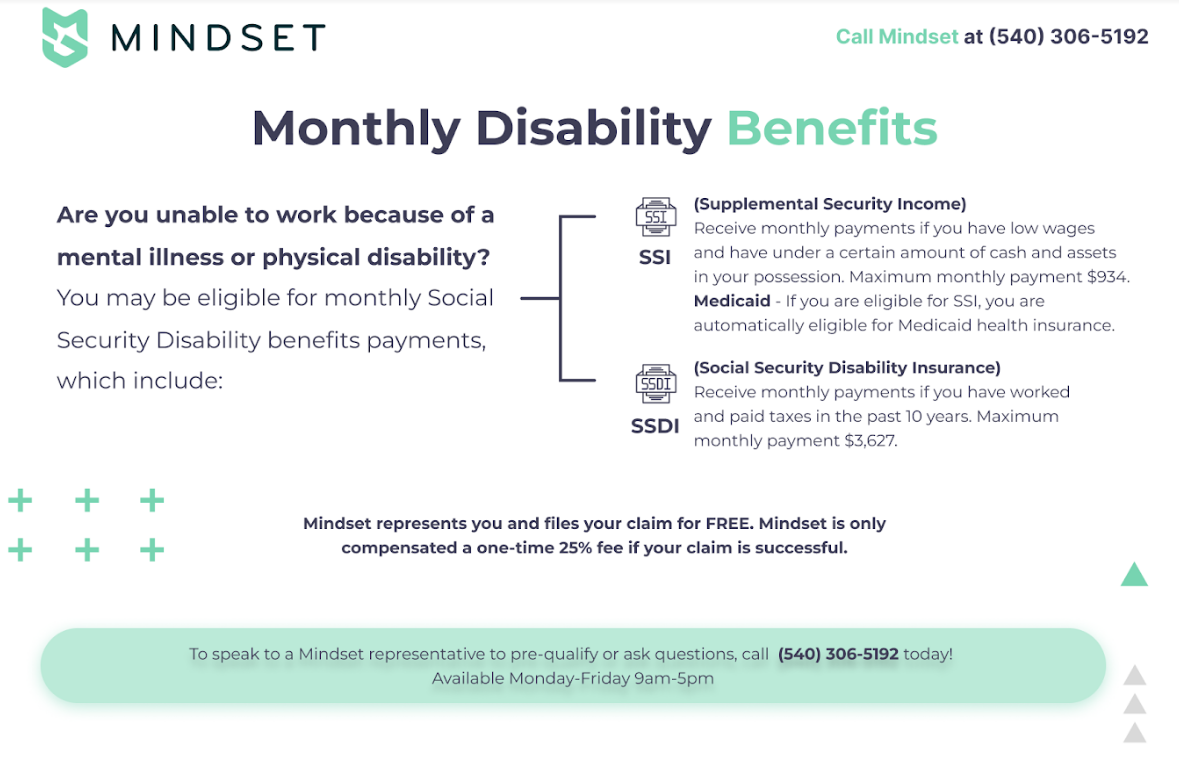 |
Mindset Care specializes in assisting individuals and caregivers with SSI and SSDI applications. Our streamlined online process reduces the application time from 4-6 weeks to just 1 hour. We charge a one-time fee, equivalent to 25% of the claimant's back pay, mandated by the SSA office. There are no recurring fees or monthly charges for claimants. Our services include full legal representation, dedicated case managers, and access to a licensed psychologist.
We manage the entire application process from initial filing to appeals, ensuring a seamless experience for claimants. Our partnership with TruConnect also offers qualified claimants a federally subsidized cell phone. Noteworthy points about Mindset Care:
- No charge to our partners or your organization
- No fee if the claimant's application is not accepted
- Management of all necessary medical records and correspondence
- Focus on securing stable income, benefits, and housing opportunities for claimants
Contact Kian Ronnasi at kronnasi@mindset.care with any questions.
Project ENCORE (P-ENCORE) is the Pratt Library's new restorative justice program which aims to dismantle institutional barriers and social reintegration challenges that lead to recidivism. There are three parts to P-ENCORE: Workforce Development, Digital Equity, and the Reconnection Center. Our mission is to empower formerly incarcerated individuals by equipping them with the essential tools to thrive as productive members of society. We adopt a comprehensive approach by seamlessly connecting participants with Pratt's existing wrap-around services, including housing, substance abuse rehabilitation, social work, and more, addressing their mental, emotional, financial, and physical well-being. See here for more information on their extensive programming. Our Multi-Tiered approach is designed to:
- Foster generational wealth and leave a lasting legacy.
- Provide a stable source of income for participants.
- Offer support for housing and transportation needs.
- Create safe, inclusive spaces for open dialogue about barriers and mental health challenges.
- Enhance self-esteem and boost participants' sense of pride and self-worth.
If you're interested in volunteering, partnering, or becoming a participant in any of our initiatives, please reach out to swalker@prattlibrary.org or kbailey@prattlibrary.org.
Description of this workbook from the author, Vanessa Bright, Executive Director of the Maryland Reentry Resource Center:
"I created this workbook because I believe that reentry should begin the day after a person enters the correctional facility to serve his or her sentence. Instead, too often the process does not begin until a few months before release. This workbook focuses on soft skills, which we can take wherever we go in life, no matter what we do. Soft skills characterize how a person interacts in relationships with others, including communication, time management, problem-solving, and conflict resolution."
Click here for more information.
Baltimore Veteran Reentry Resources
The Baltimore Station
Know a veteran who is soon to be released with a substance use disorder? The Baltimore Station provides wraparound support programs for homeless veterans that has a workforce program, and a free residential program. Click here for more information, and contact James Hardy at outreach@baltimorestation.org with any questions.
Housing in Howard County
Bridges to Housing Stability
Bridges to Housing Stability is a 501(c)(3) nonprofit corporation, serving Howard County, MD. Bridges believes that housing is the key to a household’s stability. Whether resolving the issue of homelessness or preventing a household from becoming homeless, our goal goes beyond crisis intervention – our approach and mission focuses on long term housing stability for our target populations.
MISSION: To provide a path to self-sufficiency to prevent and end homelessness through affordable housing solutions and advocacy in Howard County, Maryland.
VISION: To champion the eradication of homelessness in Howard County, Maryland.
For more information, please visit https://bridges2hs.org/
Housing in Prince George's County
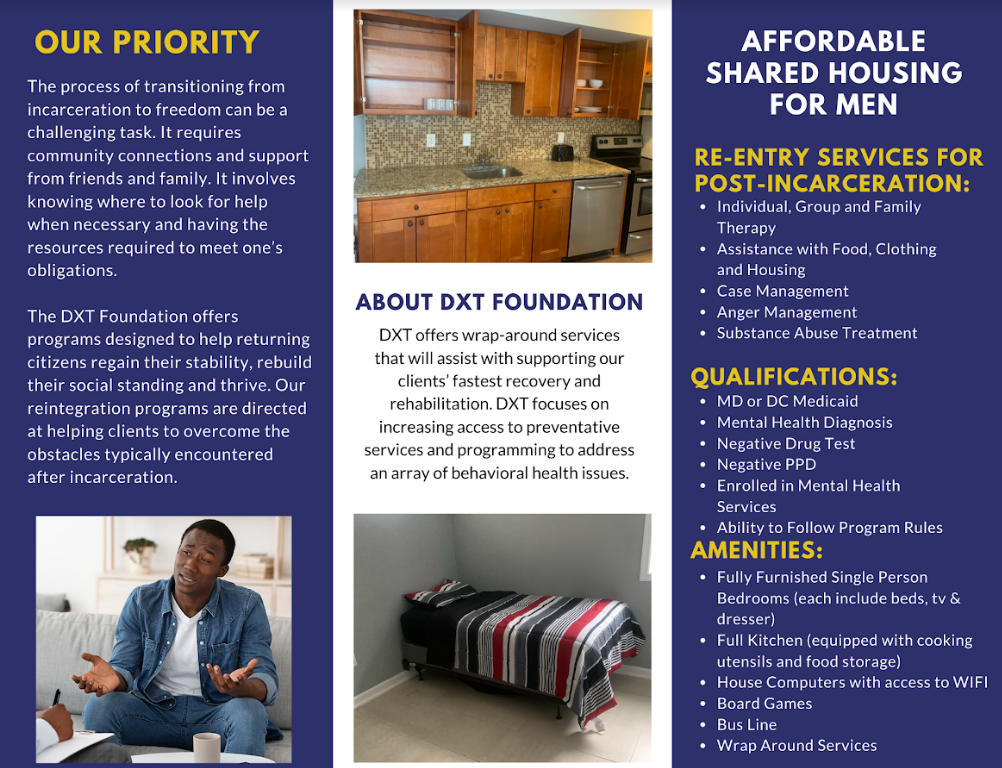
DXT Therapeutic Foundation
Offers shared transitional wrap around housing in Prince George's County. Call (240)-838-3707 or Michelle Hare at (240)-676-2895 for assistance.
Housing in Baltimore City
Sheppard Pratt
Sheppard Pratt is offering a new residential treatment program for clients with co-occurring disorders. They offer rent support and other resources for apartments in Baltimore City. For more information, contact Ziva Ritchie at (410)-382-5426.
St. Ambrose
Four new housing spots/beds are available in partnership with Jacob's Well for justice-involved youth ages 18-24. Please contact Shalawn James at St. Ambrose for more information at shalawnj@stambros.org.
To be included in March's Newsletter, please make your submission by COB Monday, February 23rd, 2026.
For more information and to make your March submission, visit the Submission Page here or send it to justice.reinvestment@maryland.gov.
|