This summer has served as a powerful reminder that climate change is not a distant or abstract concept. It is something we can see and measure–and we’re seeing its effects here in Maryland.
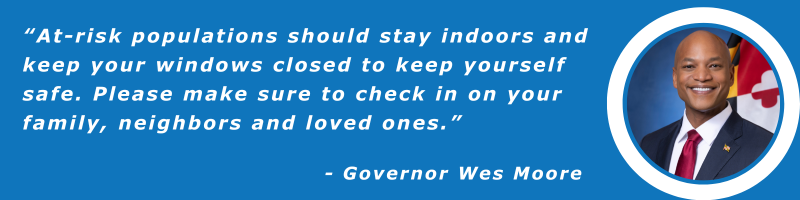
Over the Fourth of July weekend, record-breaking heat swept across much of the country. Baltimore recorded its hottest Independence Day on record with temperatures reaching 102°F, surpassing previous highs dating back to the 19th century. Excessive heat warnings were in effect across the state, with the heat index climbing to 110–115°F. Many parades and fireworks displays were canceled due to the heat. Wildfires continue to rage in Canada and elsewhere, even affecting our local air quality.
Our field teams are responding to the effects across the state. In the Potomac River, unusually warm water temperatures and prolonged drought contributed to a significant fish kill. Elsewhere, extreme heat affected communities and infrastructure, including roadway buckling along Interstate 97. These events are not isolated. They are consistent with broader trends that scientists have documented for decades. Across Maryland, climate change is increasingly affecting our weather, our waterways, our infrastructure, and the health of our communities.
Meeting these challenges requires sustained action to invest in community resilience, reduce pollution, strengthen water infrastructure, and build stronger partnerships across state and local government. Above all, it requires all of you—our scientists, engineers, inspectors, emergency responders, and support staff—whose expertise, commitment, and service are helping Maryland prepare for and adapt to a changing climate.
The lesson from this summer is clear: climate change is happening now, and it is serious. But we have the tools to address it—and each of us has a role to play in solving it.
So, as we take time to enjoy the remainder of summer, I hope you continue to take pride in the important role you play in protecting public health, safeguarding our environment, and building a more resilient Maryland. Our state is not simply responding to today’s challenges—we are creating a stronger, healthier future for generations to come.
|