| |
SPRING/ SUMMER UPDATE
|
|
We are living through one of the most exciting periods in Baltimore's History of Community development. As we approach the Fall season, I want to share several important updates with you. Late last year, Mayor Brandon M. Scott, in partnership with the Greater Baltimore Committee (GBC) and Baltimore United In Leadership Development (BUILD), announced a historic $3 Billion, 15-year plan to address vacant houses in the city. This monumental plan, which is a significant step towards a brighter future, is detailed below.
We've enjoyed a robust partnership with the State, and during the 2024 legislative session, Governor Wes Moore passed a Housing Package that aligns with Baltimore's Community Development Framework. Key components of the passed legislation support increased funding for addressing vacants, protecting renters, and assisting future homeowners overcome issues surrounding housing affordability. All of these factors are driving us towards a bright future.
Additionally, since the legislative session, we've already secured $50 million of Project Core Funding from the State, and JP Morgan announced its $8.45 million commitment to tackling Baltimore's vacant housing crisis and empowering our city's small businesses.
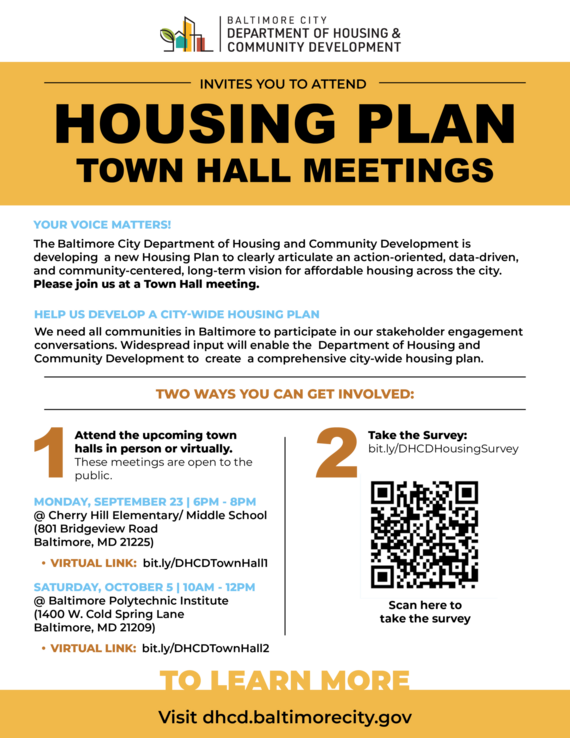
I'm also thrilled to share that in July Mayor Scott and DHCD announced the city's first-ever Comprehensive Housing Plan. This plan is a bold step toward ensuring all Baltimoreans have access to safe and affordable homes. This initiative and other vital projects highlight our commitment to creating vibrant, equitable communities across our city. Please see information below about the upcoming Housing Plan Town Halls and I encourage you to take the survey.
Last, but not least, we continue to increase momentum in making significant progress in vacant reductions. Baltimore has the lowest number of vacant properties the city has seen in decades (13,198 as of September 17, 2024). Our Fixed Pricing Program, which was launched in April as a sales program for specific City-owned vacant buildings and lots, is helping us advance this work.
In Service,
Alice
|
|
|
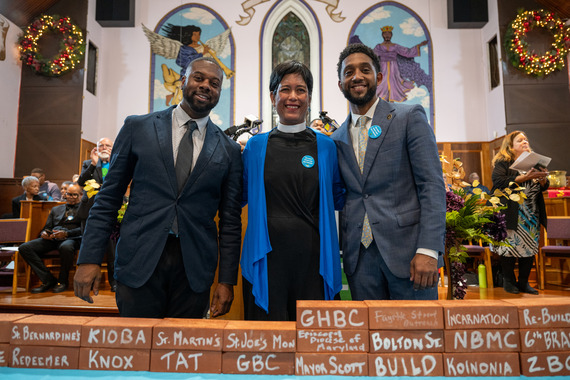
In a landmark agreement, Baltimore Mayor Brandon M. Scott, BUILD, and the Greater Baltimore Committee (GBC) have launched a comprehensive effort to address the city's vacant and abandoned property crisis over the next 15 years. With a pledge of $300 million in city investment and additional support from the State of Maryland and the private sector, the initiative aims to bring public investment to more than 30 neighborhoods.
This strategic partnership emphasizes leveraging public investment to attract private funds, with a goal of generating billions for redevelopment. The plan prioritizes community-led development without displacement, targeting historically disinvested neighborhoods to create thriving mixed-income communities.
Notably, the partnership involves diverse stakeholders, including the Mayor's Office, BUILD, GBC, and the broader community, reflecting a collaborative approach to addressing long-standing challenges. Through this comprehensive strategy, Baltimore aims to combat the impacts of vacant properties' safety, health, and wealth, signaling a significant step forward in revitalizing neighborhoods and fostering equitable growth. Learn more.
|
|
DHCD Special Investigations Unit Director Dave McGinnis (standing 2nd from right) at Govenor Moores Bill signing of HB 387 with Deputy Mayor Justin Williams and other State officials.
In a historic initiative, Mayor Brandon M. Scott has announced the development of Baltimore City's first-ever Comprehensive Housing Plan, led by the Department of Housing and Community Development (DHCD). This strategic endeavor aims to create a cohesive, long-term vision for the city's housing policy, integrating and enhancing the various programs and initiatives currently in place, such as the $3 billion vacant housing strategy introduced by Mayor Scott in partnership with BUILD and GBC.
The Comprehensive Housing Plan is not just another policy document; it is a critical roadmap designed to ensure that all of Baltimore's housing efforts are strategically aligned and working toward the same overarching goals. By consolidating the city's housing strategies into one cohesive plan, Mayor Scott's administration seeks to address the long-standing challenges of disinvestment and discrimination that have plagued Baltimore.
The foundation of this initiative is an extensive public engagement process that will involve collaboration with residents, community leaders, and key stakeholders from across the city. DHCD will conduct town halls, surveys, focus group sessions, and interviews to gather input that will directly inform the plan's final recommendations. This inclusive approach ensures that the Comprehensive Housing Plan will be community-centered and driven by the voices of those it aims to serve.
The Comprehensive Housing Plan, slated for public release in early 2025, will develop clear, actionable goals and metrics to track progress. It will guide Baltimore towards a future where every resident has access to safe, affordable, and vibrant housing options, regardless of their neighborhood.
Read the full press release for more information on the Comprehensive Housing Plan.
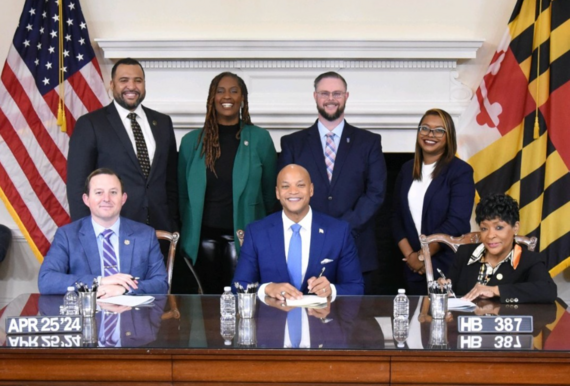
DHCD Special Investigations Unit Director Dave McGinnis (standing 2nd from right) at Governor Moores Bill signing of HB 387 with Deputy Mayor Justin Williams and other State officials.
Governor Wes Moore signed HB387 into law during this year's legislative session. This law effectively removes the barriers that legally prohibited DHCD from releasing images of surveillance footage publicly to get the community's help identifying illegal dumpers. The law becomes effective October 1.
DHCD's Special Investigations Unit (SIU), comprising 10 investigators, plays a pivotal role in combating illegal dumping. As part of their investigation and code enforcement tools, they use cameras to catch illegal dumpers. This has resulted in great success: With 16 open investigations in 2023 alone, DHCD has filed 22 cases and achieved seven convictions.
DHCD has also bolstered its surveillance capabilities by adding 30 state-of-the-art cameras to its network, marking a significant 40% increase. Since the expanded deployment in August 2023, these cameras have been instrumental in identifying and apprehending illegal dumpers. Eight dumpers were caught in the act in the first week of being utilized, leading to swift legal actions. These numbers have continued to climb, with 15 incidents identified in subsequent weeks, resulting in two convictions.
As of August 8, 2024, DHCD's SIU had 23 cases, 5 guilty verdicts, and 13 active cases.
DHCD's robust surveillance infrastructure and enforcement efforts send a clear message: illegal dumping will not be tolerated in Baltimore, and offenders will be prosecuted. These efforts align with DHCD's broader mission of fostering a cleaner, safer, and more vibrant city for all residents.
We encourage residents to properly dispose of unwanted waste by utilizing legal waste disposal channels, residential drop-off centers, recycling programs, and partnerships with organizations like Second Chance and Goodwill.
|
|
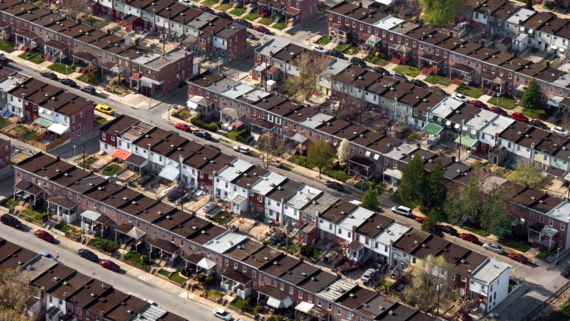
Addressing the affordable housing crisis requires a multifaceted approach, as no single subsidy can solve the issue. This summer, the Department of Housing and Community Development (DHCD) announced an allocation of $8.56 million from the Affordable Housing Trust Fund to support the new construction and rehabilitation of existing affordable rental housing. This funding initiative aims to increase the number of affordable units available, aligning with the Trust Fund's mission to serve low-income residents of Baltimore City.
The DHCD specifically sought proposals from applicants capable of completing projects within two years, which would leverage additional investments. This strategic focus expedites the development process and maximizes the impact of public funding by encouraging private sector participation.
Established to address the housing needs of low- and very low-income households, the Affordable Housing Trust Fund operates under strict spending requirements. Article I, Section 14 of the City's Charter states that all funds must be allocated to housing and housing-related activities for households earning 50 percent or less of the Area Median Income (AMI), as defined by the Department of Housing and Urban Development (HUD). Furthermore, at least half of the Trust Fund must be directed toward households earning 30 percent or less of the AMI.
We congratulate the most recent awardees in the rental housing sector. With these funds, we are proud to support the development of 146 units designated for households at 30 percent AMI and 153 units for those at 50 percent AMI. These projects represent significant strides toward closing the housing affordability gap and ensuring all residents can access safe and affordable housing. View List of Awardees.
|
|
Baltimore City took a significant step forward in housing equity by introducing the Tenant Opportunity to Purchase Act (TOPA) in April. This transformative legislation, initiated by Councilwoman Odette Ramos and named in honor of former Council President Mary Pat Clarke, aims to restore renters' ability to engage directly with landlords looking to sell their rental properties, providing a clear pathway to homeownership for many Baltimore residents.
Impact on Renters and Landlords
For renters, TOPA means enhanced stability and the opportunity to transition from renters to homeowners, fostering long-term community ties and investment in local neighborhoods. For landlords, it introduces a new dynamic in property sales and opens up the potential for smoother transitions and positive community impact.
How DHCD is Here to Support
To help renters navigate new opportunities presented by TOPA, the Baltimore City Department of Housing and Community Development (DHCD) has developed a comprehensive Renter's Guidebook. This resource is designed to provide renters with crucial information about their rights, the steps involved in the TOPA process, and the resources available to them.
Stay tuned for how Maryland's Renters' Rights and Stabilization Act of 2024, which passed the General Assembly and becomes effective on October 1, will affect your rights and impact local laws. Learn more about TOPA.
|
|
|
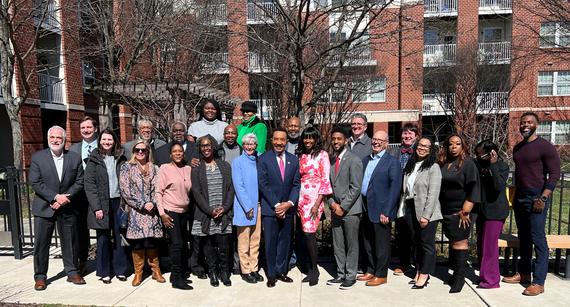
Congressman Kweisi Mfume, Mayor Brandon M. Scott and Housing Commissioner Alice Kennedy pictured with Housing Accelerator Fund awardees.
To address Baltimore's housing challenges, Mayor Brandon M. Scott allocated $29.8 million in American Rescue Plan Act (ARPA) funds to bolster permanent supportive housing and traditional affordable housing projects. Administered through the Housing Accelerator Fund, these grants aim to transform the housing landscape by supporting vulnerable residents and families facing housing insecurity.
The Housing Accelerator Fund was launched in September 2023 in collaboration with the Baltimore City Department of Housing & Community Development (DHCD), the Mayor's Office of Homeless Services (MOHS), and the Mayor's Office of Recovery Programs (MORP). This initiative, facilitated through a Notice of Funding Availability (NOFA), targets the construction of permanent supportive housing, offering a vital combination of affordable housing, healthcare, and supportive services to those experiencing homelessness or housing instability.
Eleven applicants were awarded grants ranging from $419,000 to $7 million based on the scale of their projects. This initiative, supported by $15.2 million from the City's ARPA State and Local Recovery Funds (SLFRF) and $14.7 million from the Home Investment Partnerships Program ARPA fund, marks a significant step forward in Baltimore's housing strategy.
Leveraging ARPA funding to address urgent housing needs underscores DHCD's commitment to ensuring every Baltimore resident has access to safe, affordable, and dignified housing. This initiative responds to immediate challenges exacerbated by the pandemic and fosters sustainable and affordable housing for the city.
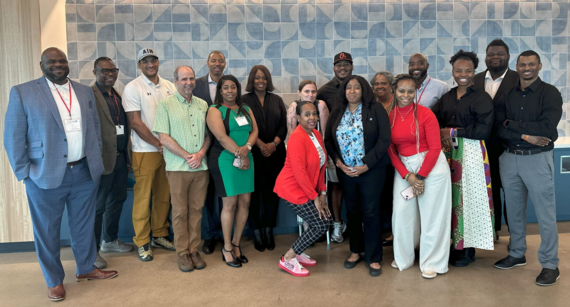
Group picture of Baltimore Supportive Housing Institute teams
Congratulations to the graduates of the Corporation for Supportive Housing (CSH) Baltimore Supportive Housing Institute!
Five teams participated in intensive training and project planning to seed high-quality Permanent Supportive Housing (PSH) projects that would serve people experiencing homelessness.
The Institute culminated with a finale on May 8, during which each team presented their project concepts to a panel of judges, who provided supportive and expert feedback to encourage and strengthen their project design.
Together, these projects represent over 60 units of new PSH and over 100 units of additional affordable housing in Baltimore City. The graduates now have access to early-stage predevelopment funding through the DHCD-MOHS Housing Accelerator Fund to continue pursuing their projects.
We especially thank all the funders and partners who worked with us to make this happen, including MOHS, CSH, Jeanette and Harry Weinberg Foundation, France-Merrick Foundation, CareFirst, and the Housing Association of Nonprofit Developers (HAND).


|
|
|
|
|