 Friday, March 13, 2026
Stay healthy on spring break:
Protect your family from illness

Many families are packing up to travel for spring break, and you don't want to bring an unwelcome illness home with you. Take some basic precautions to protect your health while on vacation.
Key things to keep in mind
-
Check for disease outbreaks and stay current on vaccines. According to Connie Mendel, director and chief health strategist for the Louisville Metro Department of Public Health and Wellness, “Flu and COVID‑19 seem to be easing but continue to circulate, and measles cases have risen in several U.S. states. In fact, 31 states have reported measles cases. Children may need additional MMR doses before travelling. Talk to your healthcare provider about any vaccine protections needed before travelling.”
-
Practice good hygiene. “Washing your hands often helps keep you healthy,” Mendel said. “If washing your hands isn’t possible, use hand sanitizer that contains at least 60% alcohol. Cover coughs and sneezes and try to avoid touching your face.”
-
Be careful in crowded places. Airports, theme parks, and public transit increase exposure to germs. Wearing masks and distancing can help, especially for people at higher risk of severe illness due to weakened immune systems.
-
Support your immune system. “Eat well, stay hydrated, get enough sleep, and manage stress. Protect your skin with sunscreen (SPF 30+), hats, sunglasses, and shade. Use insect repellent to prevent bug bites and ask a doctor if malaria prevention is needed for your destination if you are travelling abroad,” Mendel added.
-
Know when to stay home. If someone feels sick, resting and avoiding travel helps prevent spreading illness. Seek medical care if symptoms worsen or are severe.
“Families who take these steps can enjoy a safer, healthier spring break,” Mendel said.
National Poison Prevention Week:
Household items can pose serious risks
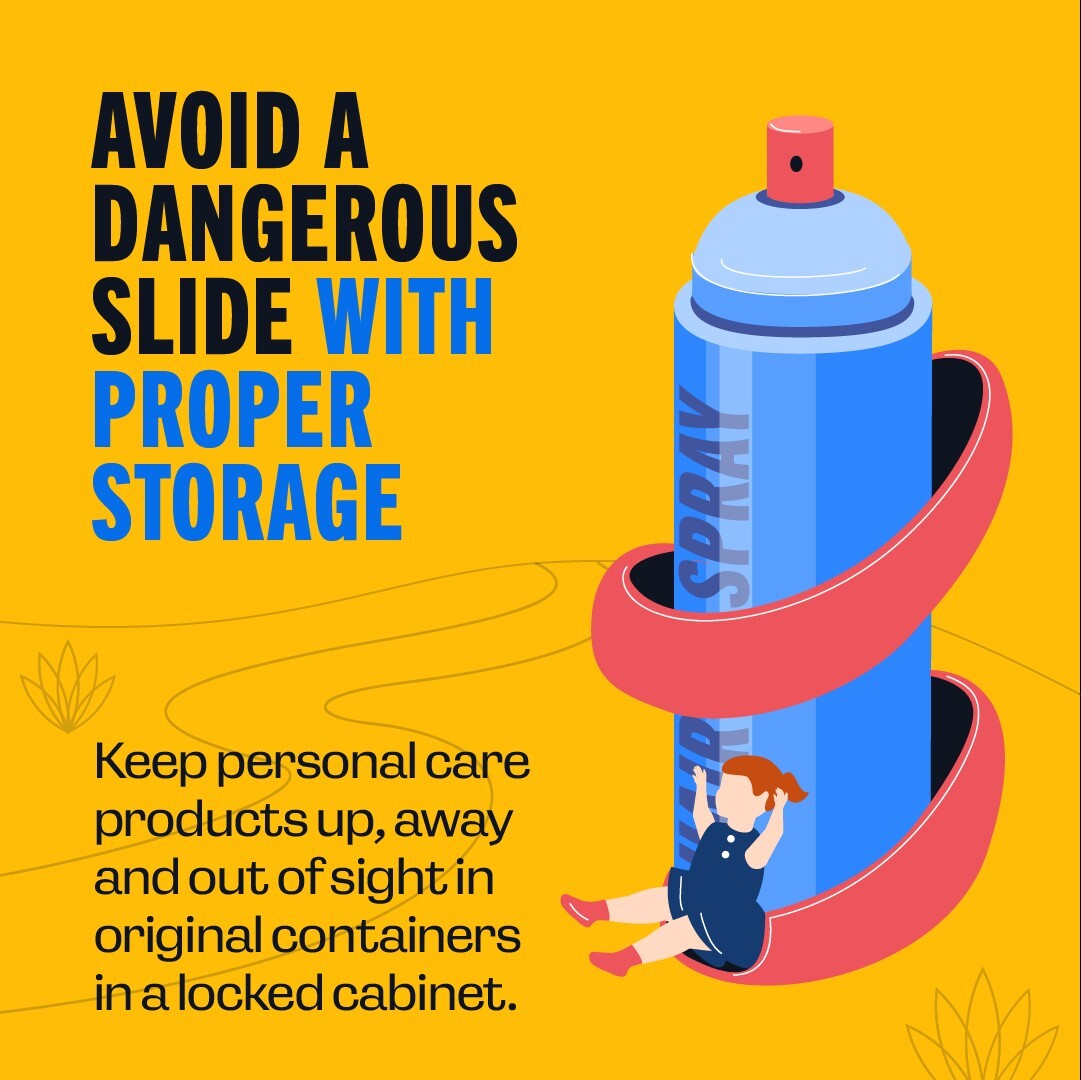 Courtesy of Health Resources & Services Administration
In 1961, Congress created National Poison Prevention Week to increase knowledge about how to prevent and stop poisoning accidents. Communities and poison centers across the country host events every year to share the message.
Poisoning can occur at any age and often when least expected. Children may mistakenly consume poisonous plants, teenagers might try out substances, and older adults can mistakenly take the wrong medication. Incidents of accidental poisoning can happen very quickly.
During National Poison Prevention Week, observed from March 15 to 21, it is important to highlight the dangers associated with poisonous substances and the measures that can be taken to protect families and friends. The Poison Help number, 1-800-222-1222, connects people across the country to their local poison control center. Calling from a Kentucky phone number will direct you to the Kentucky Poison Control Center.
Norton Children’s Hospital supports the Kentucky Poison Control Center, which was established in 1954 as the third poison control center in the U.S. It remains affiliated with Norton Children’s Hospital and is recognized as one of 55 regional poison control centers nationwide.
The center serves all 120 counties in Kentucky and operates 24 hours a day, every day of the year. All calls are confidential and free of charge.
Important safety tips for poison prevention at home include safe storage practices and medicine safety:
- Keep cleaning products and cosmetics out of reach.
- Read product labels before every use.
- Supervise young children when hand sanitizer is used.
- Avoid mixing cleaning products.
'Respecting Emotions' event
recognizes signs of trauma
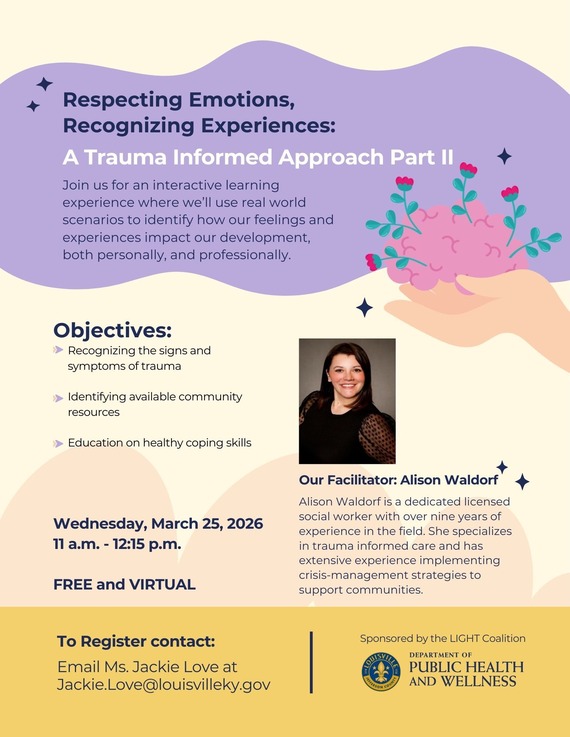
You're invited to "Respecting Emotions, Recognizing Experiences: A Trauma Informed Approach Part II," led by licensed social worker Alison Waldorf. This interactive learning experience will use real-world scenarios to explore how our feelings and experiences influence our personal and professional development.
The free virtual event will be held at 11 a.m. on Wednesday, March 25.
Waldorf specializes in trauma-informed care and has extensive experience in implementing crisis-management strategies to support communities.
To register, please contact Jackie Love at Jackie.Love@louisvilleky.gov.
|