 Friday, May 16, 2025
Spot a tick? Share it with us
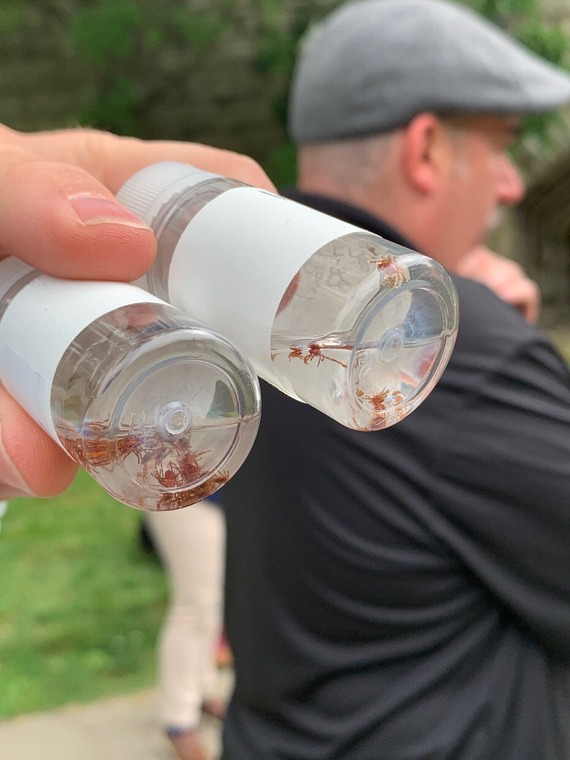 If you discover a tick, please share it with us. The Louisville Metro Department of Public Health and Wellness is using results from ticks we collect and those that people share with us to create a map of where ticks are being reported and develop outreach and education materials based on the types of ticks and the diseases they carry.
"Our Spot a Tick and Share Program helps us identify what types of ticks are prevalent in Jefferson County and any diseases they may carry,” said Connie Mendel, director and chief health strategist for the department.
Ticks are small parasites more commonly found in wooded, brushy and grassy areas. However, people can be exposed to a tick in their own yards, even with very little grass or trees. Exposure to ticks can happen all year round, but they tend to be more active during warmer months. They can spread diseases to both dogs and people. Ticks can transmit a number of illnesses like Lyme disease, Ehrlichiosis and Rocky Mountain spotted fever (RMSF).
"Our public health lab has the capacity to inspect tick samples to identify what types of ticks are living in our area," Mendel said. "From 2021- 2023 approximately 350 tick samples were collected and analyzed. So far, we know the three most prevalent ticks in Jefferson County are the Lone Star tick, American Dog tick and Blacklegged tick."
How to submit a tick
- Place it in a small leak-proof container and cover the sample with rubbing alcohol or hand sanitizer. (No plastic bags)
- Label the container with your name and contact information on it, along with this completed form. (Complete one form per tick or tick bite.)
- Drop off or mail the sample to LMPHW, 400 E. Gray St. Louisville, Ky. 40202, from Monday through Friday between the hours of 8 a.m. and 5 p.m.
Here are the T-I-C-K rules of thumb:
-
Take precautions and wear insect repellent
-
Inspect your body for ticks and rashes after being outdoors
-
Carefully remove the head and body of the tick
-
Keep monitoring your health for fever, body aches and rashes and seek medical attention if they develop.
For more information about ticks, prevention tips and proper removal, visit LMPHW’s webpage. Be sure to watch our video to learn more about our Spot A Tick and Share Program.
Safety tips for fun summer swimming
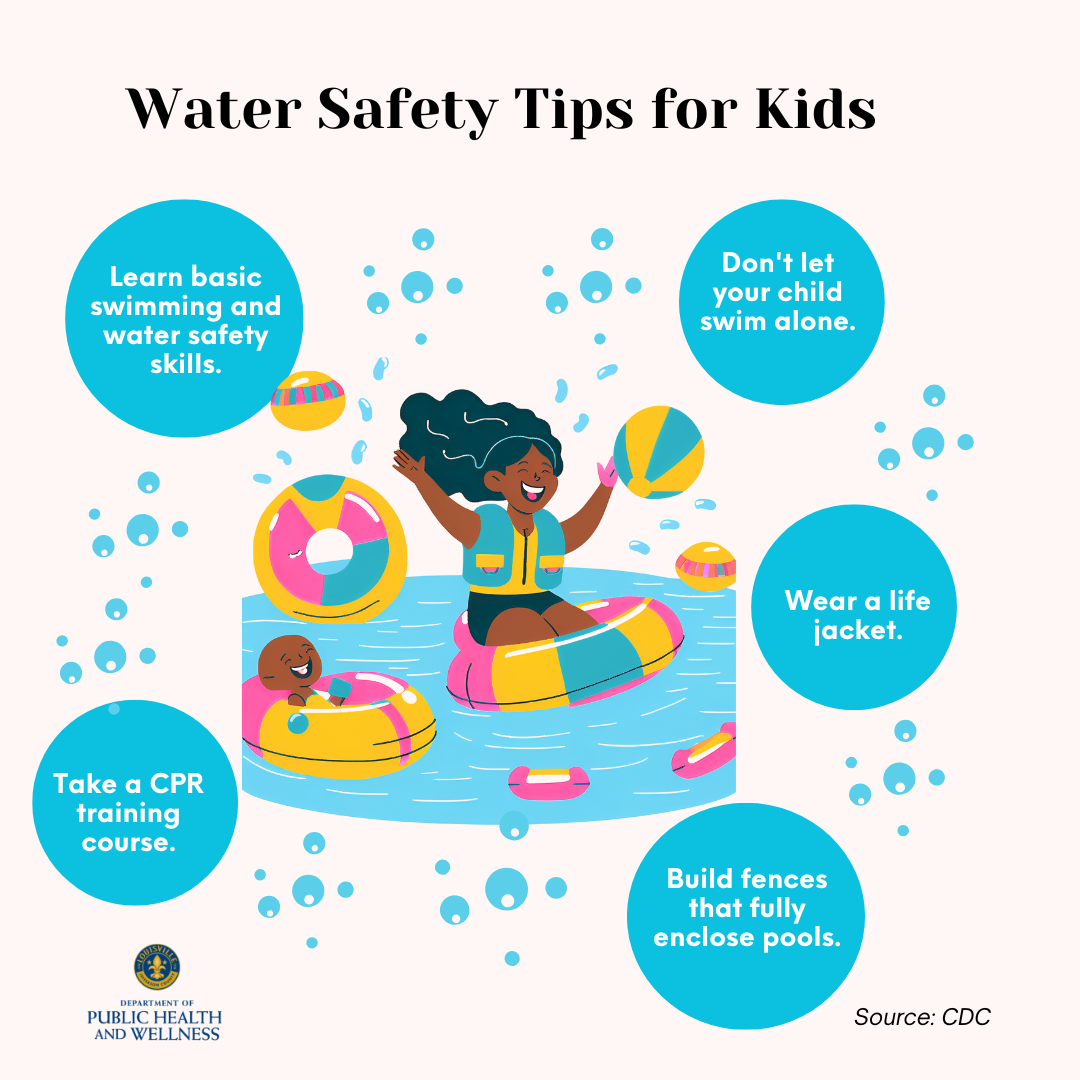 May is National Water Safety Month. As the temperatures rise, everyone is drawn to pools, lakes, oceans, rivers, and other bodies of water! While swimming is a delightful pastime during the summer, it’s essential for everyone to prioritize water safety. Here are some tips on how children can stay safe in and around the water:
Learn basic swimming and water safety skills
Formal swimming lessons can reduce the risk of drowning. Children who have had swimming lessons still need close and constant supervision when in or around water. Learn more information on how to find swimming lessons in your area.
Build fences that fully enclose pools
Construct and use a four-sided fence that is at least 4 feet in height and fully encloses the pool. The fence should separate the pool from the house, with self-closing and self-latching gates. Remove all toys from the pool area that might attract children to the pool when the pool is not in use.
Supervise closely
Designate a responsible adult to supervise closely and constantly when children are in or near water (including bathtubs). You can assign a specific adult to supervise each child when they have access to water. Adults watching kids in or near water should avoid distracting activities like reading, using the phone, and consuming alcohol or drugs, because drowning happens quickly and quietly.
Wear a life jacket
Life jackets reduce the risk of drowning while boating for people of all ages and swimming abilities. Life jackets should be used by children for all activities while in and around natural water.
Life jackets can also be used by weaker swimmers of all ages in and around natural water and swimming pools. Do not rely on air-filled or foam toys, as these are not safety devices.
Learn CPR
Your CPR skills could save someone's life in the time it takes for paramedics to arrive. Many organizations such as American Red Cross and American Heart Association offer CPR training courses, both online and in-person.
Source: CDC
YMCA offers free clinics for water safety
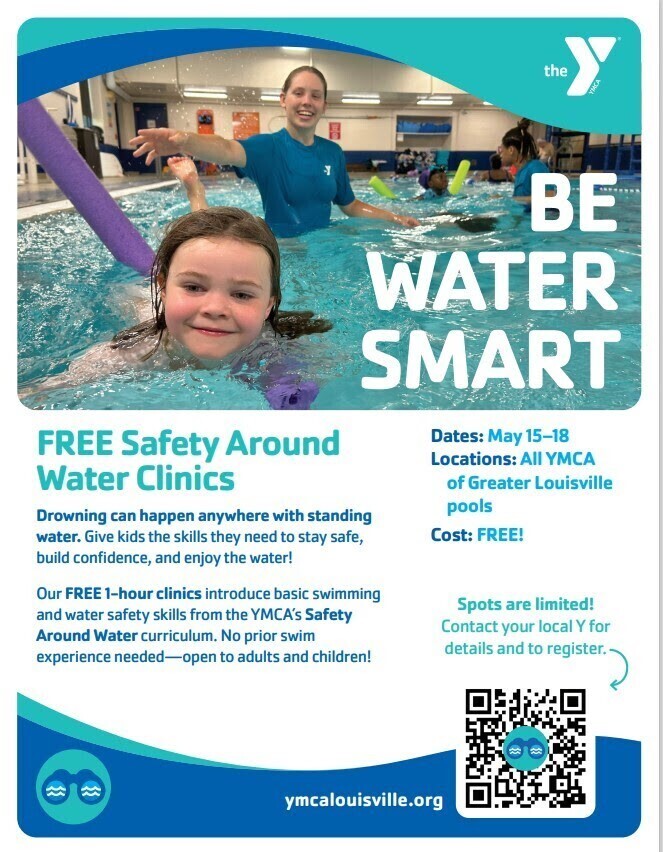 Drownings can happen anywhere with standing water. Give kids the skills they need to stay safe, build confidence, and enjoy the water!
All Greater Louisville YMCA pools are offering free one-hour clinics to introduce basic swimming and water safety skills from May 16 through May 18.
No prior swim experience needed--open to adults and children! Spots are limited. For more information, please contact your local Y for details and to register.
Join our public health team
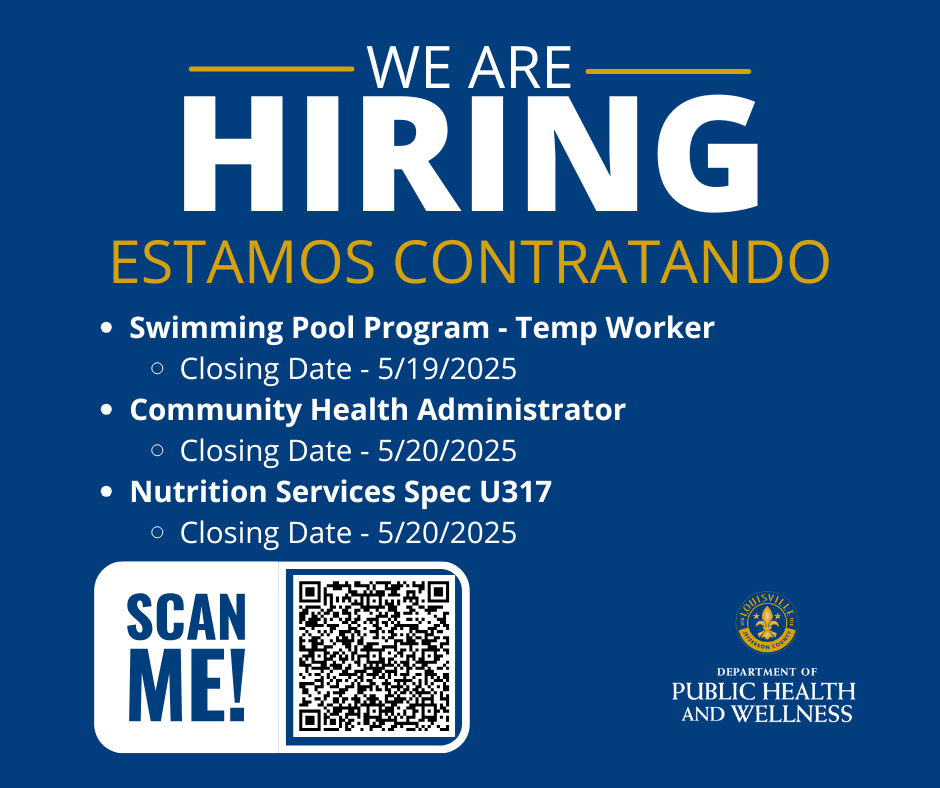 Public health professionals come from diverse backgrounds and possess a variety of skills, all united in the mission to safeguard the community's health. We invite you to be part of our team!
Explore our Metro job opportunities webpage for more information on careers in public health, or simply scan the QR code.
For further inquiries, please reach out via email at LMPHWCareers@louisvilleky.gov.
|