 Friday, April 11, 2025
What to do with food in your home after a flood
 Floods can turn your home into a hazardous environment—and one of the biggest health risks is contaminated food. Floodwater often carries bacteria, chemicals, and other pollutants that can render your food unsafe to eat. Knowing what to discard and what can be saved is essential to protecting your family’s health.
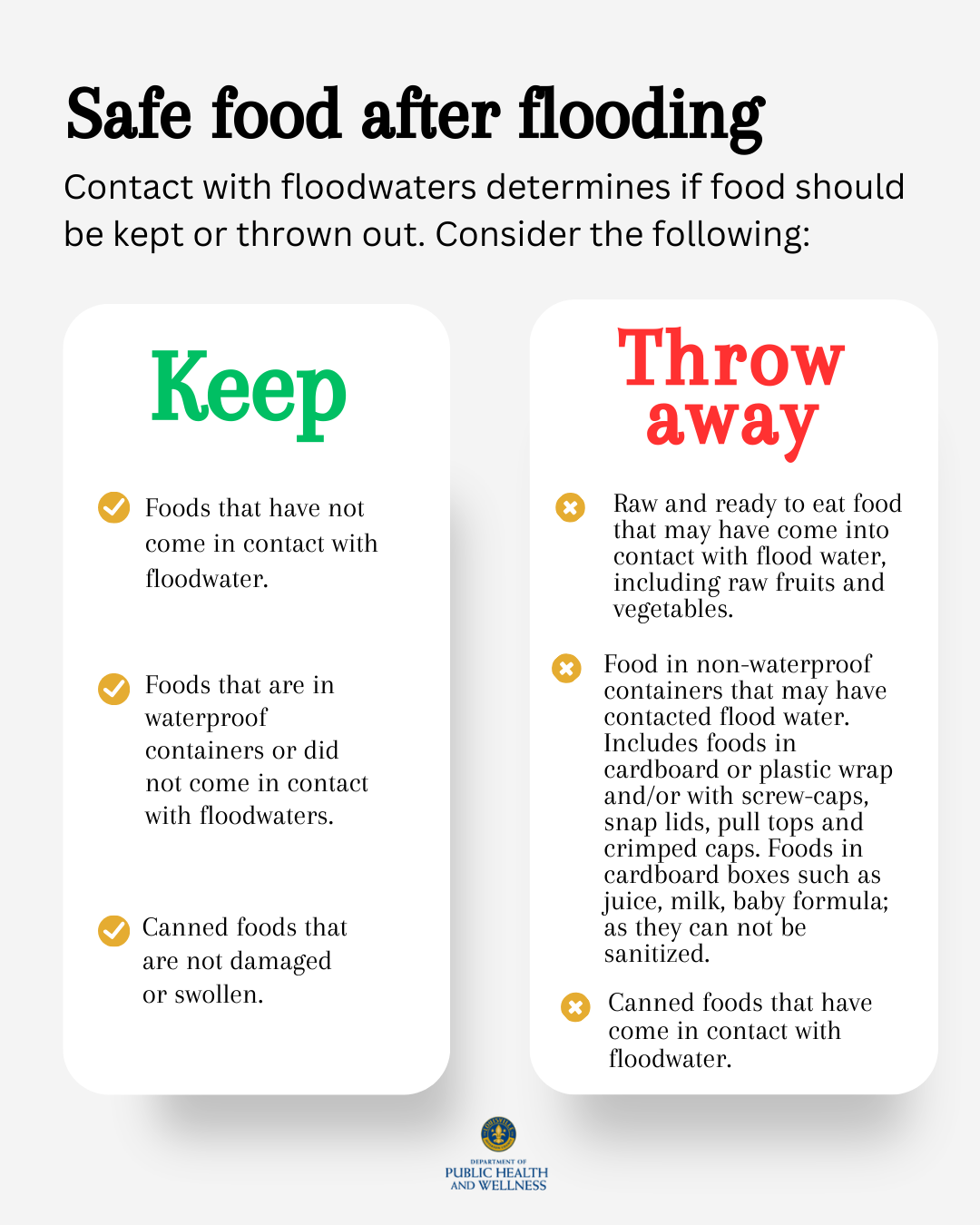
Discard any food touched by floodwater
As a rule of thumb, if any food or food packaging has come into contact with floodwater, it should be thrown away. This includes:
- Fresh produce
- Meat, poultry, fish, and eggs
- Dairy products
- Open containers and packages
- Food in cardboard boxes, paper, or plastic wrap
- Home-canned goods
Even if items are sealed, like jars or cans with screw caps, corks, or snap lids, they are not considered safe if they’ve been submerged or splashed by floodwater.
Inspect canned foods carefully
Commercially canned foods with sealed, undamaged metal lids may be safe if properly sanitized. To clean them:
- Remove labels (which can harbor bacteria).
- Wash cans in hot, soapy water and rinse.
- Sanitize by soaking in a solution of one cup of bleach and five gallons of water for 15 minutes then soak in clean water for at least one minute.
- Re-label with a marker, including the expiration date.
Clean your kitchen thoroughly
Before using your kitchen again, thoroughly clean and sanitize all surfaces, including counters, shelves, appliances and utensils.
- Disinfect with a solution of 1 cup of bleach in five gallons of water.
- Allow the surface to remain wet for at least one minute, then rinse with clean water.
- Discard wooden cutting boards, plastic utensils, baby bottle nipples, and pacifiers if they’ve been exposed—they’re difficult to fully disinfect.
Check your refrigerator and freezer
If the power was out for more than four hours, most refrigerated foods should be thrown away. Freezer items may be safe if they still contain ice crystals or stayed below 40°F. When in doubt, throw it out—don’t taste food to check if it’s safe.
Flood-contaminated food can cause serious illness. It’s better to err on the side of caution and dispose of questionable items. Always prioritize safety over salvaging.
National Public Health Week recognizes
the work of public health champions
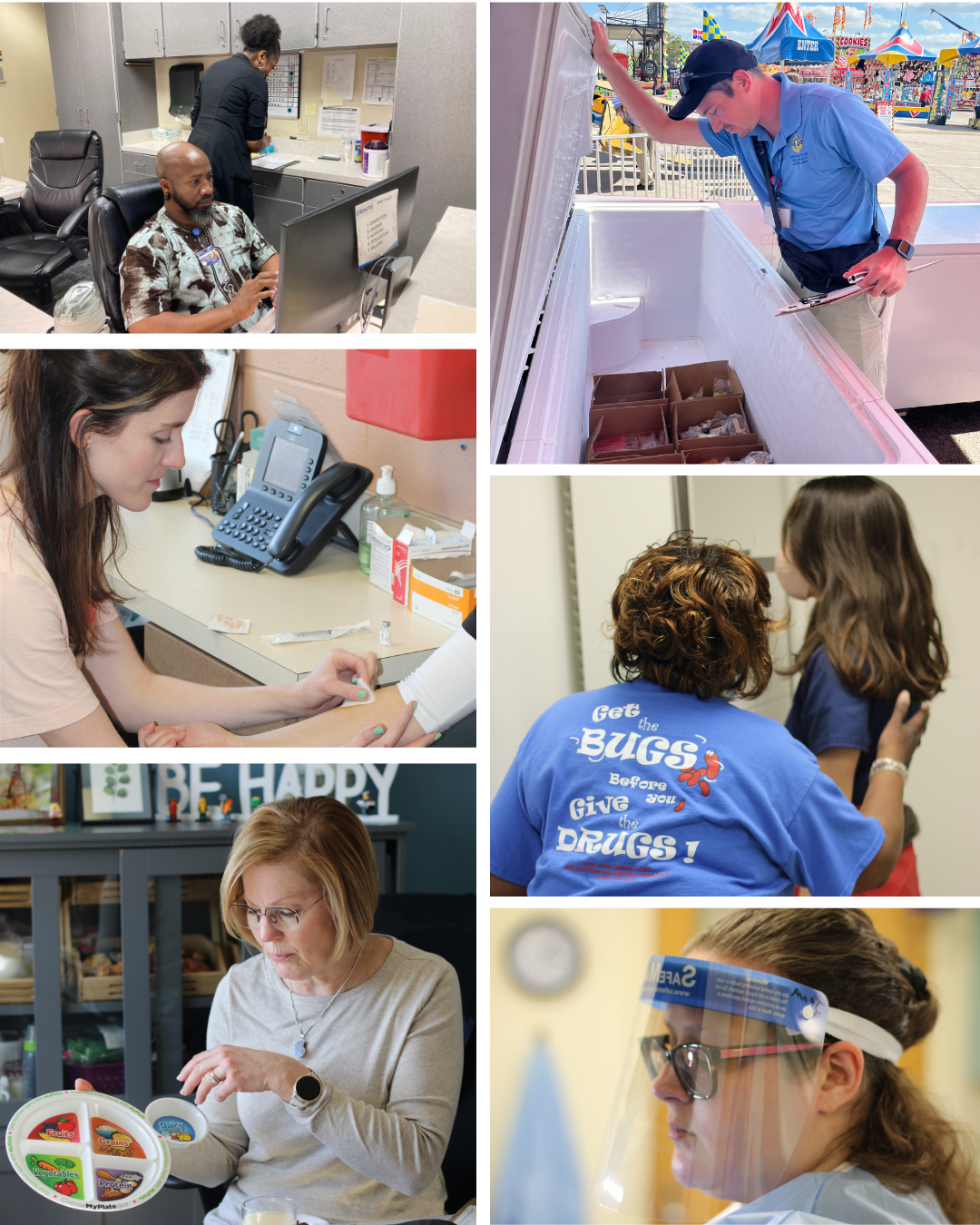

In honor of National Public Health Week, we are celebrating our employees at the Louisville Metro Department of Public Health and Wellness.
Public health is based on the idea that everyone should have an equal chance to be as healthy and safe as possible. That’s why public health workers aim to help every member of a community.
You may not always notice them, but our employees include many people with different skills all working together to protect the community’s health. We work to keep neighborhoods informed about infectious diseases, prevent lead poisoning in children and pregnant women, ensure emergency preparedness, organize vaccine clinics, offering Narcan and training to prevent overdoses, control mosquito and tick-borne illnesses and so much more.
The interconnectedness of our roles creates a significant impact on the health of Louisville.
We invite you to get a glimpse of a couple of the many important roles in the health department — food inspector and nutrition services specialist. Learn how they make a positive impact on our residents.
|
Let's talk about removing the stigma on mental health
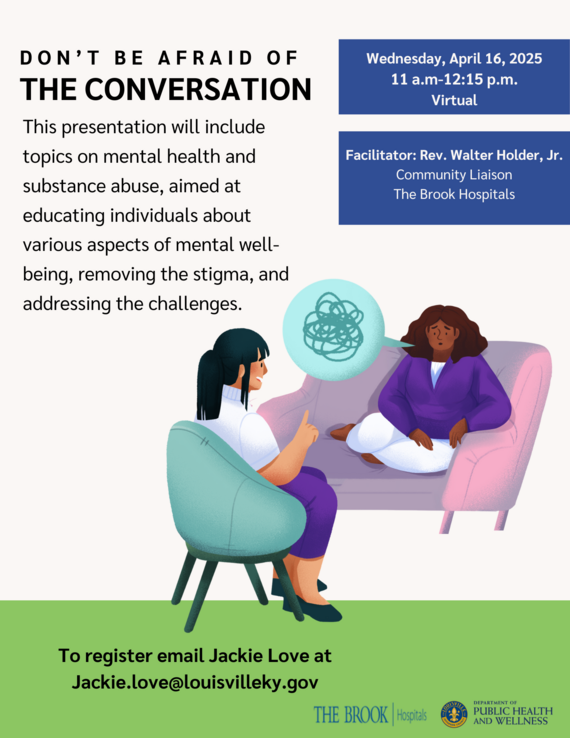 How does mental health affect your daily life? Our free virtual workshop, "Don't Be Afraid of the Conversation," is scheduled for 11 a.m. on Wednesday, April 16 and will address topics related to mental health and substance abuse. The objective is to help individuals understand various aspects of mental well-being, reduce stigma, and confront related challenges.
The session will be led by Community Liaison Rev. Walter Holder, Jr., an experienced program coordinator and mental health specialist. Rev. Holder possesses expertise in quality control, psychotherapy, anger management, public speaking, and lifestyle coaching. He holds an Associate's degree in Pastoral Counseling and Specialized Ministries from Simmons College of Kentucky.
For registration details, please contact Jackie Love at Jackie.Love@louisvilleky.gov.
|