 Friday, November 22, 2024

Make food safety the main dish at your holiday dinner
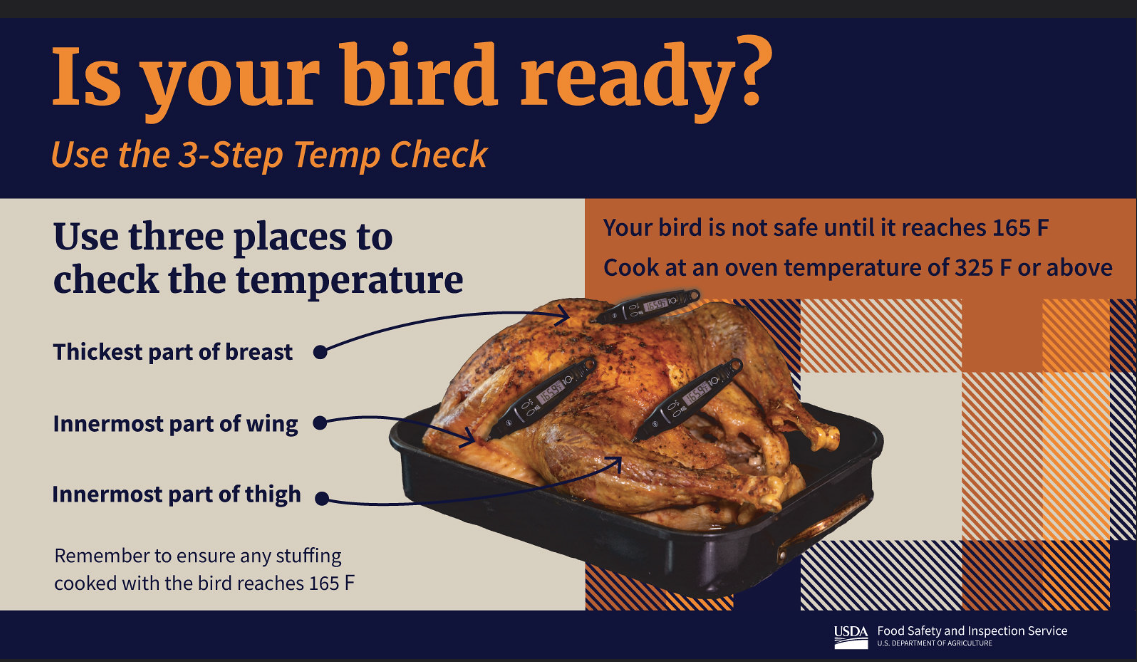 For first-time hosts, or even experienced cooks, the Thanksgiving turkey can be a nerve-wracking dish to prepare once a year. The USDA Food Safety and Inspection Service (FSIS) has some tips to reduce any anxiety over cooking your turkey this year.
Thawing turkey safely
There are two safe ways to thaw a turkey: in the refrigerator or in cold water. Thawing a frozen turkey on the kitchen counter, in hot water, or in the garage is not safe. Even though the center of the package may still be frozen, the outer layer of the food is in the Danger Zone between 40 and 140 degrees F — a temperature range where foodborne bacteria multiply rapidly. No matter which method you use, thawing a turkey takes time.
Cooking turkey safely
The USDA also has helpful tips on cooking turkey based on your preferred cooking method. Regardless of how your turkey is cooked, insert a food thermometer into the thickest part of the breast, the innermost part of the wing and the innermost part of the thigh to check that its internal temperature at all three spots is at 165 degrees F.
Food safety specialists are here for you – even on Thanksgiving Day
Need more information about Thanksgiving food safety? Call the USDA Meat and Poultry Hotline at 888-MPHotline (888-674-6854) , email MPHotline@usda.gov or chat live at ask.usda.gov from 10 a.m. to 6 p.m. ET, Monday through Friday to talk to a food safety specialist in English or Spanish. The Meat and Poultry Hotline will be open on Thanksgiving Day from 8 a.m. to 2 p.m. EST.
You can also visit our Holiday Food Safety for Home Cooks webpage.
Handwashing can prevent food poisoning
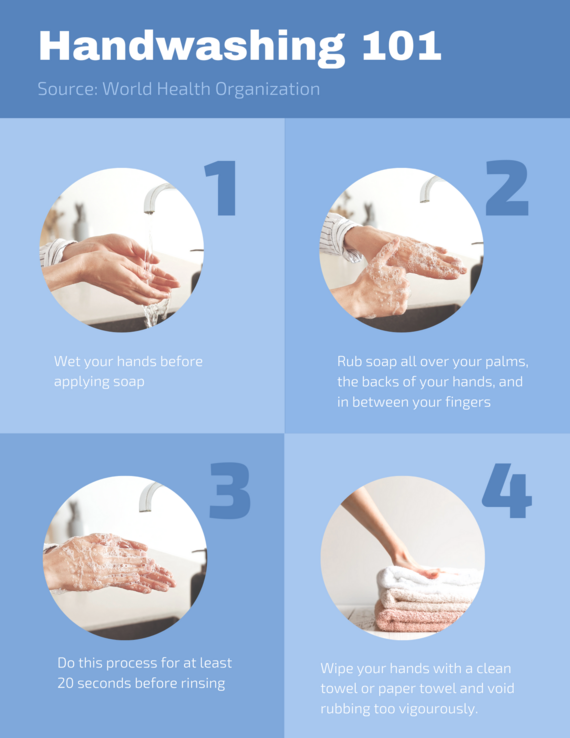 Handwashing is one of the most important things you can do to prevent food poisoning when preparing food for yourself or loved ones. Your hands can spread germs in the kitchen. Some of these germs, like Salmonella, can make you very sick. Washing your hands frequently with soap and water is an easy way to prevent germs from spreading around your kitchen while handling and preparing foods.
When to wash hands at home
Handwashing is especially important during some key times when germs can spread easily:
-
Before, during, and after preparing any food.
-
After handling uncooked meat, chicken or other poultry, seafood, flour, or eggs.
-
Before and after using gloves to prevent germs from spreading to your food and your hands.
-
Before eating.
-
After touching garbage.
-
After wiping counters or cleaning other surfaces with chemicals.
-
After touching pets, pet food, or pet treats.
-
After coughing, sneezing, or blowing your nose
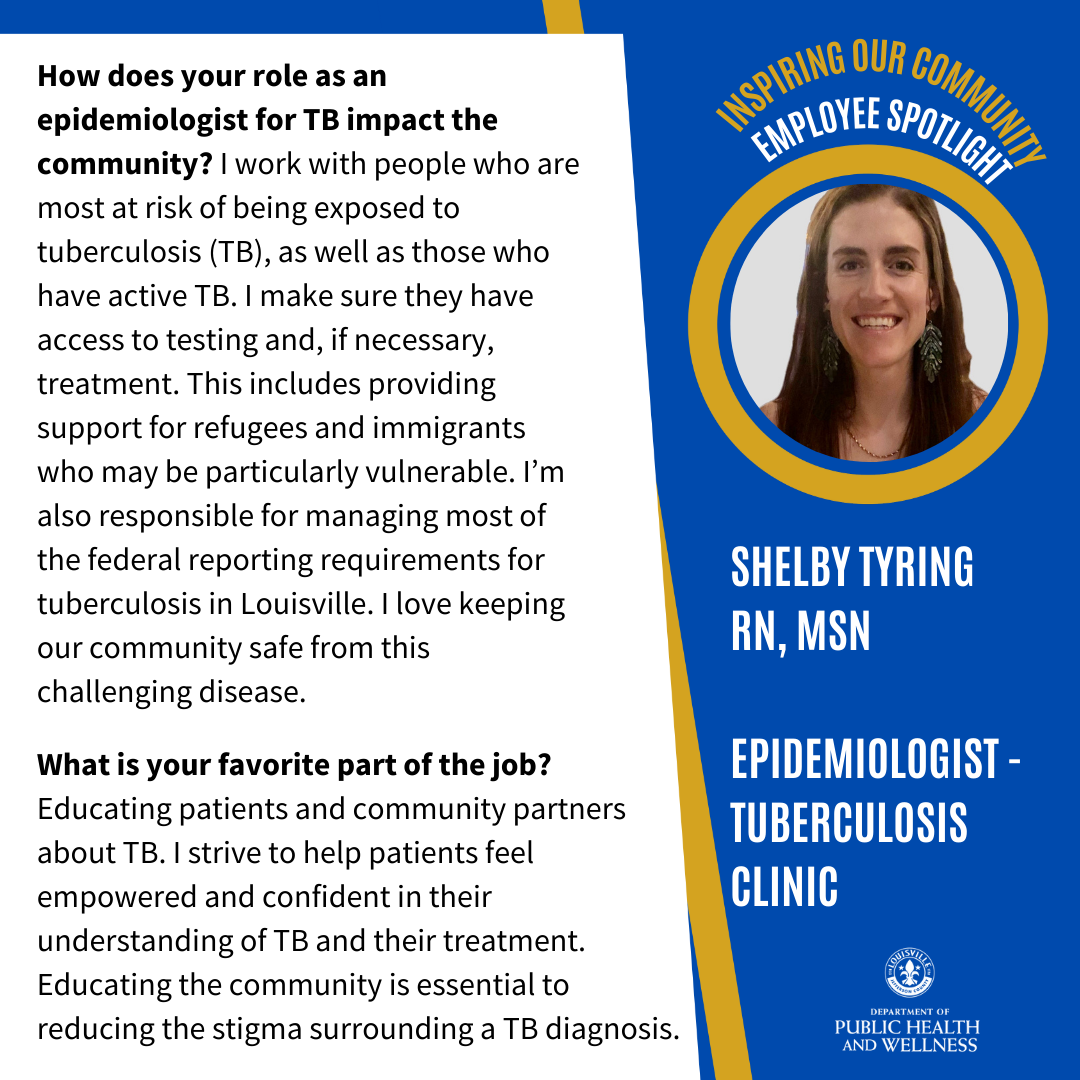
Learn more about who we are and what we do
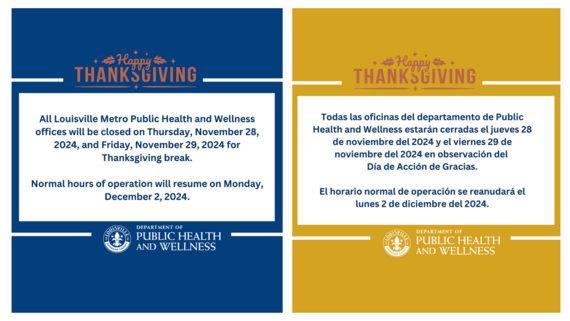
We're closed for Thanksgiving break
|