 Friday, October 25, 2024

National Lead Poisoning Prevention Week
raises awareness about dangers of lead exposure
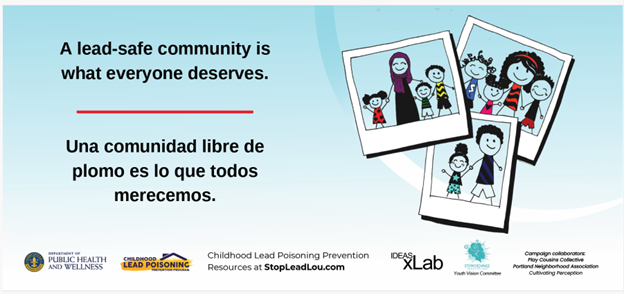
Lead poisoning and lead toxicity are terms that describe people’s exposures to lead that result in illness and require immediate medical attention. It is used to describe cases when there are severe health effects related to high blood lead levels.
No safe blood lead level in children has been identified.
Below are important facts about lead exposure and its potentially harmful effects:
- Lead poisoning is preventable! The key is preventing children from being exposed to lead.
- Lead is toxic, especially to young children. When lead is breathed in or swallowed, it can cause delayed growth and development, lower IQ and learning issues, damage to the brain and nervous system, and result in hearing, speech, and behavior problems. Additional public health actions are needed for children with higher levels of lead in their blood.
- Children younger than 6 years of age are particularly vulnerable to lead exposure. This is because their bodies are still developing and growing rapidly. Young children also tend to put their hands or other objects that may be contaminated with lead dust into their mouths.
- About 3.3 million American households with children younger than 6 years old have lead exposure hazards from lead in deteriorated paint, dust, or soil—including around 2.1 million low-income households with children younger than 6 years old.
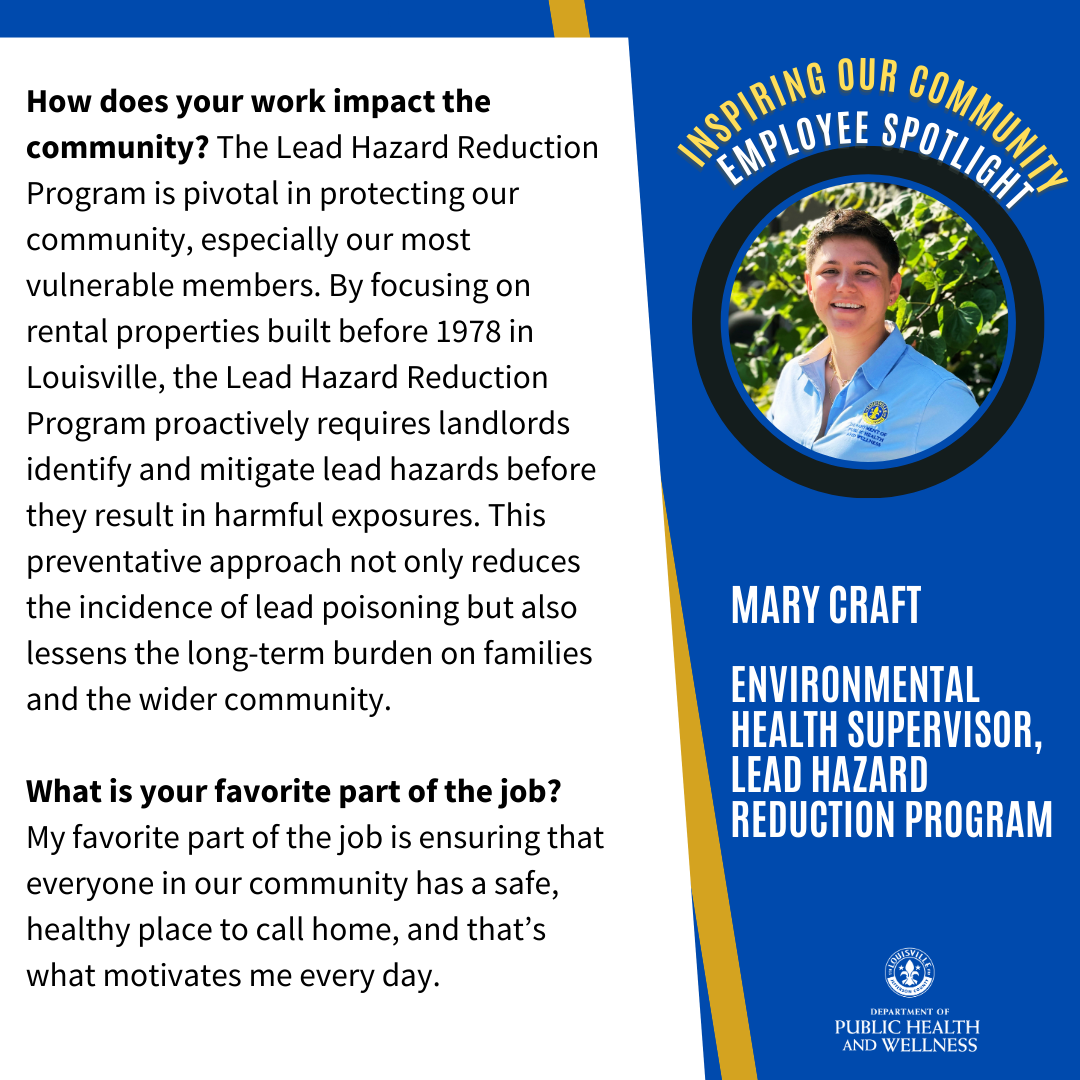
- Lead can be found inside and outside the home. A common source of exposure is from cracked or chipped lead-based paint, which was used inside and outside many homes built before 1978 and in other buildings and steel structures, which may be nearby or adjacent to homes. Children can be exposed by swallowing or breathing in lead dust created by cracked or chipped paint, eating paint chips, and chewing on surfaces coated with lead dust or lead-based paint, such as windowsills.
Visit www.louhealthdata.com to see local data and maps for lead exposure. For more information about lead poisoning prevention, you can visit our website. You can also request a combat kit, which contain:
- Swiffer Sweeper
- Wet mop pads
- Cleaning gloves
- Hand soap
- Painter’s tape
- Wet wipes
- Lead tester
The kits are available for anyone who is at risk of having lead hazards present in their home and have any children under 6 years old or pregnant individuals living there. If you have any questions about the Combat Kit, please email us or call 502-574-6644.
Learn more about who we are and what we do
E. coli outbreak linked to McDonald’s
Quarter Pounders in multiple states
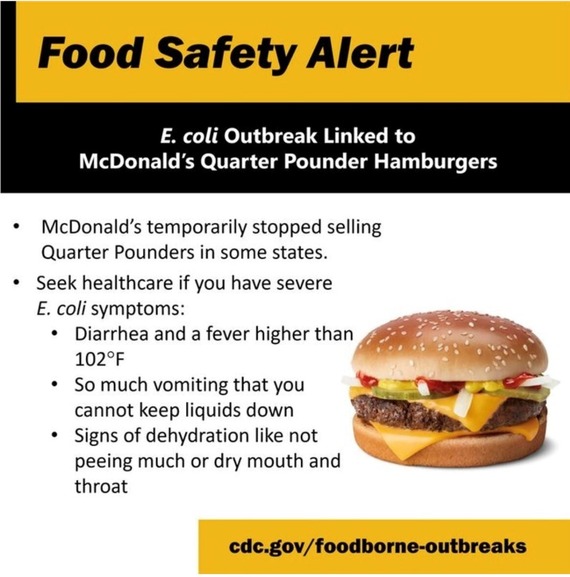 The CDC is currently examining 49 cases of illness across 10 states associated with McDonald's Quarter Pounder hamburgers. If you have consumed a Quarter Pounder from McDonald's and are experiencing severe E. coli symptoms, please reach out to your healthcare provider.
Please visit the CDC website for a list of states that have reported cases so far.
Dispose of unneeded medications
at a collection site on National Take Back Day
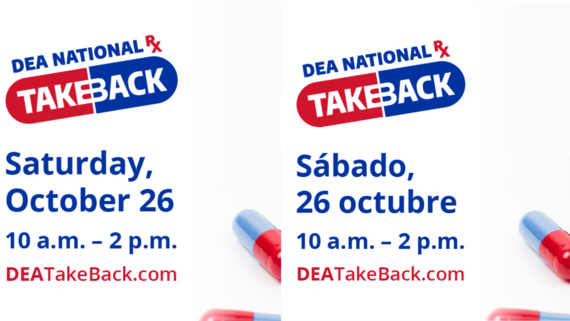 The National Prescription Drug Take Back Day is dedicated to offering a safe, convenient, and responsible way to dispose of unused prescription medications. This initiative also strives to raise awareness among the public about the risks of medication abuse.
Frequently, leftover prescription drugs can end up in inappropriate hands, leading to dangerous and often tragic outcomes.
You can drop off any unwanted medications from 10 a.m. to 2 p.m. on Saturday, Oct. 26. To locate a collection site near you, please visit the National Take Back Initiative Collection Site Search.
|