 Friday, October 4, 2024
Two more bats test positive for rabies in Louisville
 Two more bats have tested positive for rabies in Louisville this year. One bat was discovered at a home in the St. Matthews area, while the other was found at a house in Beuchel.
The Louisville Metro Department of Public Health and Wellness (LMPHW) is reminding the public to avoid touching a bat if they come across one. The Centers for Disease Control and Prevention (CDC) states that encounters with rabid bats is the leading cause of rabies in humans across the United States.
Data from the Public Health and Wellness Lab shows that since 2019, at least 19 bats have tested positive for rabies in Jefferson County.
- 2019 – 4 bats
- 2020 – 2 (1 bat, 1 dog)
- 2021 – 7 bats
- 2022 – 3 bats
- 2023 – 2 bats
- 2024 – 3 bats
The rabies virus attacks the central nervous system, and without proper medical intervention, it can lead to brain disease and ultimately result in death. Preventative measures following potential rabies exposure involve administering a dose of human rabies immune globulin along with a series of rabies vaccinations. Treatment is advised for both bite and non-bite incidents. Once symptoms of rabies appear, there is no effective treatment, and the disease is fatal.
Rabies can be transmitted to humans and animals through bites or scratches from infected animals. In the U.S., rabies is primarily present in wildlife such as bats, skunks, raccoons and foxes. In Kentucky, bats and skunks are the most common carriers of the virus.
Preventing rabies includes vaccinating pets, steering clear of wildlife, and seeking immediate medical attention in the event of potential exposure.
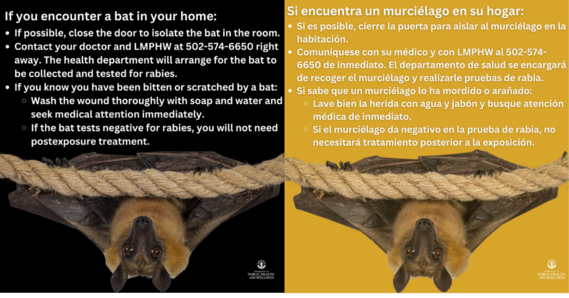
If you encounter a bat in your home:
- If possible, close the door to isolate the bat in the room.
- Contact your doctor and LMPHW at 502-574-6650 right away. The health department will arrange for the bat to be collected and tested for rabies.
- If you know you have been bitten or scratched by a bat:
- Wash the wound thoroughly with soap and water and seek medical attention immediately.
- If the bat tests negative for rabies, you will not need postexposure treatment.
- If you do not know how the bat got into your home, you will also need to contact a bat remediation specialist to determine if bats are living in your home.
If your pet encounters a bat:
- Contact LMPHW at 502-574-6650 or email publicfacilities@louisvilleky.gov. Your pet may need to be quarantined to ensure rabies is not transmitted. Please advise the health department if you choose to have your pet quarantined at another location besides your home.
- If your pet bites or scratches someone during a rabies exposure quarantine, you must report the incident to us at 502-574-6650.
If you have general questions regarding bats or rabies, contact the LMPHW Rabies Prevention Program at 502-574-6650.
For more information about rabies and prevention tips, visit our rabies control page.
Learn more about who we are and what we do
Mental Illness Awareness Week: It's OK to not be OK
Each year, millions of Americans face the reality of living with a mental health condition — but mental illness affects everyone directly or indirectly through family, friends or coworkers. That is why each year, during the first week of October, health professionals and advocates across the country raise awareness, fight discrimination and provide support.
What is a mental illness?
A mental illness is a condition that affects a person's thinking, feeling, behavior or mood. These conditions deeply impact day-to-day living and may also affect the ability to relate to others. If you have — or think you might have — a mental illness, the first thing you must know is that you are not alone. Mental health conditions are far more common than you think, mainly because people don’t like to, or are scared to, talk about them. However:
-
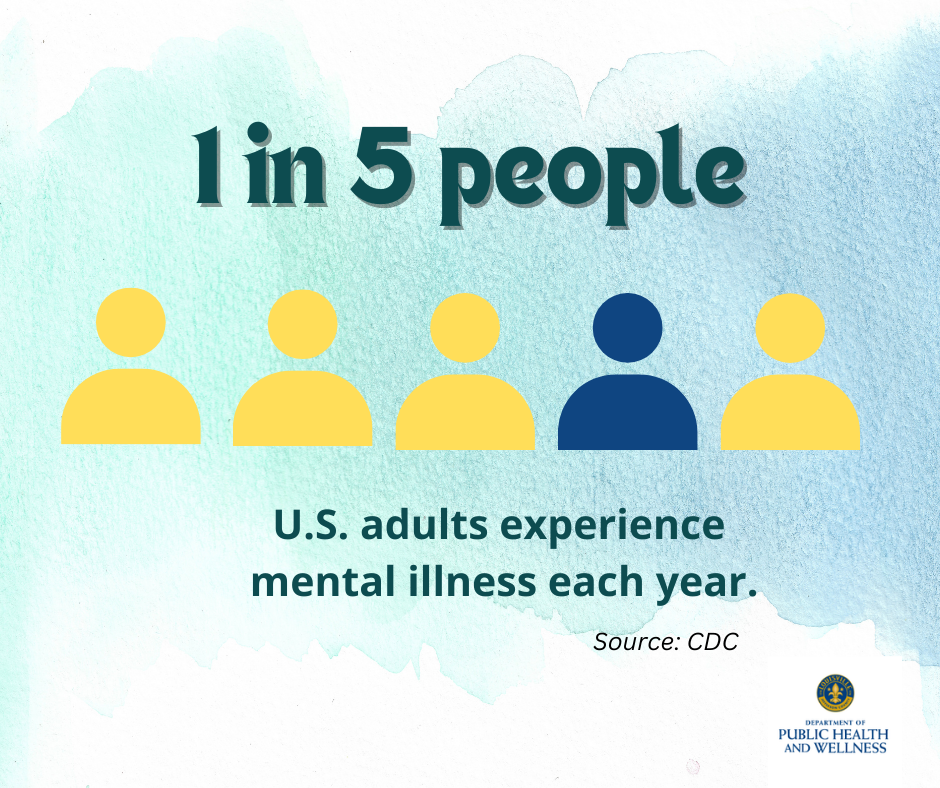
1 in 5 U.S. adults experience mental illness each year.
-
About 1 in 25 U.S. adults lives with a serious mental illness, such as schizophrenia, bipolar disorder, or major depression.
-
1 in 6 U.S. youth aged 6-17 experience a mental health disorder each year
-
Over 1 in 5 youth (ages 13-18) either currently or at some point during their life, have had a seriously debilitating mental illness.
-
50% of all lifetime mental illness begins by age 14, and 75% by age 24.
A mental health condition isn’t the result of one event. Research suggests multiple, linking causes. Genetics, environment and lifestyle influence whether someone develops a mental health condition. A stressful job or home life makes some people more susceptible, as do traumatic life events. Biochemical processes and circuits and basic brain structure may play a role, too.
None of this means that you’re broken or that you, or your family, did something “wrong.” Mental illness is no one’s fault. And for many people, recovery — including meaningful roles in social life, school and work — is possible, especially when you start treatment early and play a strong role in your own recovery process.
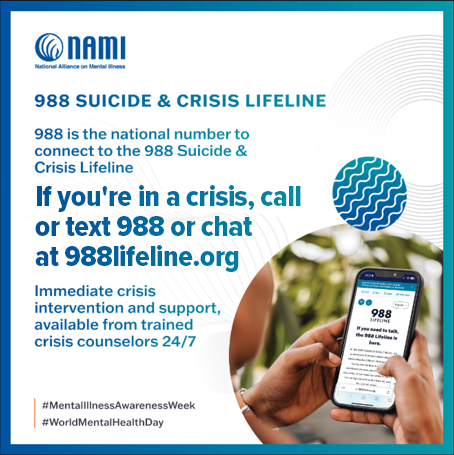
If you or someone you know is struggling or in crisis, help is available. Call or text 988 or chat 988lifeline.org to reach the 988 Suicide & Crisis Lifeline. You can also visit our Community Mental Health Services webpage for a listing of mental health resources.
Are you looking for a wellness provider? Visit Mental Health Lou for a listing of local professionals.
|
Express maternal and child health concerns
through this survey
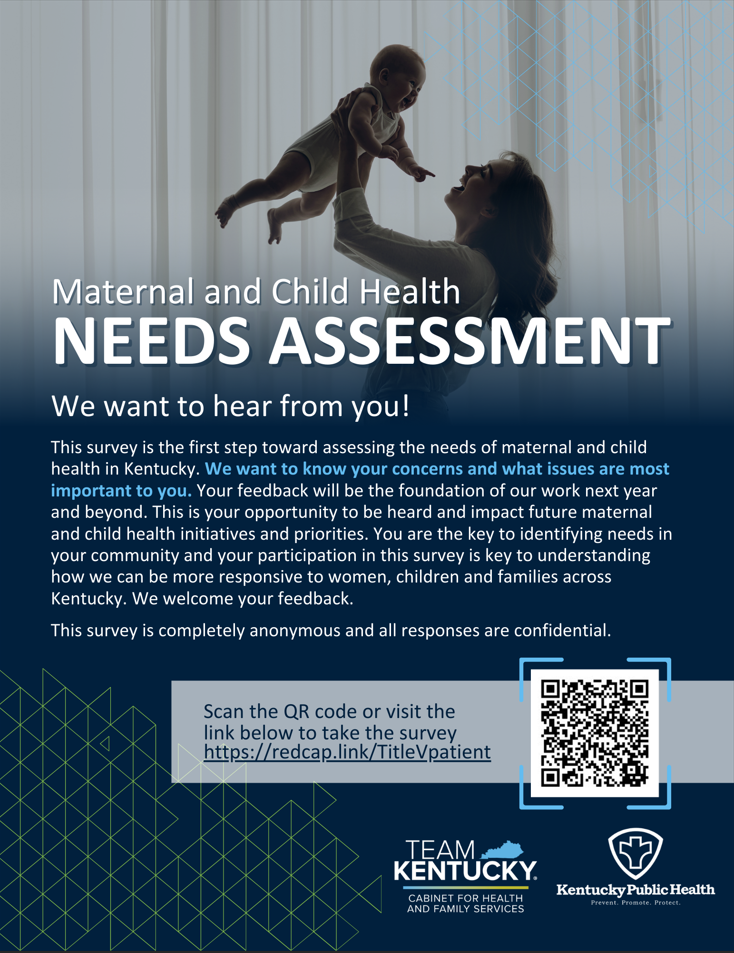
The Kentucky Department for Public Health—through the Division of Maternal and Child Health (MCH), the Office for Children with Special Health Care Needs (OCSHCN), and the Louisville Metro Department of Public Health and Wellness —want to hear from you!
Our work addresses health issues for mothers, infants, children, adolescents, and their families. We want to know your thoughts on the top health issues in Kentucky and what can be done to improve them. You can be involved by completing the following survey and letting us know what you think.
Why are we doing this survey?
This survey is the first step toward assessing the needs of Kentuckians’ maternal and child health, but we are doing it for other, more important reasons. We want to know the concerns and issues of those most likely impacted by them. Your feedback will be the foundation of our work in the coming years. The survey will take about 7-10 minutes to complete, with most questions being a 1-7 ranking or multiple choice with one tap for easy completion.
Will anyone else see your survey answers?
No, the survey is anonymous and confidential. The data and the public report will be completely anonymous. No individual answers will be revealed.
Kentucky’s comprehensive MCH needs assessment is completed every five years through this survey. The needs assessment will help us identify gaps in coverage in five key population domains: Women's and Maternal Health, Perinatal and Infant Health, Child Health, Adolescent Health, and Children and Youth with Special Health Care Needs. The results help determine statewide priorities for maternal and child health programs.
We sincerely ask you to complete this survey to help us better serve you! Again, the following survey is anonymous and will only take about 7-10 minutes to complete. It is your chance to let us know what issues are important to you!
The survey is open through Oct. 26. Please do not delay; complete today.
Explore a career in public health
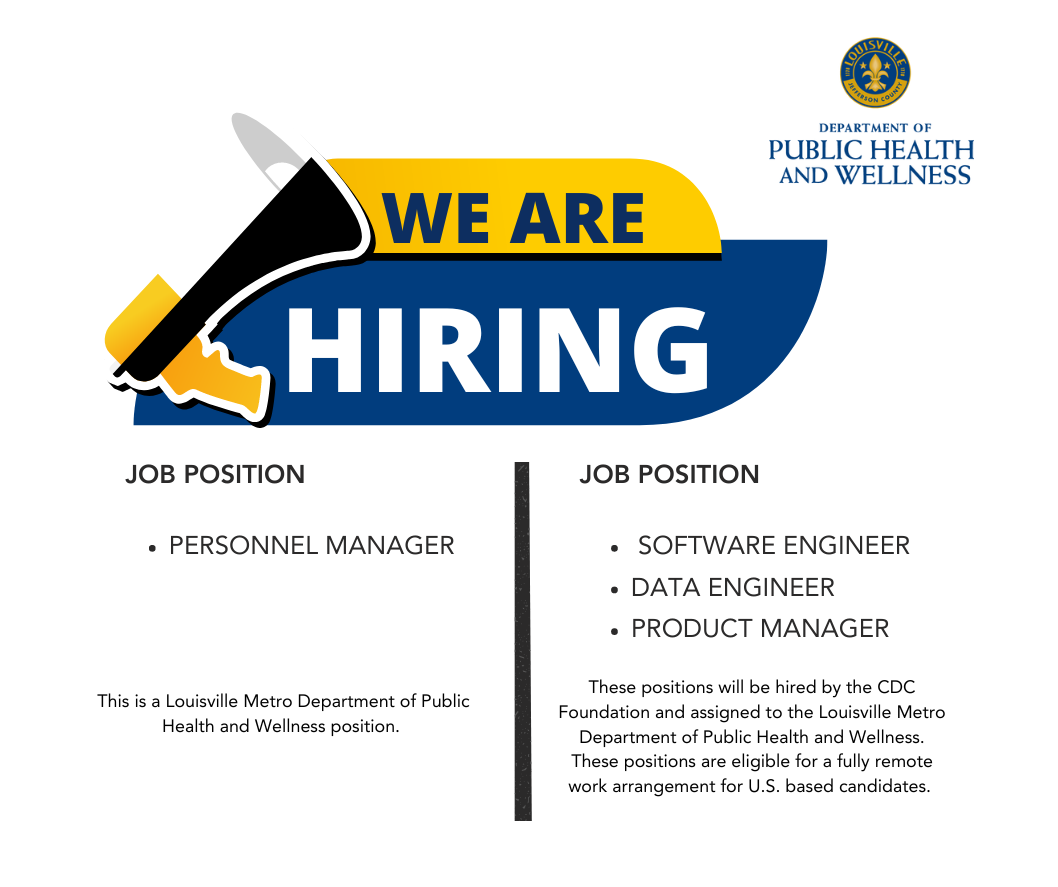 Would you like to make a difference in public health?
The Louisville Metro Department of Public Health and Wellness (LMPHW) is seeking a personnel manager to join our team of dedicated public health professionals. The CDC Foundation has exciting roles including data engineer, product manager, and software engineer which will be assigned to LMPHW. These positions are available for remote work for candidates located in the U.S.
|