 Friday, August 30, 2024

First case of travel-related Oropouche virus
reported in Jefferson County

The Louisville Metro Department of Public Health and Wellness (LMPHW) in partnership with the Kentucky Department for Public Health (KDPH) and Centers for Disease Control (CDC) has confirmed a Jefferson County resident who recently traveled from Cuba was diagnosed with the Oropouche virus infection. The infected person had mild symptoms and is recovering. Oropouche virus is spread to people through the bite of infected biting midges (also known as "no-see-ums") and some mosquitoes.
According to the Centers for Disease Control and Prevention (CDC), at this time, there is no evidence that Oropouche virus has been spread in the United States. The virus has been reported in parts of South America, Central America, and the Caribbean.
Symptoms of Oropouche virus infection
Symptoms of Oropouche virus infection may be like those of dengue, Zika, malaria or chikungunya and can include:
- Fever
- Headache
- Chills
- Body aches
- Joint paint
Oropouche virus infections are usually mild, occurring 3-10 days after a bite from an infected insect. However, some people may develop more serious disease, including meningitis (inflammation of the membranes that surround the brain and spinal cord), encephalitis (inflammation of the brain), or bleeding complications. Death from Oropouche virus infection is rare.
At least 21 Oropouche cases have been reported in the United States in travelers who have returned from Cuba. This year, more than 8,000 cases of Oropouche virus infection have been reported worldwide, including two deaths. Five cases of transmission during pregnancy have been associated with fetal death or birth defects. Brazil, Bolivia, Peru, Colombia and Cuba have reported locally acquired cases. In the United States and Europe in 2024, travel-associated cases have been identified in people returning from Cuba and Brazil.
There are no vaccines to prevent Oropouche virus infection or medicines to treat the illness. The best way to prevent the virus is to protect yourself from bug bites.
People who have recently traveled to an area where Oropouche virus transmission is occurring are also encouraged to use insect repellant for three weeks after returning home to prevent spread of the virus to other people via midges or mosquitoes.
Testing and diagnosis
If you are experiencing the above symptoms and recently traveled to an area where there is Oropouche virus transmission, call your healthcare provider and inform them of your travel history. Your healthcare provider can review CDC recommendations and determine if you need testing for Oropouche virus infection or other infections.
More information
Watch a video of local doctors talking about Oropouche.
For more information about Oropouche virus and bug bite prevention visit the CDC’s website. You can also learn more about mosquito control and prevention at louisvilleky.gov.
|
August 31st marks National Overdose Awareness Day
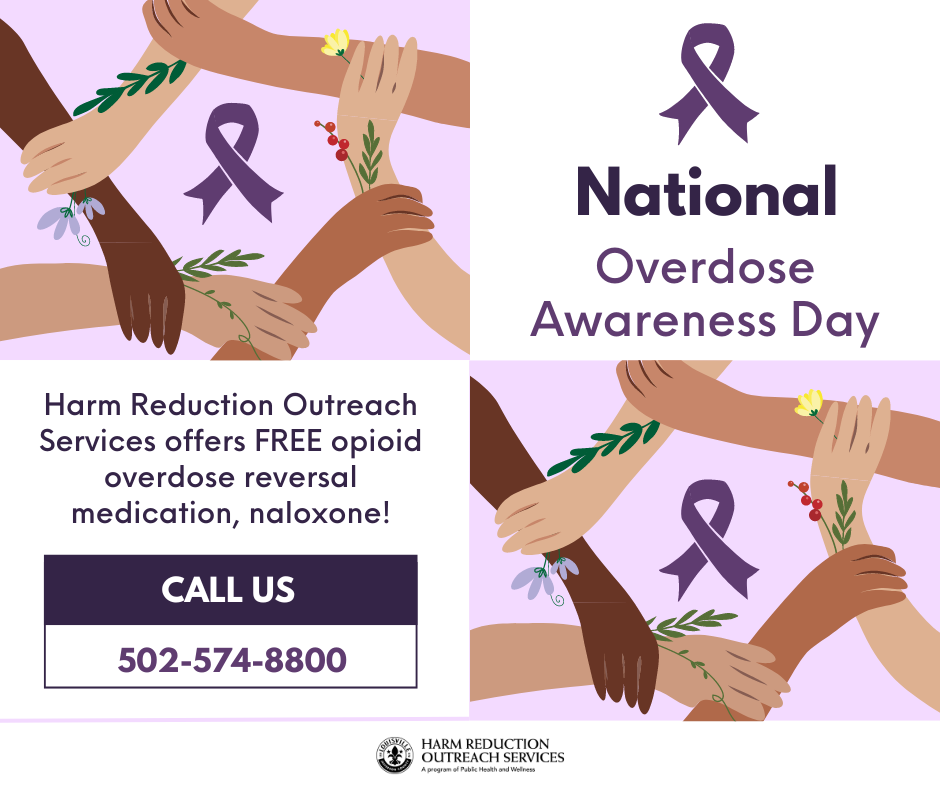 This day is dedicated to honoring those who have died from an overdose as well as acknowledging the grief of those who have lost someone to an overdose.
Our Harm Reduction Outreach Services (HROS) team works to reduce the risk of overdose related deaths by providing naloxone, fentanyl test strips, safer use supplies, a safe space for individuals to express health needs, and education on how to stop the spread of bloodborne diseases including hepatitis C and HIV.
We also connect people to treatment when they are ready. You can learn more about overdose prevention in this Overdose Prevention and Response Toolkit created by the U.S. Substance Abuse and Mental Health Services Administration (SAMSHA).
Here’s more information on how to get involved with National Overdose Awareness Day.
To request free Narcan and overdose prevention training or to learn more about harm reduction, connect with HROS at 400 E. Gray St. or by calling 502-574-8800!
Learn more about who we are and what we do
Walmart recalls apple juice due
to elevated arsenic levels
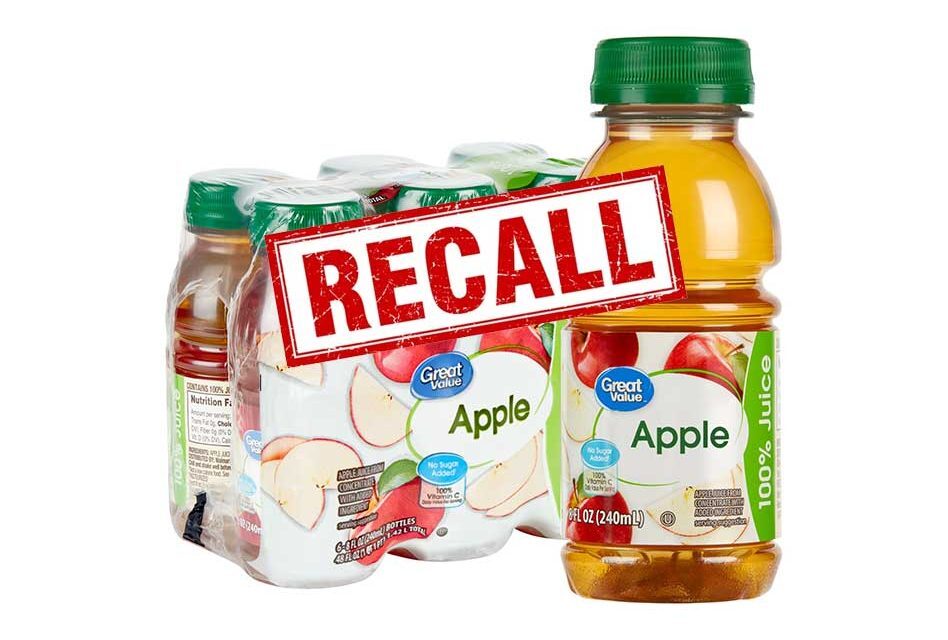 Kentucky is one of 25 states affected by Walmart's recall of nearly 10,000 cases of apple juice sold nationwide, which were found to contain potentially harmful levels of inorganic arsenic.
The U.S. Food and Drug Administration recently escalated the recall's urgency, following its initial announcement on Aug.15. The updated classification indicates that while the contaminated product may lead to temporary adverse health effects, it is unlikely to result in serious or permanent medical problems. The recall affects 9,535 cases of Great Value brand apple juice distributed in 25 states, along with Puerto Rico and the District of Columbia.
The Florida-based company Refresco Beverages US Inc. voluntarily initiated the recall of the affected six-packs of 8-ounce juice bottles after identifying levels of the contaminant that exceeded industry safety standards. According to the National Institutes of Health, trace amounts of inorganic and organic arsenic can be found in many food items.
Regular testing is conducted, as slightly elevated levels of either type can lead to symptoms such as vomiting, abdominal pain, diarrhea, numbness, and muscle cramps.
Inorganic arsenic is more toxic to humans than the naturally occurring form of the mineral arsenic, and the health effects from exposure are more severe, according to the FDA. The Environmental Protection Agency has labeled inorganic arsenic a carcinogen, or a substance that causes cancer. Levels found in the recalled apple juice bottles are low enough that the FDA doesn't expect them to cause such severe health consequences.
The FDA hasn't shared reports of possible illnesses associated with the apple juice recall.
These states are affected, along with Washington, D.C. and Puerto Rico, the FDA says:
Alabama, Connecticut, Delaware, Florida, Georgia, Illinois, Indiana, Kentucky, Massachusetts, Maryland, Maine, Michigan, Mississippi, North Carolina, New Hampshire, New Jersey, New York, Ohio, Pennsylvania, Rhode Island South Carolina, Tennessee, Virginia, Vermont, West Virginia.
-- Source: The Associated Press
|