 Friday, August 2, 2024

 Earlier this year, the Louisville Metro Department of Public Health and Wellness launched a new Health Equity Data Dashboard. It provides a current data snapshot of the city's overall health. Initially, it included demographics, data, and root cause explanations for seven health outcomes: accidents and injury, Alzheimer’s disease, arthritis, birth outcomes, cancer, heart disease and homicide. Recently, lead exposure data was added.
Exposure to lead can harm the body in many ways. It can permanently disrupt a child’s cognitive ability, concentration, language skills and impulse control. It is also 100 percent preventable. In Louisville, there are inequities in those who are exposed to lead with children in the North and West market areas being nine times more likely than children from other neighborhoods to test positive for an elevated level of lead in their blood.
See the data, maps, and root causes here.
The Department of Public Health and Wellness has a Childhood Lead Poisoning Prevention Program with resources available to families. Additionally, to prevent lead exposure from happening, the city enacted a Lead Rental Registry Ordinance that will go into effect in 2025. Property owners can learn steps they can take now to prevent lead poisoning, as well as more information on registering their property here.
Learn more about who we are and what we do
Reduce your risk of the COVID-19 "Summer Surge"
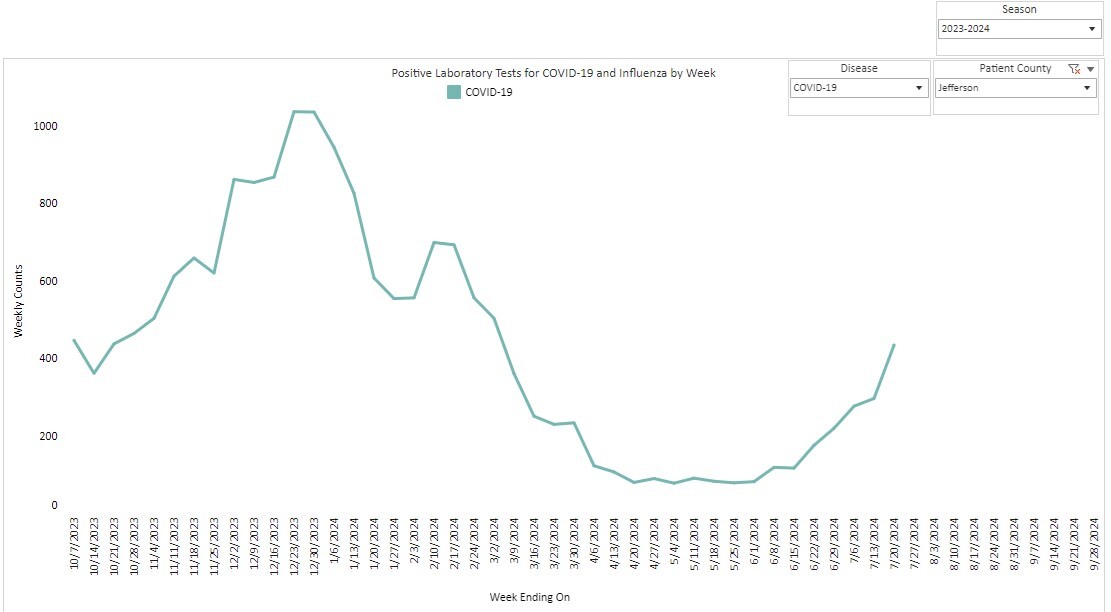 According to data from the Kentucky Department for Public Health, COVID-19 cases are increasing both in the state and locally in Louisville Metro. According to the CDC, infections are also growing in at least 38 states. Annually COVID1-9 cases have risen in the summer. This has become known as the “summer surge.”
“New variants tend to drive a surge in cases,” said Dr. Bryant, associate medical director at the Louisville Metro Department of Public Health and Wellness and pediatric infectious disease specialist with Norton Children’s. “Fortunately, however, hospitalizations and emergency department visits for COVID remain low.”
Here are steps you can take to reduce your risk of getting COVID19 this summer:
-
Stay up to date with COVID-19 vaccines
- Although people who are vaccinated can get the virus, staying up to date on vaccines significantly lowers the risk of becoming seriously ill.
- Updated 2024 – 2025 vaccines will be available this fall.
-
Practice good hygiene
- Cover your coughs and sneezes.
- Wash your hands well with soap and water.
- Use hand sanitizer with at least 60 percent alcohol if soap and water are not available.
- Use household cleaners that contain soap or detergent to remove germs and dirt on surfaces.
-
Take steps for cleaner air
- Increase airflow and bring as much fresh air into the home by opening doors and windows and/or using exhaust fans.
-
You can resume normal activities when, for at least 24 hours, both are true:
- You no longer feel ill and your symptoms are mild and infrequent, AND
- You have not had a fever (and are not using fever-reducing medication.
- When you go back to your normal activities, continue to take added precautions over the next 5 days such as continuing steps for cleaner air and practicing good hand hygiene. You can also
These actions are especially important to protect people with factors that increase their risk of severe illness from respiratory viruses.
For more information about COVID-19 and prevention tips visit the Centers for Disease Control and Prevention’s (CDC) webpage. To learn more about COVID testing and vaccination locations visit our website.
|