 Friday, March 8, 2024

CDC updates recommendations
for respiratory viruses
 People who test positive for COVID-19 no longer need to routinely stay away from others for at least five days, according to new guidelines from the CDC issued last week. The change ends a strategy from earlier in the pandemic that experts said had been important to controlling the spread of infection.
The agency says it’s updating its recommendations for COVID-19 to bring them in line with its advice for other kinds of respiratory infections, including influenza and RSV. CDC is making updates to the recommendations now because the U.S. is seeing far fewer hospitalizations and deaths associated with COVID-19 and because we have more tools than ever to combat flu, COVID, and RSV.
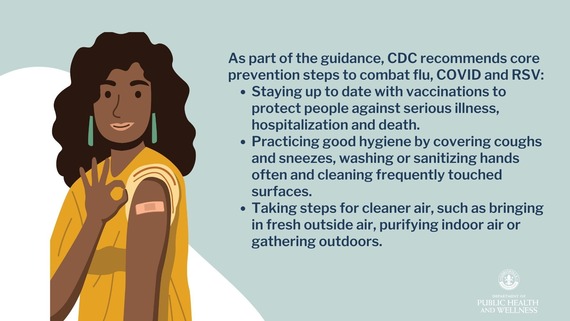
As part of the guidance, CDC provides active recommendations on core prevention steps and strategies:
-
Staying up to date with vaccinations to protect people against serious illness, hospitalization, and death. This includes flu, COVID-19, and RSV if eligible.
-
Practicing good hygiene by covering coughs and sneezes, washing or sanitizing hands often, and cleaning frequently touched surfaces.
-
Taking steps for cleaner air, such as bringing in fresh outside air, purifying indoor air, or gathering outdoors.
When people get sick with a respiratory virus, the updated guidance recommends that they stay home and away from others. For people with COVID-19 and influenza, treatment is available and can lessen symptoms and lower the risk of severe illness. The recommendations suggest returning to normal activities when, for at least 24 hours, symptoms are improving overall, and if a fever was present, it has been gone without use of a fever-reducing medication.
For a listing of vaccine providers, please visit our website or vaccines.gov. Vaccines are given by appointment at our Newburg and Dixie clinics. If you have questions or need assistance, call 502-574-5380. Language assistance is available.

If someone gets bit by an animal
in Jefferson County, what do they do?
|
If you are bit by an animal, please seek medical treatment right away. The wound should be examined for any treatment needed and the person screened for possible rabies exposure.
Are animal bites reported to the health department?
Healthcare providers as well as people who own animals and people who have been bitten by animals, report animal bites to us by calling 502-574-6640. It’s important the animal and the person who was bitten be screened for possible rabies.
What does the health department do when an animal bite is reported?
We will order the owner of the animal to quarantine it for 10 days, even if it has been vaccinated against rabies. Any animal that has bitten must be microchipped under Louisville Metro Ordinance 91.072.
What is an owner’s responsibility if their animal bites someone?
The owner is responsible for quarantining their animal for 10 days. That means the owner must securely confine the animal to their premises, away from people, either inside the home, in a totally enclosed pen inside a fenced yard, or at a veterinarian. Quarantining the animal allows it to be observed for the onset of possible rabies symptoms. Most importantly, it keeps the animal from exposing other animals or people to rabies.
Animal owners are also responsible for making sure their animal is licensed and vaccinated. In Jefferson County, all dogs, cats and ferrets are required by law to be licensed and vaccinated against rabies. For more information on local pet laws, licensing, fostering, and adoption visit https://louisvilleky.gov/government/animal-services.
If bite victims would like to file a formal complaint against the dog owner, please contact Louisville Metro Animal Services (LMAS) or call (502) 473-7387 to leave a message.
Can the health department order an animal be euthanized?
The health department doesn’t confiscate animals or have them put down. Our main responsibility is to ensure that people are protected from rabies. If an animal owner refuses to cooperate with the request to quarantine the animal, we will refer them to LMAS for follow up and enforcement actions.
Do we automatically recommend someone get the rabies vaccine series if they have been bitten by an animal?
No. We only recommend that someone receive rabies post-exposure treatment if the animal cannot be observed for the 10-day quarantine or tested for rabies.
How many animal bites are reported to the health department each year?
- 2019: 1168
- 2020: 998
- 2021: 1015
- 2022: 1131
- 2023: 1006
On average, how many animals test positive for rabies?
Bats are the most common animal that test positive for rabies in Jefferson County. No dogs or cats have tested positive for rabies.
- 2019: 4 bats
- 2020: 2 bats
- 2021: 5 bats
- 2022: 3 bats
- 2023: 2 bats
What is rabies?
Rabies is a fatal but preventable virus that can spread to people and animals if they are bitten or scratched by a rabid animal. The rabies virus infects the central nervous system causing disease in the brain which results in death, if not treated. Rabies can be prevented by vaccinating pets, avoiding wildlife, and seeking medical care after a potential exposure.
Learn more about who we are and what we do
Free COVID-19 testing is available
at two pop-up locations
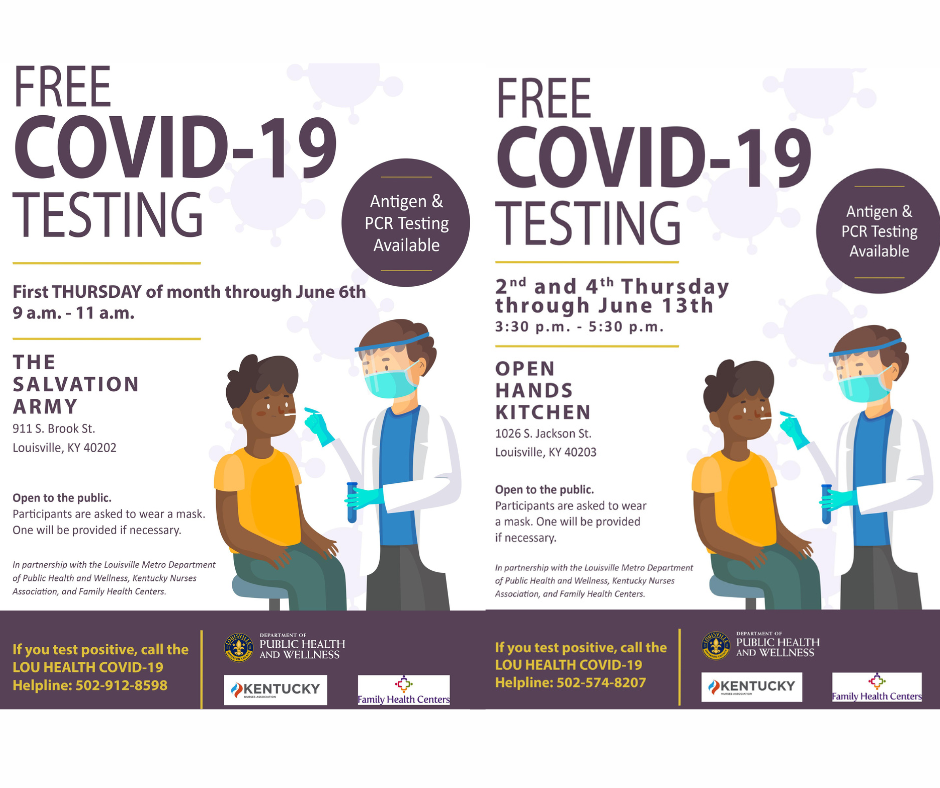 Free COVID-19 testing is being offered through partnerships with the Louisville Department of Public Health and Wellness, the Kentucky Nurses Association and Family Health Centers:
-
The Salvation Army, 911 Brook Street: 9 a.m. to 11 a.m., first Thursday of each month through June 6. See our flyer for details.
-
Open Hands Kitchen, 1026 S. Jackson Street, 3:30 p.m. to 5:30 p.m., second and fourth Thursday of each month through June 13. See our flyer for details.
For additional testing locations, please visit our website. If you have additional questions, please feel free to call the LOU Health COVID-19 Helpline from 8 a.m. to 5 p.m. Monday through Friday at 502-574-8207
|