February 28, 1909 marked the first Women's History Day in New York City. It commemorated the one-year anniversary of the garment workers' strikes when 15,000 women marched through lower Manhattan protesting the working conditions of the factories where they worked. The strike along with a 1911 factory fire that killed 145 workers helped push lawmakers to pass legislation to protect factory workers.
An education task force in Sonoma County, California kicked off Women's History Week in 1978 on March 8, International Women's Day, according to the National Women's History Alliance. They wanted to draw attention to the fact that women's history wasn't really included in K-12 school curriculums at the time.
In 1987, it became Women's History Month. Women's organizations, including the National Women's History Alliance, campaigned yearly to recognize Women's History Week. In 1980, President Jimmy Carter declared the week of March 8 Women's History Week across the country. By 1986, 14 states had declared the entire month of March Women's History Month, according to the Alliance. The following year, in March of 1987, activists were successful. They lobbied Congress to declare March Women's History Month.
The president declares every March Women's History Month. Since 1995, every president has issued a proclamation declaring March Women's History Month, usually with a statement about its importance. Every Women's History Month has a theme.
The 2020 theme was "Valiant Women of the Vote" and honored women from the original suffrage movement, as well as women who continued the struggle in the 20th and 21st century, in recognition of the centennial of the 19th Amendment. Due to the pandemic, this theme was extended into 2021 and renamed as "Valiant Women of the Vote: Refusing to be Silenced."
This year's theme is "Women Providing Healing, Promoting Hope," according to the National Women's History Alliance. This theme not only honors the tireless work of caregivers and frontline workers during the Covid-19 pandemic, but also women of all backgrounds who have provided compassionate healing and hope for the betterment of patients, friends, and family.
HAPPY WOMEN'S HISTORY MONTH!
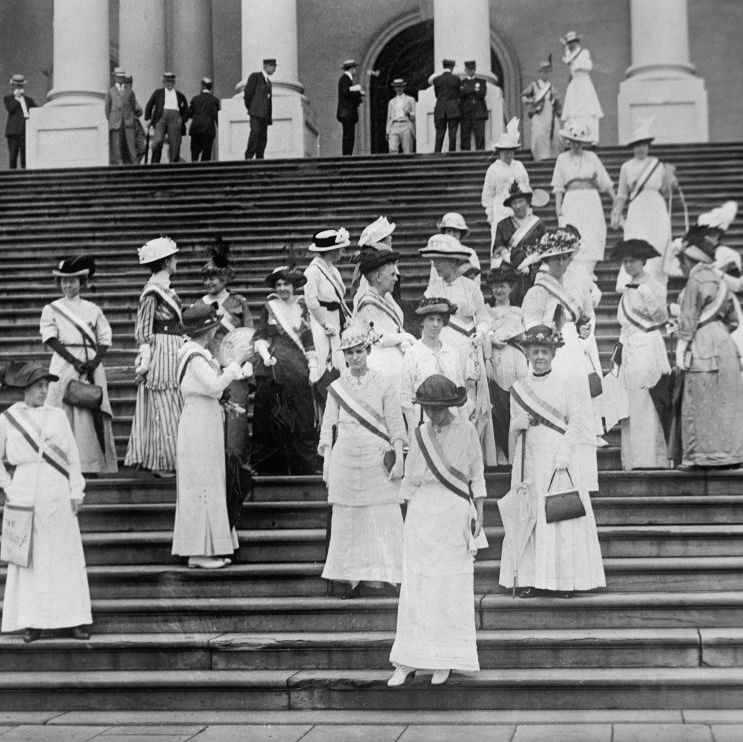
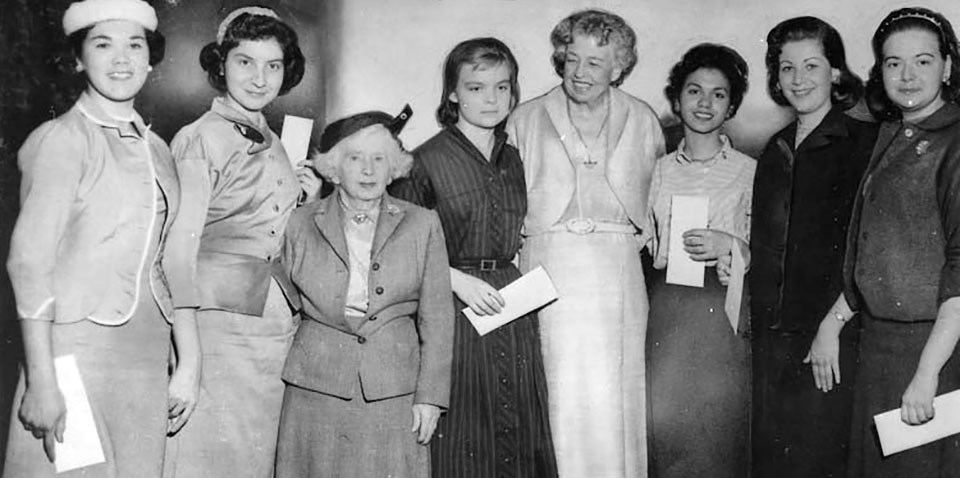
Women’s Suffrage Group in 1919, U.S. Capitol Building, Washington DC, USA
As we've seen in recent years, inequality and sexism still persists in the United States, as well as the rest of the world. In a recent survey, 42% of women said they had experienced gender discrimination at work. They also face the "motherhood penalty," in which women earn less money after they become mothers while men who become fathers earn more. These inequities are precisely why Women's History Month matters so much. Sharing Women's History Month facts and the stories of historic women is important because it helps celebrate those women who paved the way, and those who are still fighting for and representing women.
1. Wyoming Territory was the first place to grant women the right to vote.
The Wyoming Territory legislature gave every woman the right to vote in 1869, according to History.com. They elected the country's first female governor, Nellie Tayloe Ross, in 1924.
2. The 19th amendment didn't give all women the right to vote.
The 19th amendment, which granted women the right to vote, was signed into law on August 26, 1920. But at the time, a number of other laws prohibited Native American women, Black women, Asian American women, and Latin women from voting, among others. It wasn't until 1924 that Native women born in the United States were granted citizenship, allowing them to vote, according to PBS. But even after that, Native women and other women of color were prevented from voting by state laws such as poll taxes and literacy tests. It wasn't until 1965, when President Lyndon B. Johnson signed the Voting Rights Act into law, that discriminatory tactics such as literacy tests were outlawed, and all women could vote.
Claudette Colvin, Civil Rights Activist
|
|
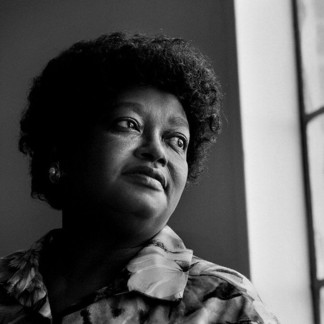 |
3. Claudette Colvin refused to give up her bus seat 9 months before Rosa Parks did.
Rosa Parks' contributions to the Civil Rights Movement are undeniable. But nine months before she refused to give up her seat on a bus for a white person in Montgomery, Alabama, 15-year-old Claudette Colvin did the same thing on the same bus system. But Colvin isn't widely recognized for her act. On March 2, 1955, the day she was arrested, she had been learning about Black history at her school. "My head was just too full of black history, you know, the oppression that we went through," she told NPR in 2009. "It felt like Sojourner Truth was on one side pushing me down, and Harriet Tubman was on the other side of me pushing me down. I couldn't get up."
She was one of the plaintiffs in Browder v. Gayle, the case that ended up overturning bus segregation laws in Montgomery.
4. Geraldyn "Jerrie" Cobb was the first woman to pass astronaut testing in 1961.
But she wasn't allowed to travel to space because of her gender. She testified on Capitol Hill in 1962, saying, “We women pilots who want to be part of the research and participation in space exploration are not trying to join a battle of the sexes,” according to the New York Times. “We see, only, a place in our nation’s space future without discrimination.”
However, John Glenn, the first American to orbit Earth, opposed her. He said "it is just a fact" that women don't do certain things that men do, such as go to war and fly airplanes. “The fact that women are not in this field is a fact of our social order,” he said.
5. About 20 years later, Sally Ride was the first woman in space — and the first gay astronaut.
Sally Ride became the first woman in space on June 18, 1983, when she flew on the space shuttle Challenger. It wasn't until her death that her obituary revealed she was gay; it referred to Tam O'Shaughnessy as her "partner of 27 years."
6. Women couldn't get credit cards on their own until 1974.
Until Congress passed the Equal Credit Opportunity Act of 1974, women couldn't get credit cards in their own name. Often, they had to bring a man along to cosign for them, according to Smithsonian Magazine. Legal work done by late Supreme Court Justice Ruth Bader Ginsburg laid the foundation for the Equal Credit Opportunity Act, as well as many other basic rights women have today, including the ability to attend state-funded schools, protection from pregnancy discrimination at work, and the ability to serve on juries, according to USA Today.
7. Women make up 27 percent of Congress.
One-hundred and forty-five women serve in the United States Congress out of 535 total members. Though the number of women representatives continues to rise, it's important to point out that the United States population is 50.8 percent female, according to Census data.
8. Women outnumber men as they get older.
Women age 85 and older outnumber men by about 2 to 1, according to Census data from 2019. That's about 4.2 million women to 2.4 million men in the United States.
9. More women are earning college degrees than men.
Women are outnumbering men in earning postsecondary degrees. According to 2021 data from the Education Data Initiative, 59% of women continued their education after high school, compared to 50% of men.
10. The gender pay gap persists.
Despite the ever-growing number of women getting degrees, the gender pay gap has narrowed by less than half a cent per year since the Equal Pay Act was signed in 1963, according to Forbes.com. Women are paid 82 cents for every dollar that a man makes, with that gap widening even more for women of color, according to 2020 data by the National Women's Law Center.
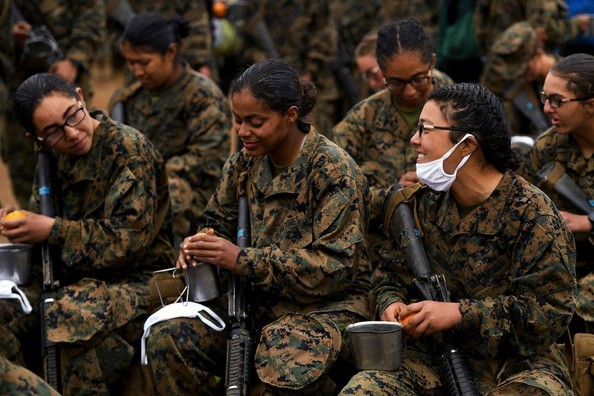
11. Women make up 14 percent of active duty military members.
Women also make up 23% of officers in the Coast Guard. In January 2013, the U.S. government lifted its ban on women serving in combat positions.
Marie Sklodowska Curie
(1867 - 1934) in her
laboratory.
|
|
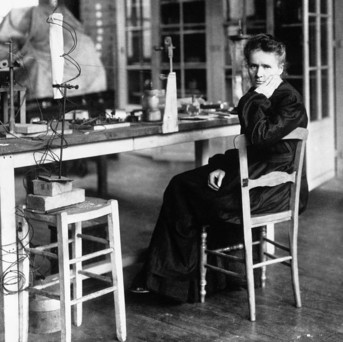 |
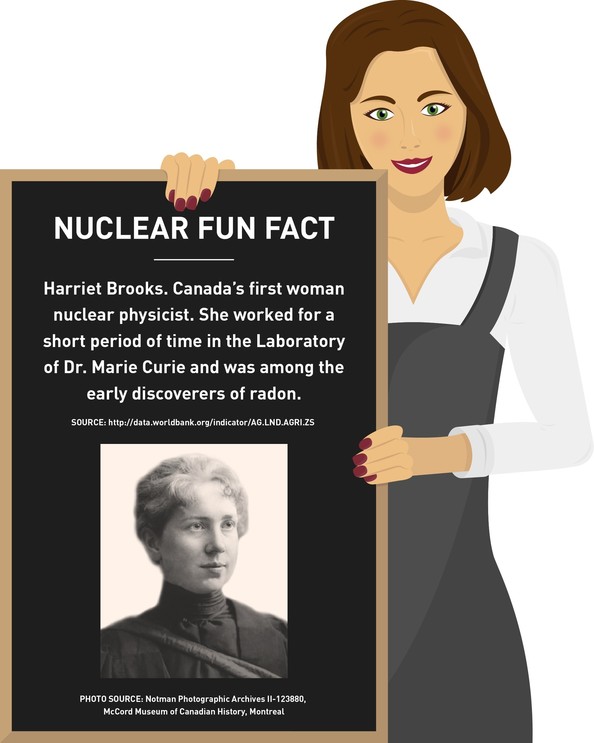
12. Marie Curie was the first woman to receive two Nobel prizes.
Curie was a scientist whose research on radioactivity led her to discover two new elements. She also researched the atom, and her findings have been integral in scientific advancements related to atomic bombs and medicine, according to Scientific American. She was the first woman to win a Nobel Prize, as well as the first person and only woman to win two Nobel Prizes. She won the Nobel Prize in physics in 1903 and the Nobel Prize in chemistry in 1911.
13. Women make up 57.8 percent of the labor force.
And nearly a million women returned to the workforce in 2021, almost double that of men. Studies show that 3.3 million of all the jobs added to the economy went to women, while 3.1 million went to men. This, however, should not overlook the jobs women, women of color, lost during the pandemic when responsibilities such as childcare often fell on their shoulders.
14. Aretha Franklin was the first woman inducted into the Rock & Roll Hall of Fame.
Known as the "Queen of Soul," Aretha Franklin was inducted into the Rock & Roll Hall of Fame in 1987. She's known for her rendition of Otis Redding's "RESPECT," and songs of her own like “(You Make Me Feel Like) A Natural Woman." She was also involved in civil rights activism, and performed at President Barack Obama's inauguration in 2009.
15. Eleanor Roosevelt held all-woman press conferences.
The First Lady held the first press conference for women reporters on March 6, 1933. She would cover issues “of special interest and value to the women of the country,” according to the National Women's History Museum. Over the next 12 years she held 348 press conferences for women reporters.
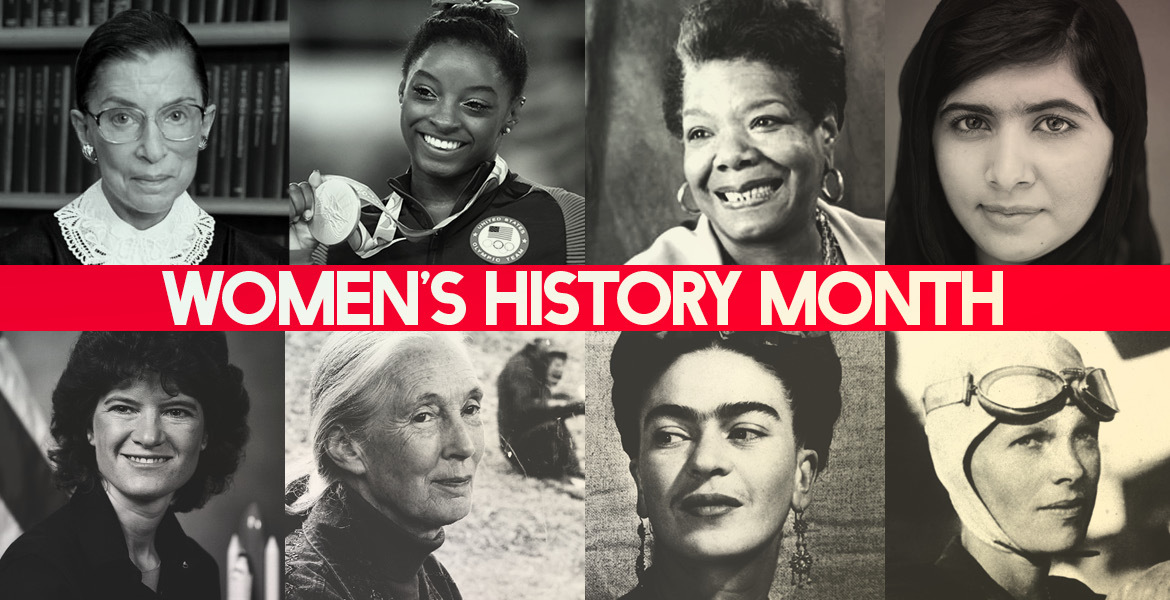
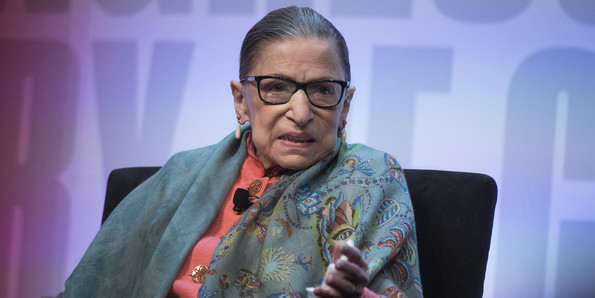
In 2020, women lost a champion, Supreme Court Justice Ruth Bader Ginsburg. In her time as an attorney, she argued cases that continue to protect women from discrimination today. She also helped in the fight for equal pay and voted in favor of marriage equality.
Here's a partial list of some of Ginsburg's amazing achievements. She graduated first in her class from Columbia Law School, battled, and overcame, sexism personally in the workplace. Also, she was the first person on both the Harvard and Columbia law reviews, she became the second female law professor at Rutgers, and fought for equal pay.
Ginsburg authored some 200 opinions, and broke new ground for gender equality in the United States. Her six landmark cases were Duren v. Missouri (1978), Califano v. Goldfarb (1976), Edwards v. Healy (1974), Weinberger v. Wiesenfeld (1974), Kahn v. Shevin (1973), Frontiero v. Richardson (1972). Some of her biggest cases included women at the Virginia Military Institute, equal pay for women and men, and Bush v Gore.
She was a diminutive woman who was well-known for her fiery spirit. In a 2015 interview with PBS, she said, "When I'm sometimes asked, 'When will there be enough (women on the Supreme Court)?' and my answer is: 'When there are nine.' People are shocked. But there'd been nine men, and nobody's ever raised a question about that."
Ruth Bader Ginsburg was fondly referred to as RBG in popular culture. Her dedication to the law was perhaps best illustrated by the fact that she always kept a “pocket Constitution” in her handbag.
Thank you for being a warrior for women's rights, Justice Bader Ginsburg. Your work benefitted all women in this country. You were an inspiration to legions of women everywhere.
Ruth Bader Ginsburg (1933-2020)
 |
|
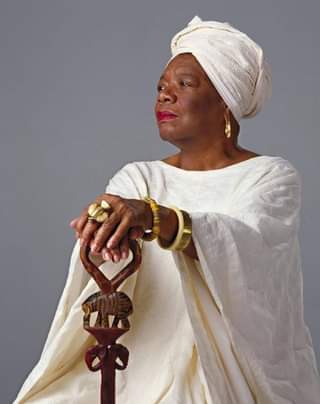
Dr. Maya Angelou (1928-2014)
Maya Angelou was a poet, dancer, civil rights activist, scholar and a world-famous author. She published seven autobiographies, three books of essays, several books of poetry, and is credited with a list of movies, plays, and television shows spanning over 50 years. Angelou received dozens of awards including a Grammy Award for Best Spoken Word Album, Presidential Medal of Freedom, three NAACP Image Awards for Outstanding Literary Work, Marian Anderson Award, Langston Hughes Medal and many others.
She served on two presidential committees, was the first female inaugural poet in U.S. presidential history and was the first black woman to write a screenplay for a major film release. Angelou is widely considered one of the 10 Best-Selling Black Authors of all time.
|
Her book titles include but are not limited to these works.
I Know Why the Caged Bird Sings, The Heart of a Woman, Letter to My Daughter
Gather Together in My Name, Maya Angelou: Poems, The Complete Collected Poems of Maya Angelou, Wouldn't Take Nothing for My Journey Now, Life Doesn't Frighten Me, Phenomenal Woman: Four Poems Celebrating Women, A Song Flung Up to Heaven.
Upon her death, President Barack Obama has led the tributes to Maya Angelou, describing the poet, author and activist as "one of the brightest lights of our time". He referred to Angelou as "a brilliant writer, a fierce friend and a truly phenomenal woman".
Former President Bill Clinton said, “With Maya Angelou’s passing, America has lost a national treasure. The poems and stories she wrote and read to us in her commanding voice were gifts of wisdom and wit, courage and grace."
Angelou's family and friends described her as "a warrior for equality, tolerance and peace".
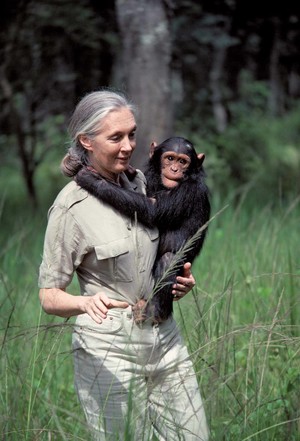
Jane Morris Goodall (b. 1934)
Equipped with little more than a notebook, binoculars, and her fascination with wildlife, Jane Goodall braved a realm of unknowns to give the world a remarkable window into humankind’s closest living relatives. Through nearly 60 years of groundbreaking work, Dr. Jane Goodall has not only shown us the urgent need to protect chimpanzees from extinction; she has also redefined species conservation to include the needs of local people and the environment. Today she travels the world, speaking about the threats facing chimpanzees and environmental crises, urging each of us to take action on behalf of all living things and planet we share.
Dr. Jane Goodall’s discovery in 1960 that chimpanzees make and use tools is considered one of the greatest achievements of twentieth-century scholarship. Her field research at Gombe transformed our understanding of chimpanzees and redefined the relationship between humans and animals in ways that continue to emanate around the world.
“A sense of calm came over me. More and more often I found myself thinking, this is where I belong, this is what I came into this world to do," Goodall once said.
|
|
 |
 |
|
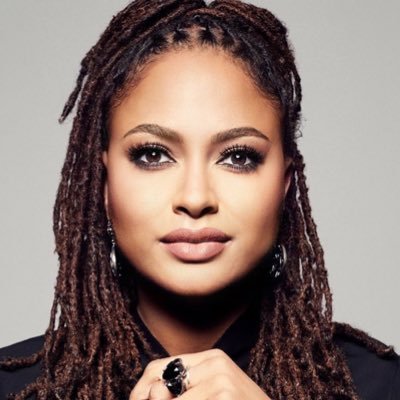
Ava Marie DuVernay (b. 1972)
Director Ava DuVernay creates inspiring and impressive work in film. DuVernay won the directing award in the U.S. dramatic competition at the 2012 Sundance Film Festival for her second feature film Middle of Nowhere, becoming the first Black woman to win the award. Other awards she's received are the Independent Spirit John Cassavetes Award, BAFTA, NAACP Image Award for Entertainer of the year & Outstanding Writing in a Dramatic Series, PGA Visionary Vanguard Award, Glamour Awards for Film Maker & The Trailblazer Award, BET Award Video Director of the Year along with other well-deserved accolades.
Her film credits include: Selma, Girl's Trip, When They See Us, A Wrinkle in Time, 13th, Queen Sugar, Colin in Black & White, Middle of Nowhere, Naomi and many more movies, TV shows, documentaries, and award shows.
Ava DuVernay said, "I'm not going to continue knocking on that old door that doesn't open for me. I'm going to create my own door and walk through that."
|
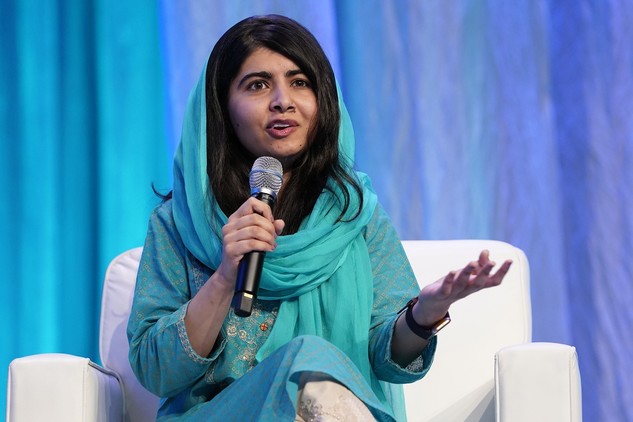 |
Malala Yousafzai (b. 1997)
Malala Yousafzai, often referred to as just Malala, and is a Pakistani activist for female education. Malala loved school as a child but everything changed when the Taliban took control of her town in Swat Valley in Pakistan. The extremists banned many things, like owning a television and playing music and enforced harsh punishments for those who defied their orders. They said girls could no longer go to school. Malala spoke out publicly on behalf of girls and their right to learn and she was targeted. One day in October 2012, she was on the school bus on her way home when a masked gunman boarded and asked, “Who is Malala?” He then shot her in her head. She woke up 10 days later in a hospital in England. The doctors and nurses told her about the attack, and that people around the world were praying for her recovery.
After months of surgeries and rehabilitation, she joined her family in their new home in the U.K. in 2014. It was then that she made the choice to continue her fight until every girl could go to school. With her father's help, she established the Malala Fund, a charity dedicated to giving every girl an opportunity to achieve a future she chooses. In recognition of her work, she received the Nobel Peace Prize in December 2014. She is the world's youngest Nobel Prize laureate, and second Pakistani to ever receive a Nobel Prize.
Malala turned her tragedy into a triumph for young girls everywhere and for that reason she is a true inspiration.
SOPHIA WHITE MARCH 15TH
HAPPY BIRTHDAY!
1. The 15 states that never ratified the Equal Rights Amendment are: Alabama, Arizona, Arkansas, Florida, Georgia, Illinois, Louisiana, Mississippi, Missouri, Nevada, North Carolina, Oklahoma, South Carolina, Utah and Virginia.
2. Today, 71% of mother's with kids under 18 work outside the home. In 1975, fewer than 47% did.
3. In almost every country in the world, the life expectancy for women is higher than men.
4. The two highest IQs ever recorded, through standardized testing, both belong to women.
5. More American women work in the education, health services, and social assistance industries than any other.
6. Approximately 14% of active members in the U.S. armed forces today are women. In 1950, women comprised less than 2% of the U.S. military.
7. Over 60 percent of college degrees awarded in the U.S. every year are earned by women.
8. Roberta Gibb was the first woman to run and finish the Boston Marathon in 1966.
9. The world’s first novel, The Tale of Genji, was published in Japan around A.D. 1000 by female author Murasaki Shikibu.
10. In 1921, American novelist Edith Wharton was the first woman to receive a Pulitzer Prize for fiction. The novel was The Age of Innocence.
11. Hatshepsut was one of the most powerful women in the ancient world and the only female pharaoh in recorded history.
12. Jane Addams was the first woman to be awarded the Nobel Peace Prize.
13. The earliest recorded female physician was Merit Ptah, a doctor in ancient Egypt who lived around 2700 B.C.
14. The first woman to run for U.S. president was Victoria Woodhull, who campaigned for the office in 1872 under the National Woman’s Suffrage Association.
15. African American entertainer Josephine Baker was working in France during WWII, but not only as a singer, dancer and actress. She was also helping the war movement, smuggling numerous messages to French soldiers.
WOMEN INVENTORS WE SHOULD KNOW
Women inventors are responsible for many of the products and technologies we use every day. From disposable diapers, life rafts to rocket fuel, women have invented remarkable things, but they're also responsible for some of the things we use for day to day life. You can thank a woman for the GPS on your cell phone or vehicle, the windshield wipers on your car, and that chocolate chip cookie you ate for dessert last night. Here are some women whose innovations have changed the world.
Margaret E. Knight (1838 - 1914)
Every time you use a paper bag, you can thank Margaret Knight, the 19th century's most famous woman inventor. During her lifetime, she invented over 100 different machines and patented 20 of them, including a rotary engine, a shoe-cutting machine, and a window frame with a sash.
 |
|
Josephine Cochrane (1839 - 1913)
American inventor Josephine Cochrane came up with the idea of a mechanical dishwasher — one that would hold dishes securely in a rack while the pressure of a water sprayer cleaned them — after servants chipped heirloom dishes. Cochrane continued selling her dishwasher until shortly before her death, and her legacy lives on: her company was bought by KitchenAid in 1916, and Cochrane is still listed as one of its founders.
|
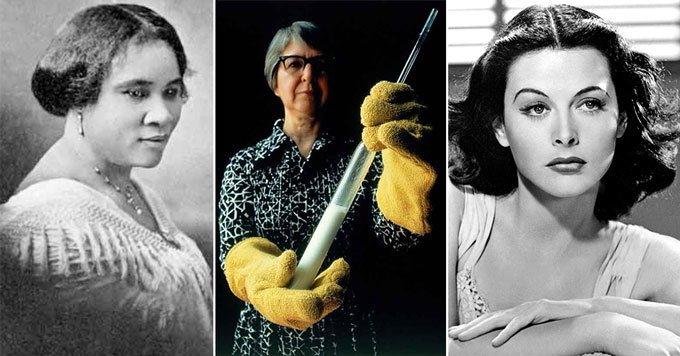
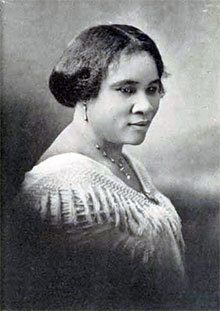
Sarah Breedlove / Madam C. J. Walker (1867 - 1919)
Sarah Breedlove was the first child of her family born after the Emancipation Proclamation, and she would go on to become the first female self-made millionaire in the United States. Widowed at age 20 and working as a laundress, Walker developed her own line of hair care products specifically designed for African American hair, and branded them with her new identity as Madam C. J. Walker; the title was deliberately chosen to evoke Parisian luxury. As her wealth and prominence grew, Walker used her influence on social and political issues. She was also a philanthropist who donated generously to African American schools, orphanages, and retirement homes. Her legacy, though, is one of perseverance; she famously said, "If I have accomplished anything in life it is because I have been willing to work hard."
|
|
 |
 |
|
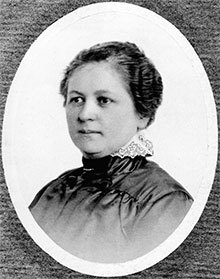
Melitta Bentz (1873 - 1950)
If you're a coffee-drinker, you have German entrepreneur Melitta Bentz for making it easier to brew. Bentz was a housewife who became frustrated with the difficulty of making coffee: percolators often over-brewed it, the machines of her day left grounds in the drink, and linen bag filters were difficult to clean. She invented coffee filters, patented her invention and opened her own company around 1908. By 1928 her company employed dozens of people. Bentz was beloved by her employees for her generous bonuses and work schedules. She also created "Melitta Aid", a social fund for her company's workers. The Melitta Group is still making coffee, coffee makers, and filters today.
|
Ruth Graves Wakefield (1903 - 1977)
American entrepreneur Ruth Graves Wakefield was a university graduate who began her career as a dietician to teach people about food and nutrition. She and her husband bought the Toll House Inn in 1930 and it quickly became famous for Wakefield's food, especially her desserts. She wanted to offer guests a new and different treat. Wakefield took an ice pick to a block of chocolate, added it to her cookie dough, and the chocolate chip cookie was born. She called it the Toll House Chocolate Crunch Cookie. Wakefield eventually sold her recipe to the Nestle Company got a minimally profitable payout, one dollar plus a lifetime supply of chocolate.
|
|
 |
 |
|
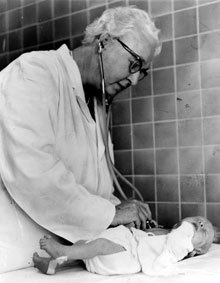
Virginia Apgar (1909 - 1974)
American doctor Virginia Apgar was a pioneering anesthesiologist and the first female full professor at the Columbia University College of Physicians and Surgeons. She also conducted research at the affiliated Sloane Hospital for Women. She realized that medical personnel had no standardized way to assess the health of newborns, so she set out to develop a clear, quick set of criteria that were easy to understand and communicate. Her Apgar Score, which she first performed in 1953, used her last name as a mnemonic for areas to assess: Appearance, Pulse, Grimace, Activity, Respiration. Thanks to the Apgar Score, newborns who need urgent medical assistance can easily be identified. Apgar was also the author of a groundbreaking 1972 book, Is My Baby All Right?, which provided parents with a guide to birth defects — revolutionary in a time when they were a taboo topic. Her determination to care for both the women and the babies under her care is best summed up by this quote: "Nobody, but nobody, is going to stop breathing on me."
|
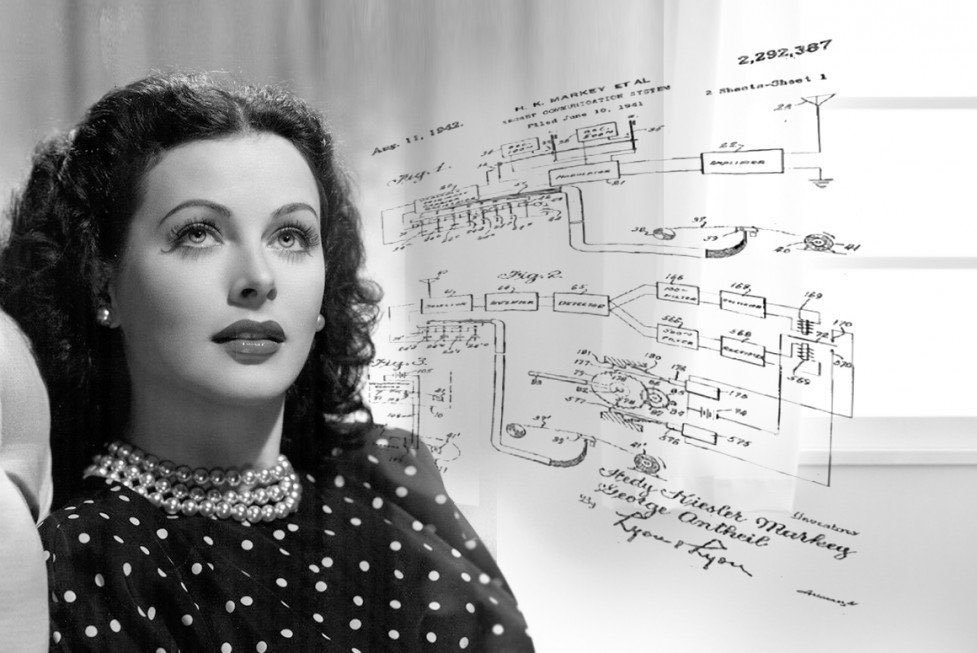 |
Hedy Lamarr (1914 - 2000)
The ultra-glamorous actress Hedy Lamarr was also a brilliant mathematician and engineer. When World War II began, she wanted to help the war effort by improving torpedo technology. Lamarr worked with musician and composer George Antheil and they developed the idea of "frequency hopping." This could encrypt torpedo control signals, preventing enemies from jamming them and sending the torpedoes off course. Lamarr and Antheil were granted a patent for the idea in 1942. Lamarr's spectrum technology has become the foundation for the portable devices that we use every day, for which she was inducted into the National Inventor's Hall of Fame in 2014.
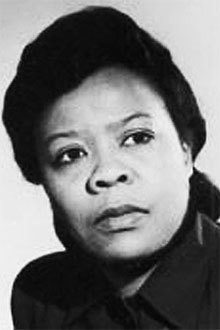
Marie Van Brittan Brown (1922 - 1999)
American nurse Marie Van Brittan Brown was concerned about her safety when she was home alone at night and the crime rate in her neighborhood in Queens, New York, was increasing. She realized that she would feel less vulnerable if she could see who was at her door, without opening it. Working with her husband Albert, an electrician, Brown created a system of four peep holes and a movable camera that connected wirelessly to a monitor in their bedroom. A two-way microphone allowed conversation with someone outside, and buttons could sound an alarm or remotely unlock the door. The Browns received a patent for their security system in 1969, and Brown received an award from the National Science Committee for her innovative idea. Her idea became the groundwork for all modern home security systems.
|
|
 |
 |
|
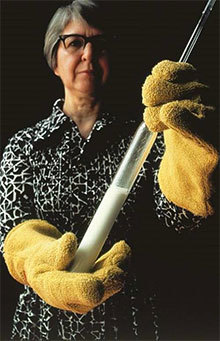
Stephanie Kwolek (1923 - 2014)
Chemist Stephanie Kwolek was working on an alternative for steel in radial car tires when she developed a fiber credited with saving thousands of lives: Kevlar. Born near Pittsburgh, Pennsylvania to Polish immigrants, Kwolek originally planned to become a doctor, but after accepting a research position with DuPont in 1946 to save up for medical school, she discovered a passion for chemistry research that led to a 40 year career. She invented Kevlar in 1964 when an experiment with turning a solid polymer into a liquid didn't work as planned; while her peers considered the experiment a failure, Kwolek took a closer look, and discovered that fibers within the liquid were five times stronger than steel. Kevlar has since been used for everything from boots for firefighters to spacecraft parts, but it's most famous for its use in bulletproof body armor. Since Kevlar vests were introduced in the 1970s, at least 3,000 police officers' lives have been saved, as well as those of countless soldiers and civilians in combat zones. In fact, on the same day that Kwolek died, DuPont announced the sale of the one millionth protective vest using her invention.
|
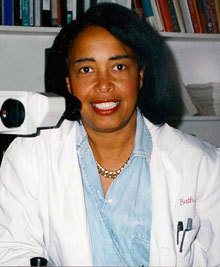
Patricia Bath (b. 1942)
Since she entered the field of ophthalmology, Patricia Bath has been breaking new ground! She was the first black person to serve as an ophthalmology resident at New York University and the first woman on staff at the Jules Stein Eye Institute, she was the first African-American female doctor to receive a patent for medical purposes. That patent was for the Laserphaco Probe, a medical device she invented in 1981 that quickly and painlessly uses a laser to dissolve cataracts in the eye, then irrigates and cleans the eye to make inserting a replacement lens quick and easy. The Laserphaco Probe is now used internationally as a quick and safe way to prevent blindness due to cataracts. She is also the inventor of a new discipline, community ophthalmology, which is dedicated to ensuring that all members of the population have access to eye and vision care. Even if people can't afford an operation, Bath believes that ophthalmologists should do all they can to care for their vision; after all, she says, "The ability to restore sight is the ultimate reward."
|
|
 |
 |
Women Wartime Heroes Who Made Significant Contributions To War Efforts
The most common image of women in wartime is worried mothers, wives, sisters, and daughters, waiting at home for the men they love to return from the battlefield. The reality, though, is very different. Women have always made significant contributions to war efforts, both on the home front and on the front lines. While women's contributions at home, especially during WWII, have become more widely known, the stories of their heroism on the battlefield are rarely told. In every war there have been women who dared to spy across enemy lines; treat wounded soldiers in the midst of the fighting; report from the front as journalists, and fight shoulder to shoulder with their male peers. And although we don't hear of them often, women also fought for an equally important cause: peace.
Here are stories of remarkable women who committed acts of heroism from the Hundred Years' War to World War II. These women were spies, medics, resisters, rescuers, journalists, soldiers, and peacemakers. They risked as much and acted as bravely as their more renowned male counterparts. This month we will honor them by sharing their incredible stories of bravery and patriotism.
 |
|
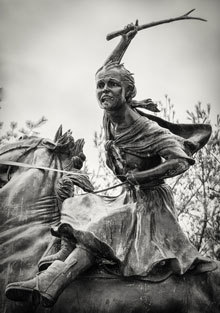
Sybil Ludington (1761 - 1839)
It's a rare person who hasn't heard of Paul Revere and his "Midnight Ride," but did you know that, two years later, a 16-year-old girl named Sybil Ludington rode twice as far as Revere to muster her father's regiment against another British attack? On April 26, 1777, Ludington heard that the British forces were planning an attack on Danbury, Connecticut; she became determined to reach her father, Colonel Henry Ludington, so he could prepare his 400 militiamen to respond. She rode through soaking rain, alerting troops along her way, warning the people of Danbury, and even fighting off a highwayman with a stick as she rode. While her efforts could not stop the British from burning Danbury, Col. Ludington's troops were able to join forces with the Continental Army at the Battle of Ridgefield, forcing the British to return to their boats. Although Sybil Ludington was personally thanked by General George Washington for her efforts, it was Paul Revere who became a household name; it's only thanks to a written account from her great-grandson that the exciting tale of Sybil Ludington's ride has been preserved.
|
 |
|
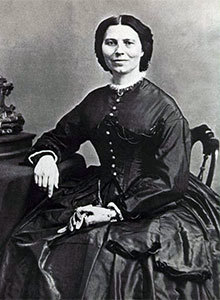
Clara Barton (1821 - 1912)
This compassionate and dedicated nurse became famous as "the angel of the battlefield" for her willingness to go into combat to help wounded soldiers, rather than staying behind the lines. Clara Barton was a teacher when the American Civil War, and she immediately knew that she had to find a way to help. She spent the years of the war providing supplies and support to wounded soldiers, and after the war, helped establish a way to reunite missing men with their families. Her new path in life set, Barton traveled to Europe to assist with preparing military hospitals during the Franco-Prussian war. There, she discovered International Committee of the Red Cross in Geneva and became determined to establish a similar organization dedicated to providing neutral humanitarian aid to Americans. Initially, there was little interest as few people believed that a conflict like the Civil War could ever happen within the nation's borders again; it took years of campaigning, as well as the argument that an American Red Cross could assist during natural disasters, before the American Association of the Red Cross was founded in 1881. Her courage stood as an example to nurses and other emergency medical personnel; she once said, "I may be compelled to face danger, but never fear it, and while our soldiers can stand and fight, I can stand and feed and nurse them."
|
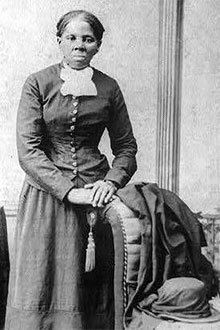
Harriet Tubman (1822 - 1913)
This near legendary abolitionist and Underground Railroad conductor is nearly a household name but many people are surprised to learn that Harriet Tubman had a key role to play in wartime as well. When the Civil War broke out, Tubman saw a Union victory as a key element to ensuring the abolition of slavery throughout America. Tubman joined the Union forces and urged their officers to see escaped slaves not as "contraband," seized by the Northern forces and put to work without pay, but as people who could aid their cause. She also offered her own expertise, starting as a nurse in Port Royal, South Carolina, and then working as a scout and spy for the Union forces, using the skills she had developed while smuggling people out of the South to smuggle information instead. She even became the first woman to lead an assault in the Civil War, by commanding the Combahee River raid that freed over 750 slaves. Her treatment after the war was over highlighted how much attitudes still needed to change: despite her key role, she wasn't given a Civil War pension until 1899. Throughout her life, though, she shrugged off the dangers she had faced with both the Underground Railroad and the Union army, saying "I can't die but once."
|
|
 |
 |
|
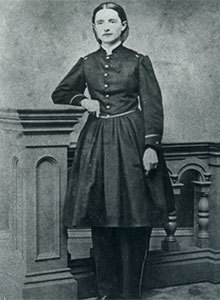
Mary Walker (1832 - 1919)
The only woman to ever be awarded the Congressional Medal of Honor was best known during her life as a feminist, abolitionist, surgeon... and the woman who insisted on wearing pants! Mary Edwards Walker was one of America's first female doctors, and eschewed the heavy dresses expected of women, writing that "The greatest sorrows from which women suffer to-day are those physical, moral, and mental ones, that are caused by their unhygienic manner of dressing!" Instead, her preferred garb was trousers under a knee-length jacket or dress. When the Civil War broke out, she quickly volunteered to provide medical care for the Union army. At first, she was only permitted to work as a nurse, but by 1863 she was officially contracted as a civilian surgeon — one who frequently crossed battle lines to assist the wounded, and who regularly treated civilians. She was captured by Confederate forces in 1864 and accused of being a spy, but later was freed as part of a prisoner exchange. President Andrew Johnson awarded her with the Medal of Honor in 1865. In her later life, she went on to argue for women's suffrage -- and for a cause close to her heart, dress reform.
|
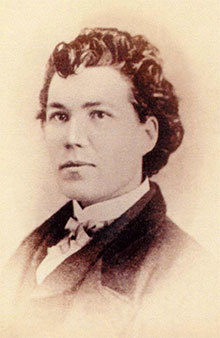
Sarah Emma Edmonds (1841 - 1898)
At one point in Sarah Emma Edmonds' strange but true Civil War career, she was a woman, disguised as a man... disguised as a woman! The Canadian-born Edmonds fled an abusive father for the United States in her teens, and when the Civil War broke out, she felt impelled by patriotism to join the war effort. Inspired by a book, she disguised herself as a man and joined the 2nd Michigan Infantry as Franklin Flint Thompson, serving as a field nurse. But partway through the war, she started operating as a spy for the Union, disguising herself in a variety of ways, including as a black man or as laundry woman. "Frank Thompson's" career ended when she contracted malaria, since she didn't dare present herself at a hospital without her true identity being discovered, and she was given a dishonorable discharge for desertion. However, after publishing a best-selling account of her military experience, her desertion charge was dropped and she received a government pension for her military service. And in 1897, she became the only woman ever admitted to the Civil War veteran's organization The Grand Army of the Republic.
|
|
 |
 |
|
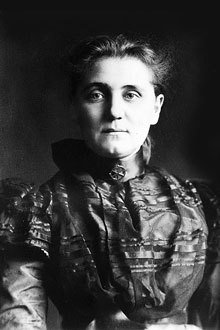
Jane Addams (1860 - 1935)
This women's rights activist and pioneering social reformer, the first American woman to receive the Nobel Peace Prize, was once considered "the most dangerous woman in the United States" for her dedication to diplomacy and pacifism. Jane Addams is considered the founder of the social work profession for co-founding Hull House, a settlement house providing education and health care to all, in 1889. Her work for peace began in earnest in 1915, when she was elected president of the Women’s International League for Peace and Freedom and helped organize the first significant international effort to mediate between the warring nations. Her dedication to pacifism resulted in severe criticism, and even charges that she was unpatriotic, once the US joined the war. After the war was over, however, she received support again, particularly for her ongoing efforts with the WILPF to ban poison gas. By the time she received the Nobel Prize in 1931, she was once again hailed as an example to the world. Her life stands as a testament to her own image of peace: "True peace is not merely the absence of war, it is the presence of justice."
|
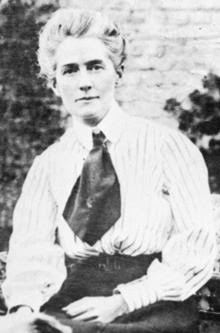
Edith Cavell (1865 - 1915)
Although Edith Cavell didn't begin her nursing career until she was 30, her dedication to helping all those who needed her aid would bring her to a tragic end. The British woman quickly became renowned for her nursing skill, and in 1907 she was recruited to become the matron of a new nursing school in Brussels. When World War I broke out in 1914, biographer Diana Souhami says "[s]he told her nurses that they must not take sides in the conflict....Any wounded man must be medically treated; each was equal at the point of need." When the Germans invaded Brussels, she chose to stay, and continued to treat both German and Allied wounded alike. However, she could not ignore her support for the Allies, so she joined a network dedicated to smuggling wounded British and French soldiers to safety. When she was discovered, she was immediately arrested and sentenced to execution for treason. Although there were numerous international calls for mercy, Cavell was executed by firing squad on October 12, 1915. Cavell's execution was condemned worldwide and prompted a fierce will to win the war in Britain. She was viewed by many as a heroic martyr to the cause; one Allied journalist observed, "What Jeanne d’Arc has been for centuries to France that will Edith Cavell become to the future generations of Britons.” However, many consider her greatest legacy her push for the modernization of the nursing field which contributed to a change in the perception of nurses from kindly ladies sitting by bedsides to skilled medical professionals.
|
|
 |
 |
|
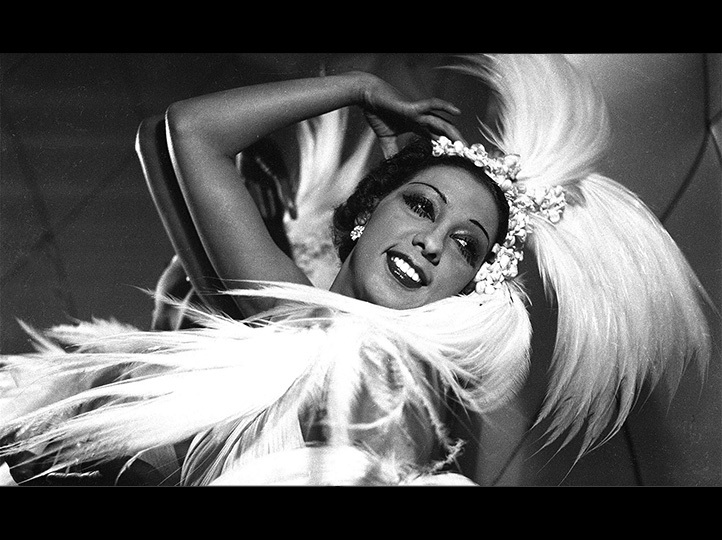
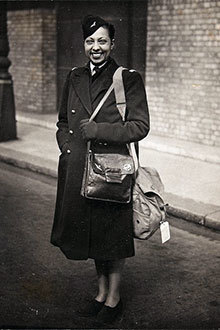
Josephine Baker (1906 - 1975)
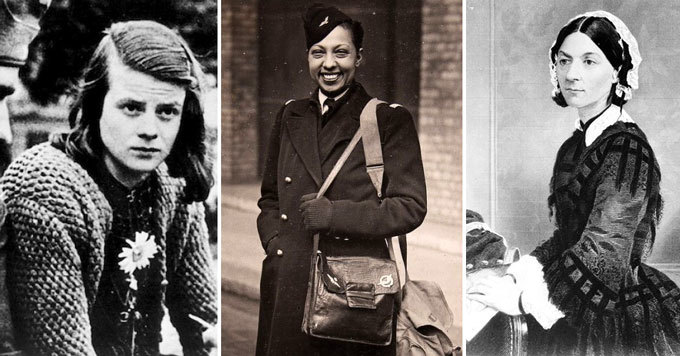
Josephine Baker is best known as a jazz singer, dancer, and actress -- but did you know she was also a World War II spy? The American celebrity was the first African American woman to integrate an American concert hall, but in France, she found both popular success and a welcoming environment, eventually making Paris her permanent home. Once the war broke out, she assisted the French government by gathering information when attending high society events at embassies; she also helped many people whose lives were threatened by the Nazis get visas to escape France. Once the Germans invaded France, she also used her unique position as a traveling artist to assist the Resistance: she visited neutral nations as part of her performance tours, smuggling secrets by writing them on her jazz sheet music in invisible ink. For her service, she received the Croix de guerre and the Rosette de la Résistance, and was made a Chevalier of the Légion d'honneur; when she died, she was the first American-born woman to receive full French military honors at her funeral. Her remarkable show business career is well worth celebrating, but the grit and selflessness she demonstrated in wartime shows a different side of this larger-than-life woman.
|
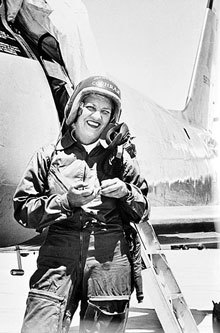
Jacqueline Cochran (1906 - 1980)
It only took one ride in an airplane to make aviation pioneer Jacqueline Cochran realize that she was destined to fly: she immediately started taking flying lessons and learned to fly solo in just three weeks. By the late 1930s she was nearly as well known as Amelia Earhart, but it was during World War II that Cochran had her most dramatic influence on aviation. She campaigned tirelessely for women pilots to have the opportunity to support the war effort by flying non-combat missions, such as delivering new aircraft and conducting reconnaissance. Cochran eventually became the director and a key trainer of the Women Airforce Service Pilots (WASPs); the WASPs proved that women pilots were equally competent -- and daring -- as their male counterparts. Under her direction, the WASP pilots flew 60 million miles of operational flights and delivered over 12,000 aircraft of 78 different varieties over two years. For her war efforts, she received the Distinguished Service Medal and the Distinguished Flying Cross. After the war, Cochran continued to make aviation history -- including becoming the first woman pilot to break the sound barrier -- and was involved with the Mercury 13 program to determine if women could be acceptable astronaut candidates. Sadly, she never lived to see an American woman go to space, and she always wished it could have been different: "I'd have given my right eye to be an astronaut."
|
|
 |
 |
|
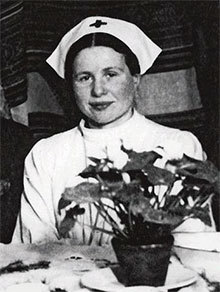
Irena Sendler (1910 - 2008)
One of the great heroines of the World War II Warsaw Ghetto could have been forgotten if it weren't for a research project by several Kansas high school students. Irena Sendler was a Polish Catholic nurse and social worker in Warsaw who joined Zegota -- the underground Polish resistance organization created to aid the country's Jewish population -- after Germany invaded in 1939. Using her medical credentials to get access to the ghetto, Sendler and her colleagues set up a smuggling operation to get Jewish children out -- hiding in a false-bottomed ambulance, baskets, coffins, and even potato sacks -- give them false identities, and place them in orphanages and with Polish families. All the while, Sendler kept lists of the real names of the children, buried in jars to keep them safe. After rescuing over 2,500 children, Sendler was arrested, tortured, and sentenced to death; however, her friends in Zegota bribed her guards and she escaped to live in hiding for the remainder of the war. Although she was honored in the 1960s, including by Yad Vashem as one of the Polish Righteous among the Nations, by the 1990s her story had been almost completely forgotten -- until, in 1999, high school students Megan Steward, Elizabeth Cambers, and Sabrina Coons discovered a short news clipping about her, researched her life, and wrote a play that reignited widespread interest in this humble hero.
|
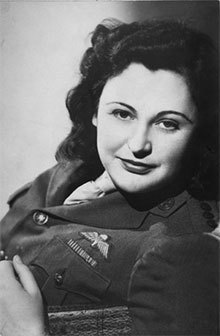
Nancy Wake (1912 - 2011)
The New Zealand-born British secret agent Nancy Wake has a story that's better than any spy film! After running away from home at 16 to become a nurse and a journalist, Wake traveled to New York, London, and Paris, then settled in Marseilles with her husband. When Germany invaded France, she immediately became a courier for the Resistance. By 1943, the Gestapo had nicknamed her the White Mouse for her ability to elude capture and declared her their most wanted person, with a five million franc bounty on her head. When the local resistance network was betrayed, Wake trekked across the country to escape to Britain through Spain -- but she wasn't done yet. She joined the Special Operations Executive and parachuted back into France in 1944 to help the Resistance prepare to assist in the Allied invasion. With her help, a group of 7,500 Resistance guerrillas successfully engaged with over 22,000 Nazi soldiers. After the war, Wake became the Allies' most decorated servicewoman and published her autobiography -- and she did become the subject of a made-for-TV movie in 1987. However, she didn't feel the portrayal did her justice, particularly scoffing at a scene of her cooking breakfast: "For goodness sake, did the Allies parachute me into France to fry eggs and bacon for the men?" she asked. "There wasn’t an egg to be had for love nor money, and even if there had been, why would I be frying it when I had men to do that sort of thing?"
|
|
 |
 |
|
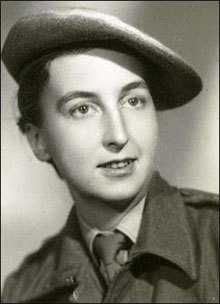
Pearl Witherington (1914 - 2008)
In 1943, a British Special Operations Executive agent parachuted into occupied France. It sounds like the beginning of a spy movie, but it’s actually the real-life story of Pearl Witherington! Witherington was working at the British embassy in Paris when the Germans invaded; after she was evacuated, she was determined to help those she left behind. She joined the Special Operations Executive, where she was hailed as the best shot they service had ever seen, and quickly returned to France, eventually leading a resistance network under the code name Pauline. Her network was so effective that the Nazis put a one million franc bounty on her head. After the war, when Witherington was offered a British civil award, she declined, stating "there was nothing remotely 'civil' about what I did. I didn't sit behind a desk all day." She later received a military Member of the Order of the British Empire, as well as France’s Legion d’honneur. But she had never been motivated by the awards; instead, she wanted to protect her adopted homeland. "I just thought, This is impossible. Imagine that someone comes into your home - someone you don’t like -- he settles down, gives orders: 'Here we are, we’re at home now; you must obey.' To me that was unbearable."
|
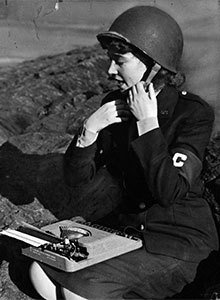
Marguerite Higgins (1920 - 1966)
When Marguerite Higgins was featured in Life magazine, the headline was "Girl War Correspondent" -- but she was so much more than the title implies. The daring American journalist convinced the New York Herald Tribune to send her to Europe in 1944, only two years into her career. She ended up covering the liberation of the Dachau concentration camp and the trials at Nuremberg. When the Korean war began, she was one of the first reporters to arrive, but she was ordered out of the country on the grounds that women did not belong at the front. Higgins appealed to General Douglas MacArthur, who replied with a telegram to the Herald Tribune: "Ban on women correspondents in Korea has been lifted. Marguerite Higgins is held in highest professional esteem by everyone." This decision, along with her shared Pulitzer Prize win for International Reporting in 1951, were major breakthroughs for women reporters. She went on to cover the Vietnam War and work as a syndicated columnist for Newsday. Her spirit is best summed up by her response when she was ordered out of Korea: "I wouldn't be here if there were no trouble. Trouble is news, and the gathering of news is my job."
|
|
 |
 |
|
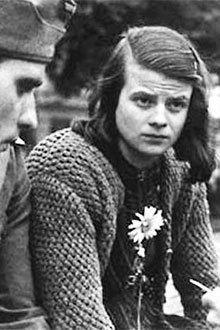
Sophie Scholl (1921 - 1943)
Perhaps the bravest heroes of all are those who realize the dangerous path that their country is walking -- and stand up against it. As a university student in Munich, Scholl became involved in resistance organizing after learning of the mass killings of Jews and reading an anti-Nazi sermon by Clemens August Graf von Galen, the Roman Catholic Bishop of Münster. She was deeply moved by the "theology of conscience" and joined with her brother Hans and several friends to start a resistance movement called the White Rose, where she helped print and distribute anti-Nazi leaflets. In 1943 she was arrested by the Gestapo for treason, and after a short show trial on February 22, she was executed within hours of being sentenced to death. She stands as an example of the power, and the need, for individuals to stand up for what is right, even in the face of great risks. In her final statement, just before her execution by guillotine, the 21-year-old activist said, "How can we expect righteousness to prevail when there is hardly anyone willing to give himself up individually to a righteous cause. Such a fine, sunny day, and I have to go, but what does my death matter, if through us thousands of people are awakened and stirred to action?"
|
 |
 |
PRAYER FOR EQUALITY, PEACE & UNITY
I pray for equality, unity and peace in every city in our country. Equality for all people in every country. I pray for justice for all those who have lost their lives needlessly and unjustly. I pray that all people, regardless of race, religion or socioeconomic status be treated with the dignity and respect they deserve. I pray for change so that healing can begin in this country and around the world.
Amen.
|