|
|
Mar. 26, 2026
Issue 48
Welcome to the KyMTSS Newsletter, a resource where Kentucky stakeholders can find information, tips and resources about the systems, data and practices of an integrated multi-tiered system of supports.
|
|
Just in Time Support
Balancing Frequency, Intensity and Duration
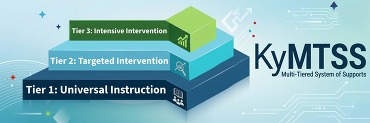
In an effective Multi-Tiered System of Supports (MTSS), the tiered delivery system is intentionally fluid and interconnected, ensuring students receive the right instruction at the right time. Tiers are layers of support, not locations or programs. MTSS functions as one cohesive system with adjustments made based on students’ current needs.
The Power of Layering
All students always receive Tier 1, grade-level instruction. At Tier 1, teachers use formative assessment and in-class instructional strategies to identify misconceptions, adjust instruction and support student learning within universal instruction. Some students may move in and out of Tier 2 and Tier 3 while remaining anchored in Tier 1. The goal of layering is strategic fluidity in the delivery of instruction. As progress monitoring data indicates that the student has been successful in the intervention, the additional layer may fade, ensuring the student receives aligned instruction at the level of their current need.
Determining the Dosage
When a student is not making progress toward grade-level benchmarks, the goal is to ensure the support is just-in-time rather than overly intensive or not integrated with Tier 1. The MTSS team determines the dosage, or the total amount of specialized instruction the student receives to address a specific learning or behavioral gap. To determine the appropriate dosage, the MTSS team considers how far below grade-level benchmark the student is performing. Students performing significantly below grade level or with the most complex needs require a higher dosage of support.
During the process of determining the dosage, the MTSS team needs to consider three interconnected elements: frequency, intensity and duration. These three elements work together to provide layers for a student in need of additional support. The team determines the level of additional assistance needed through the data-based decision-making process.
|
|
-
Frequency: How often intervention occurs (e.g., 3 days per week to 5 days per week).
-
Intensity: How strong the intervention is (e.g., smaller group size or more opportunities to respond, practice, feedback and modeling).
-
Duration: How long the intervention lasts. This may include lengthening the instructional session (e.g., increasing from 20 minutes to 35 minutes) or extending the number of weeks of the intervention cycle, allowing more time for targeted instruction.
Decisions about adjusting dosage occur during progress monitoring meetings based on student data.
Note: These examples illustrate possible adjustments. The minutes and times are for illustration and not exact requirements. MTSS teams adjust all three elements to meet the specific needs of each learner and the intervention protocol.
Frequency + Intensity + Duration = Dosage (Support)
The MTSS team uses data-based decision-making to adjust the layers of assistance as needed within the multi-tiered delivery system. Together, these variables shape the dosage, allowing the team to match support precisely to the student’s current needs and accelerate learning.
The Learning Acceleration Resources page provides educators with evidence-based guidance and resources designed to support and enhance efforts to accelerate student learning during the summer and academic school year.
NEW RESOURCE: Key Features of Progress Monitoring
The Progress Monitoring infographic summarizes key characteristics and steps of the progress monitoring process as well as ways to analyze a student’s rate of progress. Visit the Kentucky Department of Education’s Early Literacy Screening Assessments webpage for more information on implementing a Multi-Tiered System of Supports that utilizes assessments to effectively identify student needs, implement grade-level and targeted instruction, and monitor progress.
Virtual Office Hours
Wednesday, Mar. 4, 2026: 10-11 a.m., ET
Drop in anytime to ask questions about:
-
Revised KyMTSS Self-Assessment Tool 2.0
- Scheduling strategies
- High school implementation challenges
- Aligning Tier 1 supports
- Using screeners and diagnostics
- SEL and behavior supports
- District or school-specific question or scenario
Kentucky Regional Educational Cooperatives
The eight regional educational cooperatives offer MTSS professional learning and technical assistance. For more information regarding cooperative technical assistance, please contact the MTSS Point of Contact for your region.
KyMTSS Newsletter Archive
Did you miss the last KyMTSS Newsletter? You can access all previous editions of the newsletter on the KyMTSS Newsletter Archive webpage.
|
|
|
|