Breaking the Sound Barrier
In 1947, Chuck Yeager became the first person to break the sound barrier, piloting the Bell X-1 at speeds faster than anyone believed possible at the time. What many people don’t know is that Yeager accomplished this feat while flying with cracked ribs from a horseback riding accident just days before the flight. He didn’t ignore the risk, but he prepared, adapted and trusted his training.
Before Yeager’s flight, the sound barrier was viewed as an invisible wall, something dangerous, unpredictable and potentially catastrophic. Engineers and pilots feared aircraft would lose control or disintegrate. Yet, once the barrier was broken, aviation advanced rapidly. What once seemed impossible became achievable.
For school counselors, the “sound barrier” often manifests in various ways: advocating for student needs, navigating trauma responses, managing overwhelming caseloads or pushing for systemic change. These barriers can feel just as intimidating, uncharted, risky and heavy with responsibility.
Yeager’s story reminds us that progress doesn’t come from ignoring fear, but from preparation, support and courage. As counselors, we rely on our training, our ethical grounding and our professional community to move forward, even when the work feels daunting. And just like the sound barrier, many challenges lose their power once we push through them together.
Sometimes, the most meaningful breakthroughs in our schools happen quietly, not with a sonic boom, but with a conversation, a connection or a moment of persistence that changes a student’s trajectory forever.
In Service,
Michelle
 Now Accepting Applications: Commissioner School Counselor Advisory
The Kentucky Department of Education is currently accepting applications for the School Counselor Advisory Council. This advisory group plays a critical role in informing statewide school counseling initiatives, policies and guidance by elevating the voices and expertise of practitioners from across the Commonwealth.
Selected members will serve a three-year term, with the inaugural term beginning in the 2026–27 school year. Advisory members will collaborate with KDE staff and key stakeholders to provide feedback, identify emerging needs, and help shape resources and professional learning that directly impact students and school counselors statewide. The advisory council meets virtually three times per year, and consistent attendance and active participation are essential to ensuring the work is meaningful, representative and impactful.
Principal Support Requirement
To ensure alignment with school and district priorities, applicants must obtain the support of their building principal before applying. This support affirms the principal’s awareness of the time commitment associated with advisory council participation and their endorsement of the school counselor’s involvement in this statewide leadership opportunity.
Applications are due by April 15, 2026.
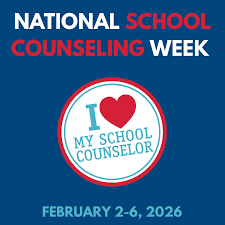
We would like to take a moment to thank all of our Kentucky School Counselors! During National School Counseling Week, we hope you are celebrated, acknowledged, and appreciated for the vital role you play in supporting students, families and school communities across the Commonwealth. Your dedication, compassion and leadership make a lasting difference every single day.
 January/February Mental Wellness Newsletter
The January/February Mental Wellness Newsletter is now available! This edition is loaded with useful information for you, your students and colleagues. Prioritize your mental health by taking a few moments to read this edition because mental wellness is a journey and worth investing in!
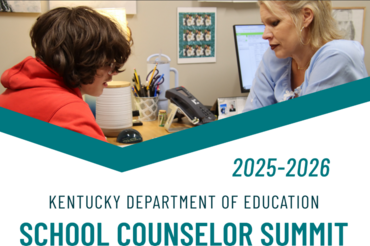
School Counselor Summit for 2025-2026
We are pleased to announce the dates for the upcoming 2025–2026 School Counselor Summits, designed intentionally with school counselors in mind.
The dates for the summits are Oct. 2, Dec. 4, Feb. 5 and June 4. All sessions are virtual, held from 9 a.m. to noon ET, and provide three Effective Instructional Leadership Act (EILA) hours for each summit you attend (following the completion of an evaluation).
This year’s summits will focus on:
-
Defining what qualifies as direct services
-
Practical strategies to meet the 60% requirement
-
Tools and approaches for advocating for your role and time
Mark your calendars and register now to ensure you don’t miss this valuable and timely professional development opportunity.
|