Approved Lists for Numeracy Screening and Diagnostic Assessments
The Kentucky Department of Education (KDE) recently reviewed early numeracy screening and diagnostic assessment submissions for inclusion on the KDE approved lists. The updated lists are now available on the Numeracy Screening Assessments webpage.
Per KRS 158.8402(5)(a), as part of the Kentucky Numeracy Counts Act, by January 1, 2026, each superintendent shall select:
- At least one (1) universal screener for mathematics that is determined by the department to be valid and reliable to be administered to all students in kindergarten through grade three (3); and
- At least one (1) diagnostic assessment for mathematics that is determined by the department to be reliable and valid to be administered as part of a multitiered system of supports for students in kindergarten through grade three (3).
The law further provides, “Each superintendent or public charter school board of directors shall adopt an evidence-based curriculum along with high-quality instructional resources for mathematics that is determined by the department to be reliable, valid, and aligned to Kentucky academic standards for mathematics required by KRS 158.6453 for kindergarten through grade three (3),” (5)(b).
KDE will continue to identify and review screeners and diagnostics for reliability, validity and classification accuracy for inclusion on this list. The approved lists will be updated regularly.
Please contact Jennifer Fraley, Director of Mathematics Education at jennifer.fraley@education.ky.gov, with any questions.
Bright Spot: Catlettsburg Elementary Shine with Number Strings
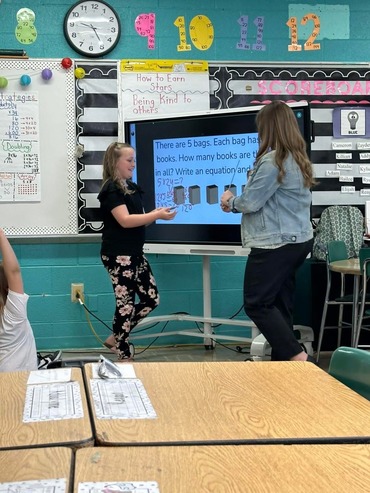 Third-grade teacher Hannah Bailey McCoy and Math Interventionist Jennifer Eerenberg, along with their students at Catlettsburg Elementary in Boyd County, recently welcomed the Kentucky Center for Mathematics (KCM), Sublime Video, and Jennifer Fraley, KDE Director of Mathematics Education, into their classroom. The visit captured an engaging lesson on Number Strings, which will be featured in the upcoming KCM K-5 Numeracy Counts Teacher Academy. Students not only explored a variety of problem-solving strategies but also pushed beyond their grade level, beginning to tackle fourth-grade content. Congratulations to the CES third-grade students, Mrs. McCoy, and Mrs. Eerenberg for an inspiring showcase of mathematical thinking!
To see videos like Hannah’s and participate in collaborative, high-quality professional learning, apply for the KCM K-5 Numeracy Counts Teacher Academy before the application window closes on May 1, 2025.
Applications Now Open for KCM K-5 Numeracy Counts Teacher Academy and PIMSER Administrator Academy
Applications are now open for both the KCM K-5 Numeracy Counts Teacher academies and PIMSER Administrator Numeracy Counts academies.
The Kentucky Center for Mathematics (KCM) will be launching a 2-year hybrid learning experience for K-5 educators in Summer 2025. Developed and facilitated by KCM in partnership with KDE, these teacher academies will feature a blend of in-person summer launch sessions and both synchronous and asynchronous virtual learning opportunities designed to meet the needs of Kentucky K-5 math teachers.
The Partnership Institute for Math and Science Education Reform (PIMSER) will launch Leadership Academies in Summer 2025. The Leadership Academies will provide a mix of in-person, synchronous virtual, and asynchronous virtual learning opportunities. Developed by PIMSER in collaboration with KDE, these academies will prioritize instructional leaders (district leaders, building principals, assistant principals, etc.) from schools where teachers are participating in the KCM K-5 teacher academies.
Information sessions on the KCM K-5 Teacher Academy and PIMSER Administrator Academy were held in February to provide an overview of the academies along with logistical and content information. A recording of the session, presentation slide deck and FAQ Google document that is continuing to capture questions about the academies are now available. Applications are available on the KCM website and the PIMSER website.
Amplify Desmos Math K-5 Added to Approved K-12 High-Quality Instructional Resources for Mathematics
The Kentucky Department of Education (KDE) previously released approved lists of K-12 high-quality instructional resources (HQIRs) for reading and writing and mathematics, focusing on Tier 1 core comprehensive resources. A core comprehensive instructional resource is one that serves as the primary means of instruction in a content area for a grade level or course. These lists are designed to assist superintendents in navigating the complex marketplace of educational resources. Kentucky law, specifically KRS 160.345, places the authority for developing local curriculum, including the selection of instructional materials, with local superintendents, following appropriate consultation.
Amplify Desmos Math K-5 has recently been added to the approved list for mathematics. While Amplify Desmos Math K-5 is currently in the “queue” to be reviewed by EdReports, Amplify has demonstrated external validation and an evidence-basis for the resource and has shown at least 80% alignment to the Kentucky Academic Standards for Mathematics through an extensive review conducted by Student Achievement Partners.
While all materials on the approved lists meet the KDE standards for HQIRs and have been informed by feedback from the Quality Curriculum Taskforce, districts are encouraged to conduct thorough local reviews to ensure that selected materials align with their specific needs and the local instructional vision. Off-list notification is still protected and allowable per KRS 156.445.
More information about the approved reading/writing and mathematics lists can be found on KDE’s Instructional Resources webpage.
District Spotlight: Powell County Transforms the Teacher Experience with High-Quality Instructional Resources for Mathematics
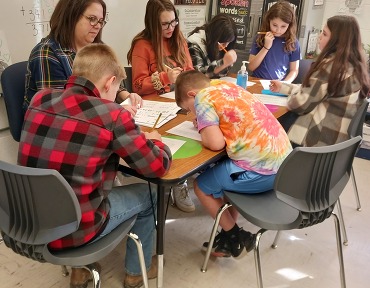 When Powell County Schools embarked on the journey to adopt a high-quality instructional resource (HQIR) for mathematics, the district’s leadership aimed to address long-standing challenges faced by teachers. Over the years, educators had been piecing together their lesson plans, often using personal funds and countless hours to source materials. This patchwork approach led to inconsistencies in instruction across classrooms and schools. The introduction of a district-wide HQIR transformed this experience, creating a ripple effect of positive change for both teachers and students.
A Collaborative Vision for Change
The decision to adopt a new Tier 1 instructional resource was sparked by the need for consistency and quality. Through a collaborative process involving teachers, principals, and district administrators, Powell County Schools crafted an instructional vision guided by the Kentucky Department of Education’s Model Curriculum Framework. Stakeholder surveys and direct discussions revealed a pressing need for accessible, high-quality resources to enhance teaching and learning. This feedback underscored the importance of creating a unified educational experience that could be embraced by the entire district.
Tonya Roach, Chief Academic Officer of Powell County Schools says, “The aim with this change was to make sure every student had access to great learning tools, and to better support our teachers. There was a need to improve the educational learning environment for everyone.”
 Streamlining Teacher Planning
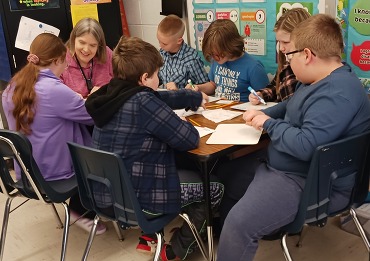
One of the most significant impacts of the implementation of the HQIR, Reveal Math, was on teacher planning. Before its adoption, educators spent hours searching for supplemental materials to align with standards. Melinda Richardson, a fifth grade math teacher at Clay City Elementary school says, “Before the implementation of Reveal Math, I felt as though I was always searching for quality resources and trying to piece together lessons for my students. The process was time intensive and frustrating. There was less cohesion between lessons and units. It was difficult to find activities with high level questions. It was simply a difficult process.”
With the new resource in place, teachers now have a structured curriculum that aligns seamlessly with the Kentucky Academic Standards for Mathematics. This shift has not only reduced planning time, but also allowed teachers to focus on delivering engaging and effective instruction. Richardson says, “Having a high-quality instructional resource means that I know that the concepts are being presented for my students in the best way possible. Reveal offered everything that an effective math class needs: pre-assessments, engaging lessons, student work activities, differentiation, reteaching activities, and assessments. I am no longer having to search for resources.”
Building Instructional Confidence
The implementation process, though challenging, was instrumental in fostering confidence among educators. Initially, professional learning sessions did not fully meet teacher needs, leading to frustration. To address this, the district engaged a retired math teacher to provide targeted support. Powell County also participated in KDE’s Designing High-Quality Local Curriculum Mathematics Pilot, which gave them access to a coach from the Achievement Network, who worked directly with teachers through weekly professional learning communities (PLCs) and classroom visits.
These supports empowered teachers to embrace the new curriculum, building their capacity to deliver rigorous, hands-on math instruction. The shift in mindset was evident as educators became increasingly comfortable with new content and teaching strategies.
“We’ve seen our teachers grow more open to embracing new and different content compared to what they were previously accustomed to,” Roach shared.
 Student-Centered Outcomes
The impact of the HQIR implementation extended beyond teachers to the students they serve. The structured curriculum provided hands-on, high-quality learning experiences, resulting in measurable gains. Data from the NWEA MAP assessment highlighted significant growth in math across all grade levels, K-5, underscoring the effectiveness of the new resource. Teachers and administrators attributed this success to the consistent and rigorous instruction enabled by the HQIR.
Not only has student data been impacted, but their perceptions of math as well. Faye Stamper, third grade teacher at Bowen Elementary says, “Students have developed a more positive attitude toward math learning. One student, who experienced significant math anxiety at the beginning of the year, now proudly writes, "I love math!" on her papers. There is a noticeable sense of enthusiasm during math class, as students feel confident knowing they receive the appropriate support and encouragement to succeed in their academic journey.”
Reflecting on Year One
The adoption of a high-quality instructional resource for mathematics has redefined the teacher experience in Powell County Schools. By alleviating the burden of resource hunting and providing robust support systems, the district has empowered educators to focus on what they do best: teaching.
Roach says, “The biggest takeaway is that the first year of implementation of any new curriculum is hard - - very hard. However, if you can encourage, motivate, and support your teachers and students the best that you can, you WILL make it through and see success.”
Don't Miss the KY Numeracy Counts Newsletter
Did someone share this newsletter with you? Sign up to receive the KY Numeracy Counts Newsletter each month.
Did you miss last week's Standards Newsletter? You can access all previous editions on the Numeracy Counts webpage.
|