|
|
Wednesday, September 29, 2021

|
|
|
Tell us how we are doing! Take this 1 minute survey to share your feedback on our refreshed newsletter.
|
|
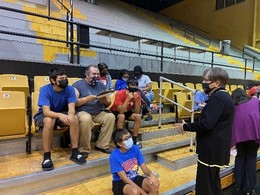 Governor Laura Kelly visiting the vaccination site at Topeka Public High School
|
|
“The COVID vaccine is safe, effective, free, and our best tool to beat this virus once and for all. I implore all Kansans to get vaccinated as soon as possible.”
- Governor Laura Kelly
|
|
|
Kansas is now seeing a decline in cases after the recent surge in August and September caused by the Delta variant, with adult hospitalizations slowly declining as well. Despite these positive trends, Kansas has now reached more than 6,000 COVID-19 related deaths, and pediatric hospitalizations have been rising since the start of the school year. Vaccination remains our best tool to keep ourselves safe while also protecting those who cannot get vaccinated, like children under the age of 12. Please read here to track COVID-19 trends and here to find KDHE’s weekly summary of local vaccine and testing events.
|
|
Find the latest report from the Safer Classroom Workgroup here. |
|
|
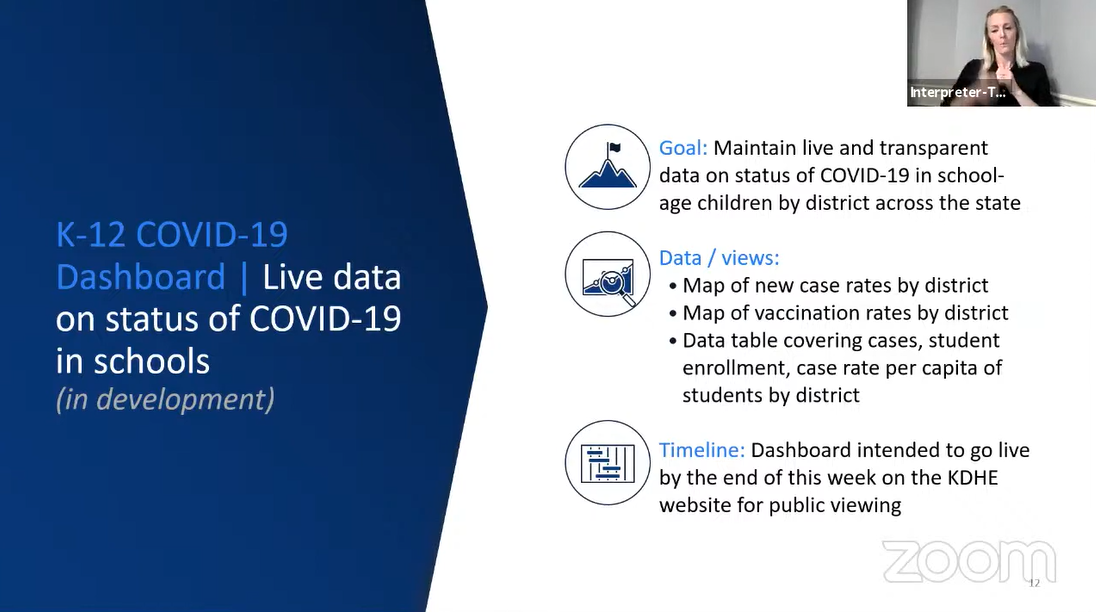
As was announced during today’s Safer Classroom Workgroup, KDHE is launching a dashboard later this week that outlines COVID-19 cases and vaccination rates by school district across the state. As kids are back in school and interacting daily with teachers and staff, this will help to provide timely, accurate information to help local health officials and school districts to make data-driven decisions to control the spread of COVID-19.
Why this matters: Sharing this information by school district is useful for parents, teachers, superintendents and school boards, all of whom can use this data to make the best decisions to keep students, teachers, and staff healthy.
A look at the numbers: Two recent studies point to the importance of masking to keep kids safe. A large, national study found those counties with school mask requirements experienced smaller spikes in pediatric COVID-19 cases. And masking requirements in schools are also proving to be effective in preventing the virus from spreading, according to US News. A CDC study on the effectiveness of masking policies in more than 1,000 schools in Arizona showed that schools without mask requirements were 3.5 times more likely to experience COVID-19 outbreaks when compared to schools that started the academic year with mask policies in place.
What this means: The goal of this new dashboard is to provide better visibility of school-related COVID-19 data to better target efforts to keep our children safe in schools. The dashboard will also be a helpful tool in tracking the anticipated upcoming roll-out of COVID-19 vaccines for 5-11 year olds.
|
|
|
Physicians and medical practice managers are invited to join the KAAP COVID-19 Vaccine Town Hall on September 30, 2021 at 12 PM CT.
The discussion will cover what is and isn’t working for pediatric vaccination with staff from the Kansas Immunization Program and Jennifer Watts, MD, FAAP from Children’s Mercy. Click here to register for the webinar.
|
|
|
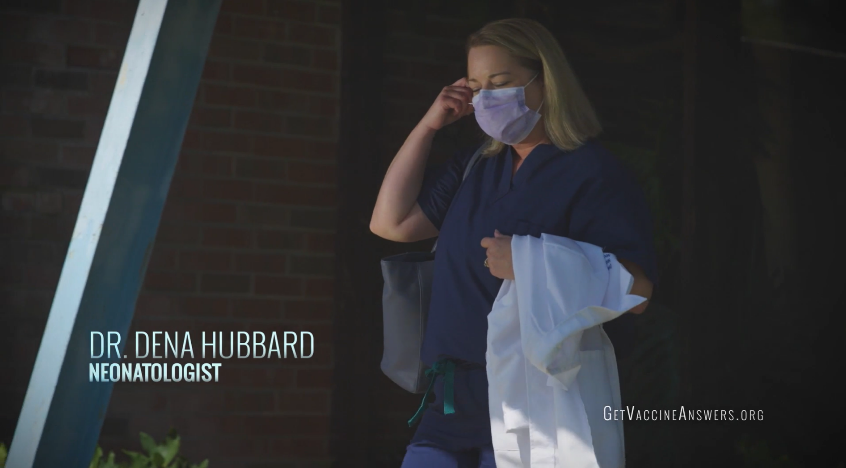
Governor Laura Kelly launched a new testimonials campaign featuring physicians and Kansans whose lives have been deeply impacted by COVID-19. The ads are paid for with federal funds specifically targeted for public education. They will run on television, radio, and digital media through the end of the year. These stories include experiences of doctors treating patients battling COVID-19, COVID-19 survivors, and families impacted by the virus.
Why this matters: As COVID-19 cases in Kansas remain high, a key public health priority is to convince those who are unvaccinated to get the shot for their own health, and the health of their communities. “We hope that this campaign will encourage those who are skeptical to get answers to their questions and do their part to keep our families, friends, and loved ones safe”, Governor Kelly said.
A look at the numbers: The KFF COVID-19 Vaccine Monitor reported that unvaccinated adults are much less worried about COVID-19 and the Delta variant, and they have less confidence in the safety and efficacy of vaccines compared to those who are vaccinated. Furthermore, the majority (57%) of unvaccinated adults say they think the news has “generally exaggerated” the seriousness of the coronavirus. These Kansas testimonials provide real-life accounts of the dangers of COVID-19 and aim to challenge these views.
What this means: As vaccine hesitancy in the U.S. begins to show signs of softening, as reported by an Axios-Ipsos poll, the testimonials campaign provide trustworthy and tangible stories from Kansans to those who may still have questions about the efficacy, safety, and necessity of the vaccines.
To view Dr. Dena Hubbard’s testimonial, click here.
To view Amy Diediker’s testimonial, click here.
To view Sha-Kendra Davis’ testimonial, click here.
|
|
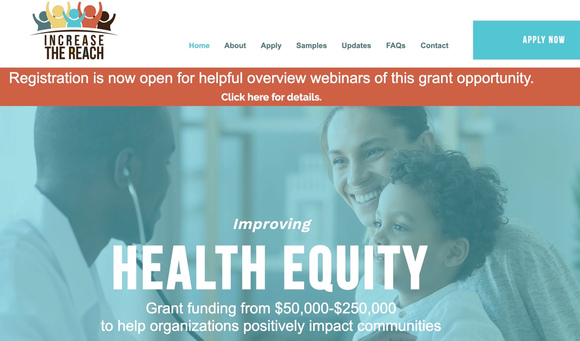 On Monday, Governor Laura Kelly announced the launch of the “Increase the Reach” Grant Initiative, a new grant program for organizations supporting health equity in communities across Kansas. The grants will enable organizations to expand access to and increase acceptance of vaccines for those who remain unvaccinated.
Why this matters: Socially vulnerable populations are especially at risk during public health emergencies. The program specifically aims to reach these vulnerable populations and those experiencing low vaccination rates, which includes both racial and ethnic minority populations as well as rural communities.
A look at the numbers: According to the KFF COVID-19 Vaccine Monitor black and Hispanic adults are more likely than white adults to express concerns about potential access-related barriers to COVID-19 vaccination. For example, while only 23% of unvaccinated white adults reported they were unable to get the vaccine from a place they trust, over 50% of black and Hispanic adults report the same experience.
What this means: The “Increase the Reach” Initiative provides an opportunity for organizations with documented success in reaching vulnerable populations to receive between $50,000 and $250,000 in funding to continue their vital work in promoting health equity through vaccination. Eligible organizations include but are not limited to Federally Qualified Health Centers, safety net clinics, state-funded community clinics, community-based organizations, and other nonprofits.
For more information or to apply, visit increasethereach.com
|
|
|
Eligible Kansans who received their first series of the Pfizer-BioNTech COVID-19 vaccine over than 6 months ago can now get a booster shot.
More information about eligibility criteria and where to get the booster dose can be found at KansasVaccine.org
|
|
|
Thank you for all you do to keep Kansas safe. For more information, check out the COVID-19 County Rankings, KS vaccine data dashboard, and Kansas’s FAQ link. Please share this information with your networks; and again, if I can be of service, please contact me (marci.nielsen@ks.gov) or my assistant Dominique Sanchez (dominique.sanchez@ks.gov).
Ad Astra per Aspera,
Marci Nielsen, PhD, MPH
Chief Advisor for COVID-19 Coordination, Governor Laura Kelly
|
|
|
|
|