|
Fall 2024 Newsletter
In this issue:
- HPAI in Livestock
- Secure Food Supply
- Regional Meetings
- ADT Rule Update
- EID Resources
- RB-51 Case
- Trich Update
- VMLRP
- Notes from the field
- FY 24 FAD Investigations
 Division of Animal Health
1320 Research Park Dr. Manhattan, KS 66502 Phone: 785-564-6617 Fax: 785-564-6778
agriculture.ks.gov
|
Highly Pathogenic Avian Influenza (HPAI) in Livestock
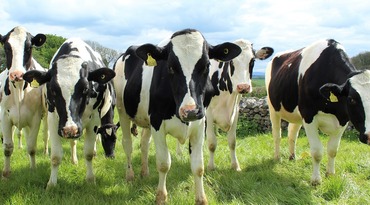 The Kansas Department of Agriculture, in conjunction with the U.S. Department of Agriculture’s Animal and Plant Health Inspection Service (USDA-APHIS), identified highly pathogenic avian influenza (HPAI) in commercial dairy operations in Kansas at the end of March 2024. On April 22, 2024, the Kansas Animal Health Commissioner issued an order that requires a certificate of veterinary inspection (CVI) and permitting for intrastate and interstate movement of all lactating dairy cattle. Two days later on April 24, 2024, USDA announced a Federal Order mandating a negative H5N1 milk test must be complete prior to interstate movement of lactating dairy animals. As of September 9, 2024, there has been a total of 197 nationally confirmed cases with 14 states having been affected.
Continued disease transmission regionally within the country is due to several factors. In addition to the movement of livestock, transmission between farms is likely related to normal business operations such as numerous people, vehicles, and other farm equipment frequently moving on and off an affected premises and on to other premises. It is currently believed that disease spread among dairies is not spread by migratory water fowl—this is supported by both genomic and epidemiological data analysis.
|
|
How can dairy producers help?
KDA continues to encourage all dairy producers to closely monitor their herd and contact their local veterinarian immediately if cattle appear infected. Symptoms are mostly restricted to late-stage lactating cows, and include a drop in milk production, loss of appetite, and changes in manure consistency. We encourage dairy producers to practice good biosecurity measures and to reduce movement onto and off the property. Additional biosecurity resources can be found below:
Everyday Biosecurity
Wildlife Prevention
Agritourism Biosecurity
To help producers with disease testing and biosecurity practices, USDA is offering additional tools to eliminate the virus and protect their animals, themselves, their families, and their employees. Producers will work with USDA personnel to develop a plan for their premises detailing planned testing and movement, biosecurity practices and other planned activities.
Learn more about USDA's Financial Assistance for Dairy Producers
Learn more about Detections of Highly Pathogenic Avian Influenza in Livestock
USDA 2024 Final Animal Disease Traceability Rule
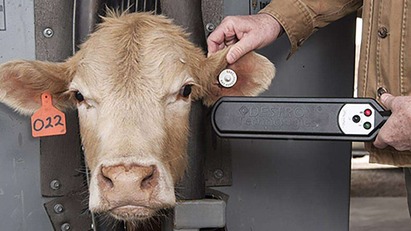
On May 9, 2024, USDA APHIS published into the Federal Register the Final Animal Disease Traceability Rule “Use of Electronic Identification Eartags as Official Identification in Cattle and Bison” making visually and electronically readable tags the only form of official identification for sexually intact cattle and bison 18 months of age and older, all rodeo, exhibition cattle, and dairy cattle moving interstate. This new rule will become effective November 5, 2024. USDA’s Final 2024 Animal Disease Traceability rule only changes the type of tag that can be used, it does not change the class of animals that are required to be tagged.
Additional changes to 9 CFR §86 include the following:
-
Additional recordkeeping requirements for the retrieval of official identification distribution records, certificate of veterinary inspection (CVI) within 48 hours of the request made by federal or state animal health officials.
-
Clarification on how dairy breeds are defined.
-
Dairy Cattle as defined in 9 CFR §86.1: “All cattle, regardless of age or sex or current use, that are of a breed(s) or offspring of a breed used to produce milk or other dairy products for human consumption, including, but not limited to, Ayrshire, Brown Swiss, Holstein, Jersey, Guernsey, Milking Shorthorn, and Red and Whites.”
Additional information can be found at: Traceability (usda.gov)
Want to know more?
Garrett Girk - Kansas Animal Disease Traceability Coordinator will give an update on the 2024 Final Animal Disease Traceability Rule. To attend the webinar, please register below.
Webinar 1 - September 26, 2024 @ 7:30AM
Webinar 2 - October 1, 2024 @12:00 PM
EID Resource Page
The Kansas Department of Agriculture Division of Animal Health has launched a resource page on their website specifically dedicated to EID (Electronic Identification) Tags, Taggers, and Readers. This page provides information on where to purchase tags, available reader options, and guidance on choosing the right tagger for your needs. To learn more, visit EID Tags, Taggers & Readers Resources | Department of Agriculture (ks.gov)
Notes from Dr. Smith - Animal Health Commissioner
The animal health team continues to review, update and modernize the Kansas animal health regulations. Our goal is to evaluate each of our regulations and make sure that they are in-line with current disease statuses, applicable to today’s livestock production methods and incorporates the most current technology in areas such as diagnostics and traceability. The process involves developing the suggested changes, collecting stakeholder engagement and then work through the formal review and adoption process. Currently, the livestock market regulations are proceeding through the formal process and should be published in the near future, a small set of livestock brand regulation changes have just started the formal process and a cervid related package has been rolled out for informal stakeholder input. Stay tuned for additional outreach as we continue to review Kansas regulations and reach out asking for your input.
AFI Pet Animal Facility License Renewal Season
All Animal Facilities Inspection (AFI) licenses expire on September 30, 2024! Late fees and possible civil penalties will be assessed for all licenses that renew after the September 30 deadline. We are off to a great start with over 48% of our facilities renewing as of September 10, 2024.
For more information please visit: Animal Facilities Inspection Program
Kansas Secure Food Supply
Secure Food Supply Plans are designed to promote continuity of business in a foreign animal disease outbreak through the implementation of enhanced biosecurity plans. Secure Food Supply Plans provide an opportunity to voluntarily prepare before a foreign animal disease outbreak occurs. Goals of Secure Food Supply Plans include:
- Avoiding interruptions in animal/ animal product movement to commercial processing from farms with no evidence of infection during an outbreak.
- Provide a continuous supply of safe and wholesome food to customers.
- Maintain business continuity for producers, transporters, and food processors through response planning.
If any operation in Kansas is interested in practicing how they will operate with their enhanced biosecurity plan in place, please reach out to Kelly Oliver at Kelly.Oliver@ks.gov to learn more about upcoming opportunities.
For more information please visit: Kansas Secure Food Supply
|
|
HPAI in Poultry
Highly pathogenic avian influenza (HPAI) has continued to be detected in new locations nationwide, including new counties in Kansas. Detections are higher in the fall and spring, because we continue to see wild birds spreading virus as they migrate to their seasonal homes, putting domestic birds at risk. Poultry producers should remain vigilant, reviewing their biosecurity activities to protect the health of their birds.
We encourage poultry owners to monitor their flocks. If you have birds showing symptoms of HPAI (see a list of symptoms on our website: KDA Avian Influenza), contact your veterinarian, contact KDA toll-free at 833-765-2006, or email us at KDA.HPAI@ks.gov.
Updated information about HPAI in the U.S. can be found here: USDA HPAI
|
|
Brucella abortus, RB-51 Strain Persistent Shedding a Risk in Jersey Cows Following Vaccination
Vaccination for brucellosis in beef and dairy cattle uses the live RB-51 strain of Brucella abortus in heifers aged 4 to 12 months. Normally, the bacteria clears from the bloodstream within three days and is not shed in secretions. However, Jersey cows have shown a genetic predisposition to persistent infection and shedding in milk and mammary secretions, with seven cases identified in the past seven years, including one in Kansas in 2024.
The RB-51 strain is not typically pathogenic to livestock but can be harmful to immunocompromised and pregnant women. Pasteurization kills the bacteria, making milk and dairy products safe for consumption. If an infected cow aborts, the placenta and fetal tissues can contain high levels of the bacteria, so proper protective measures should be taken when handling these materials.
All 50 states are considered brucellosis class free and Kansas does not require brucellosis vaccination for in-state or imported cattle from most areas of the U.S. Please utilize this information regarding the possibility of a persistent shedder when deciding if vaccination is appropriate for the cattle you work with.
Take home points:
- Jersey cows vaccinated against brucellosis can rarely become persistently infected with the RB-51 strain of brucella abortus and shed it in their milk or aborted fetal materials.
- The RB-51 strain of brucellosis can cause clinical illness in people with immunocompromised individuals at a higher risk.
- Pasteurization kills the bacteria and should be utilized for all milk and dairy products intended for human consumption.
- Raw colostrum and milk, in addition to aborted tissues should only be handled with appropriate PPE to reduce human exposure to high amounts of the bacteria.
Asian longhorned tick
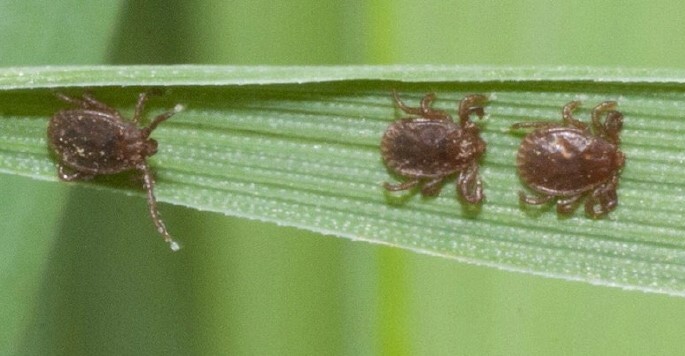
The Asian longhorned tick is native to temperate regions of Asia such as Japan, Korea, China, Australia, and New Zealand. It has the ability to reproduce by parthenogenesis, which allows a female ticks to create a population without mating and can lead to massive infestations.
Factors that influence Asian longhorned tick survival largely depend on temperature, humidity, day length, host availability. Optimal temperatures for Asian longhorned tick eggs range from 82-90*F, while optimal temperatures for adults range from 60-86*F. The tick is a three host tick which means that 90% of their life is spent off the host.
Asian longhorned ticks preferred host include; cattle, goats, sheep, deer, raccoons, birds, opossums, dogs, horses, cats, rabbits, pigs, and humans.
Pathogens associated with the Asian longhorned tick include; anaplasmosis, ehrlichiosis (human), spotted fever rickettsia (human), lyme disease (human), bovine theileriosis.
Please share this information with your stakeholders to make as many livestock producers as possible aware. More information is available here: Asian longhorned tick: What you need to know (usda.gov)
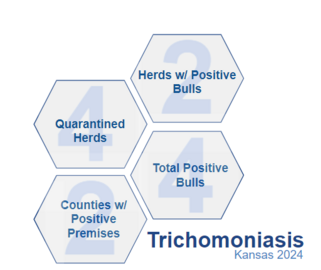
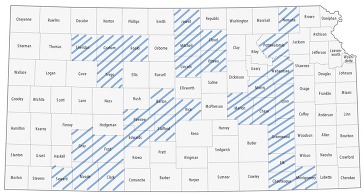
2024 Trichomoniasis Cases
 |
|
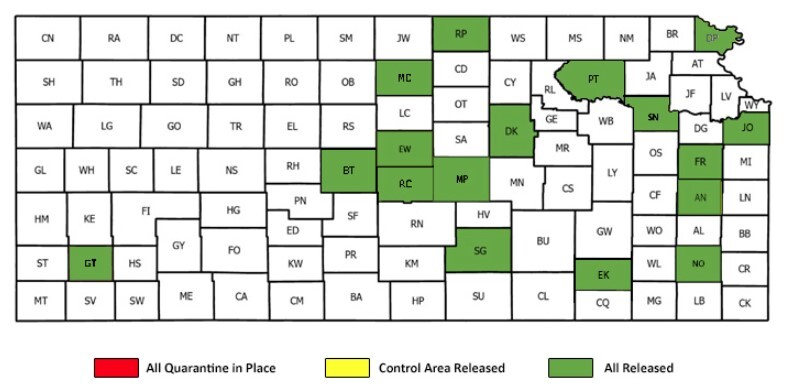
Trich is a reportable disease to the KDA Division of Animal Health. Kansas has regulations which address the interstate movement of bulls and cow, as well as the change of possession of bulls within Kansas. It requires bulls greater than 18 months of age, any non-virgin bulls, or bulls of unknown virginity status to be certified negative for Trich prior to movement, unless moved directly to slaughter or feeding to slaughter.
|
Veterinarians offering official tests must be certified in the collection, handling, and shipping of samples. Recertification is required every five years. Veterinarians seeking to become Trich certified should visit the Kansas State Veterinary Diagnostic Laboratory Trich Certification course site.
|
|
EID Reader Giveaway
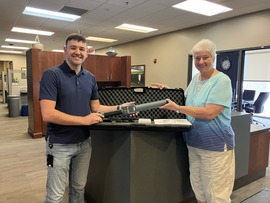
Dr. Jody Johnson was the lucky winner of the EID Reader given away during the 2024 Animal Health Regional Workshops!
Pictured is ADT Coordinator Garrett Girk with Dr. Johnson
Missing Livestock?
If you think livestock have been stolen...
- Preserve the crime scene. Do not disturb any tire tracks or footprints.
- Report it immediately to local law enforcement. Timely reporting is essential to successful investigations
To report missing, strayed or stolen livestock, contact your local sheriff and email KDA.Brands@ks.gov.
|
Premises Identification Numbers

A National Premises Identification Number (PremID or PIN) is a confidential unique code that is permanently assigned to a single physical location. A PIN allows animal health officials to quickly and precisely identify where animals are located in the event of an animal health emergency. A PIN is required to purchase official identification tags.
To obtain a PIN, submit the registration form that can be located on the KDA website under the Division of Animal Health tab. or Click Kansas PIN Application.
|
 Check out our new website!
agriculture.ks.gov/animalhealth
|
|
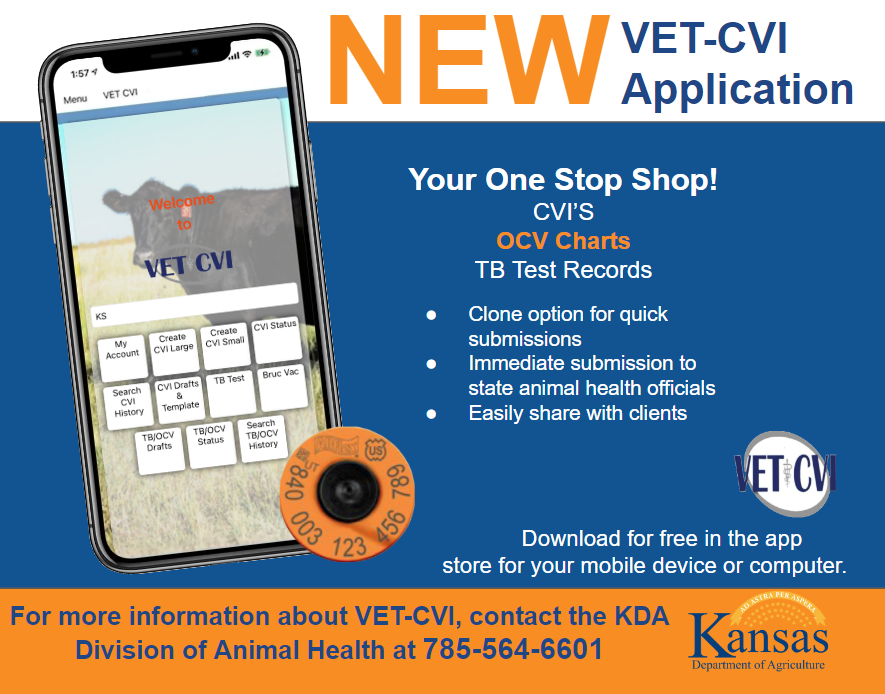
Are you having trouble with the Kansas eCVI?
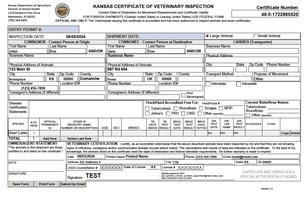
Kansas Animal Health has noticed an increase in problems related to the commonly used eCVI (electronic Certificate of Veterinary Inspection) PDF. These issues include difficulties viewing and signing the CVI. Unfortunately, Adobe Acrobat no longer supports the platform on which the eCVI PDF was built. As a result, there is no way to fix these issues. To address this, Kansas Animal Health recommends switching to VET-CVI for those still using the eCVI PDF. For additional questions reach out to the Kansas Division of Animal Health at 785-564-6616.
REGIONAL MEETINGS
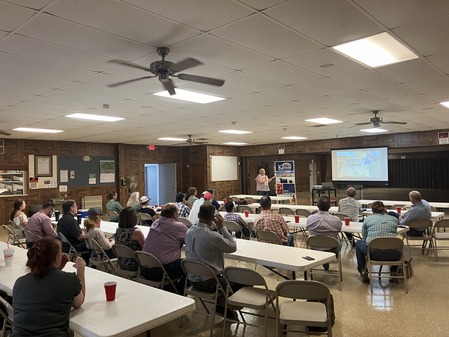
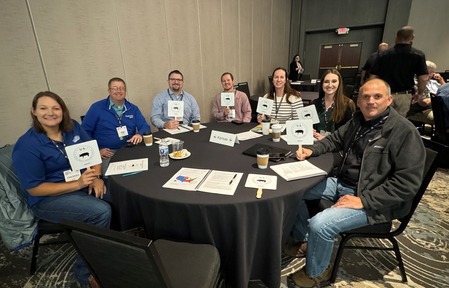
The Kansas Department of Agricultures Animal Health and Emergency Management programs recently hosted eight regional workshops across the state. These workshops attracted around 270 attendees from various agencies and organizations, including government and private sector partners.
The workshops were divided into two sessions. The afternoon session targeted first responders, emergency management, and county public sector partners, covering topics like KDA’s Division of Animal Health, Foreign Animal Disease (FAD) emergency planning, livestock truck rollovers, and pet and livestock sheltering.
The evening session focused on producers, veterinarians, industry professionals, livestock markets, and farmers/ranchers. Topics included updates from KDA’s Division of Animal Health, current animal health events, Kansas HPAI update, Animal Disease Traceability, Secure Food Supply planning, and a livestock vaccine plan presentation.
KDA plans to continue these workshops at new locations throughout Kansas and continues to emphasize the importance of collaboration with agency and industry partners.
Secure Beef Supply Plan Exercise Hosted in Texas
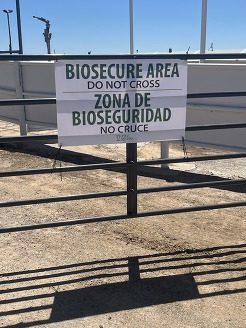
XIT Feeders and Texas Cattle Feeders Association (TCFA) hosted a Secure Beef Supply Plan exercise for stakeholders in the event of a foreign animal disease outbreak.
This exercise focused on providing an overview of foreign animal diseases, the importance of having a biosecurity plan in place, while also showing stakeholders the key parts of the plan at the feed yard. Over 100 industry professionals on a local, state and national level gathered at XIT Feeders to walk through the plan. Kansas Animal Health Commissioner Dr. Justin Smith, Assistant Animal Health Commissioner Dr. Sara McReynolds, and Animal Health Planner Kelly Oliver were in attendance to watch XIT Feeders operationalize their Secure Beef Supply Plan. This exercise tested what it would take for a feed yard to stand up and implement a Secure Beef Supply Plan in the event of a foreign animal disease.
For more information on the exercise visit: Texas Cattle Feeders Association
|
|
|
KFRM Radio Awards Fredonia Livestock Auction
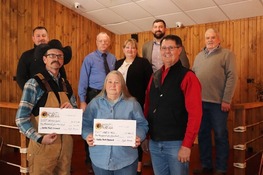
A $5,000 reward was presented by KFRM radio to Rodney Shaw, the Fredonia Livestock Auction general manager, and Janet Tuck, office manager. They were instrumental in providing support and information that resulted in the conviction of a suspect that was found guilty on three counts of felony theft for stealing cattle. This investigation was conducted by Jim Pinager and Josh Winkler, Kansas brand investigators. It was initiated on August 8, 2019 and concluded on December 13, 2023. Sentencing is yet to be determined.
|
Rural Practice Enhancement and Veterinary Medical Loan Repayment Program
The U.S. Department of Agriculture's Veterinary Medical Loan Repayment Program (VMLRP), authorized by the National Veterinary Medical Services Act, helps qualified veterinarians offset a significant portion of veterinary education debt in return for their service in a certain high priority veterinary shortage area.
The Veterinary Services Grant Program supports veterinary shortage situations through the Rural Practice Enhancement grant. RPE grants aim to enhance or expand veterinary practices in rural areas by equipping veterinary offices, sharing in overhead costs, and/or establishing mobile veterinary facilities.
For more information please visit: Veterinary Medicine Loan Repayment Program and Veterinary Services Grant Program
|
Fourth-Annual US SHIP House of Delegates Meeting
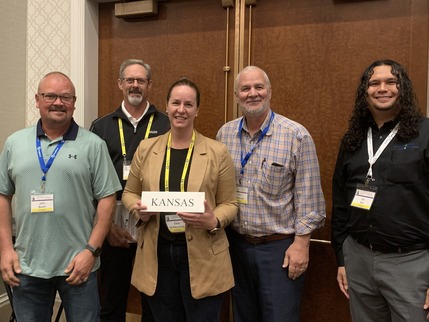
The fourth-annual US SHIP House of Delegates meeting took place the week of September 2nd in Bloomington, Minnesota. Pork producers, veterinarians, state animal health officials, state pork association officials, and USDA personnel discussed and approved program standards and resolutions for a national certification program to protect swine health.
Key topics included a voluntary certification for Porcine Epidemic Diarrhea Virus (PEDv), site biosecurity updates, traceability, feed biosecurity, and updates to the General Conference Committee (GCC), which will advise USDA APHIS and the U.S. Secretary of Agriculture on swine health matters.
US SHIP, modeled after the poultry NPIP program, is a partnership between the industry, state, and federal organizations to improve preparedness in the U.S. pork industry. Participants achieve certification for African Swine Fever and Classical Swine Fever, demonstrating disease-free status outside control areas. Kansas had eight voting delegates and currently has 10 producers with 255 premises enrolled in US SHIP.
NPIP Annual Conference
The National Poultry Improvement Plan (NPIP) Biennial Conference took place from August 27-30 in Providence, Rhode Island. Delegates from each state discussed and voted on 56 proposed changes to the NPIP, which aims to certify that U.S. poultry and poultry products are free of specific diseases. The Kansas delegation included representatives from various poultry organizations.
NPIP is a collaborative program between the poultry industry and state and federal organizations. It sets standards to ensure the health of U.S. poultry breeding stock, hatcheries, and products, striving to reduce or eliminate harmful diseases. Poultry owners can voluntarily participate in NPIP to certify their flocks as disease-free. Kansas has 162 NPIP participants.
Notes from the field, with Dr. Crisler
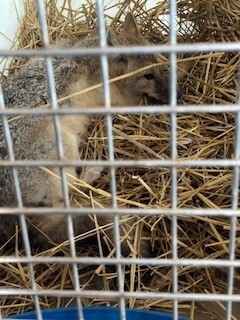
As an interesting change of activities, KDA veterinary field staff and Kansas Department of Wildlife and Parks were able to assist with the relocation of two male swift fox to a conservation breeding facility in North Dakota. Though Kansas has areas with healthy populations, much of the swift fox range has been reduced and some states have them classified as endangered. With oversight by the Association of Zoos and Aquariums, a swift fox breeding facility associated with the Dakota Zoo is focused on preserving the species. The two males from Kansas will be introduced to aid in the genetic diversity of this population.
|
|
|
|
|
|