|
Thursday, January 13, 2021

|
|
|
“I will continue working with our health officials to make sure our hospitals have the resources they need to keep Kansans safe. I give my deepest appreciation to all our health care workers during this difficult time.”
- Governor Laura Kelly
|
|
|
Starting tomorrow, our weekly newsletter will also be released in Spanish. If you would like to receive it, sign up using the button below.
|
|
|
Daily COVID-19 cases continue to rise throughout Kansas, driven in large part by the highly contagious Omicron variant. With Kansas reaching over 6,000 daily cases this week, the current wave is recording the highest number of daily cases since the start of the pandemic, similar to many other states across the country. Hospitalizations also continue to increase in both adults and children. Adult hospitalizations have almost reached last winter’s peak, while pediatric hospitalizations are nearing the record high last September driven by the Delta surge. Hospitals are experiencing staffing shortages (see below for more details) as the rapid spread of the virus is affecting many health care professionals. We urge all Kansans to continue using measures to keep safe and prevent infections: masking, testing, and distancing as possible. We also ask you continue encouraging your families, friends, and communities to get vaccinated and boosted. Please click here to track COVID-19 trends and here to find KDHE’s weekly summary of local vaccine and testing events.
|
|
|
Health care professionals and hospitals are again overwhelmed in the midst of the new surge of cases fueled by the Omicron variant. With the number of daily COVID-19 cases rapidly increasing, hospitals across the country and in Kansas are experiencing a critical shortage in staffing, affecting capacity to care for patients.
Why this matters: As we reported last week, emerging evidence shows that Omicron, while appearing to be less severe than Delta, can spread faster than other strains of COVID-19 resulting in an overwhelming increase in the number of cases. "We have significant staffing shortages throughout healthcare. You're seeing people canceling clinics, because they can't staff the practices. They can't staff the operating rooms. We can't staff inpatient beds." said Steve Stites, Chief Medical Officer at The University of Kansas Health System.
A look at the numbers: About 24% of US hospitals are reporting a critical staffing shortage. These staffing shortages are growing as frontline health care professionals are either getting sick with the virus or forced to quarantine due to exposure to COVID-19. At the University of Kansas Hospital, for example, while the number of cases rose from 40 on December 1st to 139 late last week, more than 900 employees (about 7% of the hospital’s workforce) have been infected with COVID-19 or are awaiting test results, hindering their ability to work.
The impact beyond hospitals: Other sectors are facing staffing challenges during the current surge in COVID-19 cases, similarly to hospitals. On top of hospitals experiencing capacity and staffing challenges, it is also reported that many first responders are out with COVID-19, further disrupting the full chain of emergency services. As schools opened after the holidays, local school districts are experiencing staff absences caused by COVID-19 illness and pandemic-induced stress.
What this means: Last week, to alleviate healthcare staffing shortages and facilities’ constraints caused by the surge in COVID-19 cases, Governor Kelly issued a 15-day disaster declaration and two executive orders to aid Kansas hospitals and adult care homes. We all must do our part to keep our healthcare workers safe and ensure our medical infrastructure can keep caring for patients, by getting vaccinated and boosted, wearing masks when in public, distancing when possible, and getting tested.
|
|
Given the rapid rise in cases due to the Omicron variant, demand for COVID-19 testing has also rapidly increased. KDHE acknowledges many Kansans are experiencing long wait and result turnaround times, while also experiencing difficulty in finding a testing location. KDHE is actively taking steps to address these issues and will share additional updates as they are available. |
|
|
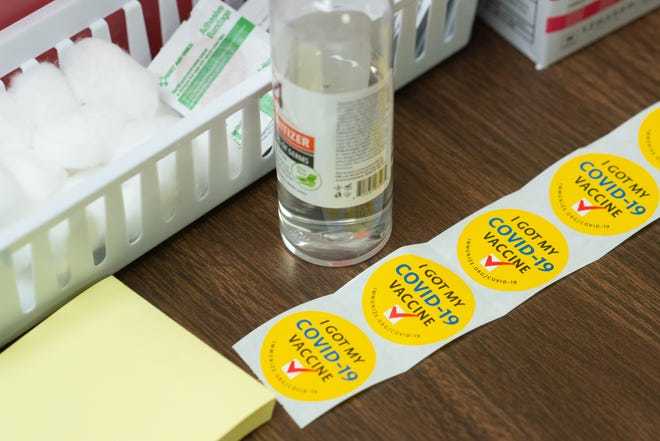
From the Topeka Capital-Journal
CDC updated criteria for booster eligibility and isolation and quarantine guidelines. Over the past few weeks, the CDC published new guidance regarding waiting times for boosters and updated quarantine and isolation guidelines. Given information is evolving quickly, we want to take this opportunity to provide all Kansans with the latest information and materials to navigate these new guidelines.
What to know about booster eligibility: Over the past few weeks, the CDC:
A comprehensive chart detailing vaccine and booster eligibility can be found on the KDHE website in English and in Spanish.
Additionally, the CDC updated the recommended quarantine period for anyone in the general public who is exposed to COVID-19:
- Unvaccinated individuals or those who are more than five months out from their second Pfizer or Moderna dose, or more than 2 months after the J&J vaccine, and not yet boosted should quarantine for 5 days followed by strict mask use for 5 additional days
- Individuals who have received a booster do not need to quarantine, but should wear a mask for 10 days after exposure
- All individuals who were exposed to the virus are recommended to test on day 5, if possible. If positive, individuals should follow the isolation guidelines
Find more information regarding isolation and quarantine guidance for health care workers and the general public on the KDHE website.
What to do if you have COVID-19: If you think you have contracted COVID-19, or if you came into close contract with someone infected with the virus, you can use the multilingual CDC COVID-19 Self-Checker tool to receive resources and recommendations on actions and measures you should take.
|
|
|
KDHE launched multiple new comms campaigns to encourage Kansans to get vaccinated and boosted. Research shows that vaccines and boosters help broaden and strengthen protection against severe illness and death caused by Omicron and other COVID-19 variants. It remains important to continue to message the safety and efficacy of vaccinations. In our effort to keep Kansans safe, KDHE is committed to continue answering questions raised by our communities and provide information to address the concerns of those who have not yet gotten vaccinated or boosted.
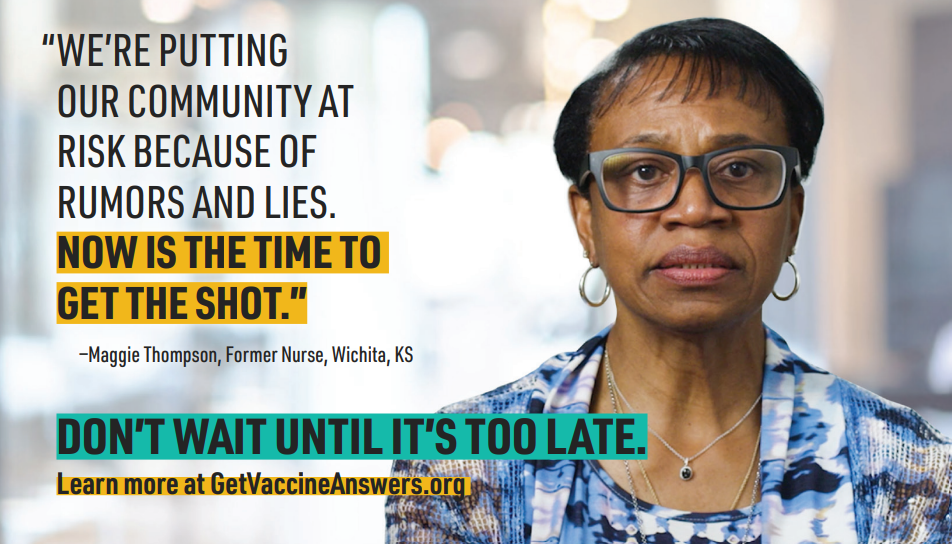
New PSAs geared toward Black/African American Kansans: While the gap is decreasing, Black/African American vaccination rates remain behind other races. As reported in the KDHE public dashboard, vaccination rates for Black/African American Kansas are about 7 percentage points behind white Kansas adults. To address common concerns and misinformation in the Black/African American community, this week KDHE launched a refreshed set of PSAs filmed in barbershops. The first ad, called “How Many,” features Dr. Sharla Smith, PhD asking members of the Overland Park community about the prevalence of vaccines in Kansas. You can watch the “How Many” video here. Videos from the previous flights of the campaign are also available for you to view: Dr. Vernon Mills, radio host Danielle Norwood, and Nurse Maggie Thompson.
New booster campaign: Over the past few months the FDA and the CDC authorized booster shots for many vaccinated individuals. With a large number of young Kansans newly eligible to receive their booster shot (children ages 12-15 became eligible earlier this month), and many more adults still waiting to receive their dose, it is a priority to urge Kansans to get boosted to keep our communities safe. KDHE has launched a new comms campaign focused on the importance, safety, and efficacy of boosters. The campaign includes video, radio, and digital ads and will run on broadcast and digital platforms. You can watch the video here.
Direct mailers sent to Kansas households: KDHE has released a set of direct mailers to households across the State. The mailers were developed to answers questions regarding boosters, vaccinations for young children, and address some of the myths on COVID-19 vaccines that misinformation has been spreading amongst Kansans.
|
|
|
Thank you for all you do to keep Kansas safe. For more information, check out the COVID-19 County Rankings, KS vaccine data dashboard, and Kansas’s FAQ link. Please share this information with your networks; and again, if I can be of service, please contact me (matthew.lara@ks.gov).
Ad Astra per Aspera,
Matt Lara
Communications Director at Kansas Department of Health and Environment
|
|
|
|
|