|
January 2, 2026
[UPDATED] Increase in Respiratory Illness–Related ED Visits in Lake County, Illinois
Dear Healthcare Providers,
The Lake County Health Department (LCHD) has noted that from Week 48 to Week 52 (November 23–December 27, 2025), there has been a continued increase in respiratory illness–related emergency department (ED) visits in Lake County, Illinois (Figure). Influenza (flu) illness accounts for the largest proportion of ED visits compared to COVID-19 and respiratory syncytial virus (RSV).
On December 26, the Illinois Department of Public Health (IDPH) reported that flu activity has reached MODERATE levels. A State of Illinois Rapid Electronic Notification (SIREN) Health Alert from the IDPH was sent to healthcare facilities with details regarding temporary visitor restriction policies and broader use of source control (i.e., masking).
For weekly respiratory activity updates in Lake County, visit LCHD's Communicable Disease webpage.
Figure. Respiratory Illness-related Emergency Department Visit Rates (%) in Lake County, IL (2025–2026 Season)
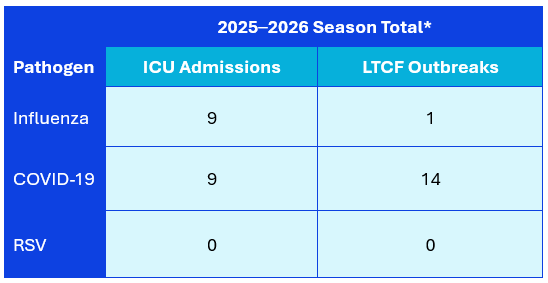
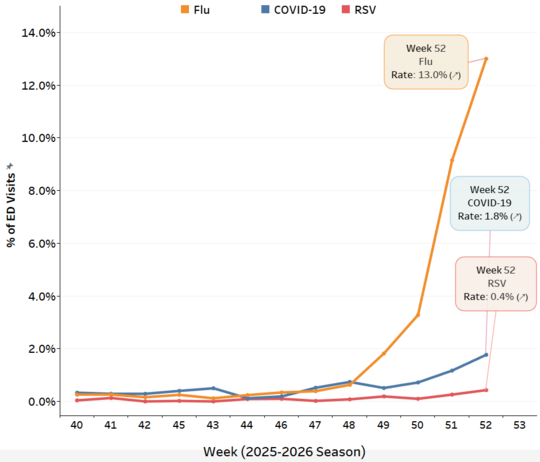 Table. Respiratory Illness-related ICU Admissions and LTCF Outbreaks in Lake County, IL (2025–2026 Season)
Abbreviations: ICU, intensive care unit; LTCF, long-term care facility.
*September 28–December 27, 2025, which represents, to date, the 2025–2026 respiratory season.
Call to Action
Enhanced History-Taking
For patients presenting with febrile respiratory symptoms, please document:
- Exposure to others with diagnosed infections.
- Recent exposure to poultry, wild birds, or dairy products (relevant for zoonotic pathogens such as H5N1 or Q fever).
- Occupational exposures, including farming, animal handling, or healthcare roles.
Diagnostic Protocols
- Conduct respiratory pathogen testing, including influenza, COVID-19, RSV, and other respiratory viruses.
- Collect appropriate specimens (e.g., nasopharyngeal swabs or lower respiratory samples) to ensure accurate diagnosis.
- Laboratories should submit influenza A–positive specimens from ICU patients that are not subtyped onsite or are untypeable to the IDPH laboratory after obtaining authorization from the Lake County Health Department Communicable Disease Program by calling (847) 377-8130, option #1; once authorized, specimens may be forwarded to IDPH for subtyping (see IDPH's Respiratory Testing and Reporting Guidance for details).
- Prioritize additional pathogen-specific testing when zoonotic or other high-risk exposures are suspected and contact LCHD's Communicable Disease Program at (847) 377-8130, option #1.
Treatment and Support
- Promptly initiate indicated antiviral therapy (e.g., oseltamivir, zanamivir, peramivir for influenza; nirmatrelvir/ritonavir for COVID-19) and antimicrobial treatment when secondary bacterial infection is suspected.
- For severe, atypical, or unusual cases, consult infectious disease specialists for targeted management.
Vaccination Campaigns
Strongly advocate for influenza, COVID-19, RSV, and pneumococcal vaccinations to reduce the burden of respiratory illness. This includes:
- Influenza vaccination for everyone aged 6 months and older, with particular emphasis on those at higher risk of complications.
- COVID-19 vaccination and boosters for all eligible individuals, ensuring they are up to date or starting the series if not yet immunized.
- RSV vaccination for adults aged 70 years and older, and for adults aged 50 to 69 with risk factors, to prevent severe RSV-related illness.
- RSV monoclonal antibody prophylaxis for infants under 8 months old during their first RSV season, and for children over 8 months old during their second RSV season.
Infection Control Precautions
Enhanced infection control precautions are strongly recommended in healthcare settings during periods of increased acute respiratory illness (ARI) in Lake County. These measures include, but are not limited to:
- Ensuring appropriate ventilation in patient care areas.
- Masking for staff, patients, and/or visitors during periods of heightened respiratory illness transmission.
- Restricting visitors to individuals aged 18 years and older, with a maximum of two visitors per patient, and enforcing entry symptom screening.
- Providing appropriate personal protective equipment (PPE) for staff managing suspected or confirmed ARI cases, including fit-tested N95 respirators, eye protection, gowns, and gloves.
- Educating staff on infection prevention and control practices, including awareness of zoonotic disease risks.
- Consulting with LCHD's Communicable Disease Program at (847) 377-8130.
Resources
Thank you for your continued vigilance and partnership in protecting the health of our community.
Sincerely,
Communicable Disease Program
Lake County Health Department
Was this email forwarded to you? Join our list to receive updates for healthcare providers!
|