|
September 10, 2025
Tick-talk – 2025 Updates on Vector-borne Diseases
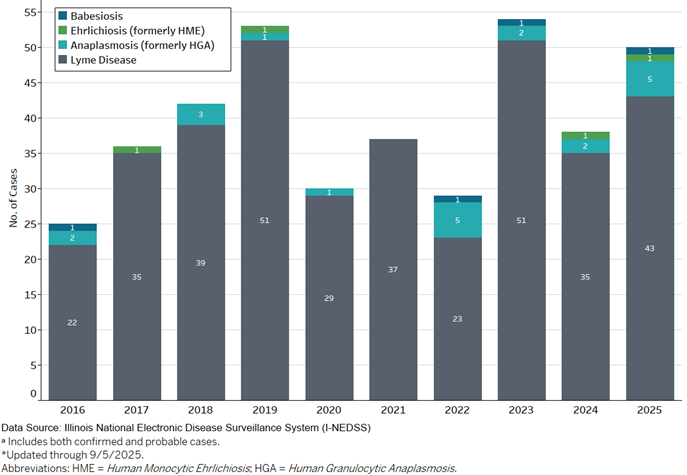
This summer has seen the highest uptick in emergency room visits nationally for tick-related concerns since 2017, per the CDC. As of August 27th, 2025, the Lake County Health Department has identified 38 confirmed or probable cases of Lyme disease in Lake County, Illinois (Figure 1). Lyme disease is the most common tick-borne disease, although, five cases of anaplasmosis have also been reported this year—the highest annual count since 2022. Babesiosis and ehrlichiosis have also been reported. These diseases are transmitted by ticks carrying bacteria such as Borrelia burgdorferi, Borrelia miyamotoi, Anaplasma phagocytophilum, and Ehrlichia muris eauclairensis (EME), as well as parasites such as Babesia microti.
Figure 1. Reported tick-borne disease casesa in Lake County, IL (2016-2025*)
 Tick season continues through the fall, with blacklegged ticks remaining active and capable of transmitting disease. Outdoor activities like hiking, leaf raking, and hunting increase risk of exposure to ticks, making prevention and monitoring essential throughout the upcoming fall months. The best way to prevent tick-borne diseases is through education on personal protection. This includes wearing long-sleeved clothing and pants, using insecticides, conducting tick checks, and promptly removing any ticks found.
Providers:
Remember to include Lyme disease in your differential. Clinical assessment considerations include:
- Likelihood of tick exposure
- Signs and symptoms of Lyme disease
-
Erythema migrans, an expanding rash with a target-like appearance
- Neurologic symptoms, such as facial droop, numbness, or headache
- Cardiac symptoms, such as light-headedness or heart palpitations
- Joint pain or swelling, muscle aches
- Results of lab tests
Testing for Lyme disease should not occur immediately after a tick bite, as antibodies take 4-6 weeks to appear. The CDC recommends a two-step process, typically using enzyme immunoassays and western blots.
-
If the first test is negative, no further testing is needed. If positive or equivocal, a second test is required.
-
If the second test was collected from a patient experiencing symptoms for more than 30 days, positive IgG indicates Lyme disease in the recent or remote past. If the second test was collected from a patient with symptoms for less than 30 days, both IgM and IgG positive are needed for a positive result.
Treatment can be started based on clinical symptoms without positive lab results. Oral antibiotics like doxycycline are indicated for most patients in the early stages of Lyme disease, along with rest and analgesics. Doxycycline is preferred as it is effective in treating possible co-infections such as anaplasmosis, ehrlichiosis, babesiosis, and Rocky Mountain spotted fever.
Other vectors, like mosquitos, can also transmit potentially dangerous diseases like West Nile virus. West Nile virus can lead to serious symptoms like a high fever and cause neurologic disease, including meningitis or encephalitis.
Was this email forwarded to you? Join our list to receive updates for healthcare providers!
|