|
October 11, 2023
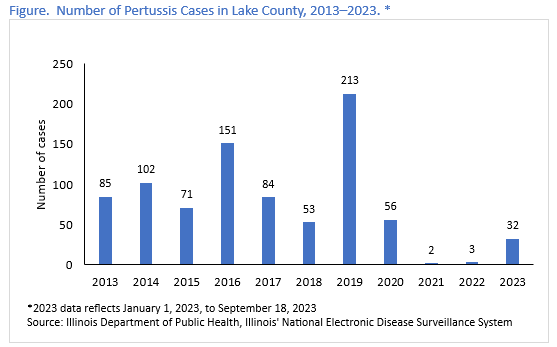
 There has been an increase in pertussis cases in Lake County. Thirty-two pertussis cases have been reported raising concerns of a continued increase for this fall and winter (Figure). In addition to viral respiratory infections, pertussis should be on your differential diagnosis for cough-related illnesses.
 Pertussis is a gram-negative bacterial infection of the nasopharyngeal region. The infection normally develops in 7 to 10 days (but may range from 5 to 21 days) after exposure. Pertussis has three stages:1
-
Catarrhal (1 to 2 weeks): cough, coryza or nasal congestion, low-grade or often no fever at all.
-
Paroxysmal (1 to 6 weeks): mucous accumulation in the throat, severe cough or fits of coughing, high-pitched intake of breath after cough (whoop), post-tussive vomiting, nocturnal cough, and extreme fatigue. Apnea and cyanosis (possibly without cough) may be seen in unimmunized or under-immunized infants.
-
Convalescent (weeks to months): gradual improvement with lessening of cough.
The preferred testing method is a rt-PCR by nasopharyngeal swab and/or culture confirmation (if needed). These tests are available through commercial laboratories.2
Early treatment with azithromycin, clarithromycin, or erythromycin is most important to prevent complications. The duration of therapy depends on the drug prescribed and the age of the patient. People with allergies to macrolides can be treated with trimethoprim-sulfamethoxazole (TMP-SMZ).3
Prevention
Prevention is key to stopping the current pertussis trend for 2023. Surveillance and reporting to public health officials are important steps to take in case finding and contact identification. Preventative strategies include:4
-
Vaccinating children (with DTaP) and adolescents and adults (Tdap).
-
Providing post-exposure prophylaxis (macrolides or TMP-SMZ) to family members and close contacts of pertussis patients, especially people at high risk for complications (e.g., immunosuppressed, pregnant women in the third trimester, infants less than 12 months, people with underlying health conditions, such as asthma and COPD).
-
Excluding patients from school, daycare, and work until pending pertussis test is resulted to stop spread.
-
Ensuring pertussis patients stay home until their medication is completed before returning to school, daycare, and work.
-
Providing education through handouts on hand hygiene, cough etiquette, cleaning and disinfection, and proper ventilation.5
If you have questions, please call Lake County Health Department’s Communicable Disease program at (847) 377-8130, option 2.
- Pertussis - Clinical Features | CDC
- Pertussis - Specimen Collection and Diagnostic Testing | CDC
- Pertussis - Treatment | CDC
- Pertussis - Prevention | CDC
-
Vaccine (Shot) for Whooping Cough (Pertussis) in English | CDC, Vaccine (Shot) for Whooping Cough (Pertussis) in Spanish | CDC
Was this email forwarded to you? Join our list to receive updates for healthcare providers!
|