The 2026-2027 Approved Early Literacy Assessments list has been released!
This updated list identifies the approved universal screening and progress monitoring assessments that schools may use to meet the requirements of Iowa Code 279.68 (Early Literacy Implementation) and House File 2618. These requirements include screening all students in kindergarten through grade 6 three times each year using a valid and reliable assessment.
Schools should select their universal screening and progress monitoring assessment(s) from the approved list.
If you have questions regarding the approved assessments or implementation requirements, please contact Greg Feldmann at greg.feldmann@iowa.gov or Synthia Davis at synthia.davis@iowa.gov.
Renaissance has notified the Department that benchmarks and norms for screening and progress monitoring assessments will be updated for the 2026-2027 school year. The new benchmarks and norms are set to release on July 31, 2026, and will be available in the FastBridge platform under the Training & Resources tab. FastBridge periodically updates its benchmarks and norms so educators can accurately understand how students are performing and make sound instructional decisions. As student populations and learning conditions change over time, updated benchmarks ensure expectations reflect current realities rather than outdated performance patterns. This helps schools correctly identify which students are on track and which need additional support. Ultimately, these updates support effective MTSS implementation over time.
Important: Beginning in the fall of 2026, schools need to update local resources and support to match the new benchmarks and norms.
After July 31, users will continue to administer the same affected assessments, but reports and setup experiences referenced will show the updated benchmarks and norms.
The affected assessments include:
aReading (K–12), including off-grade norms for K–1
aMath (K–12), including off-grade norms for K–1
earlyReading composite and subtests (K–1)
earlyMath composite and subtests (K–1)
CBMreading (1–8), including off-grade updates for grades 4–8
CBMmath Automaticity (1–12), including off-grade updates for grade 1
AUTOreading (K–12), including off-grade updates for grades K–3 and High School norms
Progress Monitoring norm growth targets used in setup defaults
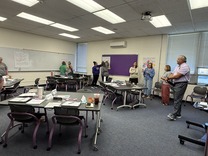
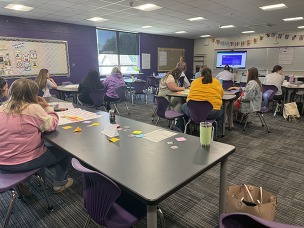
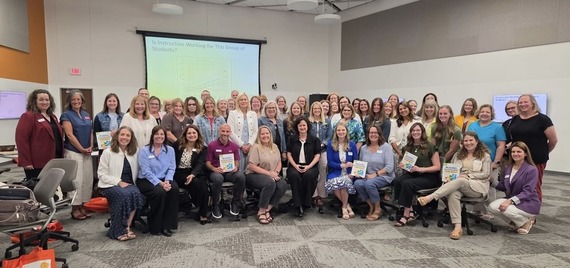
Eagle Grove Community School District is one of 38 school districts across Iowa selected to receive funding through the Comprehensive Literacy State Development (CLSD) Grant. As part of its ongoing commitment to improving literacy outcomes for all students, the district partnered with its Grant Support Providers this summer to engage educators in a two-day professional learning experience focused on the Science of Reading, evidence-based instructional practices, and high-quality literacy instruction.
The professional learning brought together educators from across the district to deepen their understanding of foundational literacy instruction, writing practices, and the implementation of evidence-based strategies that support student achievement. Rather than viewing professional development as a one-time event, district leaders emphasized the importance of establishing a continuous cycle of learning, reflection, implementation, and improvement.
A key focus of the training was helping educators understand the "why" behind instructional decisions by utilizing student data to identify strengths, address areas for growth, and prioritize instructional practices that have the greatest impact on student learning. Participants explored how high-quality instructional materials (HQIM) can support consistent, standards-aligned instruction and discussed ways to strengthen implementation across classrooms and grade levels.
In addition to whole-faculty learning focused on foundational Science of Reading principles and writing instruction, educators engaged in department-specific training designed to meet the unique needs of English Language Arts, Special Education, and Multilingual Learner teachers.
Throughout the two days, educators were encouraged to embrace the role of reflective practitioners—continually examining their practice, analyzing student outcomes, and making informed instructional adjustments to better meet the needs of learners.
This professional learning experience demonstrates Eagle Grove's dedication to creating a sustainable culture of literacy excellence. By investing in ongoing educator development, implementing high-quality instructional materials, and utilizing evidence-based practices grounded in the Science of Reading, the district is taking meaningful steps to ensure every student has access to effective literacy instruction and the opportunity to become a successful reader and writer.
Through the support of the CLSD Grant and the commitment of its educators, Eagle Grove continues to build a strong foundation for literacy achievement that will benefit students for years to come.
Iowa Code 279.68, as amended by House File 2618 and House File 784, promotes effective assessment, instruction, and intervention practices to support all students to become proficient in reading and mathematics. Taken together, these separate requirements are combined into a common set of assessment, intervention and decision-making practices.
Access the Implementation Guidebook for the Iowa Academic Standards for English Language Arts and Literacy, which offers free professional learning materials aligned with the revised standards.
The guidebook includes video recordings, presentation slides, and additional resources, covering topics such as an overview of the revised standards, foundational skills, shifts in ELA and literacy, and depth of knowledge. Additional resources include the K-12 Vertical Progression for English Language Arts, Iowa Comprehensive State Literacy Plan, and a spreadsheet of the English Language Arts and Literacy Standards to support district-level planning and implementation.
This document is regularly updated with new resources as they become available.
Iowa districts participating in the Iowa Comprehensive Literacy State Development (CLSD) grant were invited to attend the fourth session of the HQIM Leadership Academy on either July 9 or July 10, 2026. Other districts that have participated Iowa districts participating in the Iowa Comprehensive Literacy State Development (CLSD) grant recently attended Session #4 of the HQIM Leadership Academy, “Monitoring and Responding to Evidence of Implementation.” This session built upon the learning from previous sessions, including “Effective Leadership During Adoption and Implementation of HQIM” and “Continuous Improvement: Supportive, Aligned Systems and Structures.” The Department is planning future training and collaboration opportunities through the HQIM Leadership Academy for the 2026-27 school year to build literacy and mathematics leadership capacity across Iowa.
Please continue to monitor Iowa’s CLSD website for any updates.
For additional questions about the CLSD grant, please contact Darcie Kress at darcie.kress@iowa.gov.
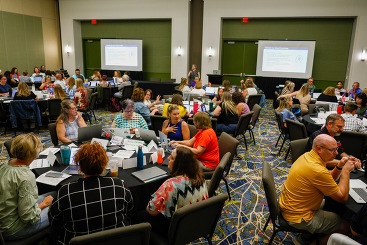
On June 3-4, 2026, higher education faculty and educator preparation program staff from across Iowa gathered at the University of Northern Iowa for two days of professional learning focused on the Science of Reading in educator preparation programs. Sponsored by the Iowa Department of Education, the summit brought together participants and Department staff from the Division of Teacher Quality and Innovation and Bureau of Academics and Learner Supports Literacy Team in the PK-12 Learning Division, reflecting a shared commitment to strengthening literacy outcomes through teacher preparation. This train-the-trainer event featured keynote presentations by Stephanie Stollar and Nina Lorimor-Easely, along with sessions from Molly Ness, the University of Iowa, Amplify, and Darcie Kress. Attendees explored evidence-based literacy practices, strengthened their understanding of Science of Reading principles, shared resources, and fostered collaboration across institutions to support greater consistency in educator preparation statewide. Division Administrator of Teacher Quality and Innovation, Jay Pennington, and members of the Department’s teacher quality team provided information and additional support during the summit.
Participants highlighted the quality, relevance, and practicality of the experience. The most frequently cited strength was the abundance of ready-to-use resources and actionable content that could be immediately applied within educator preparation programs. One participant shared, “Thank you so much for this opportunity and organizing wonderful speakers with ready-to-use content.” Another noted, “Great resources and presenters yet again this year. This is one of my favorite professional learning sessions. I greatly appreciate the time and effort that you all put forth to make this amazing.”
The summit also demonstrated a continued commitment to advancing evidence-based literacy instruction. Following the 2026 Summit, 100% of participants reported they were either likely (19.4%) or extremely likely (80.6%) to advocate for integrating Science of Reading principles into literacy instruction within educator preparation programs. Compared to the 2025 post-survey results, this measure increased by 3 percentage points while maintaining an exceptionally high level of advocacy across both years.
As Iowa continues to strengthen educator preparation through evidence-based literacy practices, the Iowa Higher Education Summit provides an important opportunity for collaboration, shared learning, and continuous improvement. The Department looks forward to continuing its partnership with educator preparation across the state to support future educators and advance literacy outcomes for all students.
New Morpheme Lab Supports Literacy Across Content Areas
The IRRC recently released new resources for secondary content-area teachers interested in incorporating morphology instruction into their lessons! These resources—including a morphology application, observation checklists, blog posts, and more—are available in the new Morpheme Lab.
New Resource from the Iowa Reading Research Center
How Can Caregivers Spark Early Literacy?
Young readers develop foundational literacy skills long before they begin reading independently. Two especially important early literacy skills include:
Recognizing the sounds in spoken language
Connecting letters with their corresponding sounds
Caregivers play an essential role in helping children build these early reading skills through simple, everyday interactions and activities.
To support families in this important work, the Iowa Reading Research Center has released the Spark Early Literacy Hub — a free collection of resources designed to help caregivers easily incorporate literacy learning into daily routines.
The hub provides practical, family-friendly tools and activities that can be used at home, during playtime, while reading together, or throughout everyday conversations. These resources are designed to make early literacy learning engaging, accessible, and manageable for families.
As we enter the summer months, this resource offers an excellent opportunity for families to continue supporting children’s literacy development in meaningful and fun ways.
We encourage educators and caregivers to explore and share these free resources to help spark early literacy learning at home.
Some of the resources housed on the newly created Spark Early Literacy Hub include the following:
Supporting Your Child’s Early Word Recognition Skills: a short eLearning module that explains early word recognition skills (phonological awareness and letter-sound knowledge) and ten simple activities caregivers can do at home with their children. This eLearning module includes video examples of parents implementing these activities with their children.
Letter-Sound Spark: an online application that includes interactive embedded picture mnemonic cards for the letters of the alphabet and their most common sounds. This app also includes videos that model correct letter-sound pronunciation.
10 Activities to Spark Early Literacy: a downloadable booklet that contains the instructions for ten simple activities to support early word recognition skills at home.
Letter-Sound Memory Game: a downloadable memory match game caregivers can play with their children to build letter-sound knowledge.
Letter-Sound Cards: a downloadable version of the embedded picture mnemonic alphabet cards.
Letter-Sound Alphabet: a one-pager that contains the embedded picture mnemonic alphabet.
HERE is a downloadable flyer that can be shared with stakeholders across Iowa, including educators, parents, caregivers, and community members, to help promote these new resources.
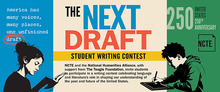
NCTE and the National Humanities Alliance, with support from The Teagle Foundation, invite students to participate in The Next Draft, a writing contest celebrating language and literature’s role in shaping our understanding of the past and future of the United States.
Students in grades 9–12 who are enrolled in a US-based school may enter the contest by responding to one of two prompts, opting to submit a written Literary Reflection or a Multimodal Creation. Winners will receive up to $1,000 each.
The contest deadline is September 30. Entries must be submitted by an educator or guardian.
Panorama Student Success Literacy Risk Status Changes
The literacy and mathematical risk status calculations used by Student Success will be changing to better align with legislative language. This change will occur over the summer and should be in place by the end of August 2026. The updated calculations may result in changes from the student’s spring risk status when they return in the fall. Schools are strongly encouraged to verify student risk status in the fall since status may change for some students.
Reading Assistant featuring Amira will continue to be available to Iowa schools for three more years.
Elementary students will continue to have no-cost access through July 31, 2028 for the first 110,000 elementary students who enroll in the program.
Tier II, Tier III, and English Learner (EL) students will continue to have access through July 31, 2029, ensuring ongoing support for students who benefit most from personalized reading practice.
This extension reflects Iowa's continued commitment to improving literacy outcomes and providing schools with high-quality, evidence-based tools to accelerate student reading growth. We look forward to partnering with districts as even more students experience the benefits of Reading Assistant featuring Amira!
Des Moines Public Schools Deepen Reading Assistant Knowledge
This summer, approximately 60 Des Moines Public Schools educators participated in free EPS Reading Assistant featuring Amira professional learning designed to strengthen implementation and maximize student outcomes. Building on an impressive year in which more than 7,500 students read 304,000+ stories and accumulated 1.5 million reading minutes, the district is continuing to invest in educator learning to further expand the impact of Reading Assistant. Teachers deepened their understanding of Reading Assistant's assessment tools, reports, and instructional features, including Benchmark Assessments, Progress Monitoring, the Dyslexia Risk Indicator (DRI), Mastery of Academic Standards and Targets (MAST), th Foundational, Assessment, and Dynamic reports. Participants also explored effective classroom implementation routines, accommodations, and the platform's embedded micro-interventions aligned to Scarborough's Reading Rope. Des Moines Public Schools looks forward to building on this year's success and continuing to grow student engagement and literacy outcomes through thoughtful implementation and ongoing professional learning.
Interested in bringing this professional learning to your school or district? Free Reading Assistant professional learning is available for Iowa schools and districts, whether you are just getting started with Reading Assistant or looking to deepen your implementation. For more information or to schedule a training, please contact April Gosselink-Lemke at april.gosselink-lemke@iowa.gov.
Responding to requests from instructional leaders across Iowa and school needs, the Department conducted a request for proposals to identify and enter into statewide contracts with negotiated pricing for high-quality instructional materials (HQIM) aligned with Iowa’s state standards for English Language Arts/Literacy and Mathematics.
During a competitive bidding process, publisher submissions were first reviewed to meet rigorous evaluation criteria and the highest levels of quality on EdReports. They were then reviewed and scored by a team of literacy and mathematics experts. Districts interested in utilizing the statewide contracts can contact the Department's Literacy and Mathematics consultants, Leigh Bellville and April Pforts, or access the purchasing list on the Department website to obtain the contract number(s) and then are able to work directly with the vendor(s).
While not exhaustive, the following optional list of statewide HQIM is intended to support schools with options in their evidence-based curriculum review, adoption, and implementation processes. Please note, this purchasing list is not an “approved list.”
The English Language Arts and Mathematics resource list includes:
K-5 ELA:
Amplify CKLA by Amplify Education
Benchmark Advance by Benchmark Education Company
HMH Into Reading by Houghton Mifflin Harcourt
6-12 ELA:
Amplify ELA (6-8) Amplify Education
HMH Into Literature by Houghton Mifflin Harcourt
K-5 Mathematics:
HMH Into Math by Houghton Mifflin Harcourt
i-Ready Classroom Mathematics by Curriculum Associates
6-12 Mathematics:
i-Ready Classroom Mathematics by Curriculum Associates
Illustrative Mathematics Traditional by Kendall Hunt
Imagine IM 6-12 Math by Imagine Learning LLC
For questions regarding the ELA materials, please contact Leigh Bellville, Literacy Consultant, at leigh.bellville@iowa.gov, and for inquiries related to the mathematics materials, please reach out to April Pforts, Mathematics Consultant, at april.pforts@iowa.gov.
The Iowa Department of Education has a program to support schools and child care centers to voluntarily test drinking water for lead. This program is funded through the Environmental Protection Agency’s Water Infrastructure Improvement for the Nation (WIIN) grants. WIIN programs are designed to reduce lead exposure for children (who are most vulnerable) at schools and child care programs as well as increase awareness and education about this environmental health issue.
Ballard Community School District Strengthens Literacy Learning Through Summer Support
This month we are proud to recognize the outstanding efforts of Ballard Community School District as they continue to invest in evidence-based literacy instruction and targeted support for students who may be at risk of falling behind in reading achievement.
This summer, Ballard's elementary team launched a comprehensive five-week summer learning program serving 68 students in grades K-5. Students were identified based on literacy data and invited to participate through a collaborative process that began during spring parent-teacher conferences. Using spring FAST assessment results and additional diagnostic data, district educators carefully placed students into instructional groups designed to meet their individual learning needs.
The program features six classrooms and specialized support from a special education teacher, ensuring students receive personalized instruction in a supportive environment. Literacy instruction is grounded in the district's core evidence-based resources, including 95% Group Core Phonics and Reading Assistant featuring Amira. These tools provide students with opportunities for explicit reading instruction, individualized practice, and immediate feedback to strengthen foundational literacy skills.
A unique highlight of the program is Ballard's partnership with Iowa State University. Twenty-one university student tutors are providing daily one-on-one support to students for 25 minutes each day using UFLI resources. To ensure consistency and high-quality instruction, the district's elementary instructional coaches and Title teachers partnered with the tutors through virtual training and modeling sessions, helping them effectively implement evidence-based literacy practices.
While literacy remains a primary focus, students also receive mathematics instruction using the district's core Bridges curriculum and intervention resources when needed. District leaders note that most students are performing well in mathematics, allowing additional attention to be devoted to literacy growth and acceleration.
Perhaps most importantly, the program is creating an environment where students are highly engaged and excited to learn. Through small-group instruction, individualized support, and meaningful opportunities for success, students are building confidence alongside their academic skills. Educators report that many students are thriving in ways they may not always have the opportunity to during the traditional school year.
Ballard Community School District's commitment to using data-informed decision-making, evidence-based instructional practices, strategic partnerships, and targeted intervention exemplifies the work being done across Iowa to support literacy achievement and close opportunity gaps for students. The district's efforts demonstrate how intentional summer programming can help accelerate learning, foster student confidence, and support long-term reading success.
We applaud the educators, staff, university partners, and families who are working together to ensure every student has the opportunity to become a confident and successful reader.
What are you doing to promote literacy?
Are you utilizing tools to design instruction, assess learning, or create professional learning opportunities to support all students in meeting the expectations of Iowa Academic Standards in ELA/Literacy?
We value your work and would love to hear about your successes. Share your work and celebrations via the Spotlight Literacy Google Form.
Also, feel free to nominate another educator for the spotlight.
Leigh Bellville Literacy Consultant Academics and Learner Supports Iowa Department of Education Grimes State Office Building 515-689-3717 leigh.bellville@iowa.gov
April Gosselink-Lemke Elementary Literacy Consultant Academics and Learner Supports Iowa Department of Education Grimes State Office Building 515-971-0469 april.gosselink-lemke@iowa.gov
Darcie Kress Administrative Consultant - Literacy Academics and Learner Supports Iowa Department of Education Grimes State Office Building 515-729-7584 darcie.kress@iowa.gov
Wanda Steuri Science of Reading and Dyslexia Consultant Academics and Learner Supports Iowa Department of Education Grimes State Office Building 515-238-8634 wanda.steuri@iowa.gov