|
 January 2026
|
|
Inside this issue:
Department of Education Resources
|
Upcoming Deadlines
|
Due Date
|
What's Due
|
|
January 1
|
Last Date to Certify to the Department for Reorganization or Dissolution Action Effective July 1
|
|
January 15
|
At-Risk/Dropout MSA Application Due
|
|
January 27
|
SBRC Hearing
|
|
February 2
|
Last Day to Request Authority to Charge Administrative Cost to Special Education for the Subsequent Fiscal Year
|
|
February 6
|
Deadline to Request to Appear or Submit Exhibits for March 10, 2026 School Budget Review Committee (SBRC) Hearing
|
|
February 16
|
Last Day to Bill for First Semester Special Education Tuition
|
|
February 27
|
Area Education Agency (AEA) Budget Submission Deadline
|
Staff Contact Information
|
|
|
As we step into a new year, the Bureau of School Business Operations would like to recognize the dedicated school business employees in the field who work diligently all year to serve the students of Iowa. The work done in business offices across the state is crucial to the continued growth and success of the state’s educational system. The Bureau shares this commitment to the students of Iowa and strives to be a resource for all. From our team to yours, we wish you health, productivity, happiness, simple reconciliations, clean audits, and account codes that all work. Happy New Year!
A special section at the end of the newsletter highlights the specific areas of contribution for all members of our team.
Do you enjoy helping others in the realm of school finance and accounting? Do you enjoy troubleshooting account coding practices? Do you consider yourself an account coding guru? Are you intrinsically motivated to help and be a resource for others? Join our team!
Position Name #1: Education Program Consultant (School Finance - Accounting) (closes 2/14/26)
Position Name #2: Education Program Consultant (School Business Operations) (closes 2/1/26)
Reach out to Kassandra Cline at kassandra.cline@iowa.gov or 515-326-2242 if you want to learn more about the incredible impact you can have working on our team supporting SBOs across the State!
The Department will be hosting a statewide webinar on February 10 at 11:00 am to introduce the new Individuals with Disabilities Education Act (IDEA) Part B application available in the EdPortal, which will be used to submit budgets and claims for use of IDEA Part B funds previously issued through the AEA system. The intended audience is those who oversee the special education program as well as the person who will submit the budget and the claims.
Please click the link below to join the webinar.
https://IDOE.zoom.us/j/87456513773?pwd=ebv4KjYplLsTPN69bbZiKvegs8ttVm.1
Passcode: 529284
Or One tap mobile :
+16465189805,,87456513773#,,,,*529284# US (New York)
+16513728299,,87456513773#,,,,*529284# US (Minnesota)
Or Telephone:
Dial(for higher quality, dial a number based on your current location):
+1 646 518 9805 US (New York)
+1 651 372 8299 US (Minnesota)
+1 312 626 6799 US (Chicago)
+1 720 928 9299 US (Denver)
Webinar ID: 874 5651 3773
Passcode: 529284
Prior to this year, IDEA Part B revenues were coded to Source 4720 as payments were being made to the district through the Area Education Agencies (AEAs). This year and going forward, these payments will be made by the Department of Education directly to districts and the revenues received will be coded to Source 4521.
Questions may be directed to Sarah Sheeder at sarah.sheeder@iowa.gov or 515-326-0854.
The Department is excited to announce the first annual Iowa School Bus Safety Week Poster Contest. This is a great opportunity for students to learn about school bus safety and to share this important information with others through art.
Details of the Iowa School Bus Safety Week Poster Contest are available in the Transportation section below.
Districts should be closely monitoring the district’s financial position in relationship to the certified budget control lines.
Next Steps: The budget should be amended if the district expects to spend more in the budget control lines as adopted in the 2025-26 Certified Budget (Iowa Code §§ 257.7(2) and 24.9(2)).
Payments may come from other state agencies. If the payment in question is not listed in the Department Warrants application in the EdPortal, it was generated by another agency.
Visit the Department of Administrative Services (DAS) Vendor Payment Portal to view all state payments. The district’s Employer Identification Number (EIN), issued by the Internal Revenue Service is needed to search for the payment. The "details" link by each payment that can be expanded to display a description and contact information.
|
|
|
The Department has updated the Nutrition Programs Indirect Cost Recovery Calculations Examples and Coding (Calculator) on the Department’s Indirect Cost Rate web page. The Calculator is a structured, step-by-step process to calculate the maximum indirect cost recovery on all allowable expenses in the Nutrition Fund. The tool includes the components below.
- Overview and Instructions: The top section provides an explanation of how the indirect cost recovery amount is calculated.
- The Calculator now includes an “FSM” tab to identify payments to Food Service Management (FSM) vendors that may be limited under the federal Modified Total Direct Cost (MTDC) rules. In accordance with 2 CFR § 200.1, only the first $50,000 of total annual payments to each FSM vendor (Object 570-579) may be included in the MTDC base. Any amount over $50,000 per FSM vendor is excluded.
- District Selection and Input Fields: Users first select the district and then enter revenue and expense amounts for each program.
- Calculation Examples:
- Example A: the spreadsheet automatically calculates the maximum indirect costs recovery for federal programs that allow indirect costs.
- Example B: the spreadsheet automatically calculates the maximum indirect costs recovery for all eligible expenses in the nutrition fund.
- Journal Entry Templates: The final section provides example journal entries to record indirect cost recovery between the School Nutrition Fund (Fund 61) and the General Fund (Fund 10). Separate examples are provided for each calculation method.
The Calculator and related examples have been updated to include FY26 allocations, ensuring that calculations align with current indirect cost rate data.
Questions may be directed to Bobby Wilson at bobby.wilson@iowa.gov or 515-210-9674.
A deduction is being made for the cost of certain programs that are paid "off the top of state aid". This deduction, which occurs every year, is for the cost of educational programs for children in the state training school, mental health institutes, other licensed juvenile and foster care facilities, or special education costs for foster care children with no resident district and district court-placed children. As required by Iowa Code, the cost of these programs is distributed to all school districts based on each district's budget enrollment (line 1.1 of the Aid and Levy Worksheet). The deduction starts in January and will continue through the rest of the year. These deductions reduce cash flow but have no impact on a district’s spending authority. Visit the State Payment Information FY26 web page for an updated breakdown of categorical funding.
If you have future questions regarding this deduction, please contact John Parker, Department of Management, at john.parker@dom.iowa.gov or 515-281-8485.
|
|
|
The Special Education Billing application is used to bill districts for costs incurred to serve special education students. The application is open and districts are required to bill by February 16 for first semester billing based on either actual cost per day or estimated cost per day.
Special Education Billing - Days Only
Districts will enter student information by the number of days the student was enrolled and served pursuant to an Individualized Education Plan (IEP) during FY26.
Special Education Estimated Billing
The Department will continue to use the predetermined daily rate feature as implemented in the Special Education Billing application, which allows an additional option in determining the amount billed for the first semester. A Certified Annual Report (CAR) upload is not required if this option is selected. The goal is to simplify the process and assure that every district is sending/receiving first semester bills. This option includes a basic daily rate for special education costs and general program percentages. Refer to the examples below.
Basic Daily Rate for a Level I Student
Special Education Cost:
District Cost Per Pupil (DCPP) X Special Ed Weighting / 180 X 1st Semester Billing Days = Special Ed Expenditures
[($7,988 X .72) / 180] X 90 days = $2,875.68
General Purpose Percentage
DCPP X Level I GPP Per Pupil % (each district is different) / 180 X 1st Semester Billing Days = GPP
[($7,988 X .82) / 180] X 90 days = $3,275.08
Basic Daily Rate for a Level II Student
Special Education Costs:
DCPP X Special Ed Weighting / 180 X 1st Semester Billing Days = Special Ed Expenditures
[($7,988 X 1.21) / 180] X 90 days = $4,832.74
General Purpose Percentage
DCPP X Level II GPP Per Pupil % (all districts are the same) / 180 X 1st Semester Billing Days = GPP
[($7,988 X .32) / 180] X 90 days = $1,278.08
Basic Daily Rate for a Level III Student
Special Education Costs:
DCPP X Special Ed Weighting / 180 X 1st Semester Billing Days = Special Ed Expenditures
[($7,988 X 2.74) / 180] X 90 days = $10,943.56
General Purpose Percentage
DCPP X Level III GPP Per Pupil % (all districts are the same) / 180 X 1st Semester Billing Days = GPP
[($7,988 X .27) / 180] X 90 days = $1,078.38
Days Enrolled and Served - Full or Partial Semester
“First semester billing days” means the number of days the student was enrolled and served pursuant to the student’s IEP. The examples above assume the student was present for the full semester or 90 days. However, for students enrolled and served less than a full semester, the district will enter the actual days enrolled and served rather than 90 (i.e., ($7,988 X 1.21)/ 180 X 25 days = $1,342.42). If a student was Level II for part of the semester and then became Level III, the student will be included as Level II for the number of days served pursuant to the IEP at Level II, and again included as Level III for the number of days served pursuant to the IEP at Level III.
Completing the Application
Upon entering the application, the Local Education Agency (LEA) will need to enter at least one contact person in the categories Special Education Supplement, Claim Forms, and Special Education Billing. Then, select the billing option that will be used for semester one billing.
- Per Day Estimated Rate is the option described above.
- Per Day Actual Costs from Screen 1 is similar to what districts use for final billing.
Please ensure the accuracy of the data pre-populated in the application as listed below.
- Student name
- State Student ID
- Special education weighting
- Resident district
The district is responsible for entering the information below.
- Days enrolled and served
- Individualized costs
If you have further questions regarding Special Education Billing, please contact specialeducationfinance@iowa.gov.
|
|
|
The United States Secret Service National Threat Assessment Center (NTAC), a branch of the United States Department of Homeland Security, published a research report titled, “The State of Behavioral Threat Assessment and Management in K-12 Public Schools” from a 2025 American School Leader Panel Survey. In 2024, NTAC tasked the Homeland Security Operational Analysis Center (HSOAC) with conducting a study to advance the field’s understanding of behavioral threat assessment and management practices in K-12 schools. This report takes a comprehensive look at how K-12 schools are implementing and using behavioral threat assessment and management programs as part of their violence prevention efforts. The intended audience for the report include school- and district-level administrators, school safety partners, law enforcement, and other community-based organizations.
|
|
|
If the student who is placed in a Psychiatric Medical Institute for Children (PMIC):
- Is served pursuant to an IEP, the resident district pays.
- Is a regular education student, the resident district pays.
- Is home schooled, the resident district pays.
- Attends a nonpublic school, the resident district pays.
- Dropped out of school, the resident district pays.
- Recently moved into your district, the current resident district pays.
- Was placed by a parent, the resident district pays.
- Was counted in certified enrollment by another district, the current resident district pays.
- Was under open enrollment prior to the placement, the resident district pays.
Q: Is there a way a district can avoid paying for the educational services a student receives while at a Psychiatric Medical Institution for Children (PMIC) or psychiatric unit of a hospital?
A: If the student has an IEP and parental rights have been terminated, then the host district is responsible for paying. However, the district with the PMIC or hospital may file the claim with the state through the Special Education Billing (SEB) application.
Question: How is the resident district determined?
Answer: According to Iowa Code section 282.1(2) defines the resident district as the location where a student is physically present, whose residence has not been established in another district by operation of law, and is in the district for the purpose of making a home and not solely for school purposes.
Question: If the resident district did not get to count the student in certified enrollment, does the resident district still have to pay?
Answer: Yes, the current resident district is still responsible for the educational costs incurred for a student in a PMIC facility or psychiatric unit of a hospital. Iowa Code section 282.27(5) allows districts to include, in the regular education foster care claim, students who were not included in the resident district’s certified enrollment count and who were placed in either a PMIC facility or psychiatric unit of a hospital. The district where the PMIC facility is located will educate the student and bill the PMIC’s district cost per pupil to the resident district. Students who were not in the resident district’s count will be automatically included in the regular education foster care claim. For students in a psychiatric unit of a hospital, the resident district will need to enter the student in their local student information system in order to generate the record that will populate the regular education foster care claim.
Questions related to billing may be directed to contact Ted Bauer at ted.bauer@iowa.gov or 515-979-5468.
The majority of students who utilize open enrollment attend the serving district on the first day of school, remain enrolled through the last day of school, and do not move during the course of the year. For these students, the serving district bills the resident district twice a year. This is a simplified process. All other situations - involving open enrollment and moving - are not as simple. The information below provides a brief review of how billing is to be handled when changes occur during the year (281 IAC 17).
- Scenario: A student is not utilizing open enrollment on count day, moves after count day, and utilizes open enrollment to remain enrolled in the former district of residence, known as Iowa’s “continuation rule”.
- Related billing: No district is billed for days served under open enrollment for the remainder of the school year. A district cannot bill for the 1.0 funds (the budget year state cost per pupil) or special education costs. If a student utilizes open enrollment to remain enrolled in the same district, that district would have already counted the student in the fall’s certified enrollment count. Billing to the new resident district will begin the following year.
- Scenario: A student is under open enrollment on count day, moves after count day, and continues to utilize open enrollment to remain enrolled in the same serving district.
- Related billing: The serving district will bill the district that generated the count on count day. The serving district can bill for 1.0 funds (the budget year state cost per pupil) and, if applicable, actual special education costs incurred.
- Scenario: A student is identified as homeless and is temporarily living in a different district.
- A homeless student can attend school in the district where the student is currently living or in the district of origin (281 IAC 33.2), which is the Iowa public school district in which the student was last enrolled or in which the child last attended when permanently housed.
- If the district elects to place the student in an educational placement other than the district where they are currently living or the district of origin, the district must provide written justification for this decision (281 IAC 33.7(1)).
- If the parent chooses to enroll the student in a different district other than the district where the student is living or the district of origin, the parent or guardian must apply for open enrollment, and cannot be denied open enrollment on the basis of their homelessness alone.
- If the application for open enrollment is approved after the student is determined to be homeless, the parent assumes responsibility for transportation (281 IAC 33.8(4), 281 IAC 17.9(1)).
- Transportation services to the school of origin (pursuant to open enrollment agreement in place prior to homelessness occurring) is required to be provided pursuant to 42 U.S. Code § 11432 (e)(3)(E)(i)(III). If the school of origin is not the same as the district in which the student is physically located, the district in which the student is physically located and the district in which the student is attending are required to work together to determine a method to apportion responsibility and costs for providing transportation to the school or origin. If a method cannot be agreed upon, costs shall be shared equally between the two districts [42 U.S. Code § 11432 (g)(1)(J)(iii)(II)].
- Scenario: A student is placed into foster care. When a foster care placement occurs, a “best interest determination” decision will be made in consultation with HHS regarding the school of attendance, resulting in either remaining in the school of origin or, if that is found to not be in the student’s best interest, another educational placement that will best serve the student’s needs, including the district where the student resides in foster care. Additional information for each service arrangement is provided below.
- The student remains enrolled in the school of origin.
- Whether the student’s foster care placement is within the same district or not, the student’s resident district does not change in the student information system. The student continues to be identified as having the same resident district. The student does not utilize open enrollment to remain enrolled in the school of origin unless the student was already under open enrollment. The attending district will maintain the same enrollment information, but add the foster care indicator on the new enrollment period record (Iowa Code § 282.31(1)(b)).
- The student does not remain enrolled in the school of origin and enrolls in the district where the student resides while in foster care, or another suitable placement.
- If the student does not have an Individualized Education Program (IEP), the student is a resident in the district where he or she is attending while in foster care. There is no billing. The student will be included in the district’s general education foster care claim, as long as the district identifies the student as being in foster care (Iowa Code § 282.19(3); Iowa Code § 282.31(1)(b)).
- If the student utilizes open enrollment while in foster care to attend a district that is not the district of origin or the district where the student is currently living while in foster care, the serving district will include the student on the regular education foster care claim.
- If the student has an IEP, regardless of where the student attends school, the resident district remains the resident district where a parent lives, if the parent lives in Iowa. The resident district is billed through the Special Education Billing application (Iowa Code § 282.31(2)(a)).
- If the student has an IEP and parents do not live or cannot be found living in Iowa, regardless of where the student attends school, the serving district will use the Look Back feature in Special Education Billing to determine if a district counted the student in the October special education count. If a district counted the student, the district that counted the student will be billed for the student’s educational costs. If no district counted the student on the October special education count, the serving district will bill the state under the foster care claim in the Special Education Billing application at the end of the year (Iowa Code § 282.31(3); 281 IAC 41.907(5)(c)).
- If the student has an IEP and parental rights have been terminated, the serving district will bill the state under Termination of Parental Rights in the Special Education Billing application for days served from the date parental rights were terminated. Billing to the state is completed at the end of the year. A copy of the court action is to be shared with the area education agency (AEA) so the Information Management System (IMS) can be updated accordingly (281 IAC 41.907(6)).
If applicable, the amount to bill for open enrolled students equals the sum of the budget (i.e., current) year state cost per pupil and the supplemental state cost per pupil for the following: teacher leadership and compensation (TLC), professional development (PD), and early intervention childhood(EIC). If the student was included in the resident district’s October 2025 English Learner (EL) supplementary weighting calculation, funds due to the resident district for this purpose are also billable.
For updated billing guidance, including prorated billing amounts, please refer to the 2025-2026 Open Enrollment Billing Chart.
For questions relating to serving homeless students, contact Tyler Navin at tyler.navin@iowa.gov or 515-669-8622.
For questions relating to open enrollment, contact Sara Nickel at sara.nickel@iowa.gov or 515-971-7558.
For questions relating to billing, contact Ted Bauer at ted.bauer@iowa.gov or 515-979-5468.
For questions relating to foster care, contact Elisa Koler at elisa.koler@iowa.gov or 515-669-4052.
The 2026 legislative session began on Monday, January 13. There are various resources available to access information related to any action taken or progress made by The Iowa Legislature.
Department of Education’s Legislative Information web page
Iowa Legislature website
For further information on legislative issues, contact Eric St Clair, Legislative Liaison, at eric.stclair@iowa.gov or 515-326-0274.
The School Budget Review Committee (SBRC) met in regular session to hold hearings on December 16, 2025. The Committee discussed the list of districts that preliminarily incurred a negative unspent balance and negative regular program balance; reviewed lists of late filers for Certified Enrollment, School Association Report (SAR), and the Facilities, Elections, and Sales Tax (FEST) Report; reviewed state decile rankings for unspent authorized budget (UAB) and regular program amounts on a per pupil basis; reviewed the historical list of districts and AEAs that late-filed their Certified Annual Report (CAR), Special Education Supplement (SES), or Annual Transportation Report (ATR); and set the fiscal year 2026-2027 hearing schedule. The Committee certified to the Department of Management (DOM) the list of supplementary weightings for FY27 and approved modified supplemental amounts (MSA) for eligible and requesting districts related to excess costs of providing an English Learner (EL) program in the prior fiscal year, increased enrollment applications, open enrollment out students not included in the prior year headcount, and EL programs offered beyond five years. The Committee reviewed district special education balances and approved MSA for eligible and requesting districts with deficit balances.The Committee accepted the Director’s recommendation to not change the special education weightings.
The Committee approved three requests for modified supplemental amounts (MSA) due to hazard abatement and one request for MSA related to start-up costs for new student programs.The Committee approved a request from one district for a negative MSA equal to excess MSA requests in prior years related to special education deficit amounts and received fiscal updates from three districts that were required to appear based on fiscal triggers. The Committee accepted corrective action plans from two districts that late filed the CAR, SES, and/or ATR and from three districts that preliminarily incurred a negative unspent balance, of which two were accepted and one was tabled, including a directive to appear at the March 2026 hearing with an updated plan.
The Summary of Action can be found on the SBRC Hearing Information web page under the Summary of SBRC Hearing Decisions.
If you have further questions, please contact Stephanie Edler, SBRC Liaison, at stephanie.edler@iowa.gov or 515-689-2258.
Information regarding Iowa’s Students First Education Savings Account (ESA) program can be found on the Department's Students First Education Savings Accounts web page.
|
|
|
Questions relating to the articles below may be sent to State Director for Pupil Transportation, Tom Simpson at tom.simpson@iowa.gov or 515-336-3965 or one of the inspectors below.
Beginning January 1, 2026, House File 395 (Iowa Acts) grants districts the authority to choose not to participate in (i.e., opt out of) the School Transportation Operator’s Program (S.T.O.P.), which is the Department’s school bus driver training program. S.T.O.P. consists of three components, two for new drivers (online and face-to-face) and the annual renewal class for all drivers.
Default: No action is required of districts who wish to continue to participate in the Department’s S.T.O.P. training.
Non-Participants: Districts who choose not to participate in the S.T.O.P. training program for new and/or returning school bus drivers must complete two tasks.
- Take annual board action.
- Notify the Department.
1. Take Annual Board Action
Districts that choose to opt out of S.T.O.P. training must do so annually.
To Opt Out of School Year 2025-2026
Window for Board Action: January 1, 2026 to June 30, 2026
To Opt Out of School Year 2026-2027 and beyond
Window for Board Action: January 1 to June 30 prior to the beginning of the school year.
Example 1: Opt Out for School Year 2026-2027
Window for Board Action: January 1, 2026 to June 30, 2026
Example 2: Opt Out for School Year 2027-2028
Window for Board Action: January 1, 2027 to June 30, 2027
Districts that choose to opt out of S.T.O.P. training for any school year, beginning with the 2026-27 school year, should complete the opt out procedure prior to July 1 of that school year. This will allow driver authorizations to be issued to drivers that have not participated in S.T.O.P. training, but are otherwise qualified.
Template Board Language
Department S.T.O.P Training Requirement: The district’s administration is authorized to opt out of the Department’s S.T.O.P.[new school bus driver or annual school bus driver] training for new and returning drivers for the 2025-26 school year.
Motion by _______ to approve the decision to not require S.T.O.P. training for the district’s school bus drivers for the 2026-27 school year. Seconded by _______; Ayes: ______, Nays: ________The motion _______ by a vote of _____.
Notify the Department
If a district’s board of directors approves the decision to discontinue the requirement for its school bus drivers to receive the Department’s S.T.O.P. training, the district must notify the Department via the Driver Authorization System (DAS) each school year. The steps to complete this process are listed below.
- Log in to the Driver Authorization System (DAS).
- Select the “Driver Training” tab at the top of the page.
- Choose the “Opt Out Training” option.
- On line 2, choose the date that the board meeting took place.
- On line 3, check the “Opt out of Training” box.
- On line 4, check the “District Approval” box.
- Select the “Upload Minutes of Meeting” button.
- Choose the district’s board minutes file and then select the “Upload” button.
- Select the “Certify” button at the bottom of the page.
Once this process is complete, the Department will review the board minutes. The Department will then either approve the request or notify the district that more information is needed.
If approved, the training requirement for the drivers of the district will be eliminated for the school year reflected in the board minutes. Drivers will still be required to have a valid school bus driver authorization, but the DAS will only require the district’s drivers to have a current license and a current medical certificate to be eligible for an authorization.
Artistic and creative students of Iowa are encouraged to participate in the first annual Iowa School Bus Safety Week Poster Contest. In addition to showcasing student creativity, the contest also allows students to spread the word about school bus safety throughout Iowa.
The theme for the first annual Iowa School Bus Safety Week Poster Contest is “Safe Rides, Everyday Heroes”. Students will compete in three different age divisions (K-2, 3-5, 6-8), and a Computer-Aided Design (CAD) division. Entries must be received no later than April 17, 2026, and can be submitted by mail or electronically.
Winning artists will receive recognition from the Department and their posters will be shared across the state in time for National School Bus Safety Week (October 19-23, 2026). The winning poster in each division will also advance to the national competition.
Rules and detailed information about the contest can be found on the Department’s Iowa School Bus Safety Week Poster Contest web page.
The National Highway Traffic Safety Administration (NHTSA), a branch of the United States Department of Transportation, offers convenient email notification of recalls that might affect district owned school buses, Type III vehicles, tires, or child car seats. Interested parties can sign up for notifications on the NHTSA’s Recall Notification Email System web page.
A confirmation email will allow the user thirty minutes to complete the user profile. Users have the option to select notifications for specific vehicles or all vehicles. Users also have the option to select car seat, tire, motorcycle, and/or school bus recall notifications.
NHTSA also offers the free SaferCar application for iOS or Android cell phone users. This application also provides recall notification. SaferCar application information can also be found on the webpage listed above.
Email and cell phone notification of NHTSA recalls provide quicker, more efficient, and more direct communication than regular mail.
Inspection schedules are typically posted each year by January 15 (spring semester) and July 15 (fall semester). The schedules and inspector contact information can be found on the Department’s Bus Safety and Inspection Schedules web page.
Districts should make every effort to have all vehicles used to transport students available on the scheduled inspection day. If a vehicle will not be available on the day of inspection, districts should contact the Department inspector assigned to the district to find an alternate time and location to have the vehicle inspected. Vehicles can be inspected before the scheduled inspection if the district is aware that the vehicle will not be available on the scheduled day.
|
|
 |
|
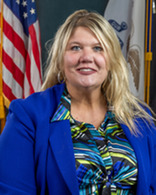
Kassandra Cline | Bureau Chief
Background: MS TET, MBA, Ed.D., ISBMA Graduate, and Former Teacher, Program, and Fiscal Administrator
Bureau Specialties:
- School Finance
- School Budget Review Committee (SBRC)
- ESA Auditing
- Allowable Use of Funds
- Charter School Finance
- Support this amazing team!
|
 |
|
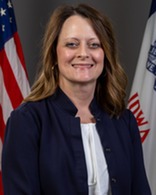
Stephanie Edler | Administrative Consultant - School Finance
Background: B.S. in Finance, B.S. in Accounting, ISBMA Graduate, Former Business Manager, SBO, Board Secretary, and Treasurer
Bureau Specialties:
- School Finance
- School Budget Review Committee (SBRC)
- ESA Auditing
- Uniform Administrative Procedures manual
|
 |
|
Tom Simpson | Administrative Consultant - Pupil Transportation
Background: B.S. in Mathematics, Former State School Bus Inspector, Former District Transportation Director, North American Standard Inspections Part B Certification
Bureau Specialties:
- State Director for Pupil Transportation
- Annual Transportation Report Application
- Annual Transportation Nonpublic Claim
- Driver Authorization System
- Vehicle Information System
- School Vehicle Inspector
|
 |
|
Eric How | Executive Officer 3 - Education Savings Accounts
Background: B.A. in Criminal and Social Justice, M.S. in Law, Northwestern University School of Police Staff and Command Graduate, Former Police Lieutenant, US Army Logistics Major
Bureau Specialty:
- Education Savings Accounts (ESA) Program Administration
|
 |
|
Linda Ankeny | Executive Officer 2 - Education Savings Accounts
Background: B.S. & M.S. in Elementary Education, Specialist in C&I, Ed.D. in Education Administration, Master Educator License, Professional Administrator License, Former Teacher and Program Coordinator
Bureau Specialty:
- Education Savings Accounts (ESA) Program Administration
|
 |
|
Ted Bauer | Consultant - School Finance
Background: B.A. in Accounting, ISBMA Graduate, Former Business Manager, SBO, Board Secretary, and Treasurer
Bureau Specialties:
- Tuition and Billing
- SAVE, PPEL
- At Risk/Dropout Programming
- School Facilities & Bonds
- Reorganization, Dissolution and Sharing
- SBRC Application
|
 |
|
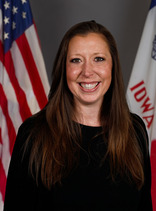
Valerie Moos | Consultant - Special Education Finance
Background: B.S. in Early Childhood Education, M.Ed. in Educational Administration - Certifications: EC-4 Generalist, 4-8 Generalist, ESL EC-12, Special Education EC-12, Principal, Former Special Education Teacher and Special Education Consultant in Texas
Bureau Specialties:
- Special Education Finance
- Special Education Billing
- Special Education Fiscal Monitoring
|
 |
|
Sarah Sheeder | Consultant - Special Education Fiscal Monitoring
Background: B.S. in Business, ISBMA Graduate, Former School Business Official, Board Secretary, and Athletic Coach
Bureau Specialties:
- Special Education Finance
- Special Education Billing
- Special Education Fiscal Monitoring
|
 |
|
Bobby Wilson | Consultant - School Finance
Background: B.S. in Accounting, B.A. in Finance, M.S. in Business Analytics, MBA University of Iowa, Former Auditor at John Deere Financial
Bureau Specialties:
- UFA Chart of Accounts
- CAR Application
- COA Application
- Federal Financial Reports
- Federal Indirect Cost Rate Plan / Annual Indirect Cost Rates
- Governmental Accounting and Auditing
|
 |
|
COMING SOON! | Consultant - School Finance
Bureau Specialties:
- UFA Chart of Accounts
- Certified Annual Report (CAR) Application
- Chart of Accounts (COA) Application
- AEA Budgets
- Juvenile Home Claims
|
 |
|
COMING SOON! | Consultant - School Finance
Bureau Specialties:
- UFA Chart of Accounts
- CAR Application
- COA Application
- Student Activity Fund
- Categorical Funds
|
 |
|
Chris Errthum | School Bus Inspector (Northeast Region)
Background: Former District Lead Technician, Heavy Duty Diesel Mechanic degree, Air Brake Certification, Drive Line Certifications, CFC-12 and HFC-1341 Certified, CDL
Bureau Specialties:
- Pupil Transportation Safety
- Pupil Transportation Quality Inspection Standards
|
 |
|
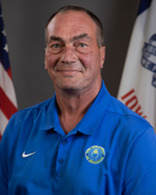
Joe Funk | School Bus Inspector (Southeast Region)
Background: ASE Certified Master School Bus Technician, Certified D.O.T. Inspector, North American Standard Inspections Part B Certification
Bureau Specialties:
- Pupil Transportation Safety
- Pupil Transportation Quality Inspection Standards
|
 |
|
Codie Kellen | School Bus Inspector (West Region)
Background: A.S. in Automotive Repair, Former Transportation Director, Former District Mechanic, former Senior Master Technician
Bureau Specialties:
- Pupil Transportation Safety
- Pupil Transportation Quality Inspection Standards
|
 |
|
Holli Marolf | Bureau Administrative Support Assistant
Background: A.S. in Business Administration, ISBMA Graduate and Troubleshooter Extraordinaire
Bureau Specialties:
- Pupil Transportation
- Vehicle Information System (VIS) Application
- Driver Authorization System (DAS) Application
- School Board Officers and District Leadership Contacts Application
|
|
|
|
It is the policy of the Iowa Department of Education not to discriminate on the basis of race, creed, color, sexual orientation, national origin, sex, disability, religion, age, political party affiliation, or actual or potential parental, family or marital status in its programs, activities, or employment practices as required by the Iowa Code sections 216.9 and 256.10(2), Titles VI and VII of the Civil Rights Act of 1964 (42 U.S.C. § 2000d2000e), the Equal Pay Act of 1973 (29 U.S.C. § 206, et seq.), Title IX (Educational Amendments, 20 U.S.C.§§ 1681 – 1688), Section 504 (Rehabilitation Act of 1973, 29 U.S.C. § 794), and the Americans with Disabilities Act (42 U.S.C. § 12101, et seq.). If you have questions or complaints related to compliance with this policy by the Iowa Department of Education, please contact the legal counsel for the Iowa Department of Education, Grimes State Office Building, 400 E. 14th Street, Des Moines, IA 50319-0146, telephone number: 515-281-5295, or the Director of the Office for Civil Rights, U.S. Department of Education, Cesar E. Chavez Memorial Building, 1244 Speer Boulevard, Suite 310, Denver, CO 80204-3582, telephone number: 303-844-5695, TDD number: 800-877-8339, email: OCR.Denver@ed.gov.
|
|
|
|
|