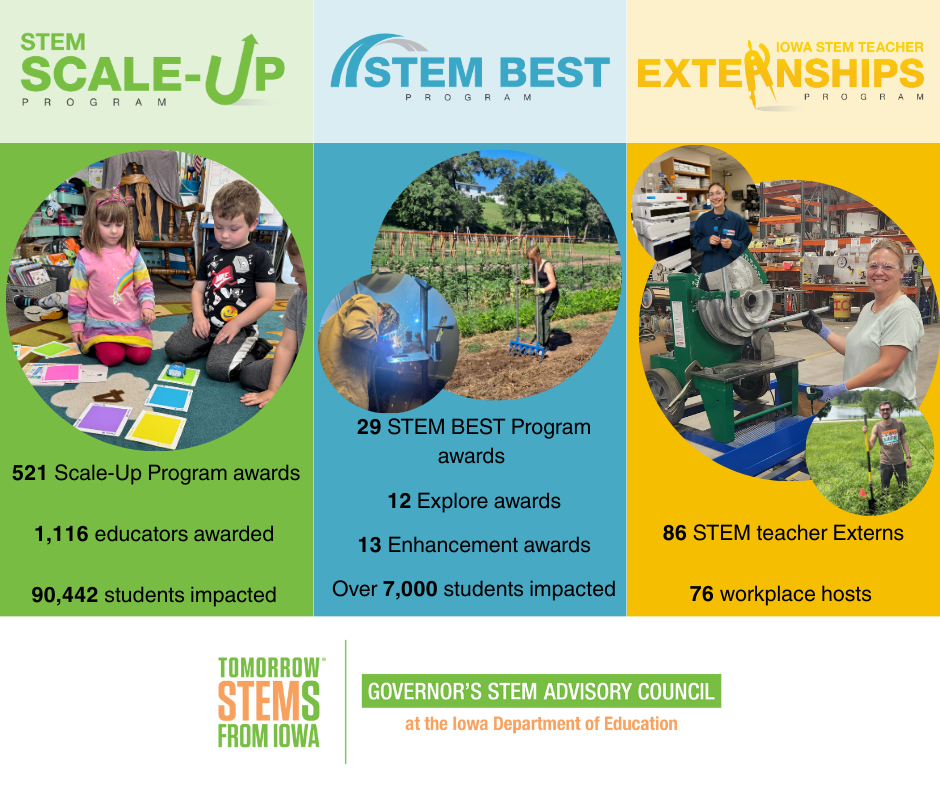
 The Governor’s STEM Advisory Council at the Iowa Department of Education is awarding 10 Iowa school districts with STEM BEST® Program Enhancement awards.
Through the STEM BEST® Program, students and teachers work closely with local workplaces and professionals to introduce and prepare learners for future success in their communities. By helping schools identify and anticipate local workforce needs in collaboration with business professionals, the STEM BEST® Program strengthens Iowa’s future workforce through the development and expansion of work-based learning and career exploration opportunities. The STEM BEST® Program enhancement award supports previously awarded STEM BEST® Programs that demonstrate evidence of how the funds would enrich or expand the current STEM BEST® Program, strengthen partnerships and/or enhance experiences for students.
“The STEM BEST® Program prides itself on fostering long-lasting relationships between students and businesses in their hometowns,” said STEM BEST® Program coordinator Tanya Hunt. “A funding boost from the Enhancement award helps our STEM BEST models expand upon the amazing work they are doing, amplify their successes and create lasting solutions to both current and unforeseen challenges.”
Recipients of the 2025-2026 STEM BEST Program Enhancement Fund are:
- Allamakee Community School District
- Boone Community School District
- Creston Community School District
- Easton Valley Community School District
- Holy Family Catholic Schools - Dubuque
- IKM Manning High School
- Iowa City Community School District
- Pleasant Valley Community School District
- Waverly Community School District
- Woodbine Community School District
Congratulations to these models!
 CSEd Week was celebrated Dec. 6-12, 2025.
Computer Science Education Week (CSEd Week) is celebrated nationwide in early December. This year’s theme in Iowa, “Elementary, My Dear Coder,” was chosen to reinforce the importance of foundational computer science experiences in the early grades.
The Department of Education’s Computer Science consultant Michelle Meier, who works closely with Iowa STEM, organized engaging events like hands-on coding with CodeJoy, story time with former rocket scientist Terysa Ridgeway and an interactive AI activity with the Science Center of Iowa. Nearly 2000 people registered for the free events throughout the week, allowing students and educators to collaborate with classrooms across Iowa.
“We intentionally focused our CSEd Week efforts on elementary students this year because exposure at a young age is key to future success,” Meier said. “ Studies show that early opportunities to explore computer science and data science help create positive associations and spark student interest in future STEM careers, reinforcing the idea that everyone can succeed in computer science.”
To kick off the week, the Department of Education released a new video highlighting what Marion Independent School District is doing to integrate computer science into their elementary curriculum. Marion Independent School District is not only a model computer science school district, it is also a STEM BEST Program model and participant in the STEM Scale-Up Program.
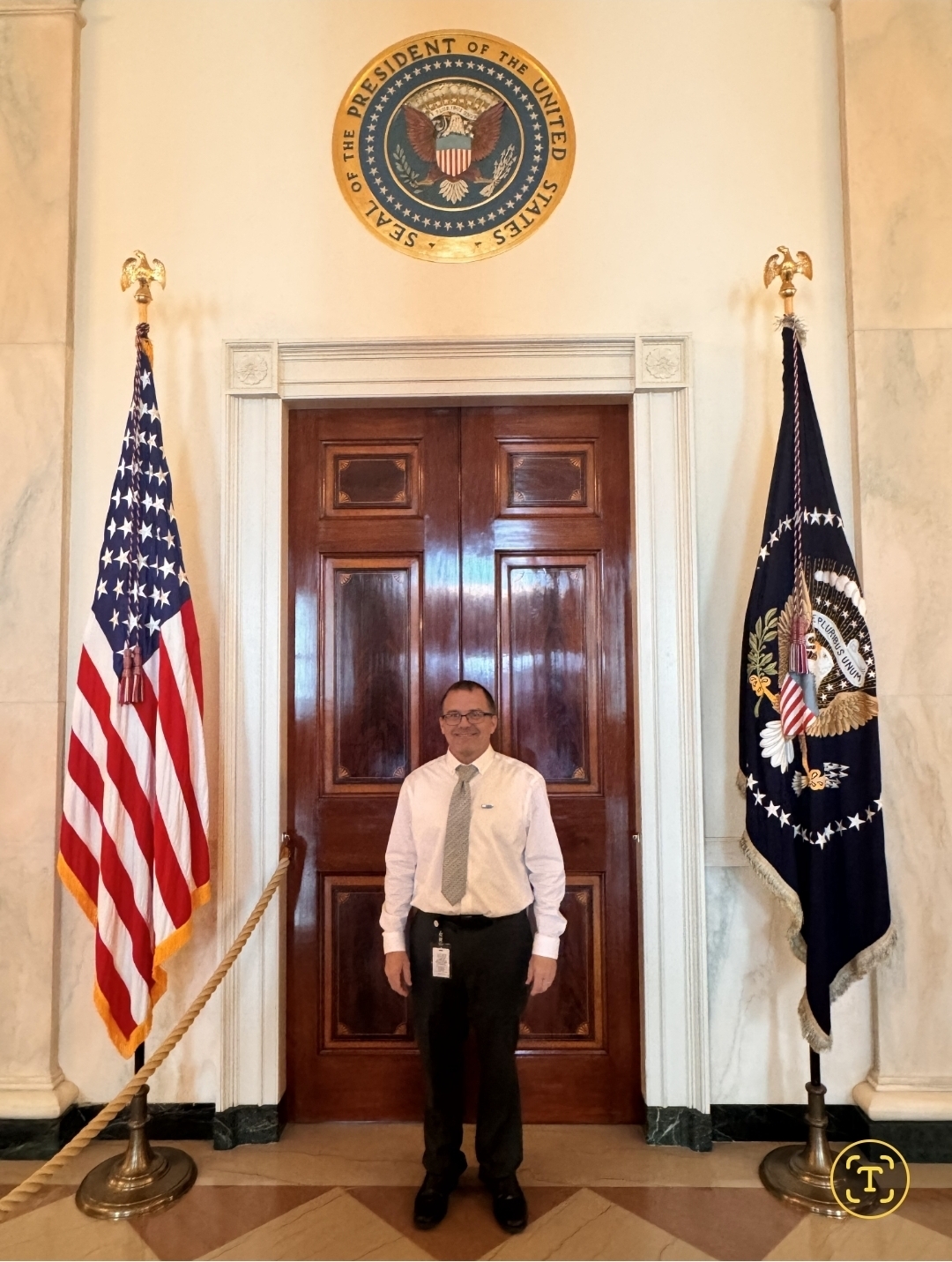 Kyle Kuhlers, Waterloo Career Center teacher, is a 2025-26 Albert Einstein Distinguished Educator Fellow.
Veteran educator Kyle Kuhlers has traded in the familiar school hallways of the Waterloo Career Center (WCC) for a view of the U.S. Capitol on his way to work these days as he spends a year in the national spotlight as an Albert Einstein Distinguished Educator Fellow.
“It is a great honor to represent Iowa on a national level,” Kuhlers said.
Kuhlers has over 20 years of teaching experience, most recently teaching information technology and cybersecurity in the Waterloo Community School District. As an Albert Einstein Distinguished Educator Fellow, Kuhlers is one of 15 educators from across the country selected to spend 11 months in Washington, D.C.
“I’m serving in the United States House of Representatives Education and Workforce Committee. My focus is technology, artificial intelligence (AI), quantum and cybersecurity. The connections I’ve made are unbelievable,” Kuhlers said. “A second focus is giving congressional staff and elected officials in D.C. a real high school teacher perspective on their ideas. I provide input and value from a perspective that most don’t have.”
Kuhlers hopes this experience will help him gain further credibility with his students and community.
“I have asked students for the last 21 years to explore and try new things, explore outside their box. This is an opportunity for me to do just that, modelling that opportunity,” Kuhlers said.
Working at the national level is providing Kuhlers with a wider perspective on education across America.
“Iowa does an amazing job of educating our youth, and our students are amazing,” Kuhlers said. “We are currently doing what a lot of other states are trying to figure out and start doing. We have teacher externships, business involvement, high school paid internships and IRCs (industry-recognized credentials), to name a few.”
During his time in D.C., Kuhlers has had the opportunity to attend several events including the Google AI Summit, Defense Tech and a showcase of national security critical technology startups, among other events.
“I plan to bring back to the WCC and the State of Iowa my AI and emerging technology experiences, resources and ideas that will make students more marketable,” Kuhlers said. “Students never fail, they are curious. There are no problems, only opportunities! Let’s continue building students’ passion toward the lifestyle they want to achieve 10 years from now.”
*All views expressed are Kuhlers' personal views and not AEF or any government office or agency views.
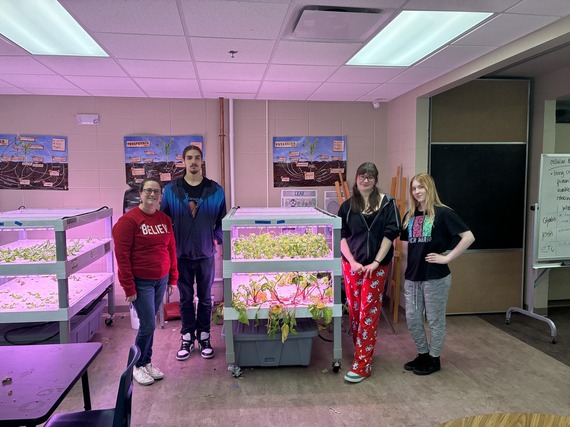 The STEM BEST Program has become a powerful tool for science educators at Walnut Creek campus in West Des Moines to advocate for real-world experiences for students who might not otherwise receive them.
This month, Iowa STEM representatives visited Randi Glaser, Walnut Creek STEM teacher and 2024 South Central Region Iowa STEM teacher awardee. As a team, Glaser and her teaching team including Jason Fantz and Wesley Hall shared what makes their science classroom and STEM BESTⓇ model so exceptional.
Q: What makes Walnut Creek Campus special?
Walnut Creek team: "Walnut Creek Campus is a trauma-responsive alternative high school built on strong relationships, flexibility, and a deep sense of belonging. With smaller class sizes, staff can meet students where they are: academically, socially, and emotionally—while providing individualized support that helps each student succeed.
Students have multiple options and pathways to demonstrate their understanding of course content, allowing them to learn at their own pace and in ways that align with their strengths. This personalized approach fosters confidence, engagement, and academic growth.
The small learning environment also allows projects like the hydroponics program to have a meaningful impact. Students are excited to grow food that supports other students and families, reinforcing a sense of purpose and community contribution. Leadership opportunities are accessible to all students, including those who may not have had the chance to lead in a larger school setting. At Walnut Creek, students discover their value, build confidence, and learn that they are capable, successful, and important members of a caring, family-like community."
Q: What role do your STEM BESTⓇ community partnerships have in supporting student learning?
Walnut Creek team: "STEM BEST community partnerships play a vital role in supporting and extending student learning. Our partners are experts in their fields, and they bring real-world knowledge, mentorship, and authenticity to the learning experience. They provide students with opportunities to volunteer, learn, and work alongside professionals, helping students connect classroom learning to real careers and industries.
In addition, partners have generously contributed resources such as seeds, technical knowledge, and enthusiasm. Their involvement not only strengthens the learning experience but also shows students that their work matters beyond the classroom, reinforcing confidence, purpose, and real world relevance."
Q: What are some advantages of teaching with the school-to-work connection in mind?
Walnut Creek team: "This approach provides students with meaningful, hands-on learning experiences that directly connect classroom instruction to real-world applications while still meeting required graduation standards. Through the hydroponics program, students learn by doing, applying chemistry and biology concepts to authentic problems, collaborating with peers, and developing practical solutions.
Hands-on learning increases student engagement and helps students see the relevance of their coursework beyond the classroom. It also strengthens career connections by exposing students to potential pathways in agriculture, science, sustainability, and business. In addition, students develop transferable skills such as leadership, communication, marketing, and problem-solving, all of which prepare them for both postsecondary education and the workforce.
This method makes learning more relevant, engaging, and impactful, helping students not only understand academic content but also see how it applies to their future goals."
 STEM-sights is written by members of the Iowa Governor's STEM Advisory Council’s Youth Ambassador Group. This is their space to share insight and ideas on STEM events and initiatives important to Iowa students, written by Iowa students.
Reflecting on the past year, we want to highlight some leadership initiatives from several Iowa STEM Youth Ambassadors. These high school students have put a tremendous amount of effort into STEM endeavors to give back to their communities, from environmental impact solutions to expanding STEM literacy in underserved communities. Through their work, these students are exploring their own interests and inspiring engagement from others across Iowa.
Elle Wernimont, a freshman at Dubuque Senior High School, led a project called Weatherization Team 2025. The city's Office of Sustainability in Dubuque offers grants for youth-led environmental projects. Wernimont noticed that many neighboring houses were in poor condition, inspiring her to create weatherization kits for low-income renters to improve their living conditions. Wernimont’s favorite part of completing this project was seeing how it positively impacted her community.
“Watching the joy it brought to them made all the hard work worth it,” Wernimont said. “Being able to help others in a meaningful way is an experience I loved and will always remember.”
Wernimont advises aspiring students “to take action and just do it. Believing in your idea and advocating for it can make a real difference.”
Elise Smith, a junior at Waukee Northwest High School, currently runs the non-profit known as Next Scientists, Inc. She was driven to create the organization by the inequalities in “many rural, low-income areas in which young students do not get adequate exposure to STEM education.” Her passion for the nonprofit stems from her favorite part of Next Scientists: working with the students.
“It is so fulfilling to see their love for science blossom,” Smith said.
However, starting a nonprofit has its challenges. Smith emphasizes community in times of doubt. Her advice for aspiring students is to recognize that “there are so many people who want to help you. Contact teachers, lawyers, friends, and anyone else who can help you with the process.”
Claire Lu, a junior at Ames High School, founded the 501(c)3 organization EcoTips, a community awareness project aimed at providing eco-friendly “tips” for community members in varying areas of the environment, in August 2024. In 2024, the team raised awareness about sustainability issues in scientific laboratories, particularly with single-use plastic waste, through weekly waste audits, interviews with professionals, public presentations, and solution implementation. In the summer of 2025, the team started planning a sustainability event called “EcoVision”.
“We noticed at sustainability events that many community members who noticed environmental issues didn’t know who to express their concerns to,” Lu said.
In 2026, the team hopes to host an “EcoKids” camp with interactive activities to teach the younger generation environmental sustainability.
Iowa Governor's STEM Advisory Council
Iowa Department of Education
214 East Bartlett Hall
University of Northern Iowa
Cedar Falls, IA 50614-0298
515-335-1531
info@IowaSTEM.org
|