|
Your weekly source for internal news at the MPCA. June 1, 2011

June 4 - 12 is Twin Cities Bike Walk Week. Alexis Donath regularly bikes to work.
--from Jeanne Giernet
 |
|
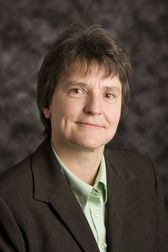
“I bet this is the first time you’ve breathed fresh air, isn’t it?” commented Rebecca’s middle school science teacher after classes resumed in January 1967. A blizzard had just shut everything down, including the steel mills that spewed pollution from their smoke stacks near Rebecca’s home in Lansing, Illinois.
“At the time, I didn’t know anything about fresh air—or pollution,” says Rebecca Flood. “I remember seeing the sun set in the west, and the glow from the steel mills to the north.” The teacher recommended reading Silent Spring by Rachel Carson. It was this book that set Rebecca on a path that eventually led to her career in the environment.
After graduating from college with a degree in wildlife biology, Rebecca intended to work in the natural resources area.
|
In 1978, a project with the Metropolitan Waste Control Commission took her in a different direction. The job was a temporary project working on sewage sludge land application. “I took it because 60 percent of my time would be spent outside and that appealed to me,” said Rebecca.
In the mid 90s, the Metropolitan Waste Control Commission was merged with the Metropolitan Council, and Rebecca moved into the environmental compliance area. Eventually she became a manager. It was also where she met Paul Aasen. “Our cubicles were next to each other,” she quipped “I got pretty good shooting rubber bands at him over the cubicle wall.”
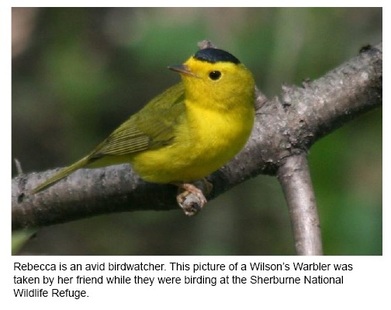
Rebecca came to the MPCA in 2008 to oversee water policy matters and was quickly impressed by the staff’s level of expertise and professionalism in all program areas, not just the water programs she is most familiar with. She has enjoyed the challenge of dealing with statewide approaches to water issues.
 |
|
A lot has happened since she read Silent Spring as a teenager. The 70s and 80s brought a lot of environmental regulations that in turn led to changes in policy. Wastewater and air emissions from point sources have improved, the Mississippi has gone from no fish to trophy fishing and rivers don’t catch fire from oil slicks anymore.
“We’ve come a long way, and sometimes we need to take a moment to reflect on just how far we’ve come.”
|

Jim Warner, Tim Scherkenbach and Roger Bjork are retiring. All together they have worked more than 111 years at the MPCA, making them a combined supercentenarian. Join us to celebrate their retirements and supercentenarian status. There will be plenty of stories and pictures to share of our fellow colleagues and friends.
If you have photos or stories to share of Jim, Tim or Roger please contact Cathy Moeger.
Jim Warner
Jim has worked for the MPCA for 35 years. A retirement and farewell party for Jim will be June 22 from 1 - 3 p.m. in Conference Room 2-A. Stop by the 4th floor Director's office to sign a card. An envelope will also be there to contribute towards a gift.
Tim Scherkenbach
Tim began his career at the MPCA in 1972, only 5 years after the MPCA was officially created. After 39+ years of working at the agency he is retiring. Tim's retirement celebration will be held June 24 from 1 - 3 p.m. in the Board Room. You can sign a card for Tim by stopping by the reception desk in the Commissioners office. Regional staff can contact Michele Clarizio to "sign" the card. Roger Bjork
After working for the agency for 37 1/2 years Roger is retiring on June 30. He will be hosting a retirement open house between June 20 - June 30. Stop by his office on the 6th floor to wish him a fond farewell, grab a treat and share a story or two.

--from Britt Gangeness
This year is the sixth year of the MPCA's award-winning State Fair exhibit, the Eco Experience. The exhibit is a venue for the MPCA to work with citizens; build positive relationships with more than 120 government, business, and non-profit partners; and gain positive media exposure.
Working at the Eco Experience—August 25 through September 5—is a fun way to interact with the public, spend time with coworkers, and learn about different environmental topics. Over the next few weeks eNews will feature stories about the various jobs you can sign up for.
You can also learn about the event at the staff kick off July 12 from 11-11:30 a.m. in the Central Board Room. St. Paul staff can sign up for shifts July 12 and 13 from 11:30 a.m.-1 p.m. in the cafeteria. Regional staff can sign up by calling Joan Heldt (651-757-2420) from July 6-13.
Before you sign up, remember:
-
Prior supervisor approval is required.
-
All shifts are 6 hours long. After adding travel time to the fair grounds, this will be equivalent to your 8 or 9 hour work day.
-
Regional staff who work two consecutive shifts will be considered in travel status and are eligible for travel costs to be covered.
-
FLSA applies for non-exempt staff and time must be balanced within 40 hour work week.
- One extra ticket will be given to those who work Fridays 3-9 p.m., Saturdays, Sundays, or Labor Day.
Keep reading your weekly eNews for more information!
|
--from Melissa Wenzel
Check out their website to find bike routes and maps, essential bike gear, or how to find the right bike for you. |
|
 |
Participate in one or more of the upcoming events such as the St Paul’s Grand Old Day Parade on June 5 or Bike/Walk to the Twins Game on June 12. See the full schedule of Twin Cities events, or check out events happening in Greater Minnesota. June 7-9 MPCA staff will be in the cafeteria from noon – 1 p. m. with information on:
-
B iking to work
- Busing to work
- Car/vanpooling to work
Mark your calendars! Thursday, June 9 is Bike/Walk to Work Day. Let’s have as many MPCA staff bike, bus or walk to work that day. We’d like to see to see how much we reduce the number of vehicles in our parking lots! --from Sandy Gurak
The annual Administrative Staff Conference was attended by over 80 administrative staff from St. Paul and Regional Offices. At the conference, staff learned about emerging issues, met coworkers from the various MPCA Offices, and got to know each other a little better.
The conference began with a continental breakfast provided by office supervisors, office administrators, and assistant division directors.
Rich Thul was the Master of Ceremonies and kept the day flowing seamlessly between speakers and activities.
A number of training and development topics were on the agenda including:
- History of pollution in Minnesota
-
Microsoft Office/Word tips
-
Leadership
-
Change management
-
Social media
-
A demonstration of TurningPoint, an interactive polling software, purchased by the agency
Conferees heard from agency leadership and other speakers, including John Linc Stine, Myrna Halbach, Steve Lee, Jim Behm, Milt Thomas, Pam McCurdy, Kayla Bromelkamp, Cathy Jenson, and Todd Kohl from EAP’s Organizational Health Program. E
The TurningPoint technology was used to evaluation the conference. A large majority (81 percent) felt the conference was a good use of their time, with divisions equally represented between 23 and 27 percent.

2011 Administrative staff conference planning team:
Pictured front to back: Mel Preczewski, Duane Gatzke, Michelle Stryker, Sherry Mottonen, Juli Reed, Jan Sandstrom, Cindy Ng, Roxanne Wehausen, Liz O'Gara, Sandy Ikeda
--from Kris Van Amber
In our culture we are "spring loaded" to define all difficult situations as problems that can be fixed. If we are only smart enough to find the right answer, the problem will go away. But life's experiences tell us that this approach frequently doesn't work - some problems never seem to get solved. The truth is, some "problems" are on-going and can never be solved in a traditional sense. These are polarities - situations in which both conflicting points of view are true.
If you work with others in bringing about change, in a watershed, office environment, sector, or any time there isn’t an easily agreeable solution to the problem(s), the Polarity Management course will give you a way to approach the situation.
Course date: Wednesday, June 22 from 9 a.m. - noon.
Register for this course through the EDC, course code: PCACSW0009
Polarity Management provides organizations with:
-
An ability to distinguish between problems that are inherently solvable and finite, and those which are both unsolvable and unavoidable.
-
Enhanced decision-making through supplementing the problem-solving mind set.
-
Reduction of wasted time and money spent in non-productive conflict and decisions that will result in "failed fixes". (The Fifth Discipline, 1990, Peter Senge).
-
Reduction of time-to-stakeholder with new strategies and new products.

Jim Kolar testing the pelletizer stacks at the old Butler Taconite Plant near Keewatin in 1975.
Stories are due by noon on Tuesday.
Past issues of PCA Today and eNews are available in OnBase. You can access them through the Stuff for Staff section on the intranet
|


