Withlacoochee River System Update - 3/2/2026
Southwest Florida Water Management District sent this bulletin at 03/02/2026 01:50 PM EST
 |
February Rains Temporarily Halt Dry Season Declines
Rainfall:
- Our water resources remain low for this time of year…and we’ve still got a few months remaining in the dry season.
- February did bring a few days of good rainfall to the Withlacoochee Watershed, providing minor relief from the dry conditions.
- But that relief will be temporary as our warmest dry season months are yet to come, and water levels are expected to continue to decline.
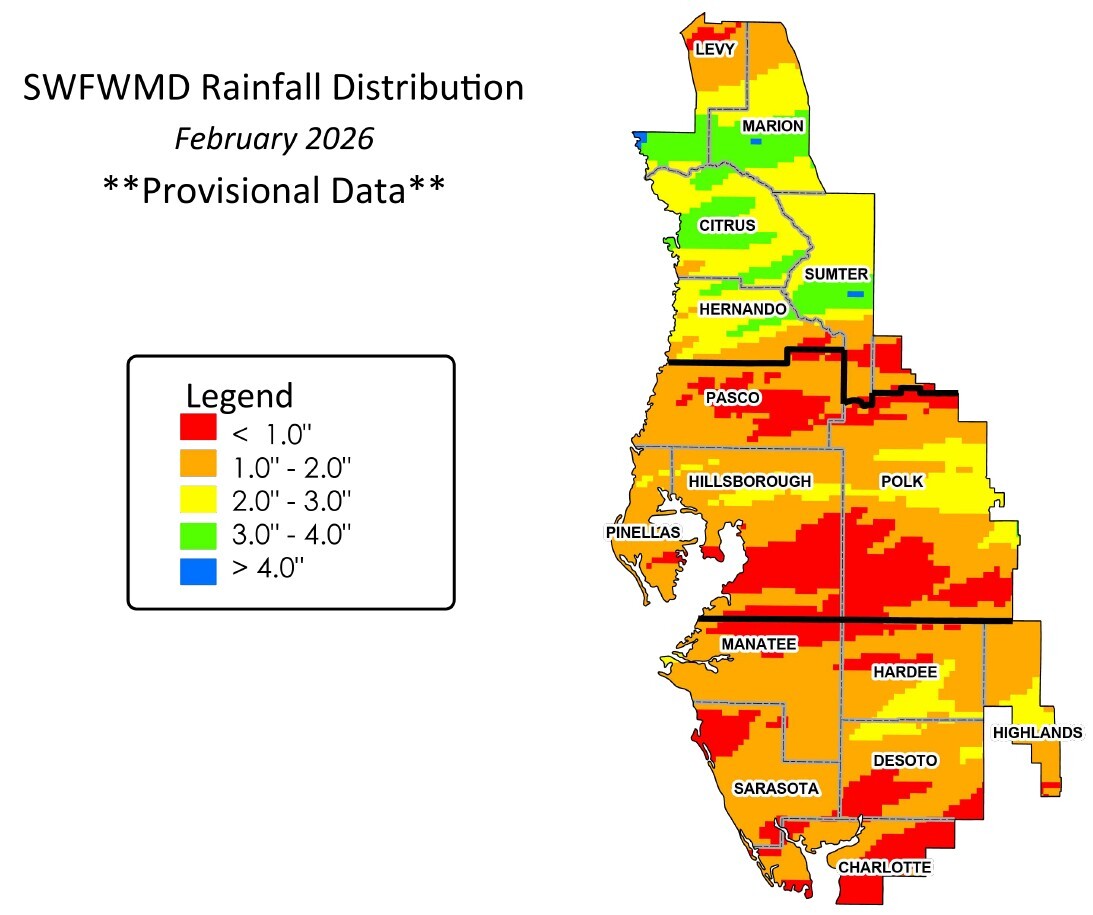
- Our region received about 2.5 inches of rainfall last month, close to the historical average for February (3.0 inches).
- So far this year (Jan – Feb), our region has received 3.4 inches of rain, below average for the first two months (5.7 inches).
- And over the past 12 months, we remain in a double-digit deficit for rainfall (-15 inches).
- Aquifer (groundwater) levels remain below average, currently in the 18th percentile for this time of year, and much lower than last year (67th percentile). Remember, the 50th percentile is average.
- The figure below shows how much rainfall different areas received last month. All areas received below average rainfall in January.
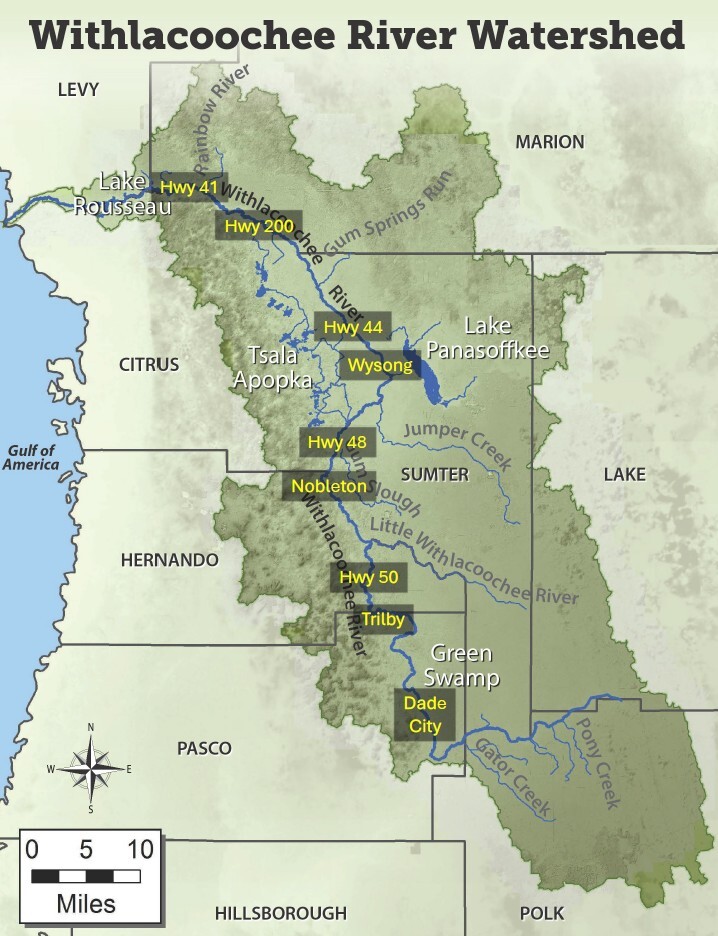
Withlacoochee River (from the Green Swamp downstream past Hwy 200):
- The river and its surrounding watershed got enough rainfall in February to temporarily halt its dry season decline.
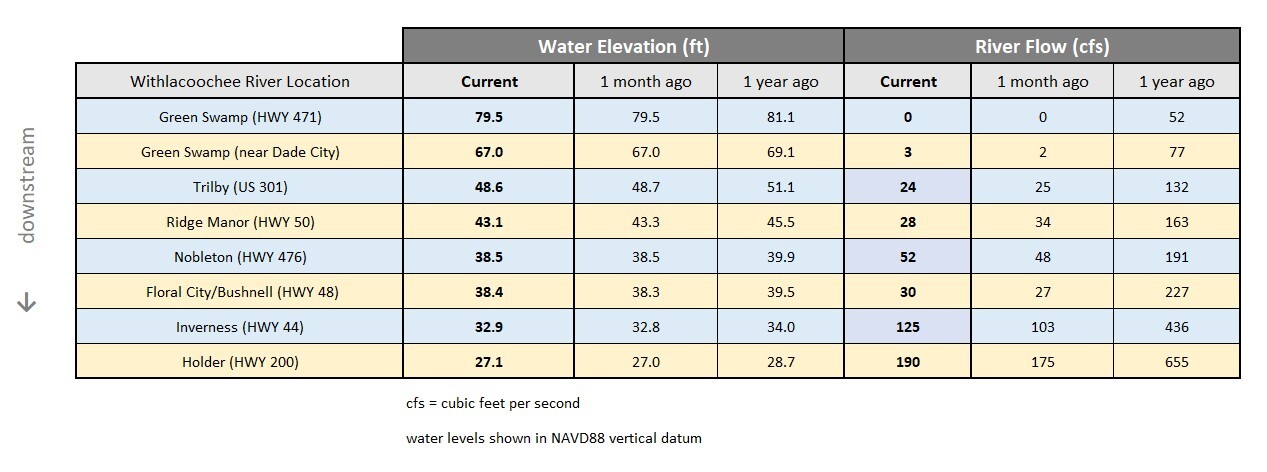
- All along the Withlacoochee, water levels are currently close to where they were a month ago, meaning there was very little net gain or loss in February.
- River flows showed slight gains in some areas from the recent rainfall.
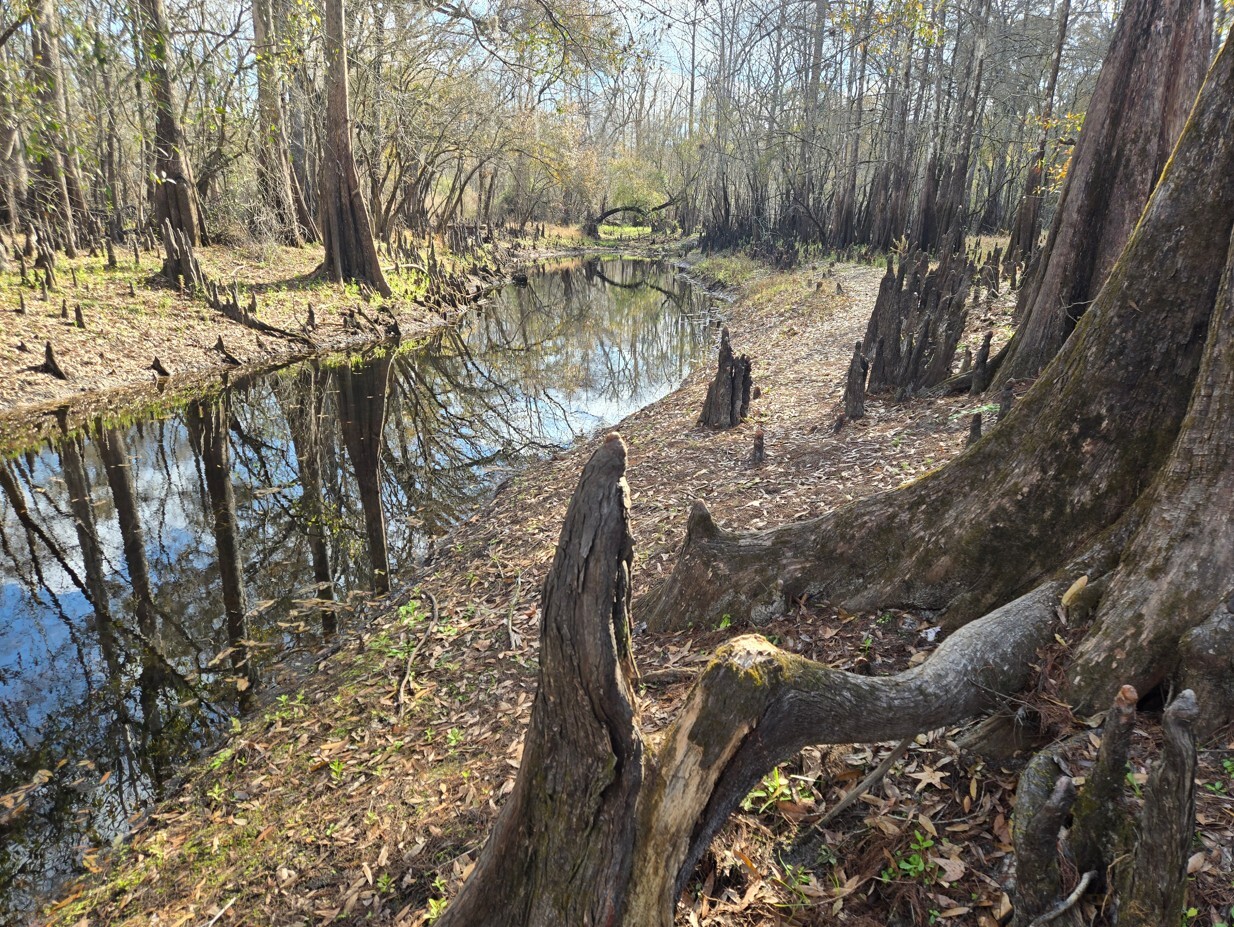
- In the Green Swamp, river levels are still very low with only slight flow leaving the Withlacoochee’s headwaters and making its way downstream.
- Near Hwy 301 (Trilby) and Hwy 50 (Ridge Manor), river levels fell slightly in February and remain about 2.5 feet lower than they were a year ago.
- From Hwy 476 (Nobleton) to Hwy 48, river levels are about 6 inches higher than they were a month ago but remain more than a foot lower than last year.
- Near Hwy 44 (Inverness) and Hwy 200 (Holder), river levels saw a slight rise of about 1-2 inches in February but are also more than a foot lower than last year.
- The most impactful months of our dry season lie ahead, so we could see much lower water levels and flows before the summer rains have a chance to accumulate.
- The table below compares current river levels and flows to what they were last month and last year.
The Withlacoochee River is only a narrow stream in the Green Swamp (February 2026)
Tsala Apopka Chain of Lakes:
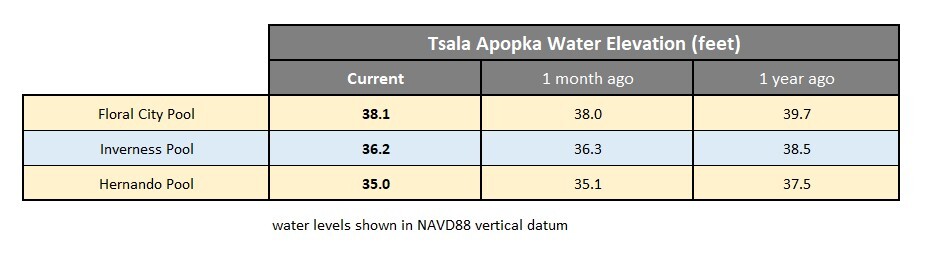
- Water levels on the Tsala Apopka Chain of Lakes saw minimal change in February.
- While lake levels naturally decline every day, the area received enough rainfall last month to balance out those natural losses which are caused by evaporation and downward leakage.
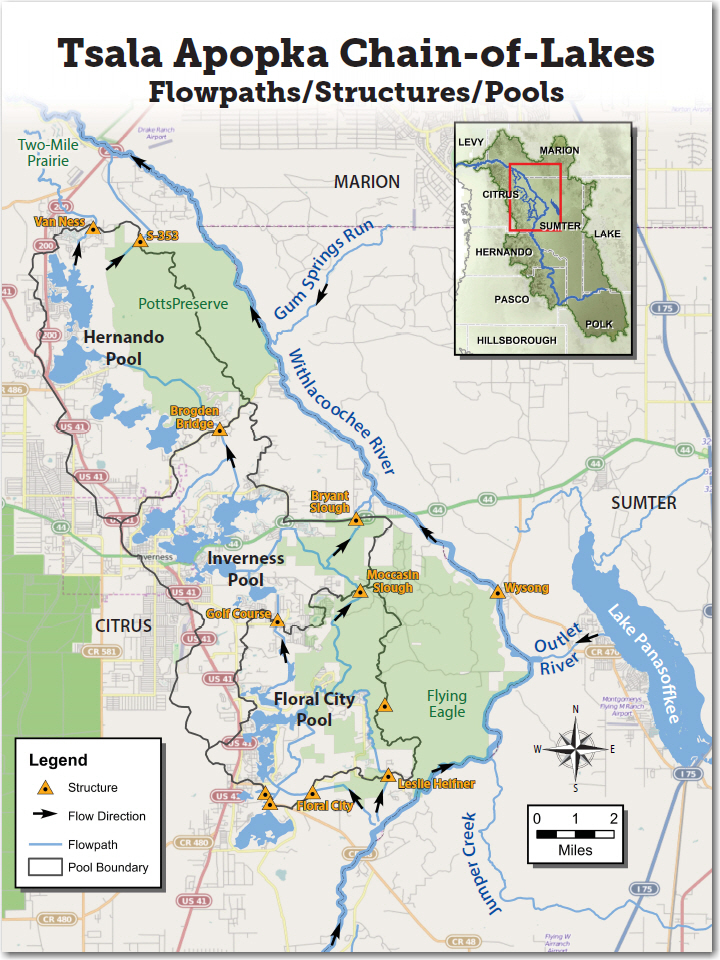
- Water control structures remain open, bringing available water into the lake chain, but the impact is negligible, because the inflow is so minor.
- Each pool continues to receive an equal amount of river inflow, and no water is leaving the lake chain.
- All three pools of Tsala Apopka are currently 2 to 2.5 feet lower than they were a year ago.
- Many of the shallow marsh areas remain dry, and navigation outside of the lakes is limited to the deeper canals and boat channels.
- How far the lakes will drop this year is still unknown and depends on whether we get increased rainfall over the next few months.
- During the springtime we typically see much sharper water level declines, as temperatures warm up and the plants and trees surrounding the lake chain start consuming water again.
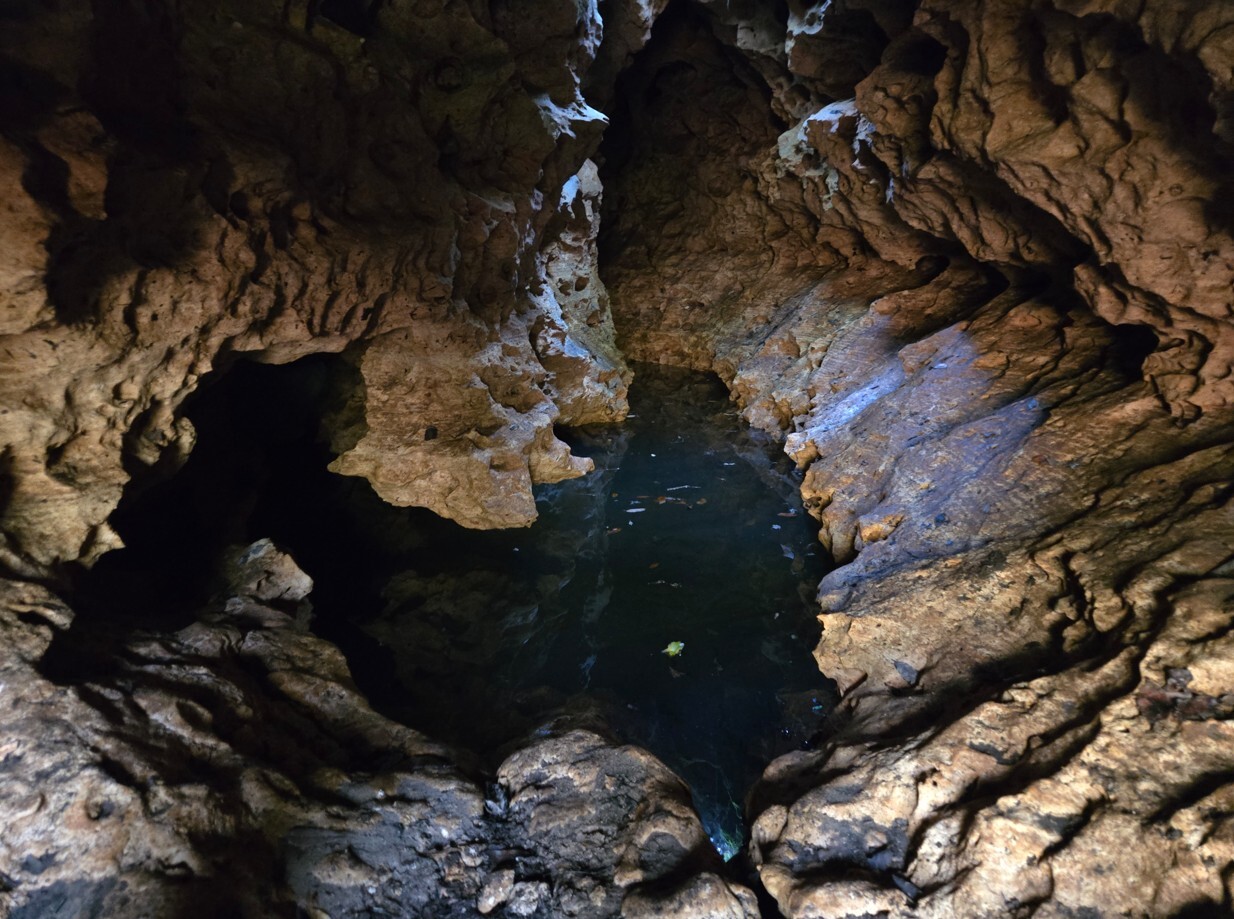
Aquifer level in underwater cave near Inglis (February 2026)
Lake Panasoffkee and Wysong:
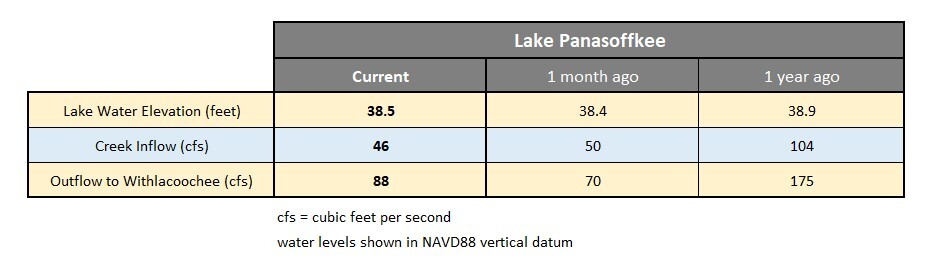
- Lake Panasoffkee receives continuous spring flow from creeks that flow into the lake from the east and aquifer levels that are generally higher than lake levels.
- After heavy rains, flow in these creeks will temporarily increase as runoff from the adjacent swamps add additional flow.
- We saw this from a few storms that passed through the area recently.
- Outflow from the lake also slightly increased over the past month due to recent rains.
- Overall, Lake Panasoffkee experienced a very slight gain in water levels in February.
- Lake Panasoffkee water levels are currently 6 inches lower than a year ago.
- The Wysong structure, located 3 miles downstream of Lake Panasoffkee, spans the entire Withlacoochee River.
- The main gate (230-foot-wide) of Wysong remains raised, helping to prolong the natural decline in upstream water levels.
- The independent gate (19-foot-wide) remains partially lowered, allowing river flows to pass downstream.
- Water levels are expected to continue to drop over the next few months, as our dry season continues.
Lake Rousseau and the Lower Withlacoochee River (from Dunnellon to the Gulf of Mexico):
- As the Withlacoochee River reaches Dunnellon, it is joined by the Rainbow River prior to entering Lake Rousseau.
- Lake Rousseau is an in-stream lake formed over a century ago with flood control structures near Inglis.
- All flow in the Withlacoochee River passes through Lake Rousseau before discharging downstream to the Lower Withlacoochee River and ultimately the Gulf of America.
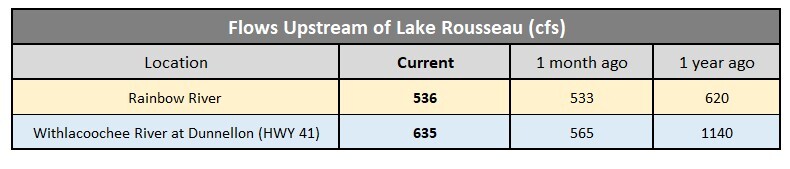
- A couple heavy rainstorms in February added a large amount of water directly into Lake Rousseau and increased flows that enter the lake.
- Rainbow River flow (which reflects changes in aquifer levels) stayed relatively steady over the past month.
- Overall, flows into Lake Rousseau are about half of what they were a year ago.
- Water levels on Lake Rousseau have stayed relatively constant the entire month of February.
- Flow that enters Lake Rousseau from the east, exits through water control structures on the west end of the lake.
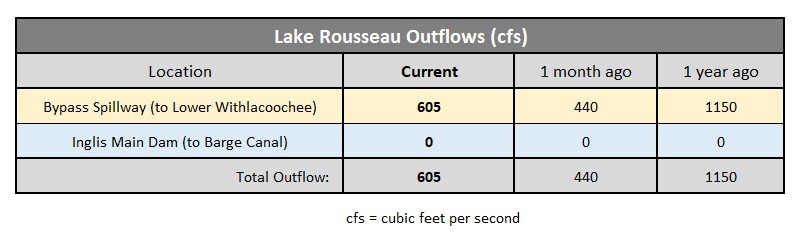
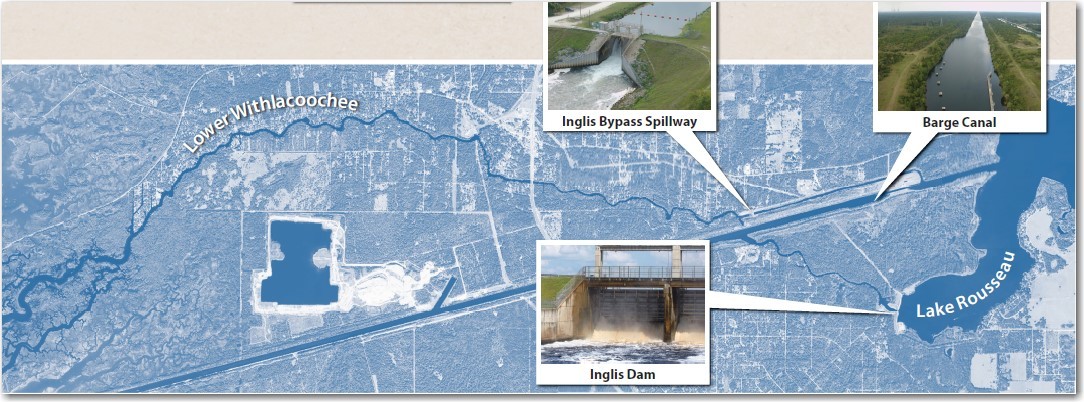
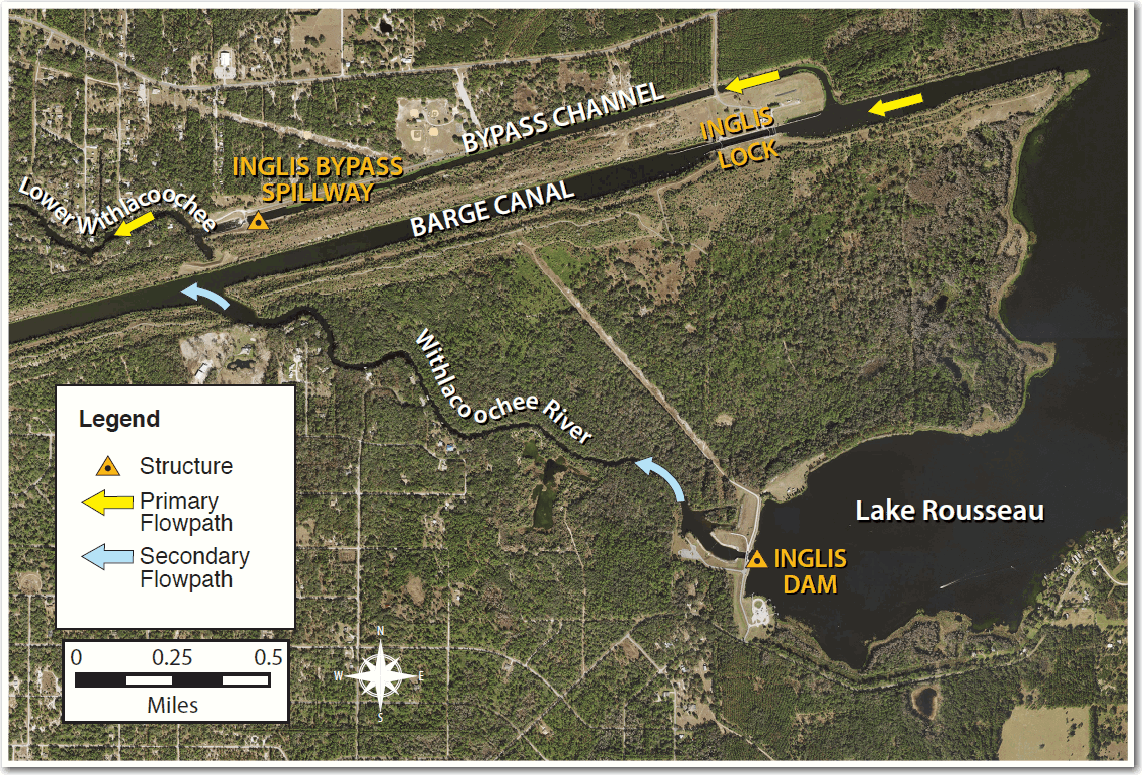
- There are two structures that release water from the lake (see map below).
- The primary outlet from Lake Rousseau is the Inglis Bypass Spillway which provides continuous freshwater flow to the Lower Withlacoochee River.
- The Inglis Bypass Spillway is currently flowing at 43% of its capacity, an increase of 8% since last month.
- When the Bypass Spillway reaches maximum capacity, the Inglis Main Dam is opened, discharging excess water from Lake Rousseau to the Barge Canal.
- This provides flood protection to the Lower Withlacoochee River when the river upstream of Lake Rousseau is experiencing high water conditions.
- The Inglis Main Dam, which was closed over a year ago, remains fully closed and won’t open again until Withlacoochee River flows increase substantially.
- The District recently completed a fish survey along the Lower Withlacoochee and continues to study trends for its work to develop an MFL for the river.
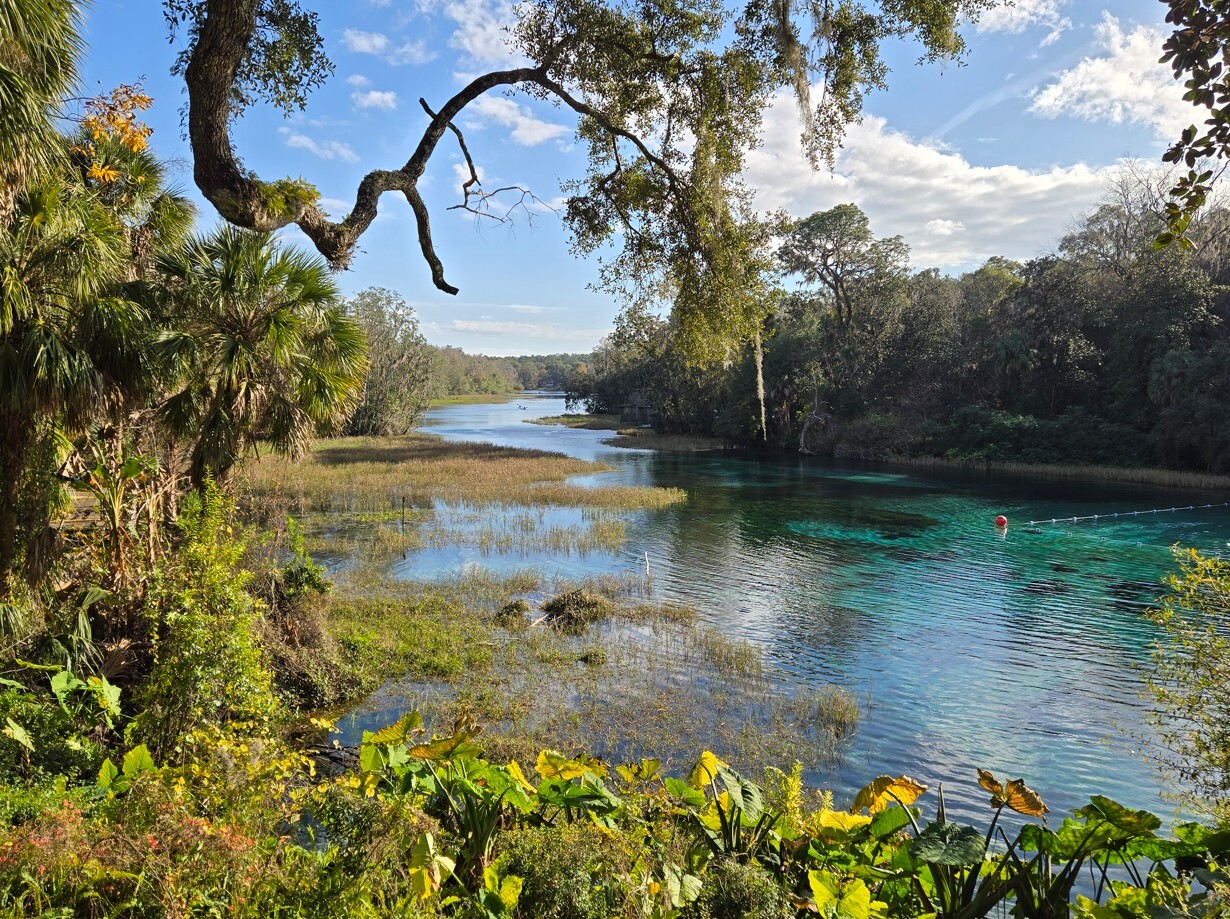
Rainbow River Headsprings (February 2026)
Hope you have a great week!
Mark
Mark Fulkerson, Ph.D., P.E.
Chief Professional Engineer
Southwest Florida Water Management District
(352) 269-6073 (office)
(352) 279-4493 (cell)
|
|
|
|
|
|
|
|


|
Southwest Florida Water Management District | 2379 Broad Street, Brooksville, FL 34604-6899 |
|
If you do not want to continue receiving emails about these projects, click Unsubscribe. To manage your Southwest Florida Water Management District subscriptions, click Manage Preferences. |