Withlacoochee River System Update - 1/5/2025
Southwest Florida Water Management District sent this bulletin at 01/05/2026 05:21 PM EST
 |
2025 Was a Dry Year for the Withlacoochee Watershed
Rainfall:
- 2025 was a very dry year for our region.
- For 10 of the year's 12 months, we received below average rainfall.
- And our wet season was largely uneventful.
- In total, our region received just 40.3 inches of rainfall in 2025, 13 inches below the historical average (53.5 inches) for the year. Last year (2024) we received 57.1 inches of rain.
- In fact, this was the driest year we’ve seen since 2006, nearly 2 decades. And you’d have to go back 25 years to the year 2000 to find a substantially drier year than we had last year.
- What does this mean for our surface water (lakes/rivers/wetlands) and ground water (aquifer)?
- It means we could be in store for very low water levels by late spring and early summer in 2026.
- Aquifer (groundwater) levels remain below average, currently in the 25th percentile for this time of year, and much lower than last year (78th percentile). Remember, the 50th percentile is average.
- In January, we’re normally living off the spoils of the wet season (high water levels and flows), but those never materialized in 2025, so we’re starting 2026 very low.
- And some of our driest months lie ahead. How low water levels could reach in 2026 will depend on whether we see unexpected high rainfall this winter/spring.
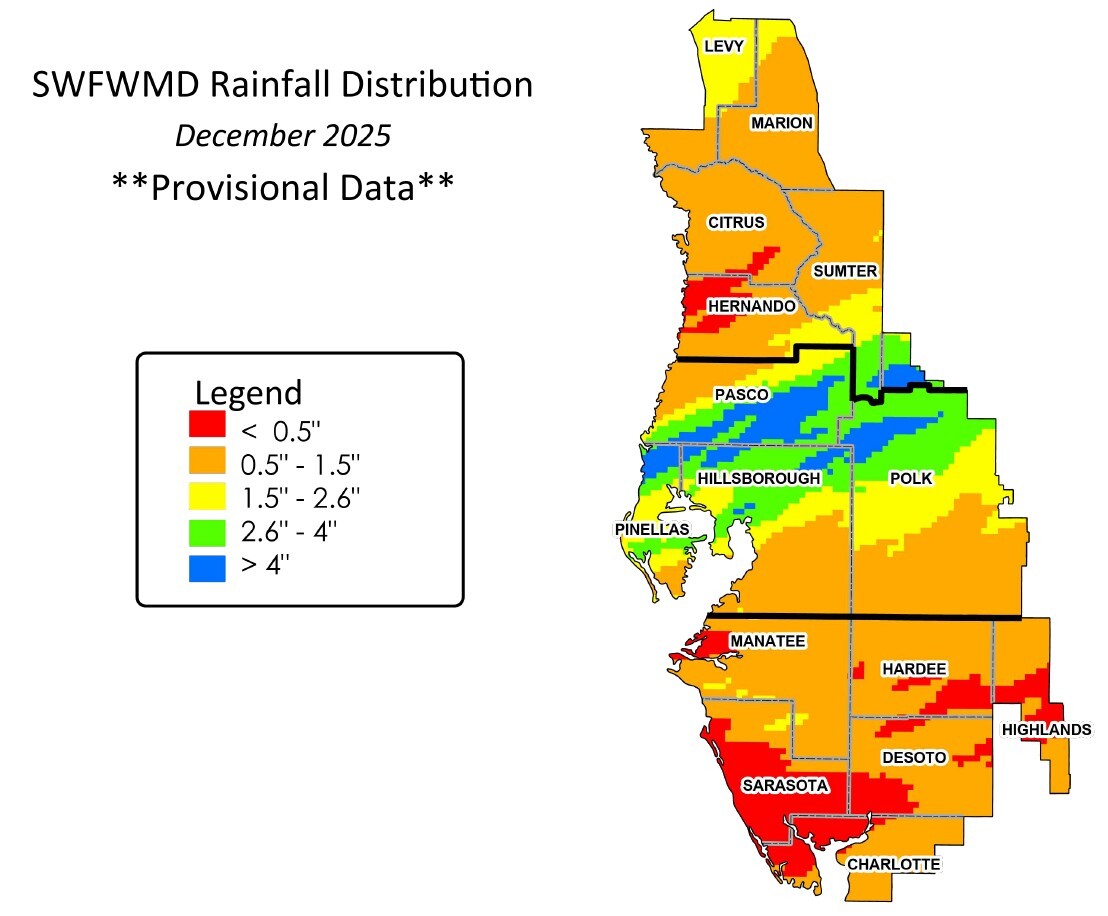
- The figure below shows how much rainfall different areas received last month. The green and blue areas received above average rainfall in December. The Green Swamp got a decent rain shower in early December.
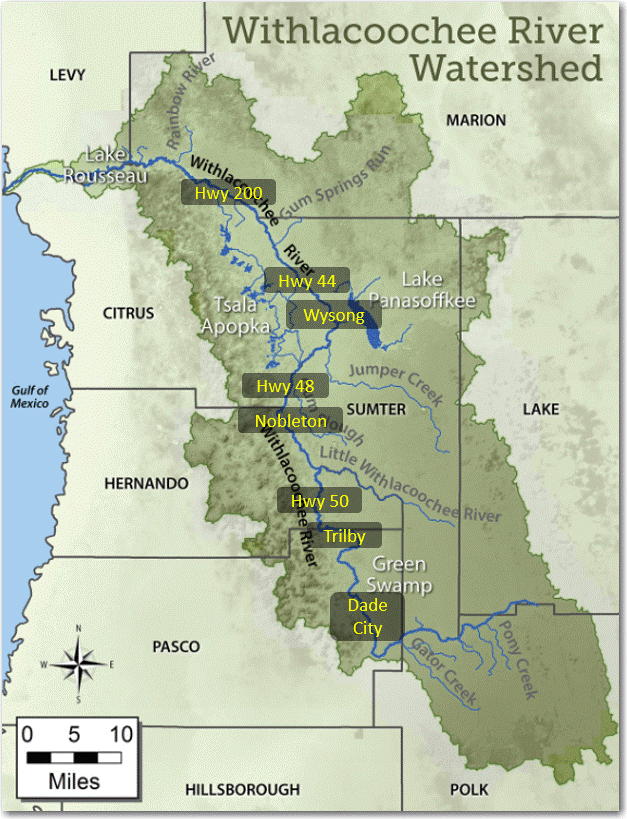
Withlacoochee River (from the Green Swamp downstream past Hwy 200):
- There were no significant changes to the Withlacoochee River in December.
- Decent rainfall early in the month increased water levels and flows, but by the end of December, conditions were similar to where they started.
- The good news is that river levels/flows have not declined in recent weeks, and in the Green Swamp, the river is slightly higher than it was a month ago.
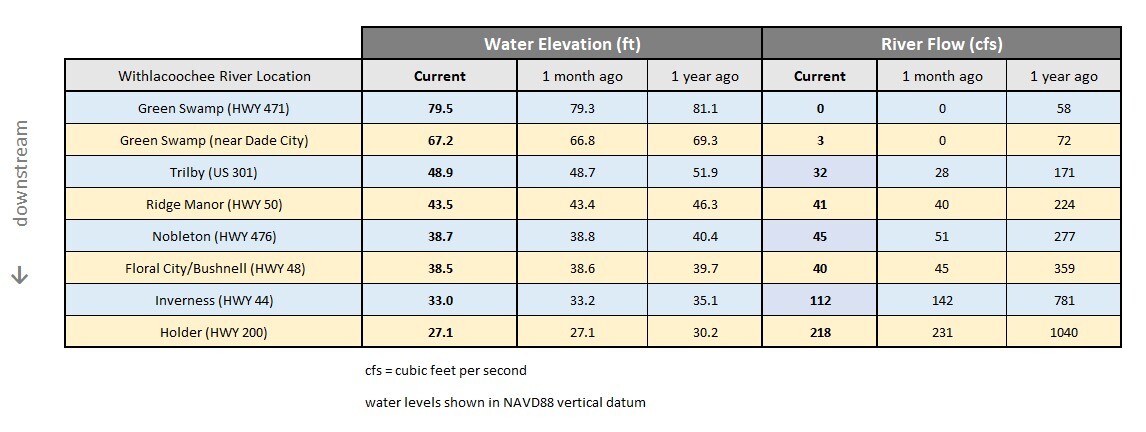
- Although the river held relatively steady in December, water levels and flows are still substantially lower than they were a year ago, and mimic end of dry season conditions already.
- Overall, the Withlacoochee River is a couple feet lower than it was one year ago.
- River flows are about 80% less than this time last year.
- We can expect minimal changes (and slight declines) to the Withlacoochee River over the next 2-3 months unless the area experiences widespread heavy rainfall.
- By late spring (May-Early June), water levels could plunge much lower ahead of the summer rains.
- The table below compares current river levels and flows to what they were last month and last year.
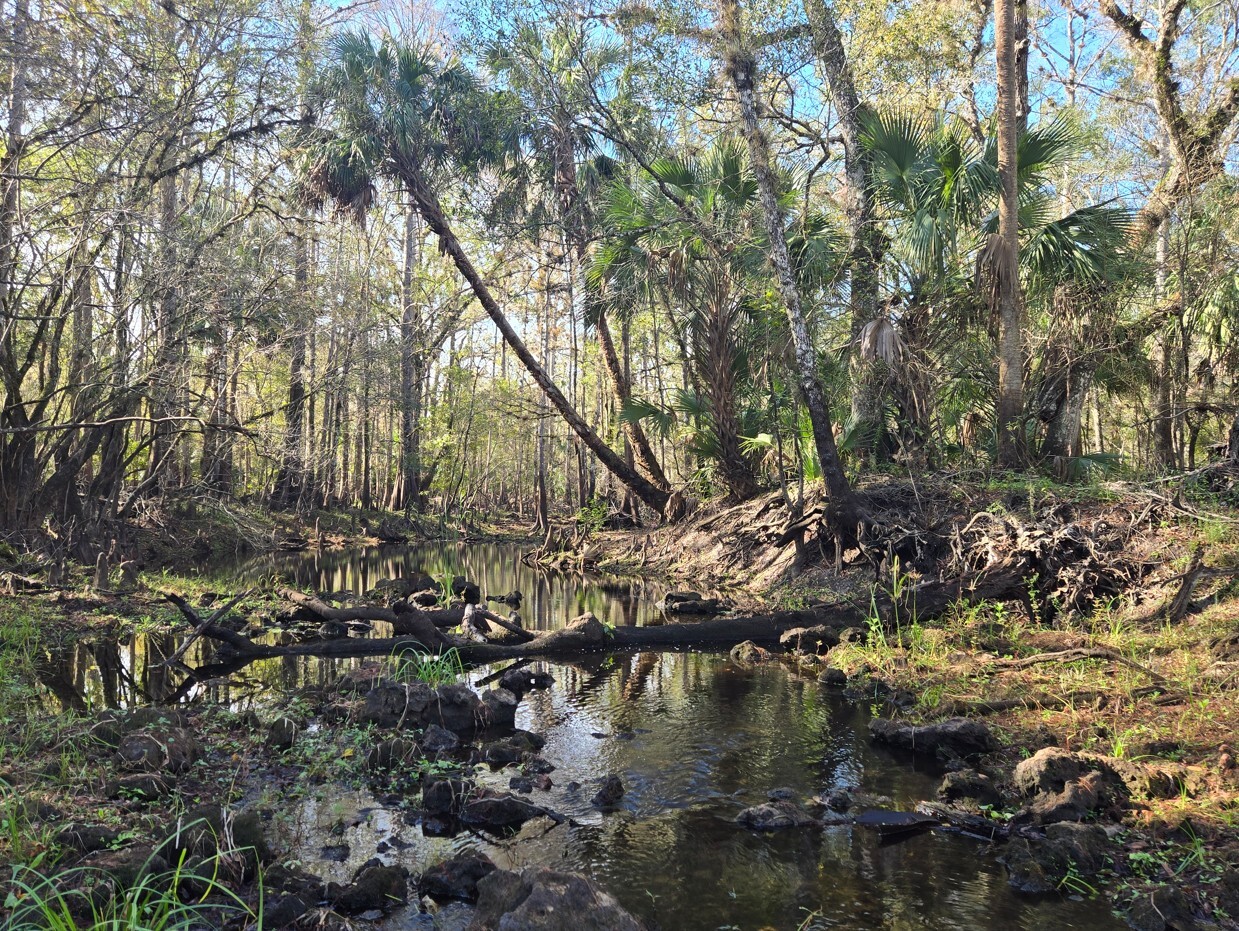
Withlacoochee River deep in the Green Swamp (December 2025)
Tsala Apopka Chain of Lakes:
- Minimal changes were observed throughout the Tsala Apopka Chain of Lakes over the past month.
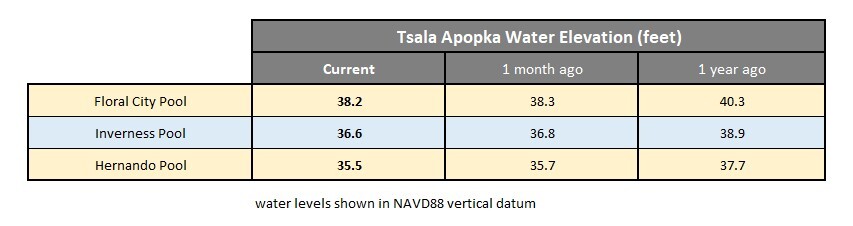
- Water is still slowly entering from the Withlacoochee River and lake levels are only 2 inches lower than they were in early December.
- This was a small decline compared to what is expected to occur in late spring, when warmer temperatures and increased evaporation will cause lake levels to drop much quicker.
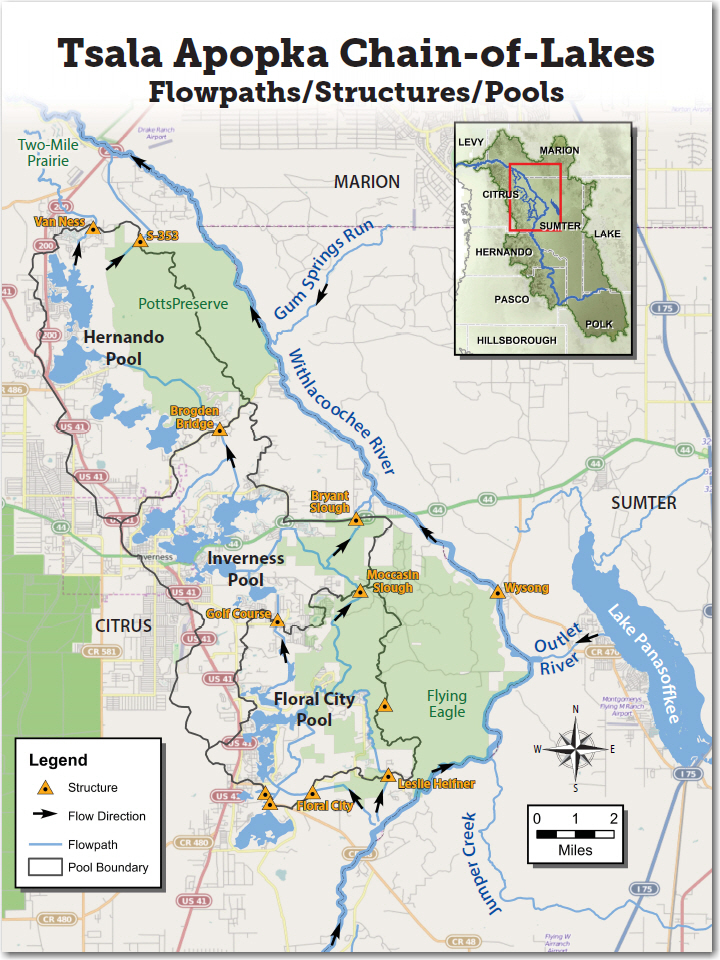
- Several water control structures, which were opened last July, remain open sharing available river water between all three pools.
- Since river levels have remained low, inflows have been minimal all year.
- The Withlacoochee River is still about 3.5 inches higher than the Floral City Pool (where inflows occur).
- Once river levels drop below the lakes, all structures will be closed.
- Water levels in the lakes, canals, and wetlands of Tsala Apopka are currently about 2.2 feet lower than they were a year ago.
- We can expect lake levels to maintain or slowly drop over the next couple months, depending on how much rainfall the lake chain receives.
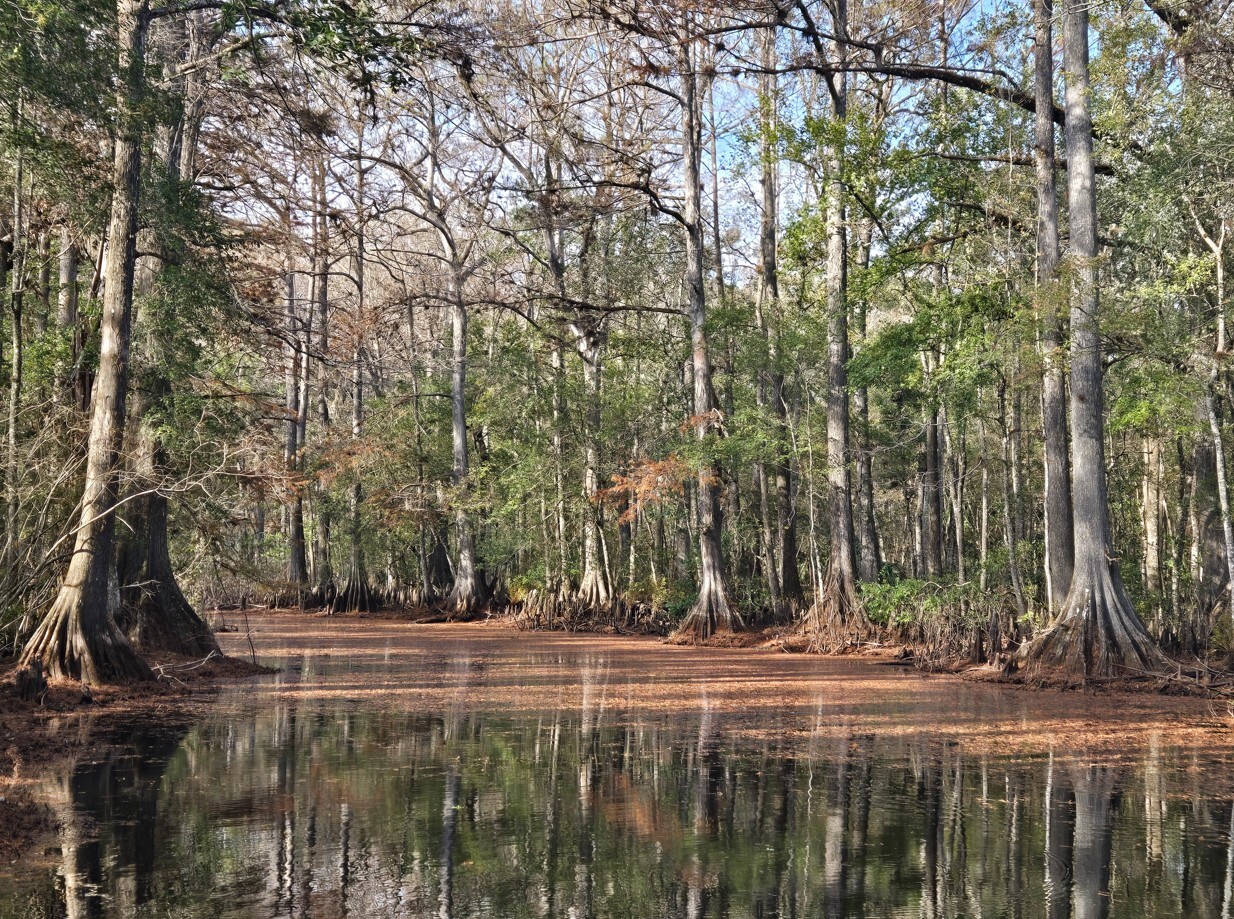
Low Water in Moccasin Slough (December 2025)
Lake Panasoffkee and Wysong:
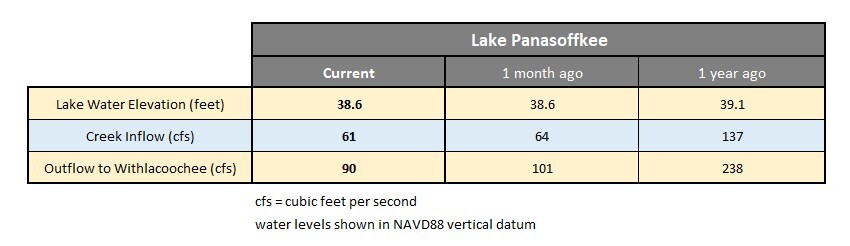
- There’s also been very little change on Lake Panasoffkee and the Withlacoochee River near Wysong.
- In early December, rainfall did temporarily raise Lake Pan about an inch, but water levels are back down to where they began the month.
- Flow from spring-fed creeks, which provide continuous inflow to the lake, are only slightly lower (-5%) than they were a month ago but much lower (-56%) than a year ago.
- Outflow from the lake to the Withlacoochee River has declined in recent weeks, down 10% from early December.
- The Wysong structure, located 3 miles downstream of Lake Panasoffkee, spans the entire Withlacoochee River.
- The main gate (230-foot-wide) of Wysong remains raised.
- The independent gate (19-foot-wide) remains partially lowered, allowing river flows to pass downstream.
- Withlacoochee River flow at Wysong declined 36% last month.
- Lake Panasoffkee water levels are currently 6 inches lower than a year ago.
- We can expect water levels and flows to continue declining throughout the winter and could see very low water levels this spring.
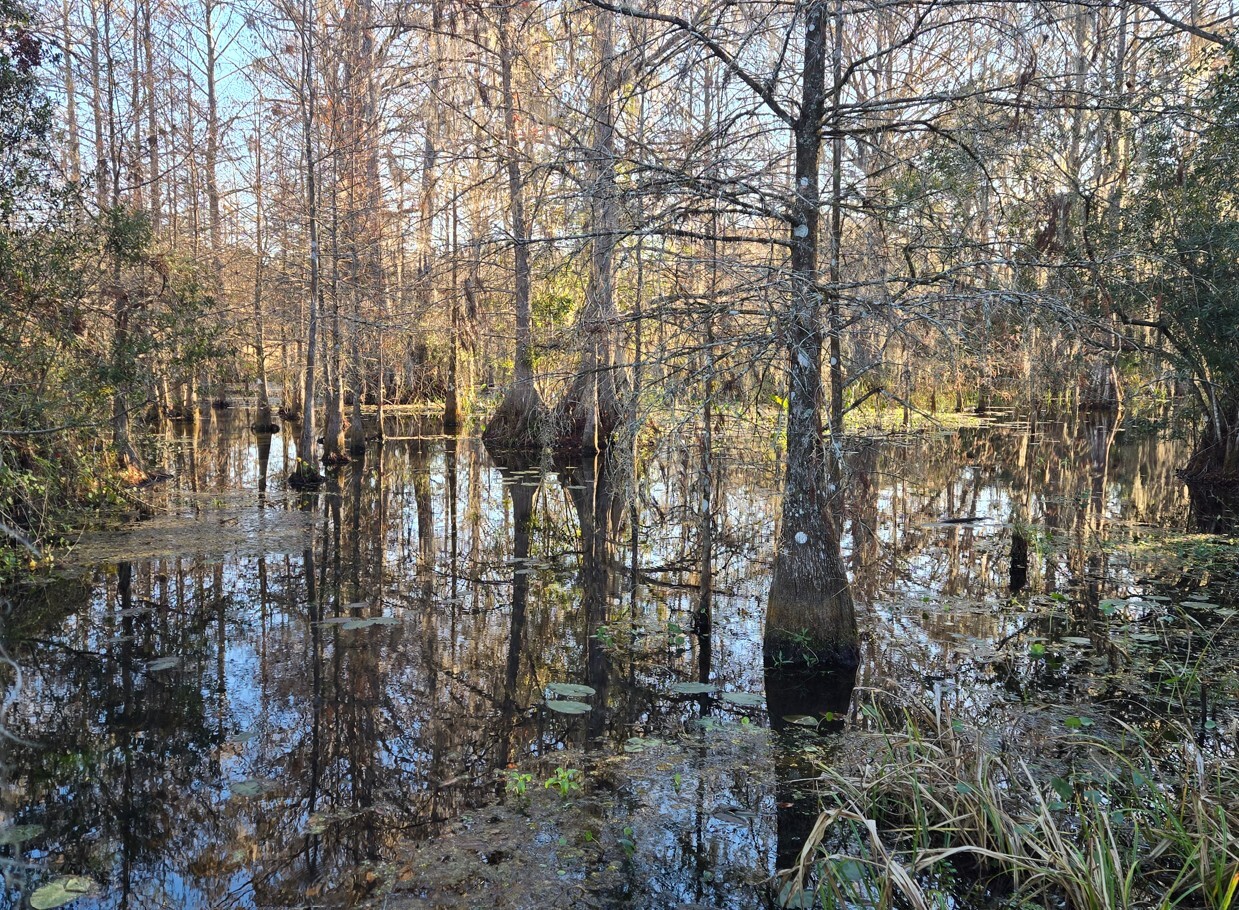
Gum Slough near Nobleton flowing slowly from grouundwater contributions (December 2025)
Lake Rousseau and the Lower Withlacoochee River (from Dunnellon to the Gulf of Mexico):
- Last year at this time, the Withlacoochee River was passing the remnants of the high flows from Hurricane Milton through Lake Rousseau and out to the Gulf of America.
- This year, our wet season never materialized, so flows both entering and leaving Lake Rousseau are much lower.
- Upstream of Dunnellon, the Rainbow River provides continuous spring flow into the Withlacoochee River.
- Downstream of Dunnellon, the Withlacoochee River enters Lake Rousseau, an in-stream lake formed over a century ago with flood control structures near Inglis.
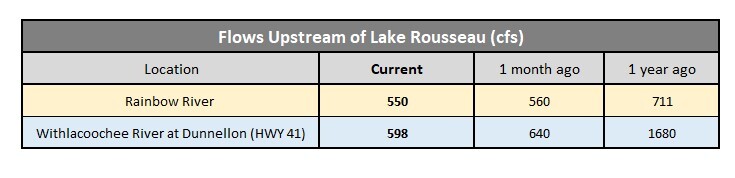
- Combined flows from the Rainbow and Withlacoochee Rivers are recorded at the Dunnellon (Hwy 41) gauge.
- Rainbow River flow (which reflects changes in aquifer levels) decreased by 2% last month.
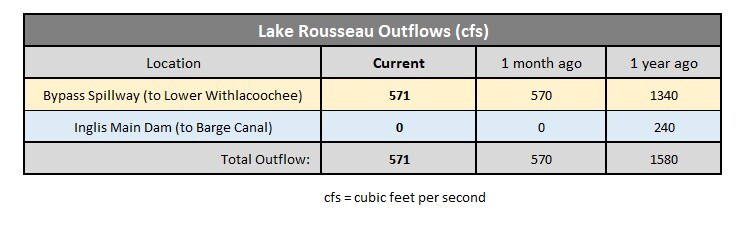
- Overall, inflows to Lake Rousseau are 64% lower than they were a year ago, when floodwaters were still making their way through the lake.
- Water levels on Lake Rousseau have stayed relatively constant the entire month of December.
- Flow that enters Lake Rousseau from the east, exits through water control structures on the west end of the lake.
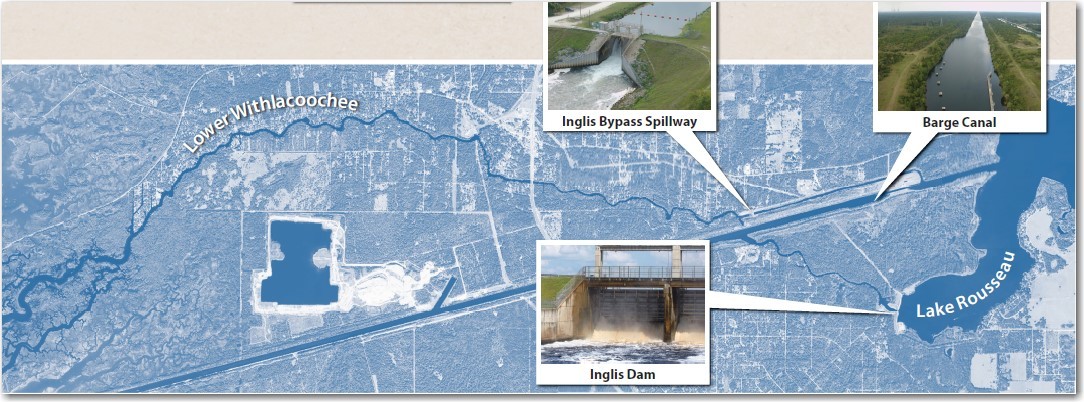
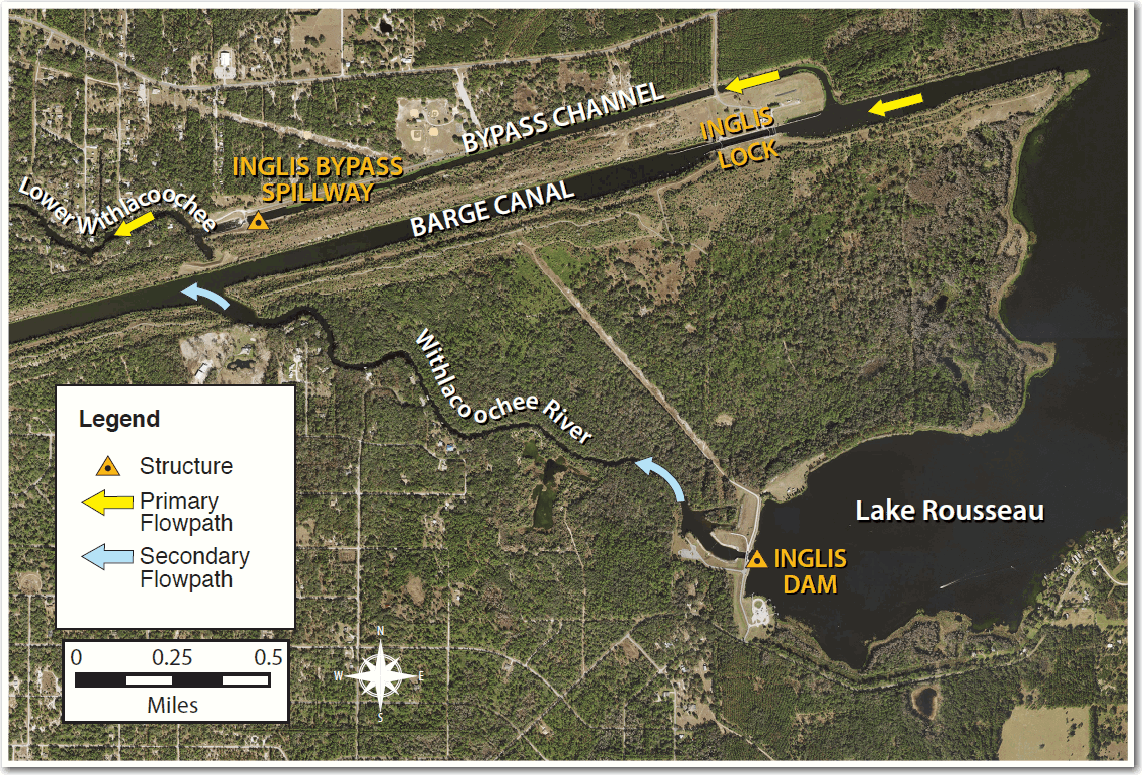
- There are two structures that release water from the lake (see map below).
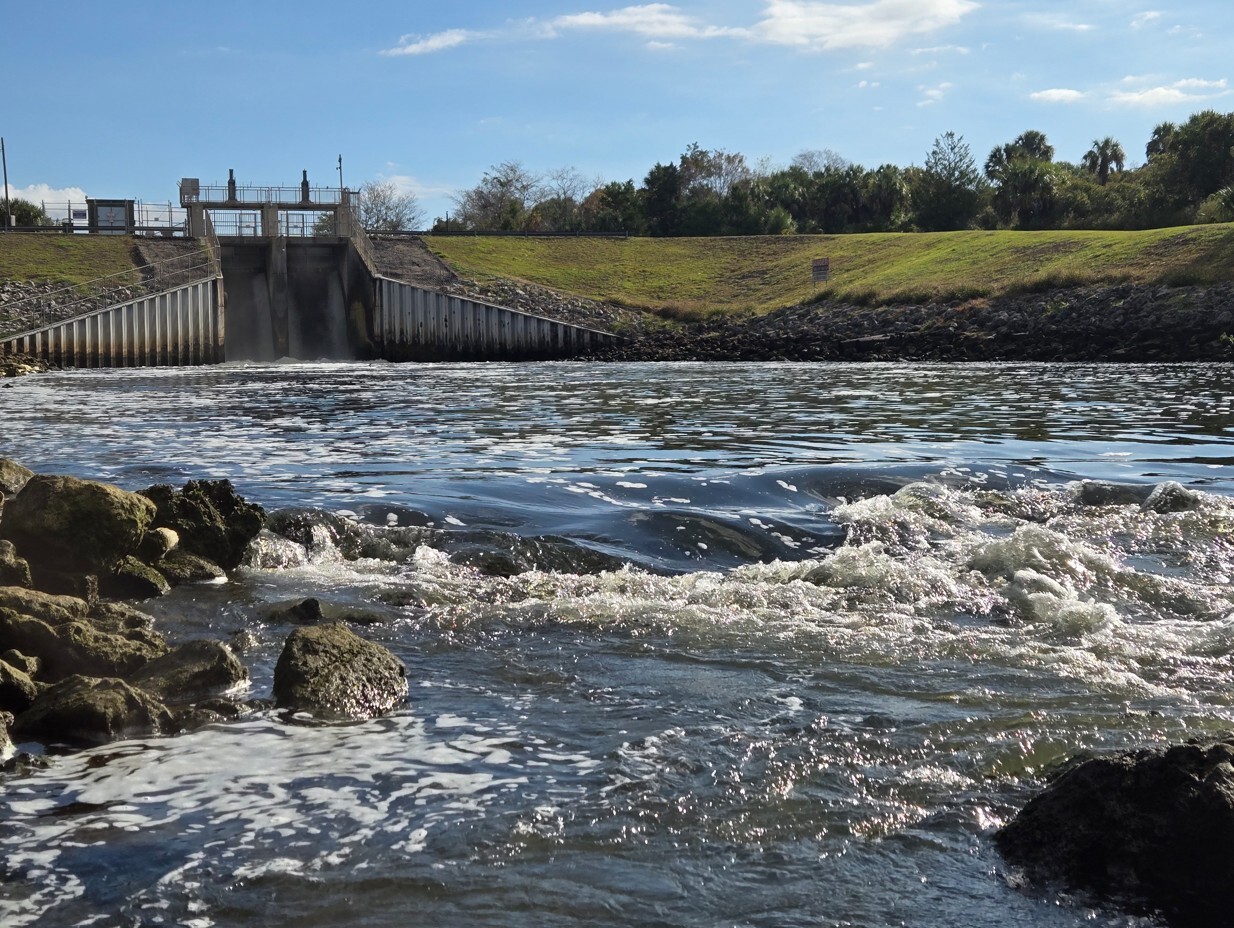
- The primary outlet from Lake Rousseau is the Inglis Bypass Spillway which provides continuous freshwater flow to the Lower Withlacoochee River.
- The Inglis Bypass Spillway is currently flowing at 41% of its capacity, with minimal change over the past month.
- When the Bypass Spillway reaches maximum capacity, the Inglis Main Dam is opened, discharging excess water from Lake Rousseau to the Barge Canal.
- This provides flood protection to the Lower Withlacoochee River when the river upstream of Lake Rousseau is experiencing high water conditions.
- The Inglis Main Dam, which closed in early February, remains fully closed and won’t open again until Withlacoochee River flows increase substantially (likely next summer).
Water exits Lake Rousseau via the Inglis Bypass Spillway
Happy New Year!
Mark
Mark Fulkerson, Ph.D., P.E.
Chief Professional Engineer
Southwest Florida Water Management District
(352) 269-6073 (office)
(352) 279-4493 (cell)
|
|
|
|
|
|
|
|


|
Southwest Florida Water Management District | 2379 Broad Street, Brooksville, FL 34604-6899 |
|
If you do not want to continue receiving emails about these projects, click Unsubscribe. To manage your Southwest Florida Water Management District subscriptions, click Manage Preferences. |