Withlacoochee River System Update - 12/1/2025
Southwest Florida Water Management District sent this bulletin at 12/01/2025 05:19 PM EST
 |
Structures Help to Conserve Water as Dry Season Continues
Rainfall:
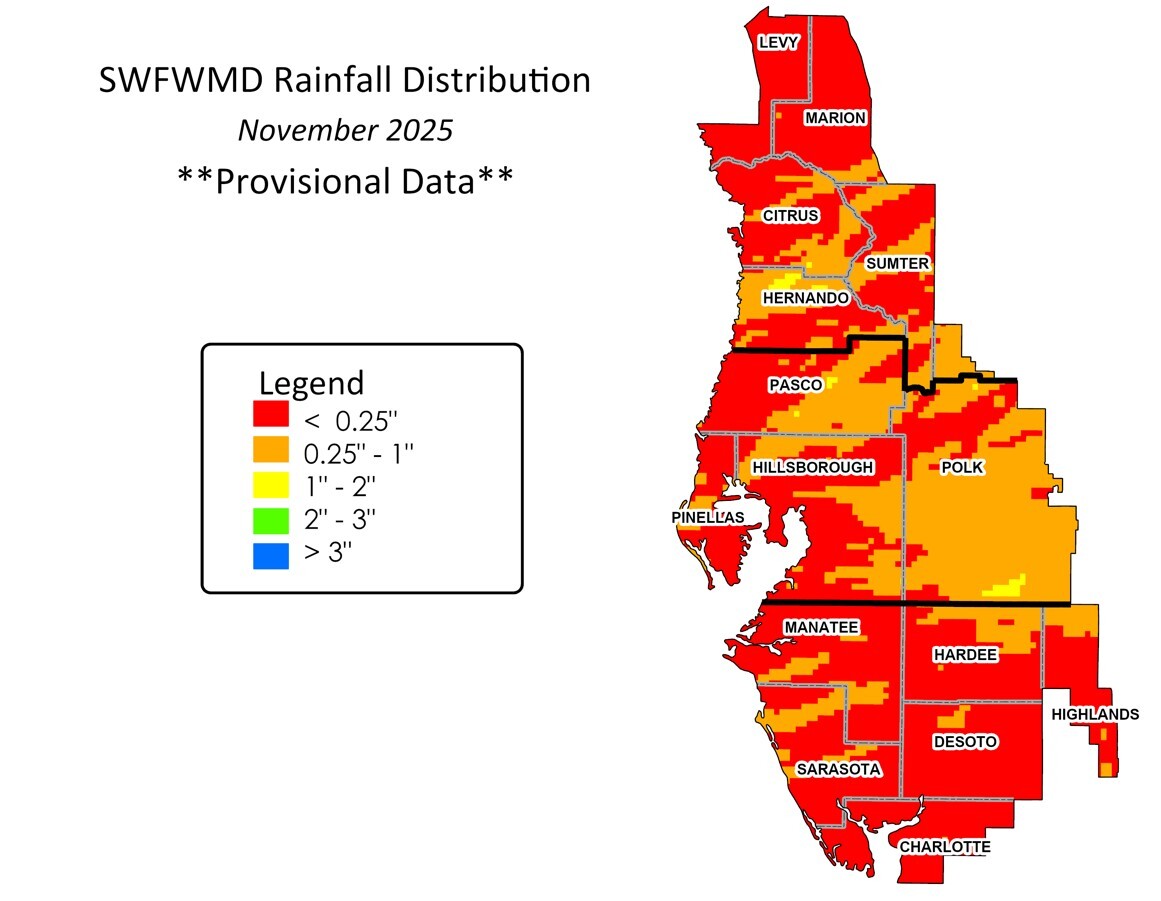
- Although November is historically the driest month of the year, rainfall was virtually non-existent last month.
- Our region received only 0.2 inches of rainfall in November, a fraction of the historical average (2.0 inches) for the month.
- This extended our rainfall deficit for the year to 12 inches, a colossal amount in hydrologic terms.
- By this time last year, our region had already received 56 inches of rainfall, but so far this year we’ve only received 39 inches.
- Substantially less rainfall in 2025 is the reason water levels are much lower than normal for this time of year.
- Aquifer (groundwater) levels remain below average, currently in the 24th percentile for this time of year, and much lower than last year (86th percentile). Remember, the 50th percentile is average.
- Unless our region receives much more rain this winter/spring, we could experience serious drought conditions by next summer.
- Throughout our District, water control structures are being operated to conserve available water, although we have no control over the rainfall.
- The figure below shows how much rainfall different areas received last month. No areas in our District’s 16 counties received even close to average rainfall in November.
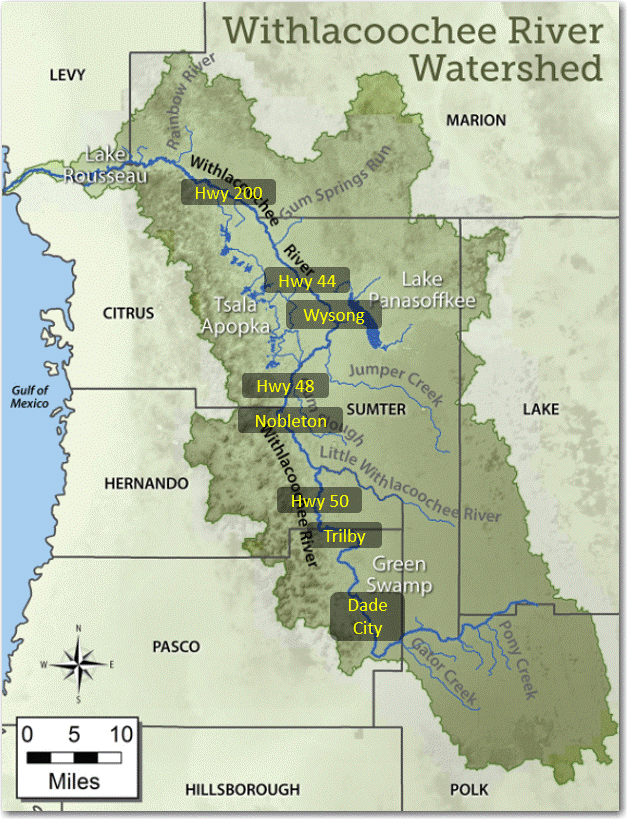
Withlacoochee River (from the Green Swamp downstream past Hwy 200):
- With almost no rainfall in November, river levels and flows have continued to decrease.
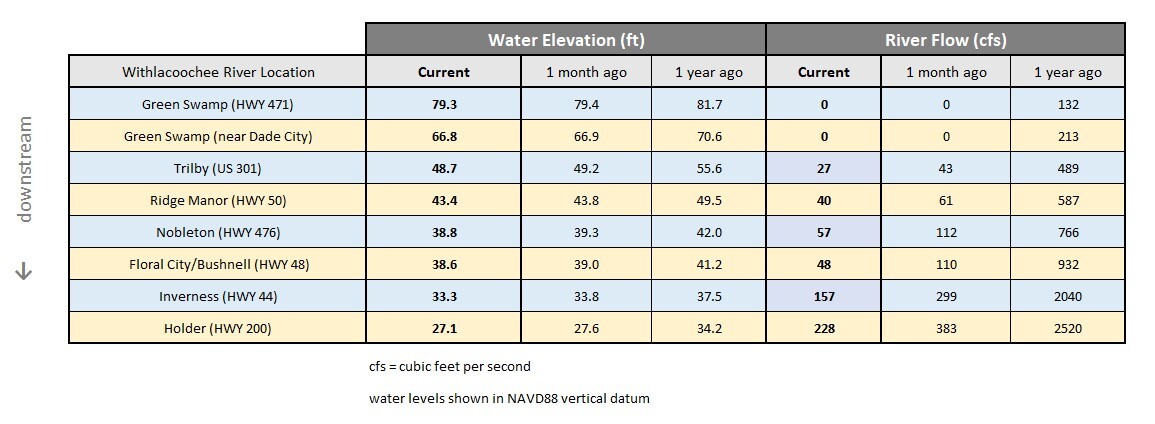
- In the Green Swamp (where the river begins), there’s been no measurable flow at the gauges (SR 471 and River Rd) for months now.
- Along the remainder of the river, flows declined by an average of 44% in November.
- Groundwater inflows are the only source of water to the Withlacoochee River, but groundwater levels are also naturally declining this dry season.
- In the Green Swamp, river levels fell about an inch last month.
- From Trilby past Hwy 200, river levels fell an average of 5 inches in November.
- It’s normal for river levels to continue to decline over the next several months, unless we experience high rainfall throughout the region this winter/spring.
- The table below compares current river levels and flows to what they were last month and last year.
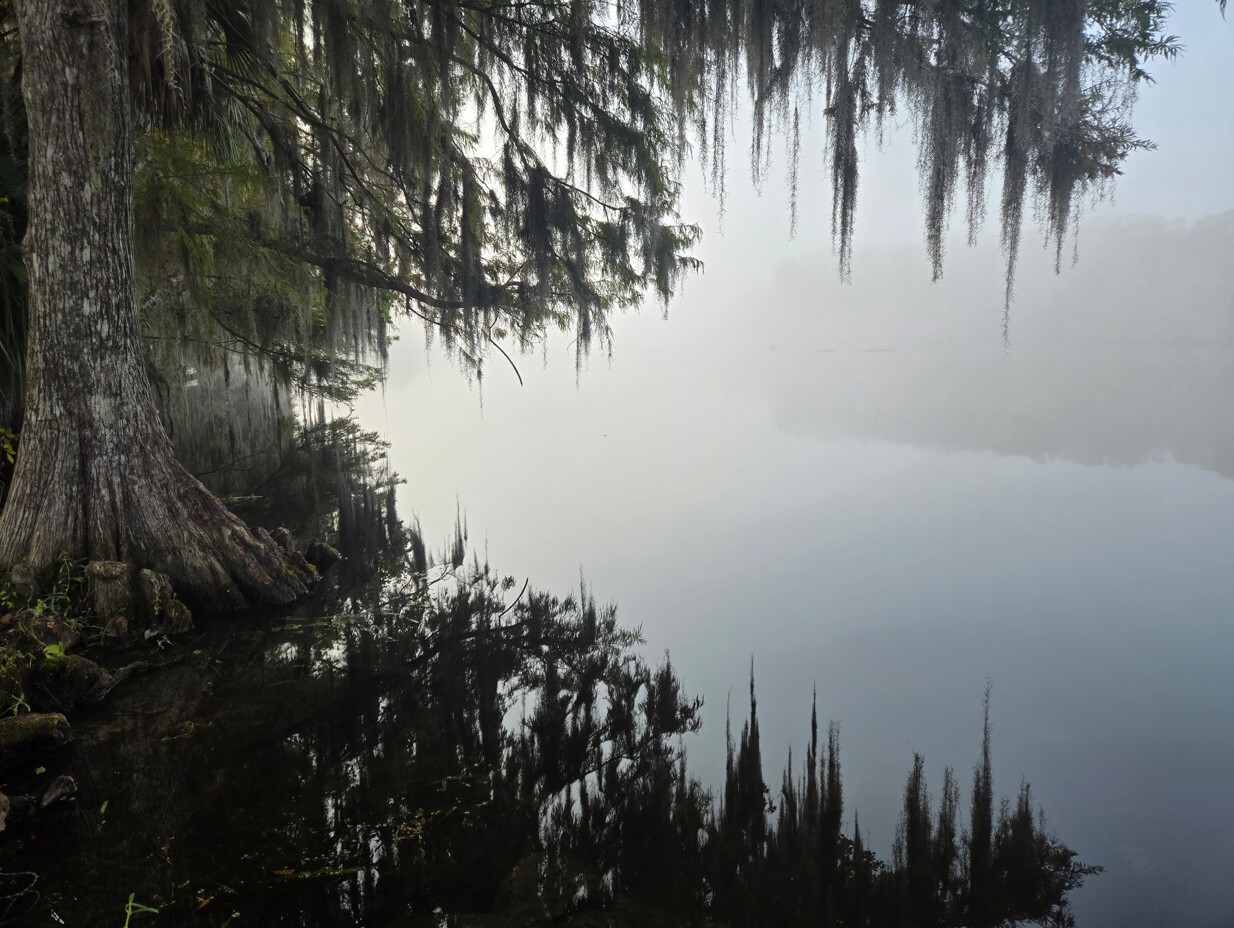
Foggy morning on the Withlacoochee River (November 2025)
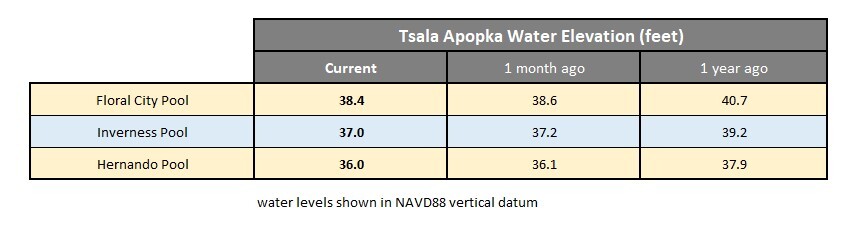
Tsala Apopka Chain of Lakes:
- As our dry season continues, water levels throughout the Tsala Apopka Chain of Lakes continue to slowly decline.
- Lake/canal/wetland levels in this area typically drop very slowly during the winter months, and then they drop much quicker in the springtime, as temperatures warm up.
- Over the past month, water levels in the Tsala Apopka Lake Chain fell 2-3 inches, which is normal for this time of year when we don’t get any rainfall.
- Several water control structures, which were opened last July, remain open sharing available river water between all three pools.
- Since river levels have remained low, available inflows have not raised lake levels this year, but rather have helped prevent the lakes from dropping quicker.
- The Withlacoochee River is currently about 3.5 inches higher than the Floral City Pool (where inflows occur).
- Once river levels drop below the lakes, all structures will be closed.
- Water levels in the lakes, canals, and wetlands of Tsala Apopka are currently about 2 feet lower than the high levels we typically see this time of year.
- We can expect water levels to continue to drop during the dry season, unless heavy rainfall occurs.
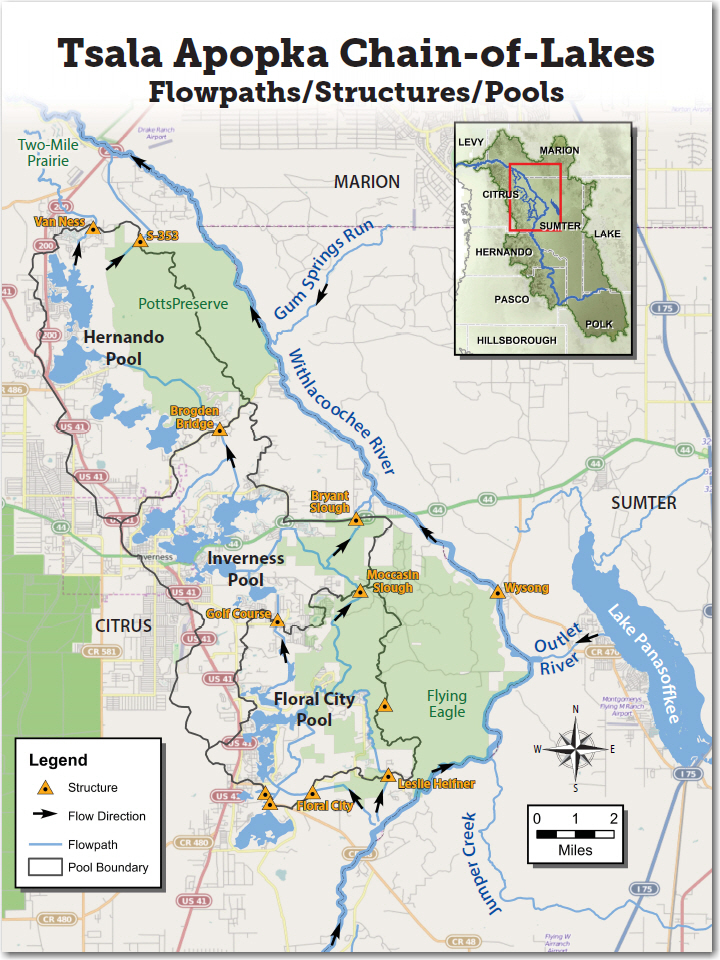
The Golf Course Structure remains open, helping to share river inflows with all three pools (November 2025)
Lake Panasoffkee and Wysong:
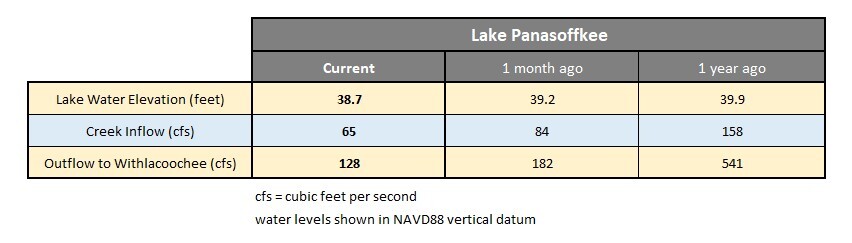
- Water levels continue to decline in and around Lake Panasoffkee.
- Flow from spring-fed creeks, that provide continuous inflow to the lake, have declined 23% over the past month and are 60% lower than a year ago.
- Water levels on Lake Panasoffkee steadily declined over the past month, dropping almost 6 inches since early November.
- Outflow from the lake to the Withlacoochee River has also declined, falling 30% in November.
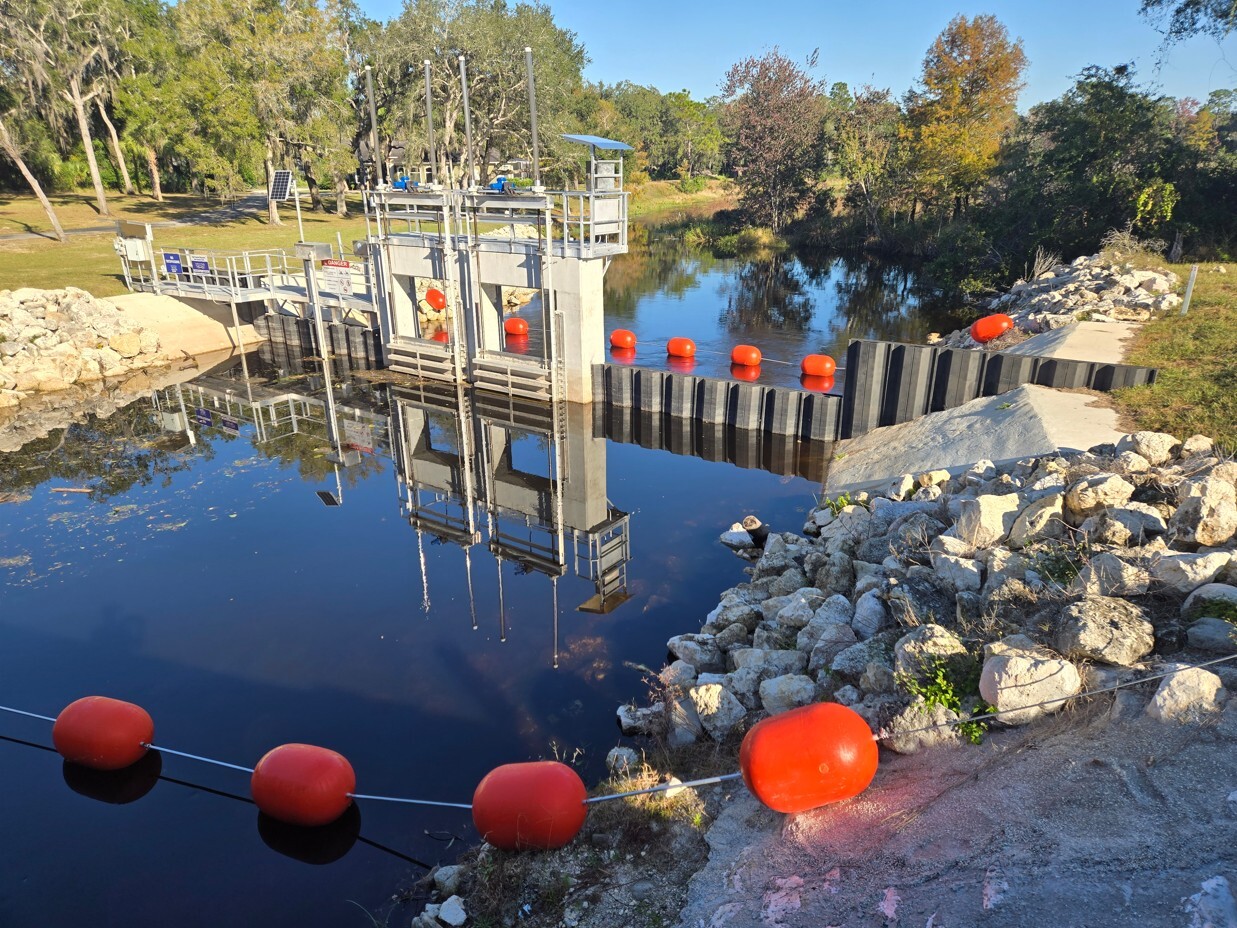
- The Wysong structure, located 3 miles downstream of Lake Panasoffkee, spans the entire Withlacoochee River.
- The main gate (230-foot-wide) of Wysong remains raised.
- The independent gate (19-foot-wide) remains partially lowered, allowing river flows to pass downstream.
- Lake Panasoffkee water levels are currently 14 inches lower than a year ago. Of course, last year the lake was still recovering from high water after Hurricane Milton.
- We can expect water levels and flows to continue declining throughout the winter and we could see very low water levels this spring.
Water flows over the Independent Gate at Wysong (November 2025)
Lake Rousseau and the Lower Withlacoochee River (from Dunnellon to the Gulf of Mexico):
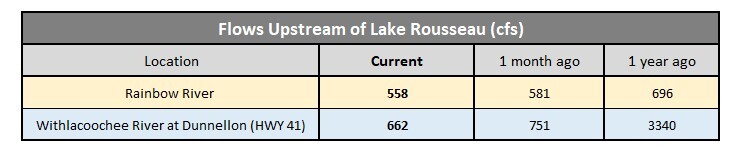
- Flows into and out of Lake Rousseau are low for this time of year because of substantially less rainfall in 2025.
- Upstream of Dunnellon, the Rainbow River provides continuous spring flow into the Withlacoochee River.
- Downstream of Dunnellon, the Withlacoochee River enters Lake Rousseau, an in-stream lake formed over a century ago with flood control structures near Inglis.
- Combined flows from the Rainbow and Withlacoochee Rivers are recorded at the Dunnellon (Hwy 41) gauge.
- Rainbow River flow (which reflects changes in aquifer levels) decreased by 4% last month.
- Overall, inflows to Lake Rousseau are 80% lower than they were a year ago, when floodwaters were still making their way through the lake.
- Water levels on Lake Rousseau have stayed relatively constant the entire month of October.
- Flow that enters Lake Rousseau from the east, exits through water control structures on the west end of the lake.
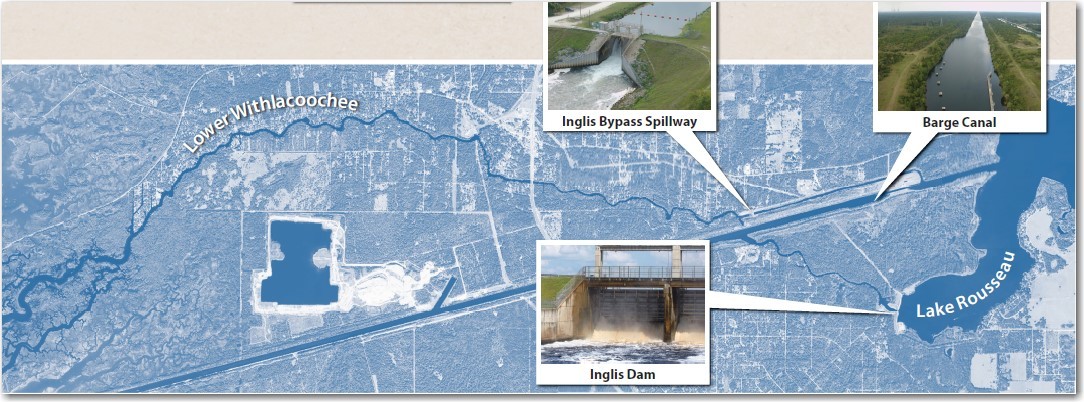
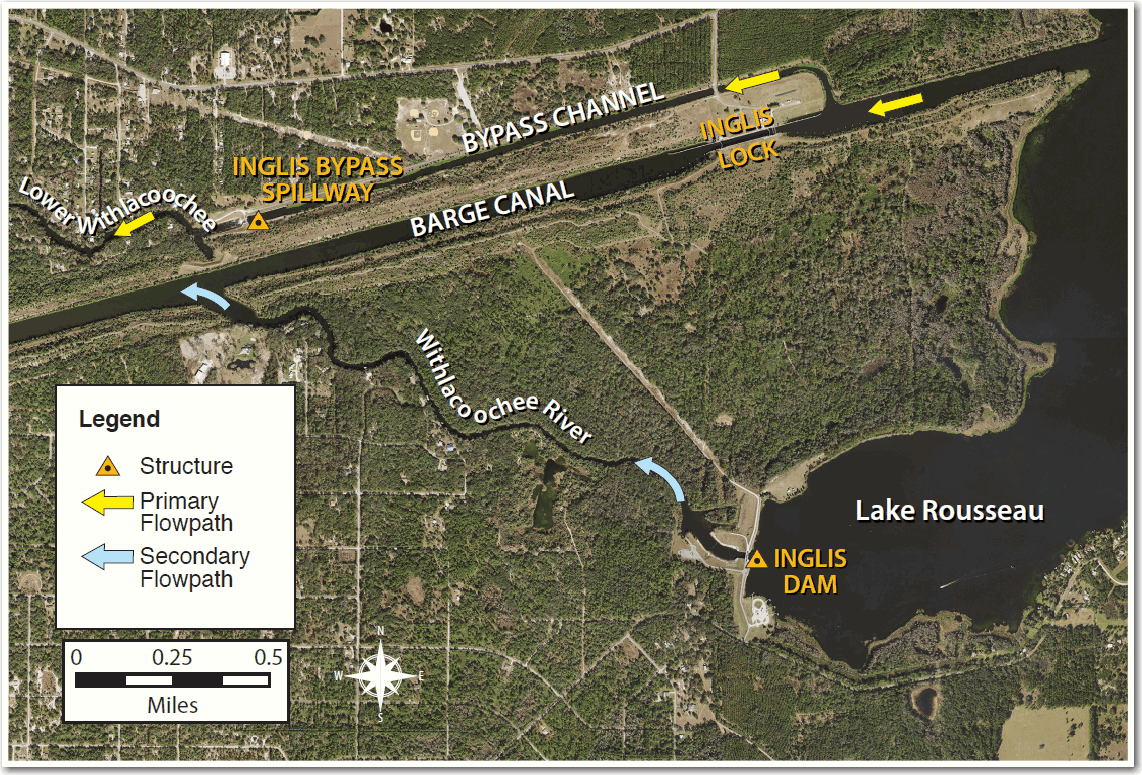
- There are two structures that release water from the lake (see map below).
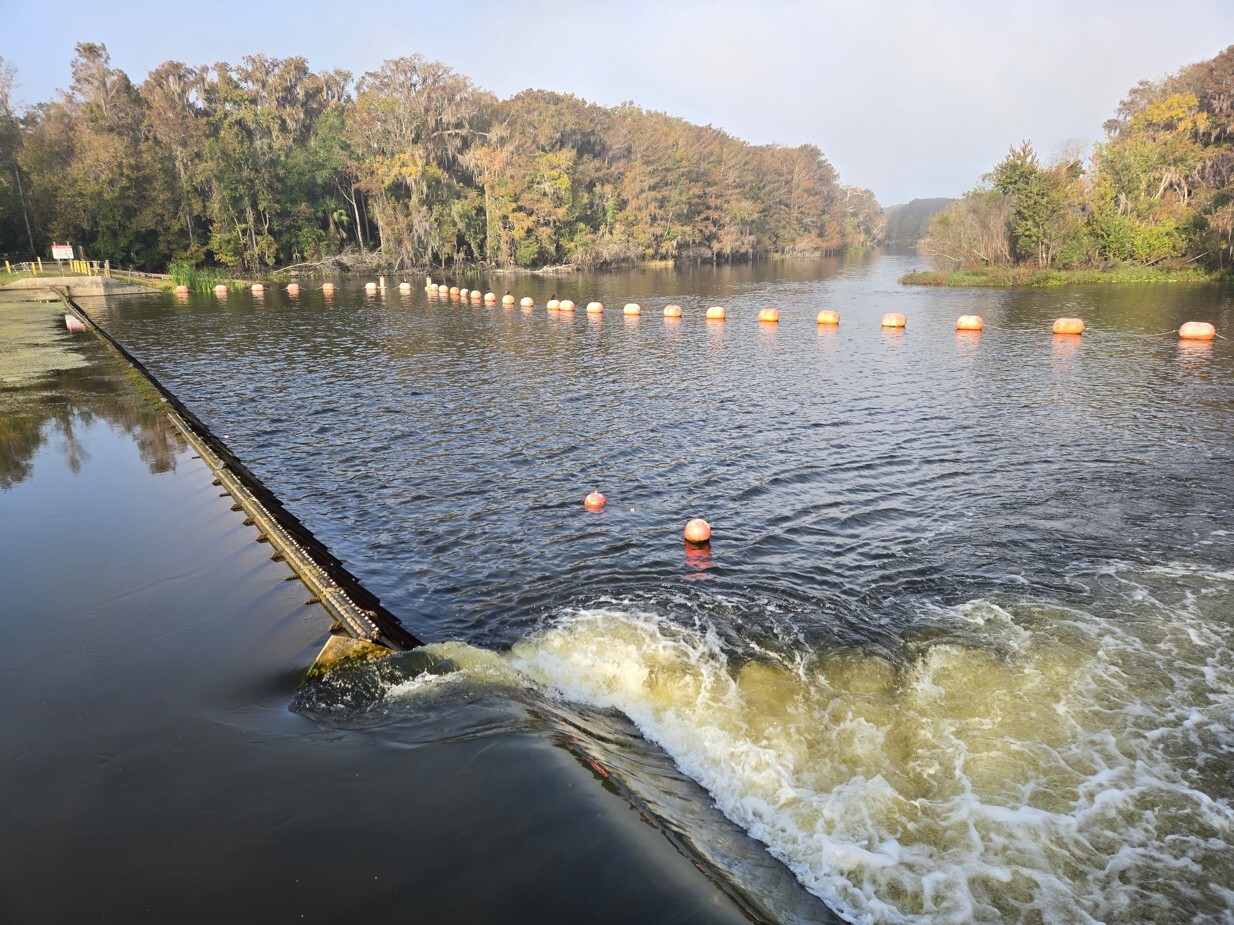
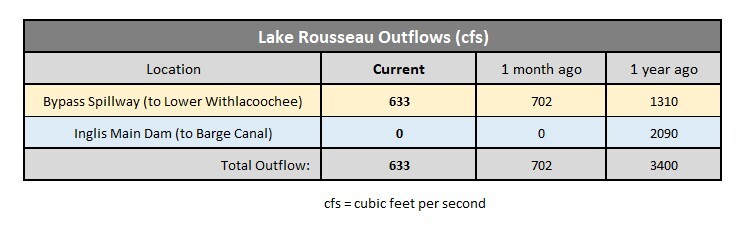
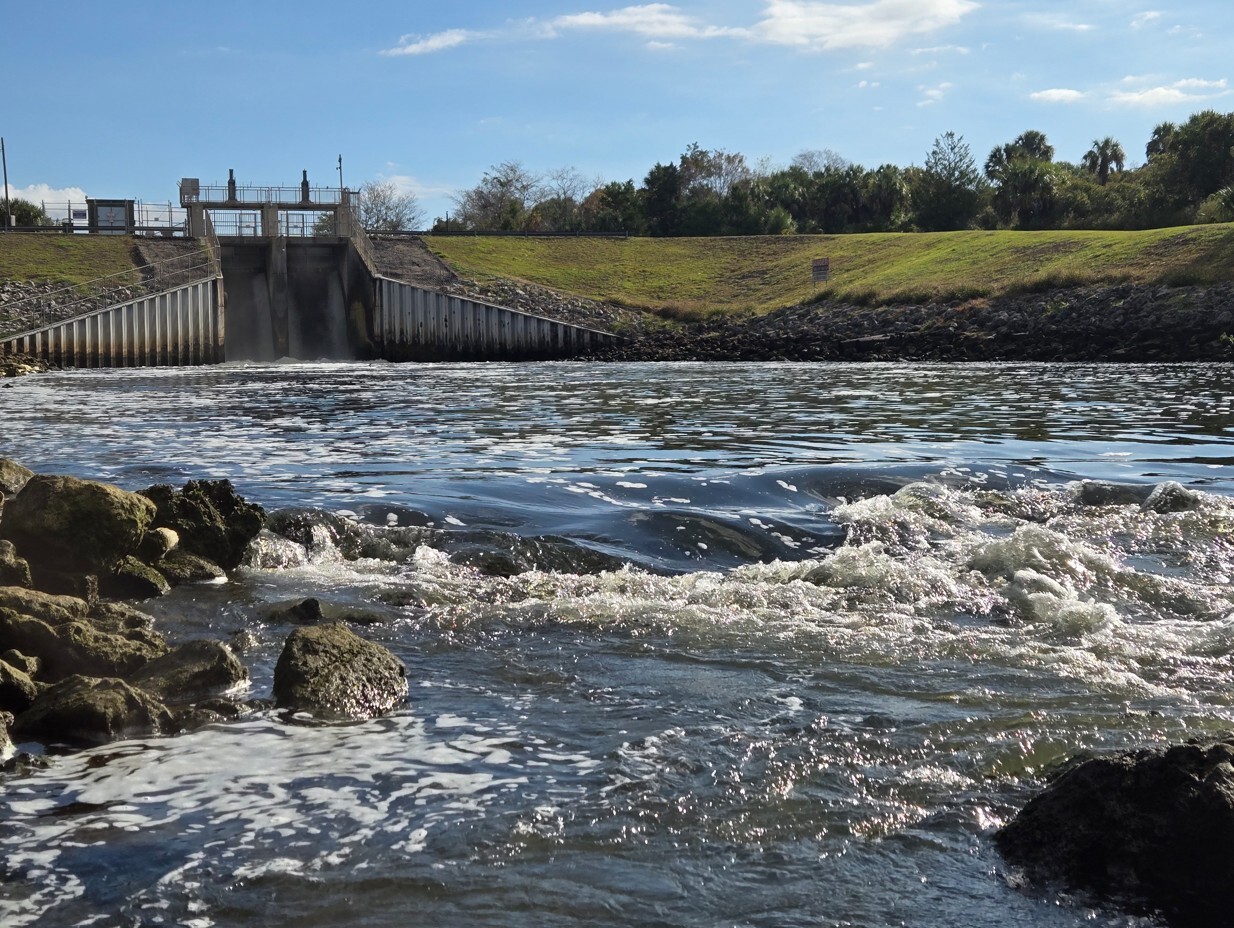
- The primary outlet from Lake Rousseau is the Inglis Bypass Spillway which provides continuous freshwater flow to the Lower Withlacoochee River.
- The Inglis Bypass Spillway is currently flowing at 45% of its capacity, down 5% from last month.
- When the Bypass Spillway reaches maximum capacity, the Inglis Main Dam is opened, discharging excess water from Lake Rousseau to the Barge Canal.
- This provides flood protection to the Lower Withlacoochee River when the river upstream of Lake Rousseau is experiencing high water conditions.
- The Inglis Main Dam, which closed in early February, remains fully closed and won’t open again until Withlacoochee River flows increase substantially (likely next summer).
- Last year at this time, the Inglis Main Dam was open, discharging nearly 1.4 billion gallons of water a day into the Gulf.
Water exits Lake Rousseau via the Inglis Bypass Spillway (November 2025)
Hope you have a great week!
Mark
Mark Fulkerson, Ph.D., P.E.
Chief Professional Engineer
Southwest Florida Water Management District
(352) 269-6073 (office)
(352) 279-4493 (cell)
|
|
|
|
|
|
|
|


|
Southwest Florida Water Management District | 2379 Broad Street, Brooksville, FL 34604-6899 |
|
If you do not want to continue receiving emails about these projects, click Unsubscribe. To manage your Southwest Florida Water Management District subscriptions, click Manage Preferences. |