Withlacoochee River System Update - 4/1/2025
Southwest Florida Water Management District sent this bulletin at 04/01/2025 03:46 PM EDT
 |
Springtime Has Arrived in the Withlacoochee Watershed
Rainfall:
- Cypress trees are budding green, songbirds are calling, temperatures are warming….all signs that springtime has finally arrived.
- As our dry season continues, we’re thankful for days like this past Sunday that brought good rainfall to our region.
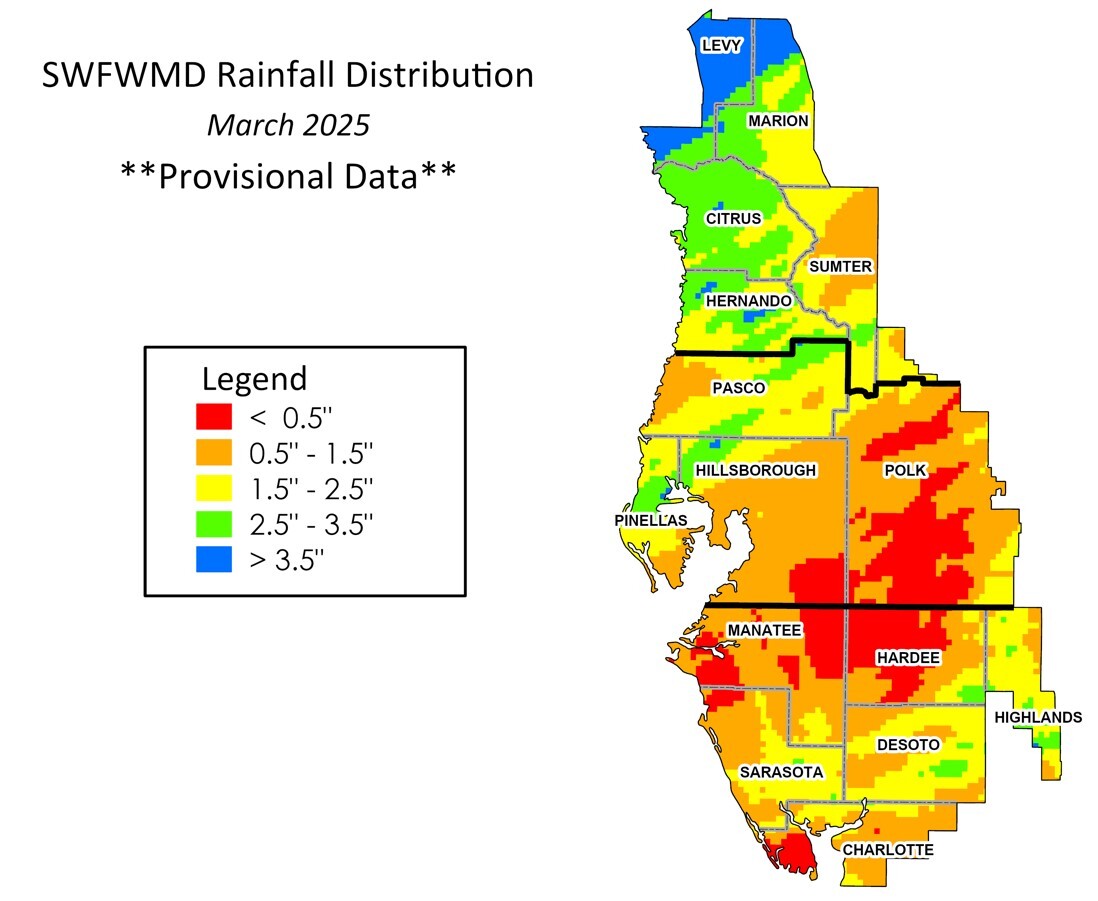
- In March, we received an average of 2.7 inches of rainfall, less than the historical average (3.8 inches) for that month.
- So far this year (January through March), we’ve received 5.9 inches of rain, less than the historical average (9.5 inches) for those first three months.
- This is substantially lower than the 10.7 inches of rain we received last year from January through March.
- Less rain during this year’s dry season is allowing water levels, which reached record highs in some areas after Hurricane Milton, to recover back to more normal conditions.
- Aquifer (groundwater) levels remain above average, currently in the 60th percentile for this time of year, and higher than last year (50th percentile).
- The figure below shows how much rainfall different areas received last month.
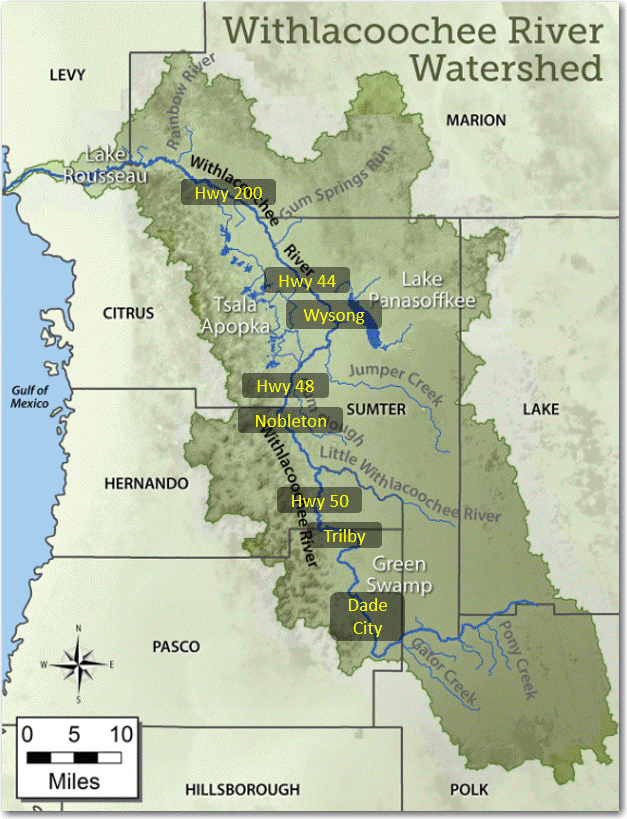
Withlacoochee River (from the Green Swamp downstream past Hwy 200):
- Decent rainfall last Sunday provided a temporary boost to river levels and flows…
- …but the overall trend has been steady declines during the month of March, a pattern we expect this time of year.
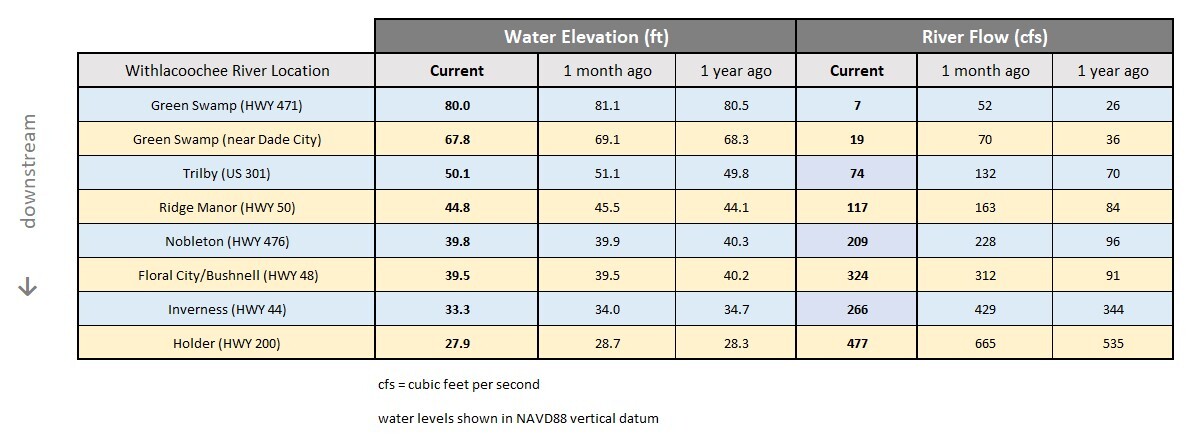
- In the Green Swamp, river levels dropped about a foot last month, while flows declined 80%.
- Unless we get substantial rainfall in the coming weeks, flows from the Green Swamp may stop entirely by early summer.
- Near Trilby (US 301) and Ridge Manor (Hwy 50), river levels also dropped about a foot in March, while flows fell by 36%.
- From Hwy 476 (Nobleton) past Hwy 48, where the river’s floodplain spreads wide into adjacent swamps, water levels and flows held relatively steady over the past few weeks.
- There is also a significant vegetation blockage on the Hwy 48 bridge, that workers will begin clearing on Thursday. This could be affecting water levels and flows in this area of the river.
- Between Hwy 44 and Hwy 200, river levels declined about a foot in March, while river flows dropped 33%.
- We can expect river levels and flows to continue to steadily decline over the next couple months, until the summer rains fill adjacent wetlands and bring increased flow from numerous creeks, ditches, and streams.
- The table below compares current river levels and flows to what they were last month and last year.
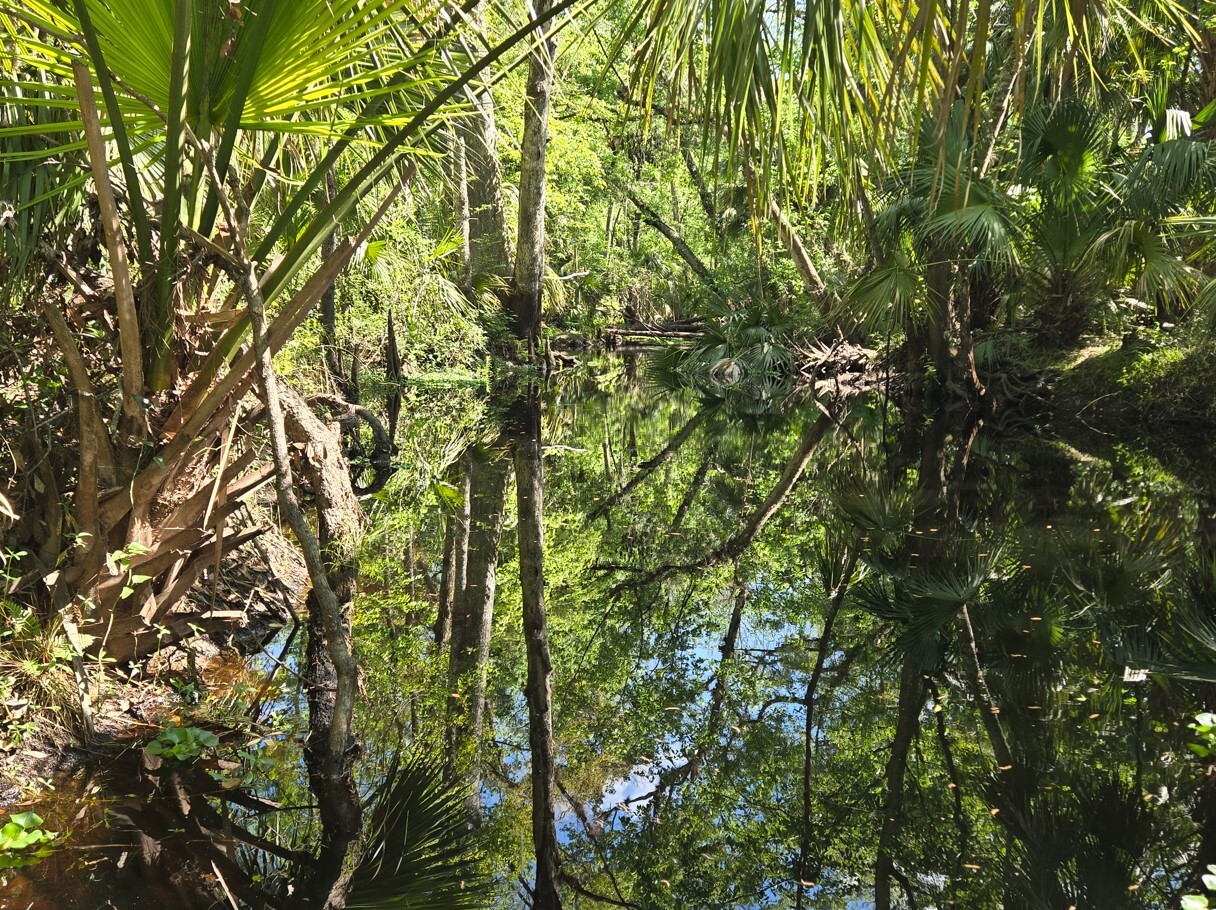
"Jungle-like" Nature of the Withlacoochee River in the Green Swamp (March 2025)
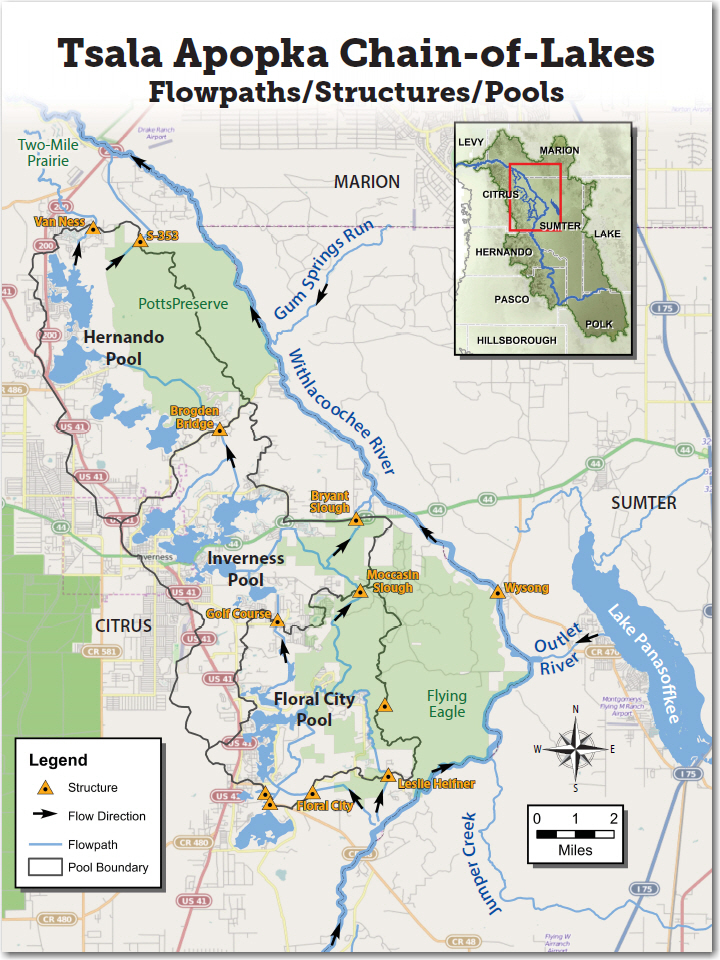
Tsala Apopka Chain of Lakes:
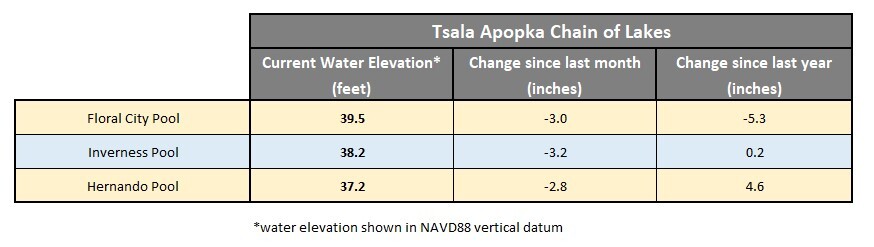
- Over the past month, all three pools of the Tsala Apopka Chain of Lakes dropped about 3 inches.
- This is normal because every day water evaporates from the lakes and leaks downward to the underlying aquifer.
- This time of year, the only source of water to the lake chain is rainfall.
- The Floral City Pool is about 5 inches lower than it was a year ago, the Inverness Pool is about the same as last year, and the Hernando Pools is almost 5 inches higher than it was a year ago.
- All the water control structures remain closed, helping to conserve water in the lake chain.
- Water levels are expected to continue to decline until the summer months bring excess rainfall to the area.
Backwaters of Tsala Apopka (March 2025)
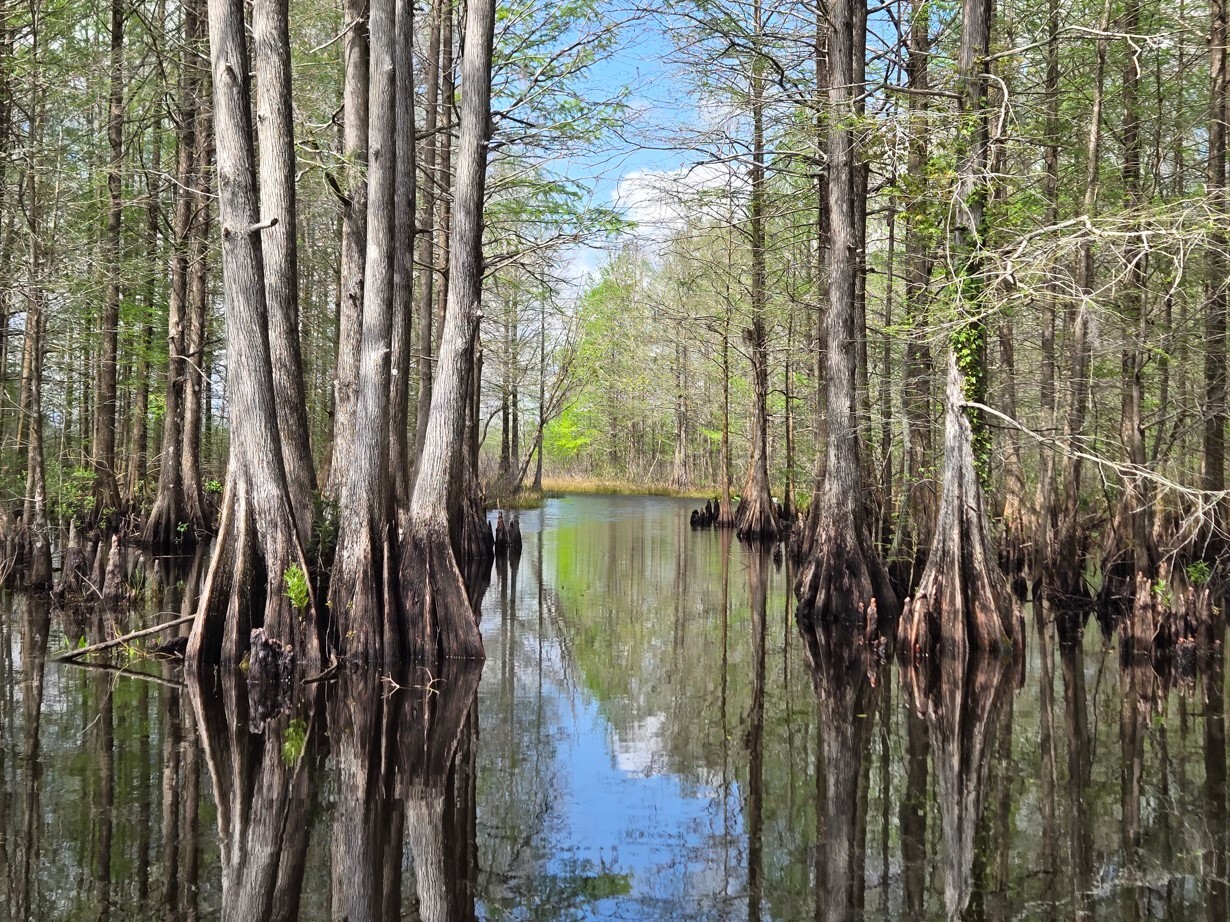
Lake Panasoffkee and Wysong:
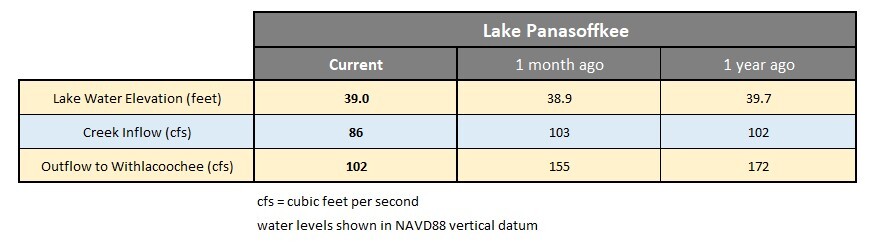
- Lake Panasoffkee sits across the river from the Tsala Apopka Chain of Lakes and behaves quite differently.
- Panasoffkee is a spring fed lake because aquifer levels are higher than lake levels.
- This provides a year-round flow of water into and out of the lake.
- Inflows to the lake from spring-fed Shady Brook and Little Jones Creek declined slightly in March.
- Outflow from Lake Panasoffkee to the Withlacoochee River also declined last month.
- The water level on Lake Panasoffkee held relatively steady in March because rainfall and other inflows essentially matched outflows to the Withlacoochee River.
- Lake Panasoffkee is currently 8 inches lower than it was a year ago.
- The Wysong structure, located 3 miles downstream of Lake Panasoffkee, spans the entire Withlacoochee River.
- The main gate at Wysong (230-foot-wide) remains fully raised while the independent gate (19-foot-wide) is partially raised.
- Wysong is helping to maintain a higher level on Lake Panasoffkee while also passing river flows downstream.
- Both lake and river levels are expected to naturally decline over the next two months as the warmest dry season months lie ahead of us.
Lake Rousseau and the Lower Withlacoochee River (from Dunnellon to the Gulf of Mexico):
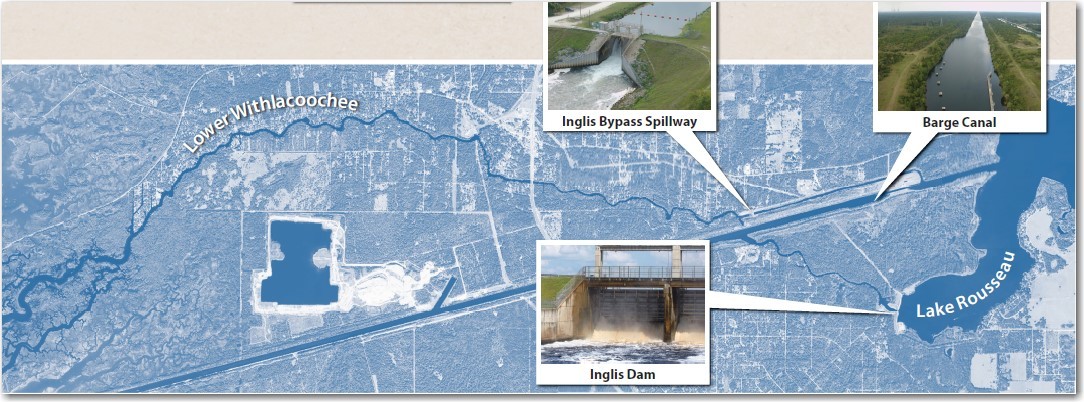
- Downstream of Dunnellon, the Withlacoochee River enters Lake Rousseau, an in-stream lake formed over a century ago with flood control structures near Inglis.
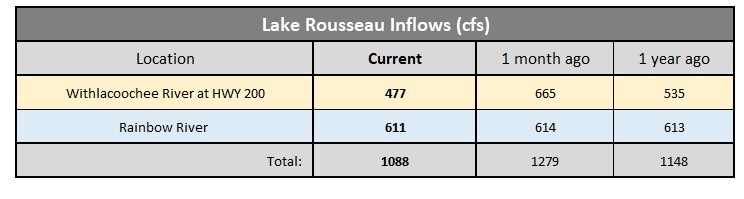
- Inflow to Lake Rousseau includes combined flows from the Withlacoochee and Rainbow Rivers.
- Rainbow River flow (which reflects changes in aquifer levels) remained relative constant in March.
- Withlacoochee River flow (which depends on rainfall and runoff from adjacent lands) decreased nearly 30% last month.
- Overall, inflows to Lake Rousseau are currently 5% lower than they were a year ago.
- Water levels on Lake Rousseau have stayed relatively constant the entire month of March.
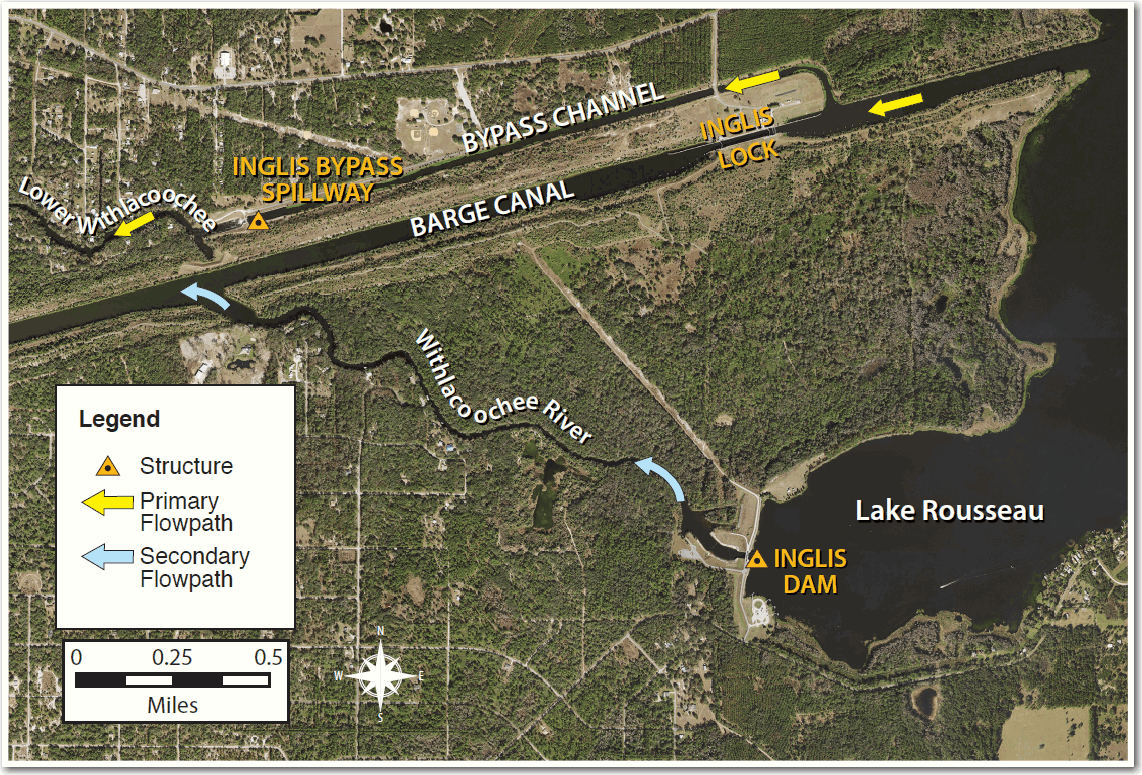
- Flows that enter Lake Rousseau from the east exit through water control structures on the west end of the lake.
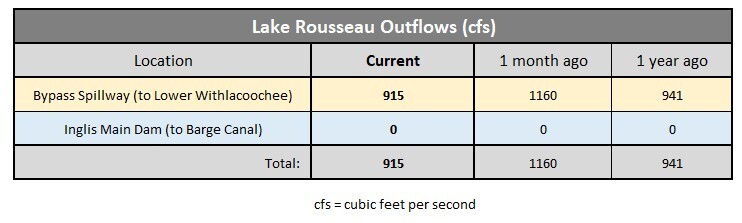
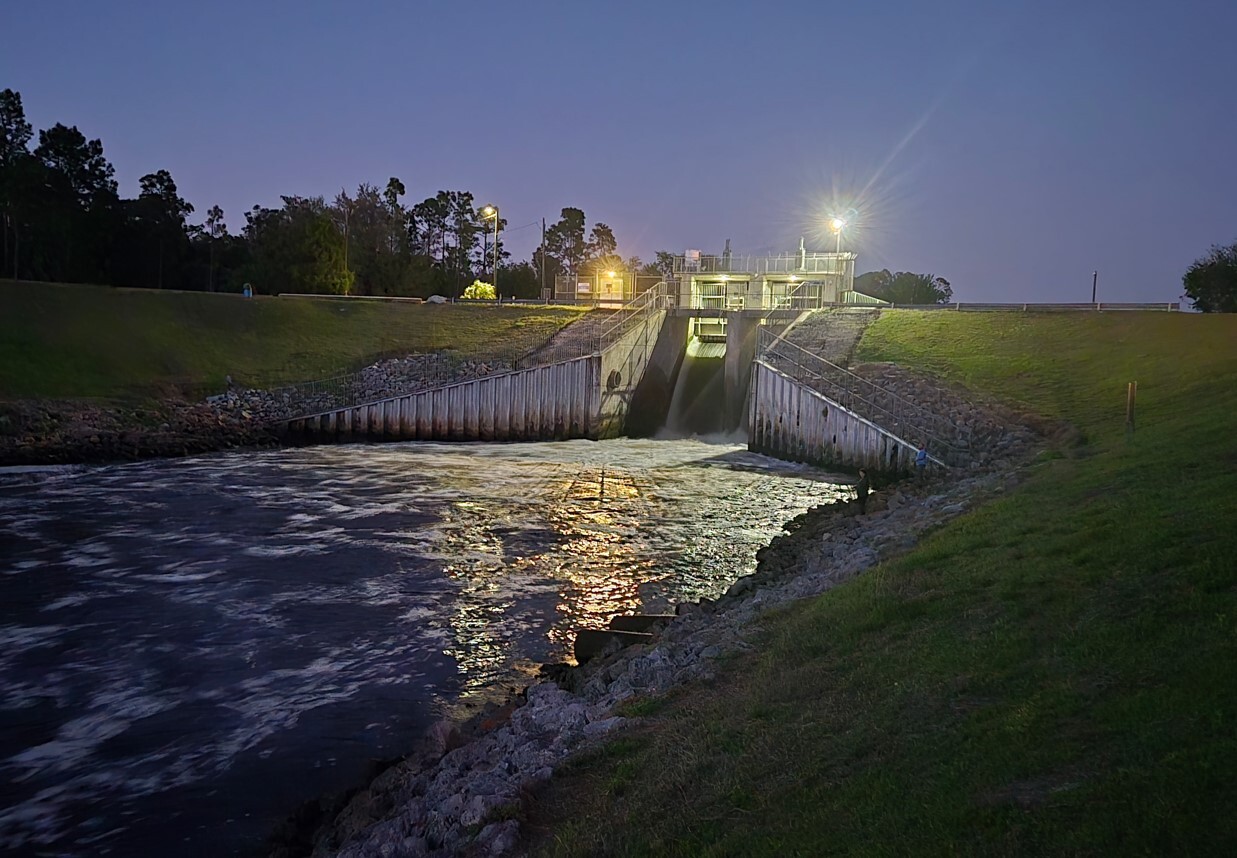
- The primary outlet from Lake Rousseau is the Inglis Bypass Spillway which provides continuous freshwater flow to the Lower Withlacoochee River.
- As inflows to the lake have declined, outflows have also declined, about 21% over the past month.
- The Inglis Bypass Spillway is currently flowing at 65% of its capacity.
- The Inglis Main Dam discharges excess water from Lake Rousseau to the Barge Canal, whenever the Bypass Spillway reaches maximum capacity.
- The Inglis Main Dam remains fully closed and won’t open again unless summer rains cause lake inflows to exceed the capacity of the Inglis Bypass Spillway.
- Freshwater flow to the Lower Withlacoochee River is currently about 3% lower than it was a year ago.
Inglis Bypass Spillway at Night (March 2025)
Have a wonderful week!
Mark
Mark Fulkerson, Ph.D., P.E.
Chief Professional Engineer
Southwest Florida Water Management District
(352) 269-6073 (office)
(352) 279-4493 (cell)
|
|
|
|
|
|
|
|


|
Southwest Florida Water Management District | 2379 Broad Street, Brooksville, FL 34604-6899 |
|
If you do not want to continue receiving emails about these projects, click Unsubscribe. To manage your Southwest Florida Water Management District subscriptions, click Manage Preferences. |