
Withlacoochee River System Update - 12/2/2024
Southwest Florida Water Management District sent this bulletin at 12/02/2024 06:11 PM EST
 |
Dry Weather Allows the Withlacoochee River to Steadily Decline
Rainfall:
- 2024 has turned out to be a wet year.
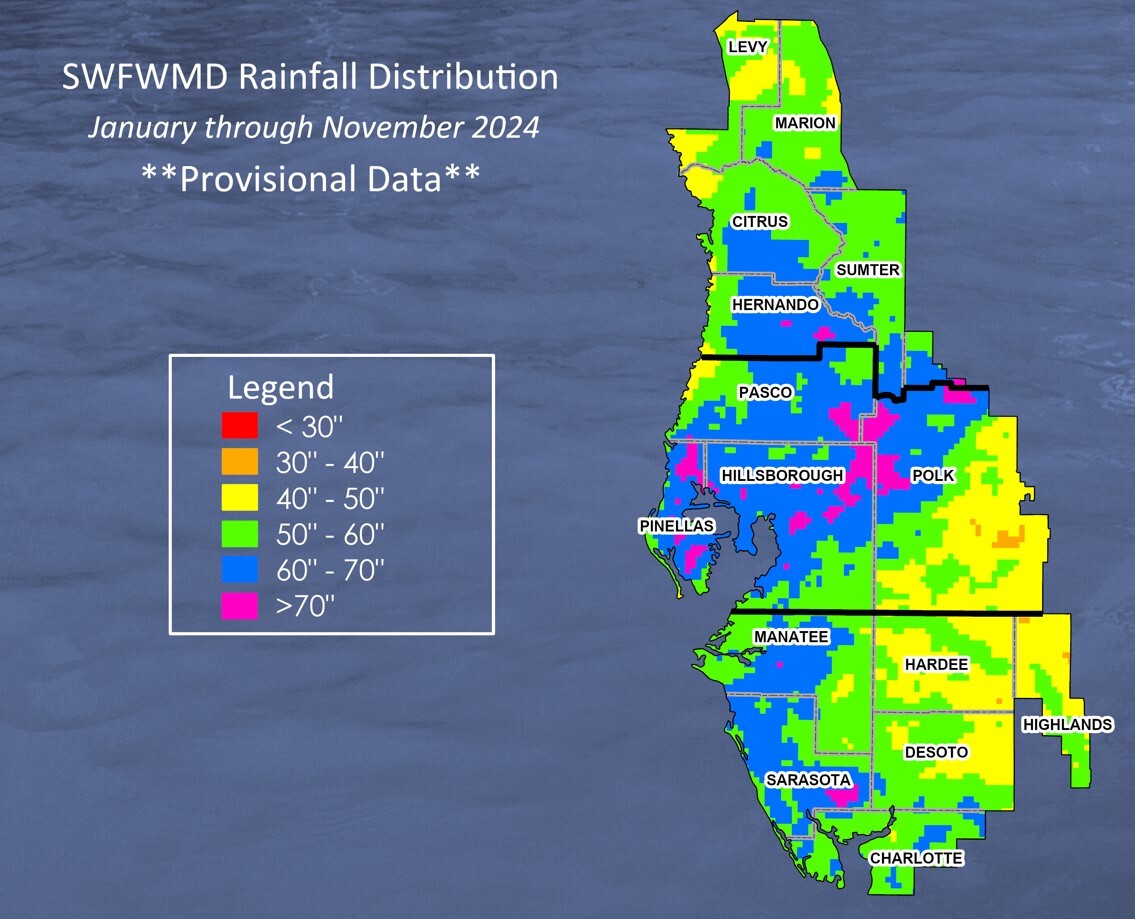
- So far this year (January through November), our region has received about 56 inches of rain, above the historical average (51 inches) for the first 11 months of the year.
- And many areas have already received 60 or 70 plus inches of rain with one month still to go.
- Our annual average is around 54 inches per year.
- Last month (November) our region only received ½ inch of rain, low even for November’s standards which averages about 2 inches for the month.
- But many folks living in flooded areas weren’t complaining about the lack of rainfall in November.
- Aquifer (groundwater) levels remain high and are currently in the 85th percentile for this time of year, much higher than last year (44th percentile).
- The figure below shows how much rainfall different areas have received so far this year (Jan to Nov). Most areas have received above average rainfall (green, blue, and pink).
Withlacoochee River (from the Green Swamp downstream past Hwy 200):
- There’s a famous quote that says, “The only constant in life is change” and that’s certainly true of the Withlacoochee River.
- Every year is different, and each flood is unique, Hurricane Milton included.
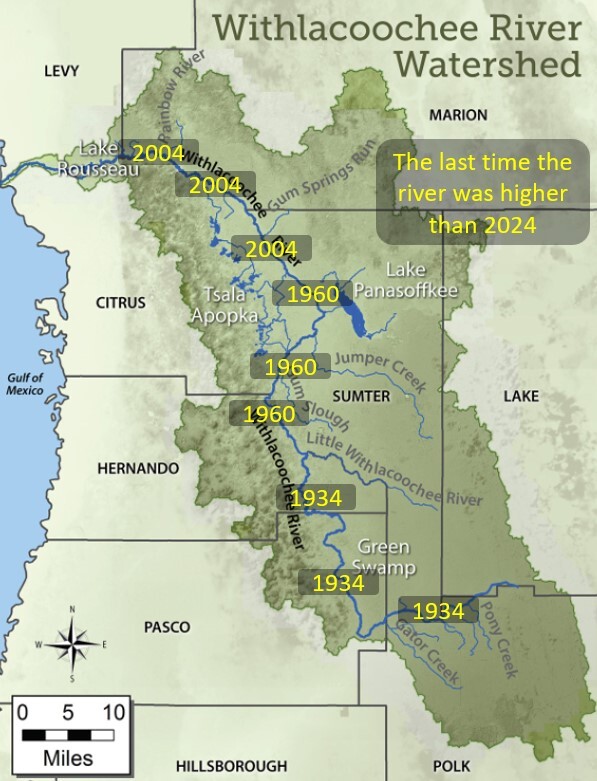
- This year, the upper portions of the Withlacoochee River (from the Green Swamp to Ridge Manor) saw its highest river levels in 90 years (since 1934).
- While downstream areas exceeded Hurricane Irma flooding from 2017, they struggled to reach 2004 levels and were well below the 1960 flood (map below).
- Over the past month, river levels and flows have declined dramatically.
- In the Green Swamp, river levels dropped more than 3 feet in November and 8 feet overall since their peak in mid-October.
- Near Trilby and Ridge Manor, river levels dropped more than 8 feet last month and 11-12 feet overall since their peak in October.
- Nobleton (476) is down nearly 6 feet and Hwy 48, Hwy 44, and Hwy 200 (Holder), have dropped more than 3 feet since their peak about a month ago.
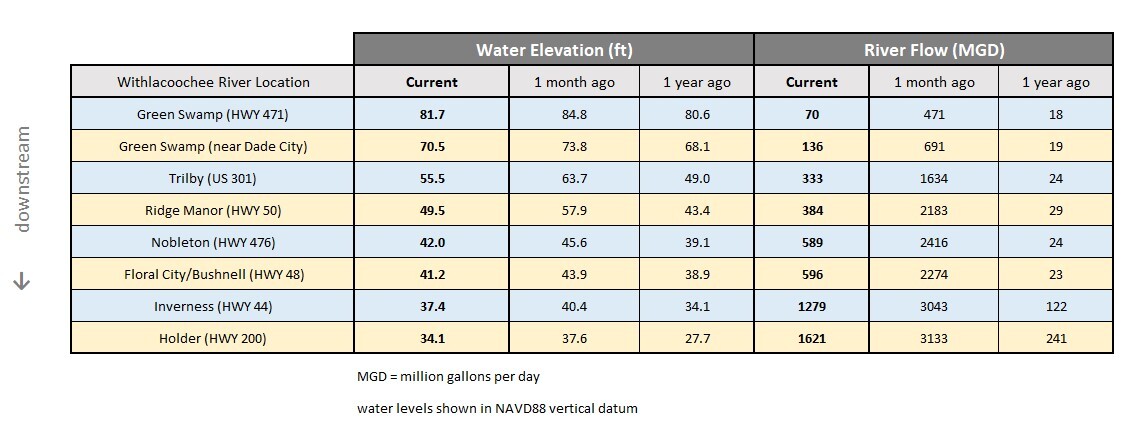
- The table below compares current river levels and flows to what they were last month and last year.
- River levels will continue to decline unless the area receives substantial rainfall this winter.
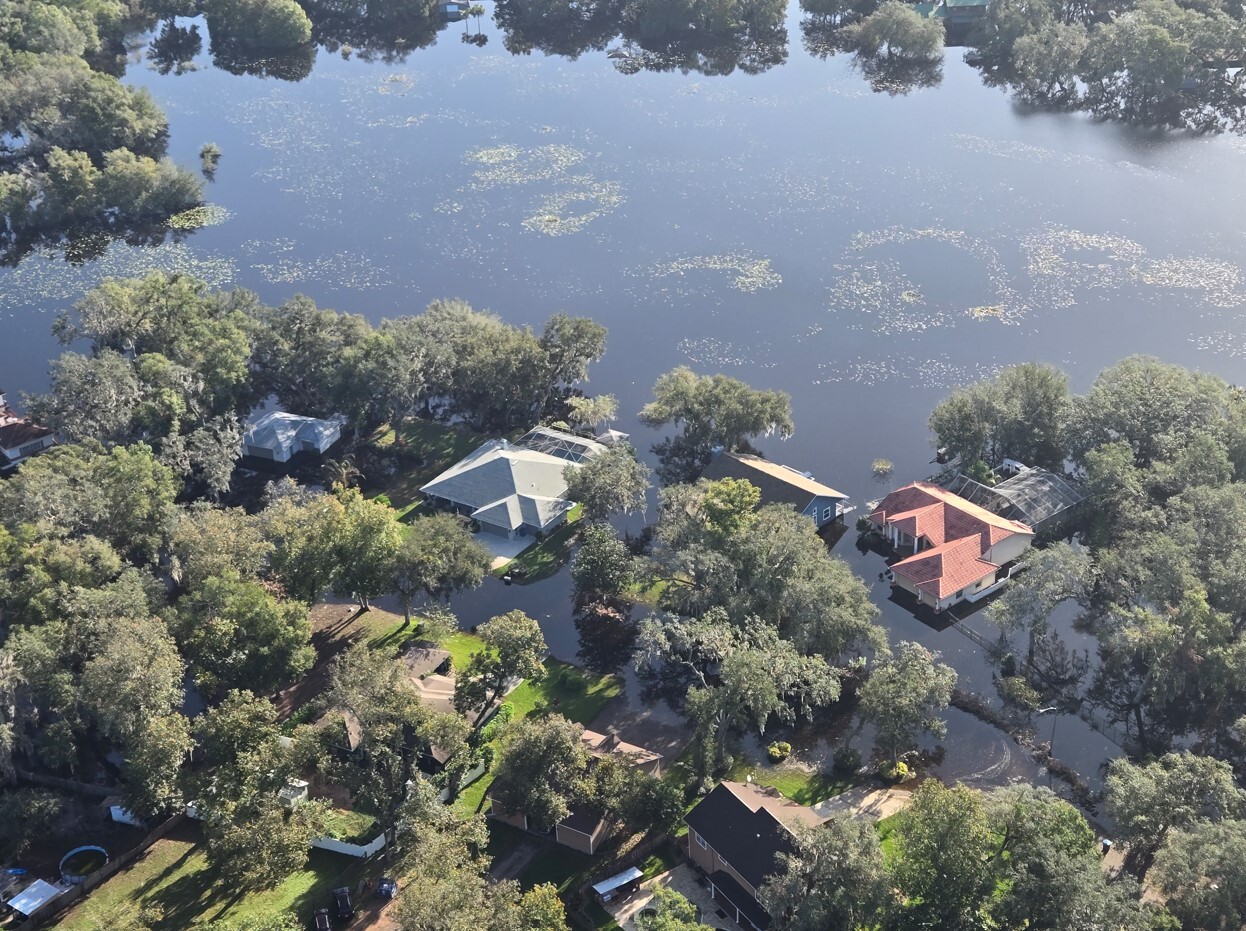
Ridge Manor Neighborhood Still Flooded, Weeks after Milton (November 2024)
Tsala Apopka Chain of Lakes:
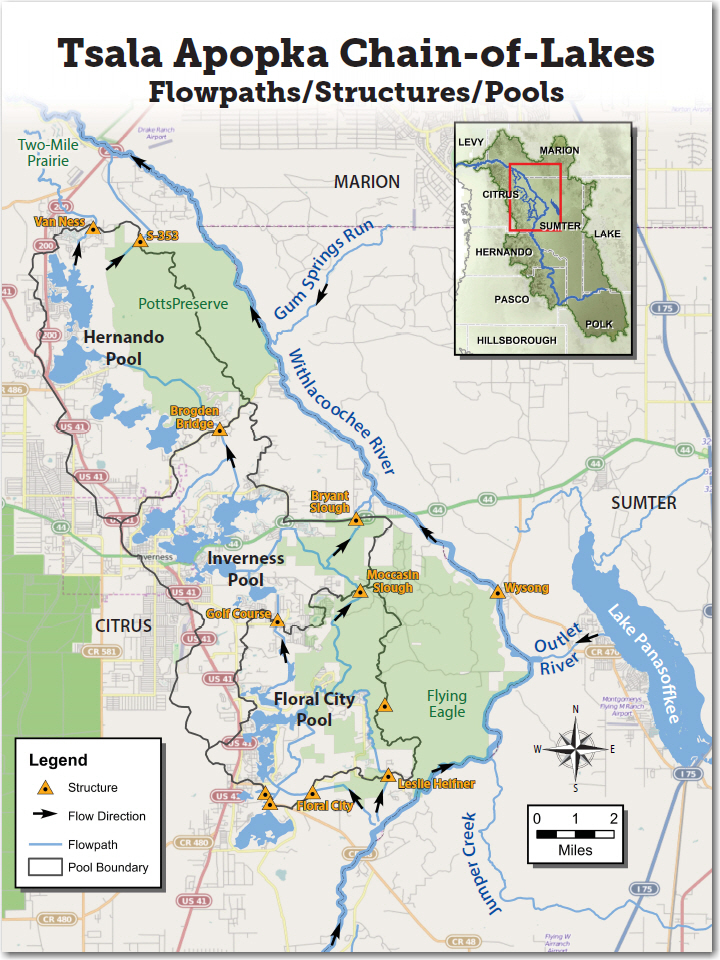
- For about a month, from mid-October through mid-November, floodwaters were diverted from the Withlacoochee River into the Tsala Apopka Chain-of-Lakes.
- This occurred after water had been released from the lakes earlier in October, prior to the river in that area reaching flood stage.
- Despite these actions, river flooding was inevitable, but our operators did everything in their power to help, even if the effects were minor.
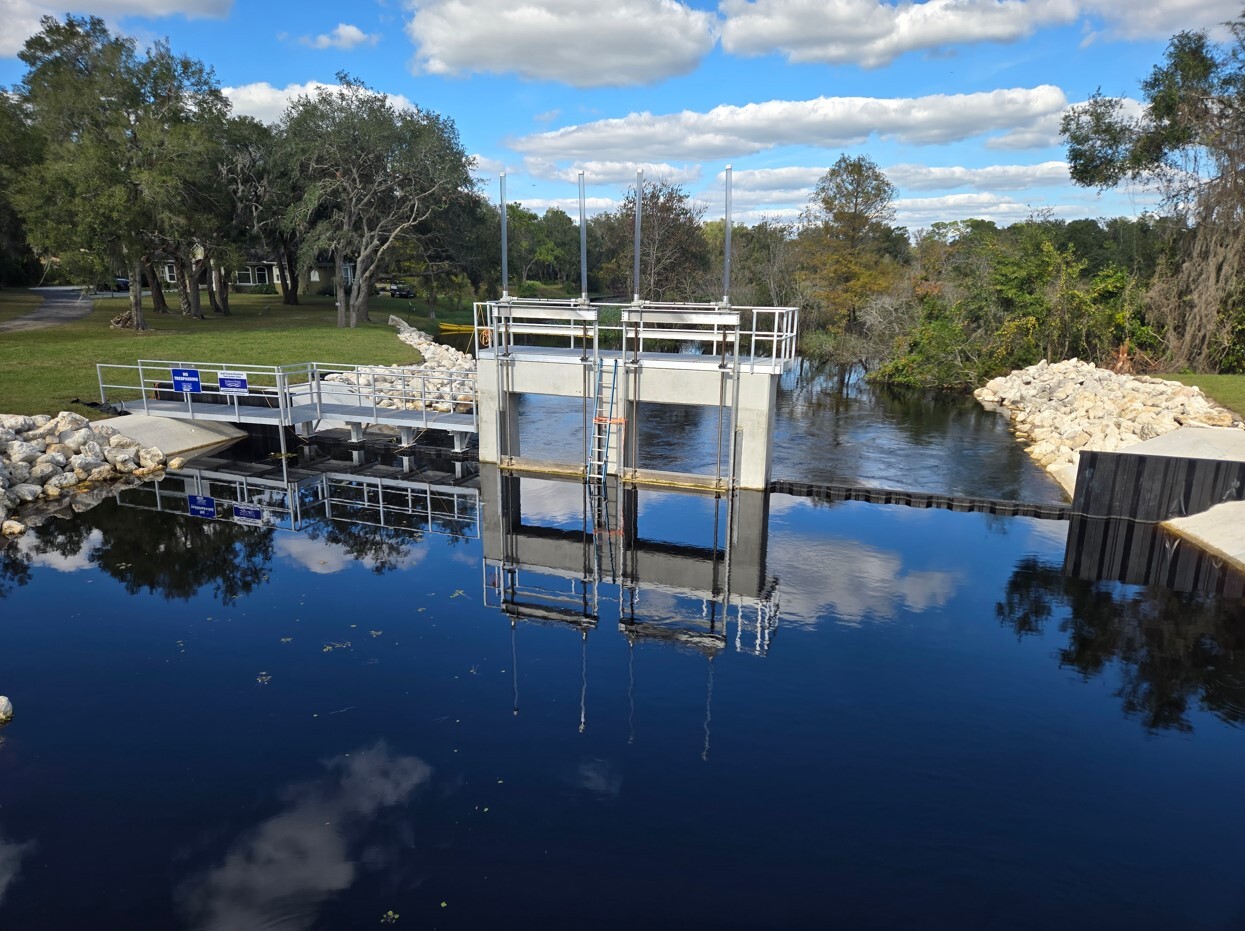
- All the water control structures in the Tsala Apopka Lake Chain are now closed and lake levels remain near their high levels.
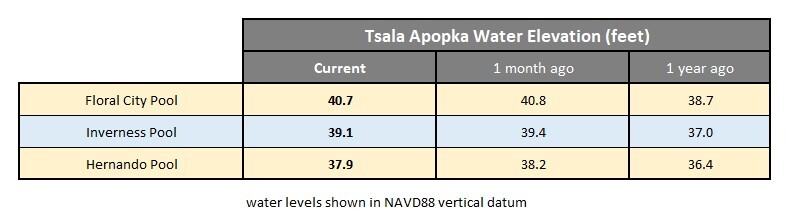
- Over the past few weeks, lake levels in all three pools have declined slightly, but are currently 1.5 to 2 feet higher than they were a year ago.
- In the coming weeks, lakes levels will slowly decline from evaporation and downward leakage to the underlying aquifer, unless the area receives widespread rainfall.
New Golf Course Structure Moving Water through the Tsala Apopka Lake Chain (November 2024)
Lake Panasoffkee and Wysong:
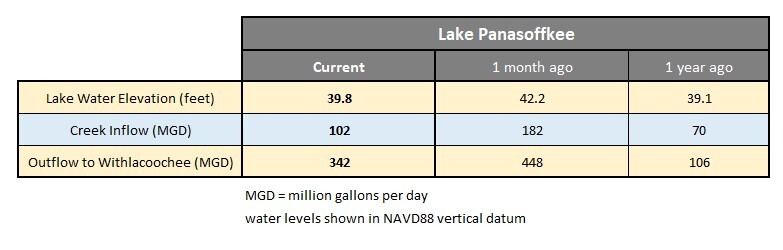
- Lake Panasoffkee crested at the beginning of November; at nearly the same level it did during the 2004 flood.
- Over the past month, lake levels have steadily declined, dropping nearly 2.5 feet in 30 days, which equates to about an inch per day.
- While incoming flows to the lake from nearby spring-fed creeks remain strong, outflow from the lake to the Withlacoochee River is also still very high.
- Currently more than 300 million gallons per day of water is exiting Lake Panasoffkee as river levels also drop.
- This is a welcome trend, given that water was flowing backwards from the river into Lake Pan when the river was cresting, nearly 3 weeks after Milton, and the lake had nowhere to drain.
- Downstream along the Withlacoochee River, the Wysong structure remains fully lowered with river levels still above normal.
- River flows at Wysong are currently still over a billion gallons per day, although they were 3 times higher about a month ago.
- Lake Panasoffkee is currently 8 inches higher than it was a year ago, which is understandable given this year’s wet season.
Lake Rousseau and the Lower Withlacoochee River (from Dunnellon to the Gulf of Mexico):
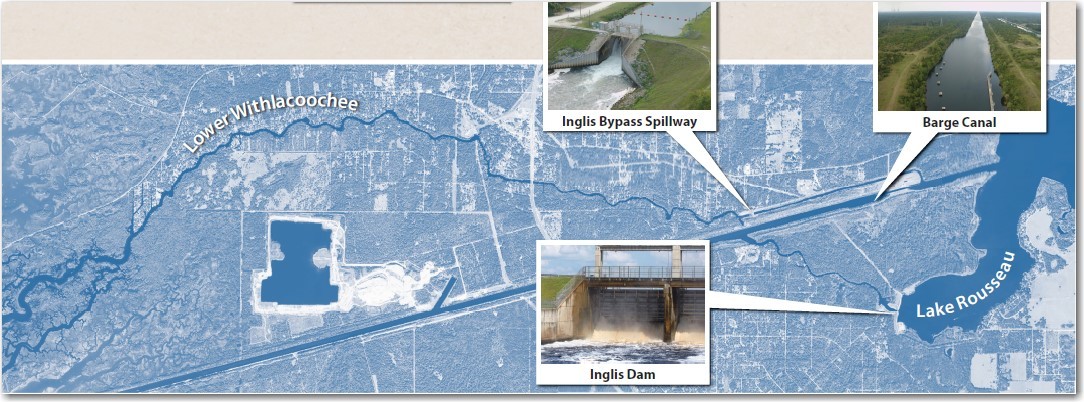
- Downstream of Dunnellon, the Withlacoochee River enters Lake Rousseau, an in-stream lake formed over a century ago with flood control structures near Inglis.
- While the lake does not typically fluctuate very much, Hurricane season caused unexpected variations in the level of Lake Rousseau.
- Water levels are normally very flat from Dunnellon to Inglis, but during the aftermath of Milton, the river at US 41 was 4 feet higher than the west end of Lake Rousseau.
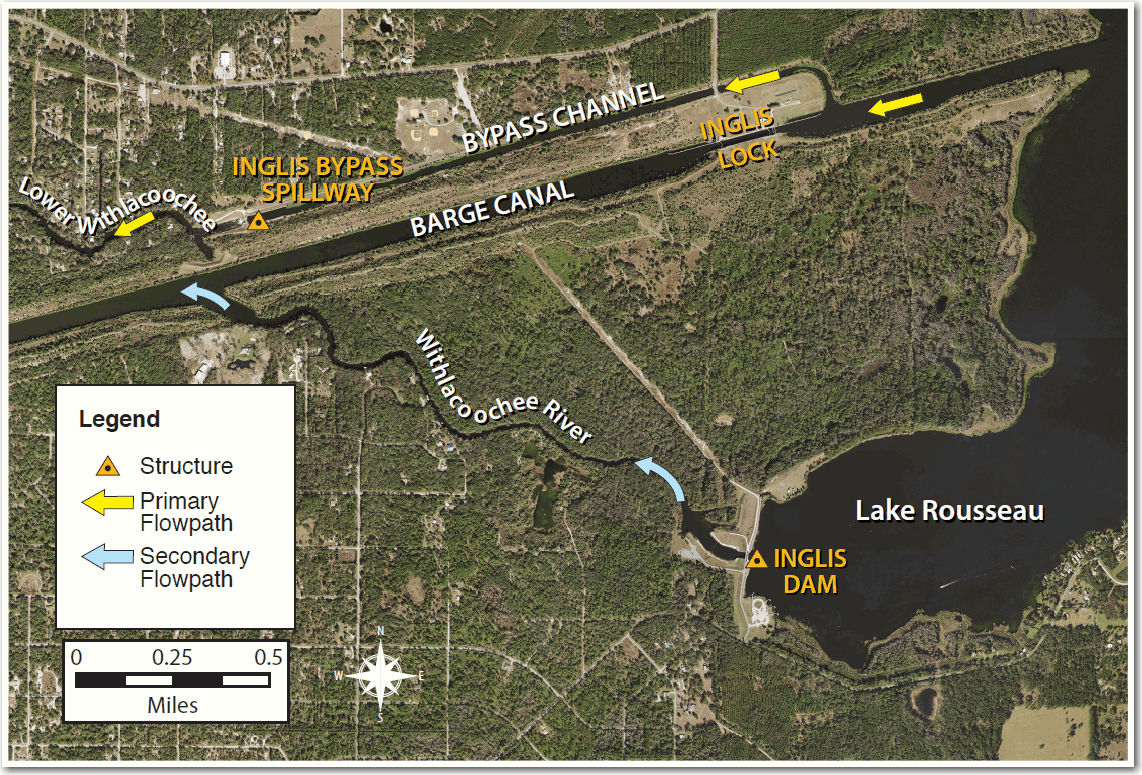
- With nearly 4 billion gallons of water per day flowing down the river, flood control structures on Lake Rousseau were opened to discharge the excess water into the Gulf of Mexico.
- As a result, Lake Rousseau was lowered for nearly two months, causing some residents in the area to ask “what flooding” as they looked out at the lowest water levels they had ever seen.
- As of last Friday (just 3 days ago) Lake Rousseau is finally back up to its normal level.
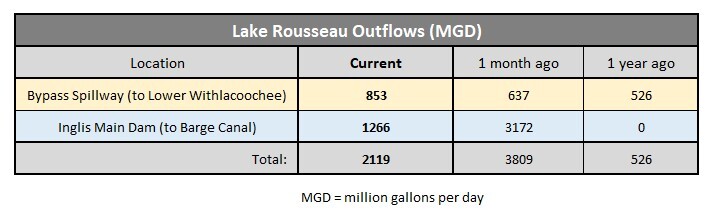
- Flows entering the lake are down substantially from a month ago, but still more than 3 times greater than a year ago.
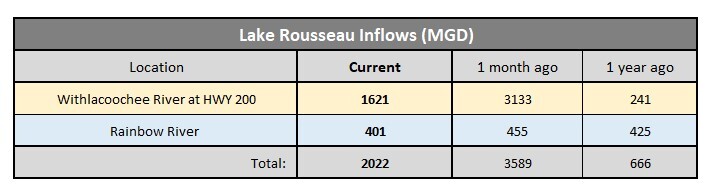
- The primary outlet from lake Rousseau is the Inglis Bypass Spillway which provides continuous freshwater to the Lower Withlacoochee River.
- This structure, which has discharged maximum available flow since early August, remains fully open with 62% more flow than a year ago.
- The Inglis Main Dam, which was opened in early August, remains open discharging excess water from Lake Rousseau to the Barge Canal.
- Last year at this time the Inglis Main Dam was closed.
- The Inglis Main Dam will remain open until the Inglis Bypass Spillway is able to pass all incoming flows, which may not happen until sometime in 2025.
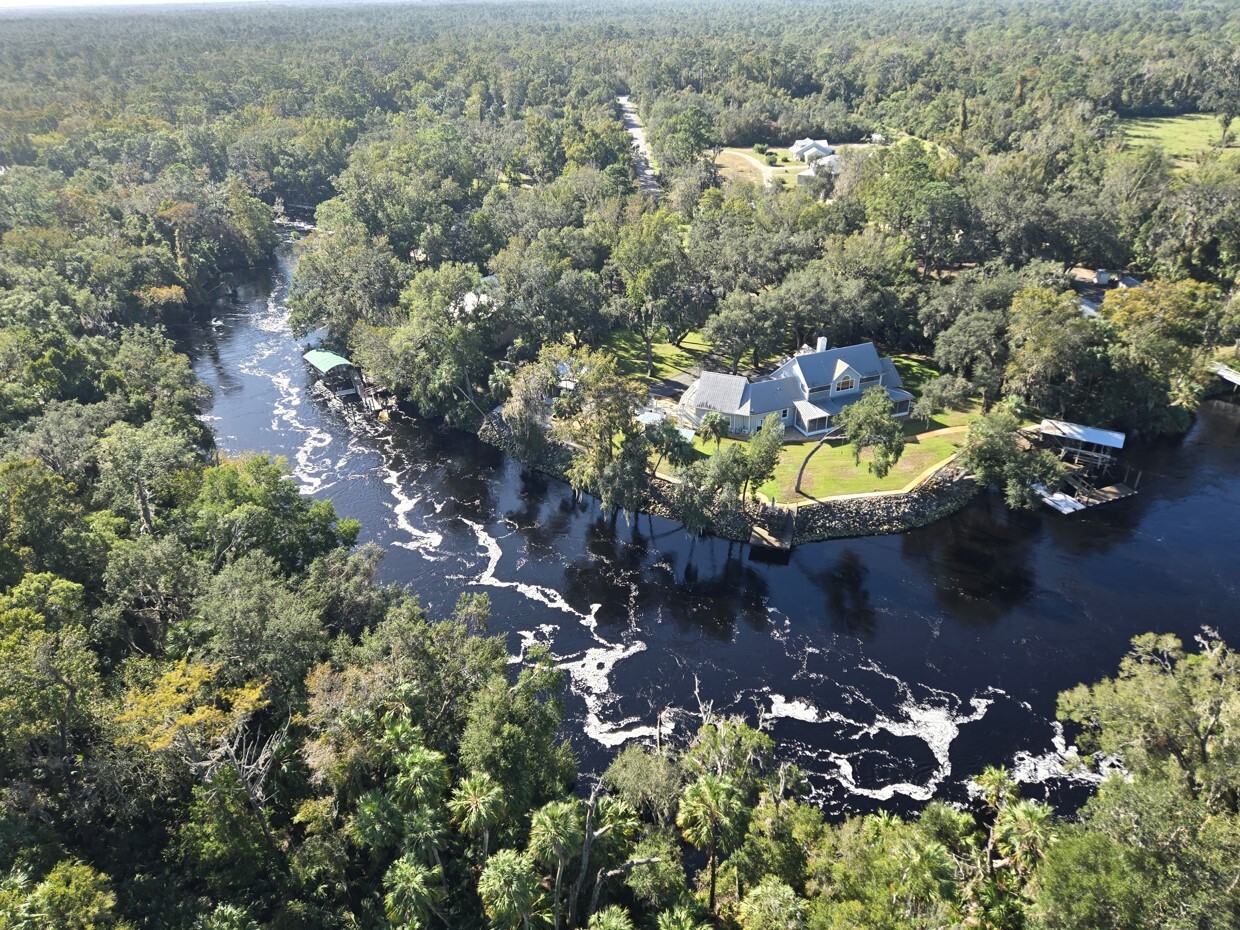
Uncharacteristically High Flows between the Inglis Main Dam and the Barge Canal (November 2024)
Stay warm and have a great week!
Mark
Mark Fulkerson, Ph.D., P.E.
Chief Professional Engineer
Southwest Florida Water Management District
(352) 269-6073 (office)
(352) 279-4493 (cell)
|
|
|
|
|
|
|
|


|
Southwest Florida Water Management District | 2379 Broad Street, Brooksville, FL 34604-6899 |
|
If you do not want to continue receiving emails about these projects, click Unsubscribe. To manage your Southwest Florida Water Management District subscriptions, click Manage Preferences. |