Withlacoochee River System Update - 5/1/2024
Southwest Florida Water Management District sent this bulletin at 05/01/2024 04:54 PM EDT
 |
Water Levels/Flows Decline from Less Rainfall
Rainfall:
- A wetter than average winter gave our water resources a nice boost over the past several months of the dry season.
- Last month, however, was the first time since October that our region’s rainfall was below average, and water levels are now dropping as a result.
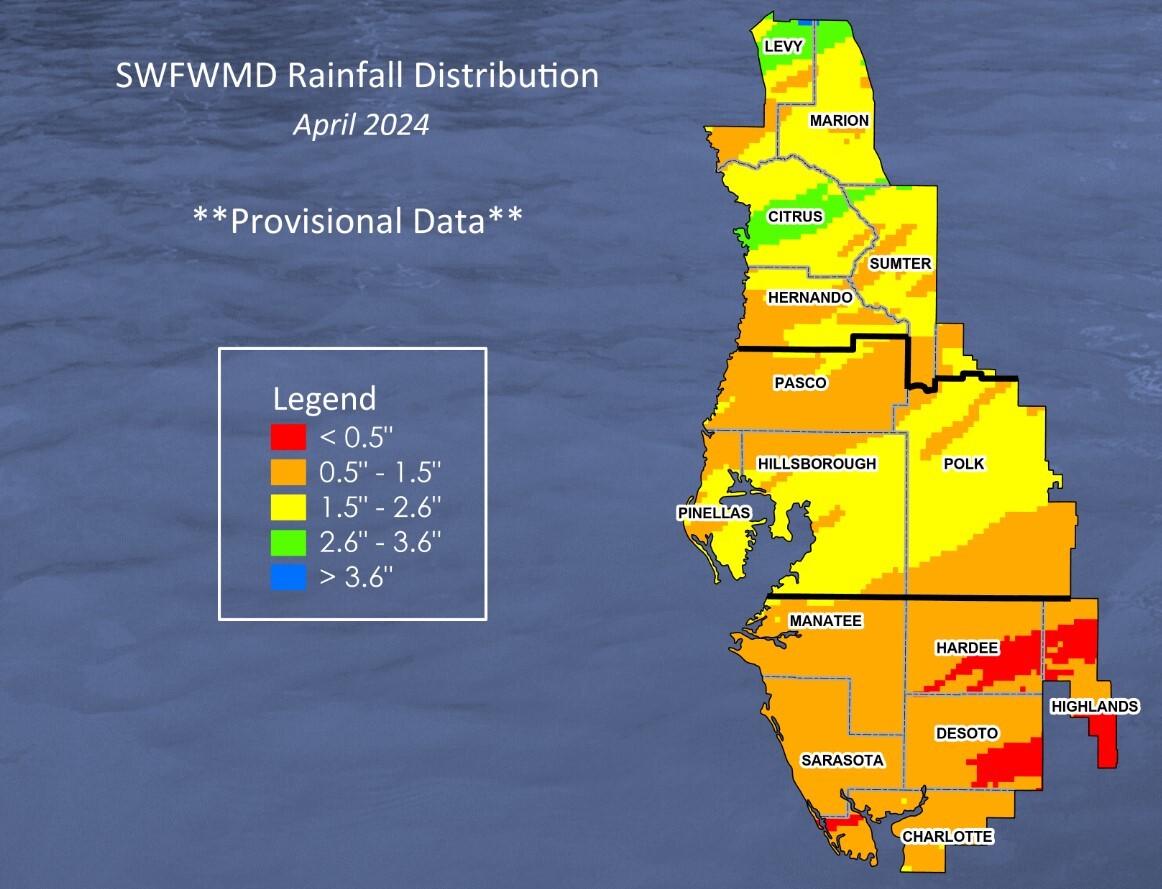
- In April, we averaged 1.9 inches of rain, less than the historical average (2.8 inches) for the month.
- So far this year (January through April), our region has received 13.0 inches of rain, slightly higher than the historical average (12.3 inches) for the first 4 months of the year.
- Less rainfall this time of year equates to lower water levels because stream flows are decreasing, and evaporation is higher.
- Trees and plants are also starting to grow, using more water from the surface and ground.
- Aquifer (groundwater) levels are declining and are currently in the 43rd percentile, below average for our region, and very close to this date last year (40th percentile).
- The figure below shows how much rainfall different areas received last month.
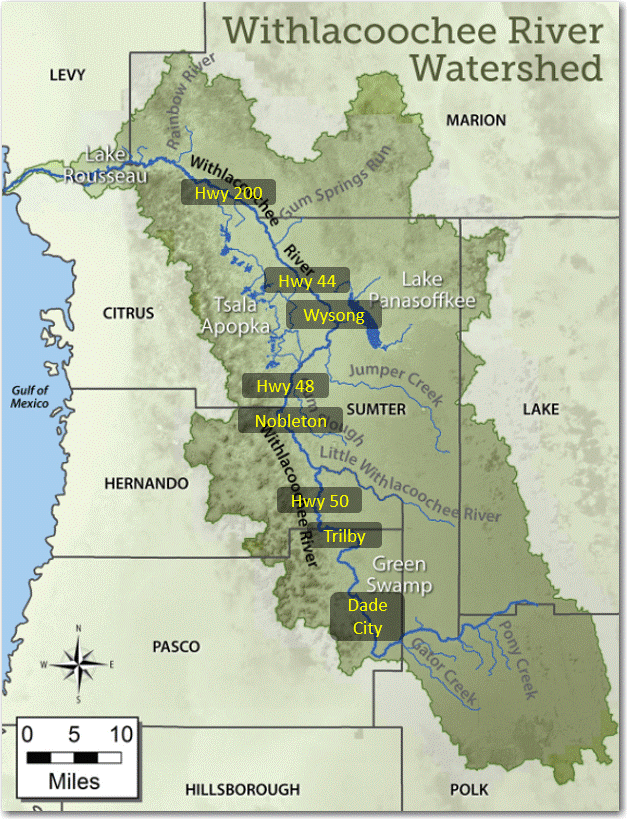
Withlacoochee River (from the Green Swamp downstream past Hwy 200):
- After defying normal trends and rising during much of the dry season (winter/spring), river levels are now steadily declining.
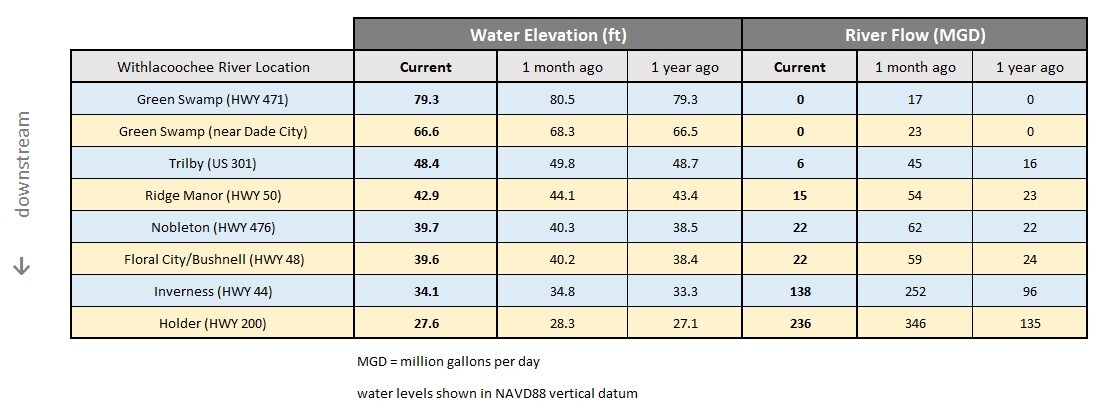
- Over the past four weeks, water levels along the upper half of the Withlacoochee River, from the Green Swamp past Hwy 50, have dropped about 16 inches.
- Farther downstream, from Nobleton past Hwy 200, river levels have declined about 7 inches over the past month.
- There is essentially no flow leaving the Green Swamp (start of the river) as wetlands begin to dry up from minimal rainfall.
- In fact, there is very little flow along much of the river now, until you reach Hwy 44 and 200, where several spring-fed tributaries join the Withlacoochee.
- If you enjoy kayaking or canoeing the river, it’ll take a little more effort right now, with less natural flow.
- The table below compares current river levels and flows to what they were last month and last year.
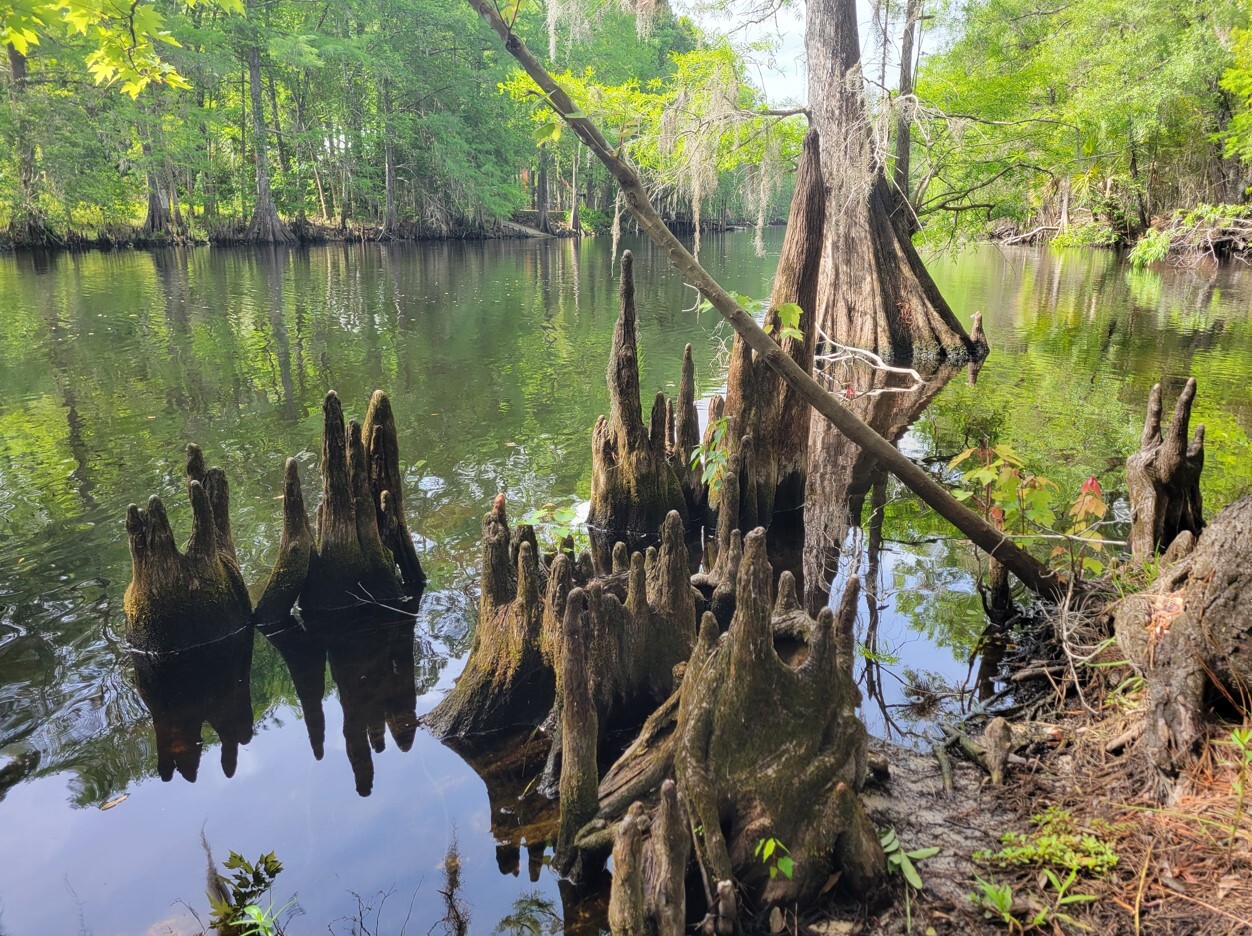
Withlacoochee River past Hwy 200 (April 2024)
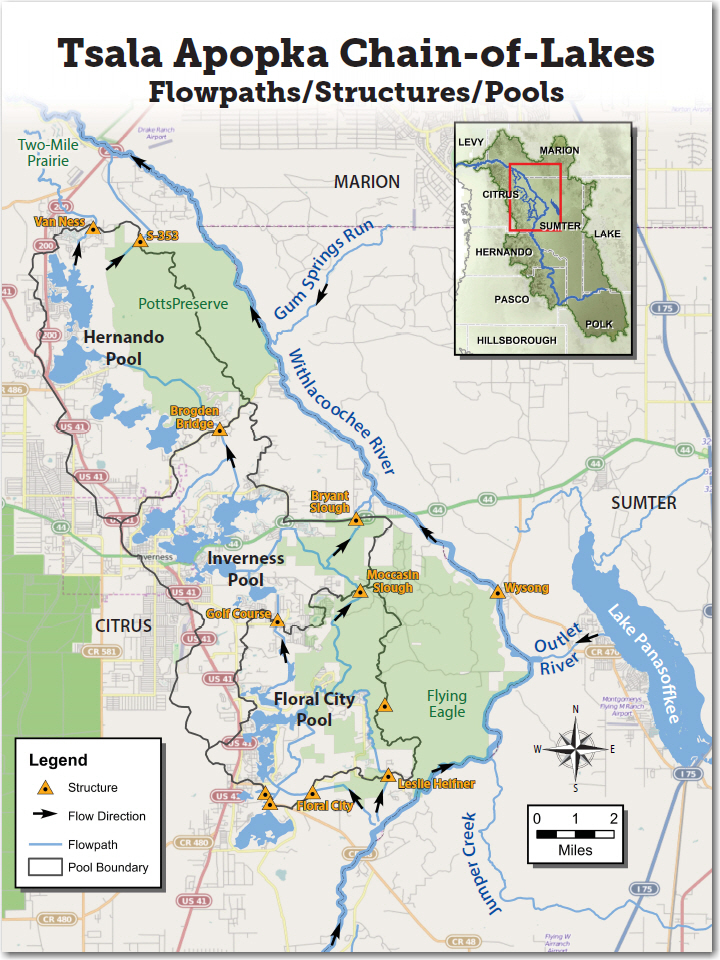
Tsala Apopka Chain of Lakes:
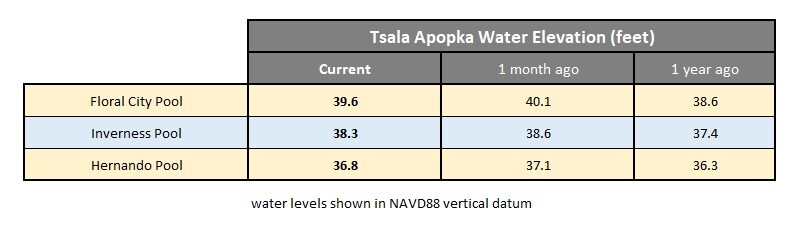
- For the first time in months, water levels have dropped on all three pools of the Tsala Apopka Chain of Lakes.
- In April, the Floral City Pool fell about 6 inches, while the Inverness and Hernando Pools declined 4 inches.
- Despite these declines, lake levels remain quite a bit higher than they were a year ago at this time.
- Water control structures were closed in early April as river levels have fallen and inflow is no longer available to the lake chain.
- Structures will likely remain closed, helping to conserve water in the lakes, until summer rains increase regional water levels again.
- All three pools are currently about a foot below their normal high levels, a target not typically reached until late in the wet season (Aug-Sept).
Lake Panasoffkee and Wysong:
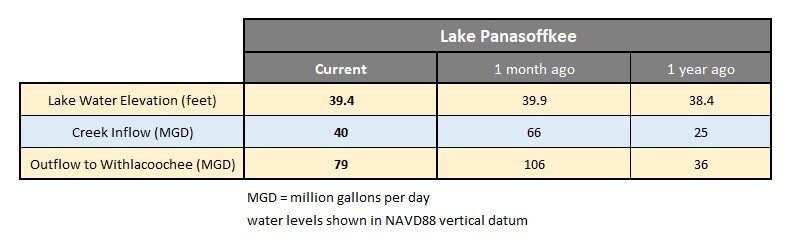
- Lake Panasoffkee also peaked in early April and has been steadily dropping over the past few weeks.
- Last month, water levels fell nearly 6 inches, due to low rainfall and less inflow from the spring-fed creeks to the east.
- Stream flows in Shady Brook and Little Jones Creek, which provide continuous inflow to the lake, declined by 40% in April but remain higher than a year ago.
- Lake Panasoffkee is currently 12 inches higher than it was last May, due to above average rainfall from November to March.
- Outflow from Lake Panasoffkee to the Withlacoochee River also declined last month but is still higher than a year ago.
- A few miles downstream along the Withlacoochee River, the Wysong Structure remains partially inflated.
- The main gate (230-ft-wide) at Wysong is fully raised.
- The independent gate (19-ft-wide) remains partially raised, allowing river flows to pass downstream.
- Flow in the Withlacoochee River at Wysong is currently twice as high as it was a year ago.
Lake Rousseau and the Lower Withlacoochee River (from Dunnellon to the Gulf of Mexico):
- Downstream from Dunnellon, the Withlacoochee River is influenced by water control structures on Lake Rousseau.
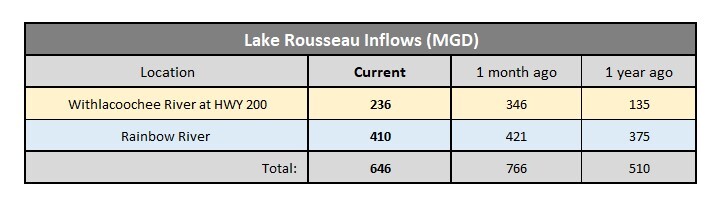
- Inflow to Lake Rousseau includes combined flows from the Withlacoochee and Rainbow Rivers.
- Rainbow River flow (which reflects changes in aquifer levels) fell 3% in April but is currently 9% higher than a year ago.
- Withlacoochee River flow (which depends on rainfall and runoff from adjacent lands) fell 32% last month but is still nearly double what it was a year ago.
- Overall, inflows to Lake Rousseau are 27% higher than they were last year, due to higher rainfall this past winter.
- The Rainbow River is currently providing nearly two-thirds the total flow entering Lake Rousseau.
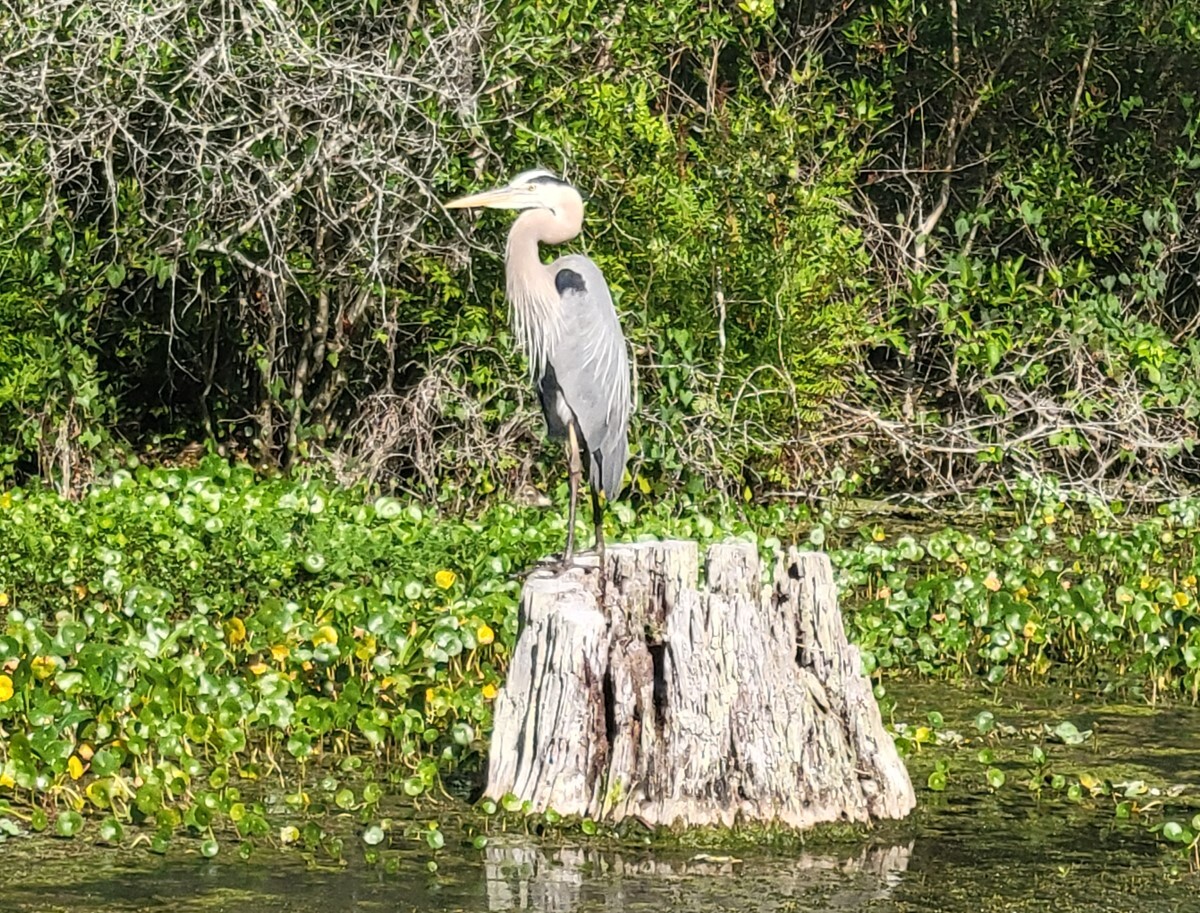
Great blue heron guards the Lake Rousseau backwaters (April 2024)
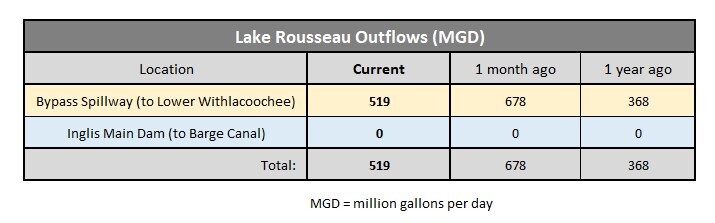
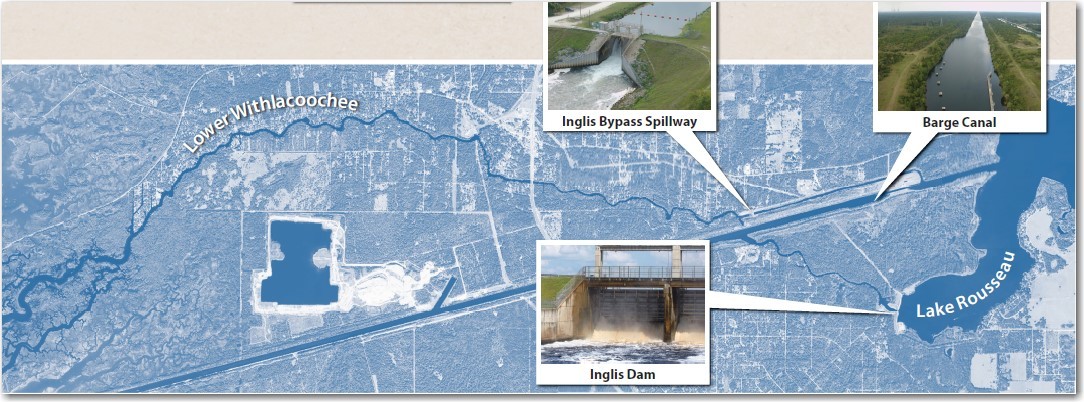
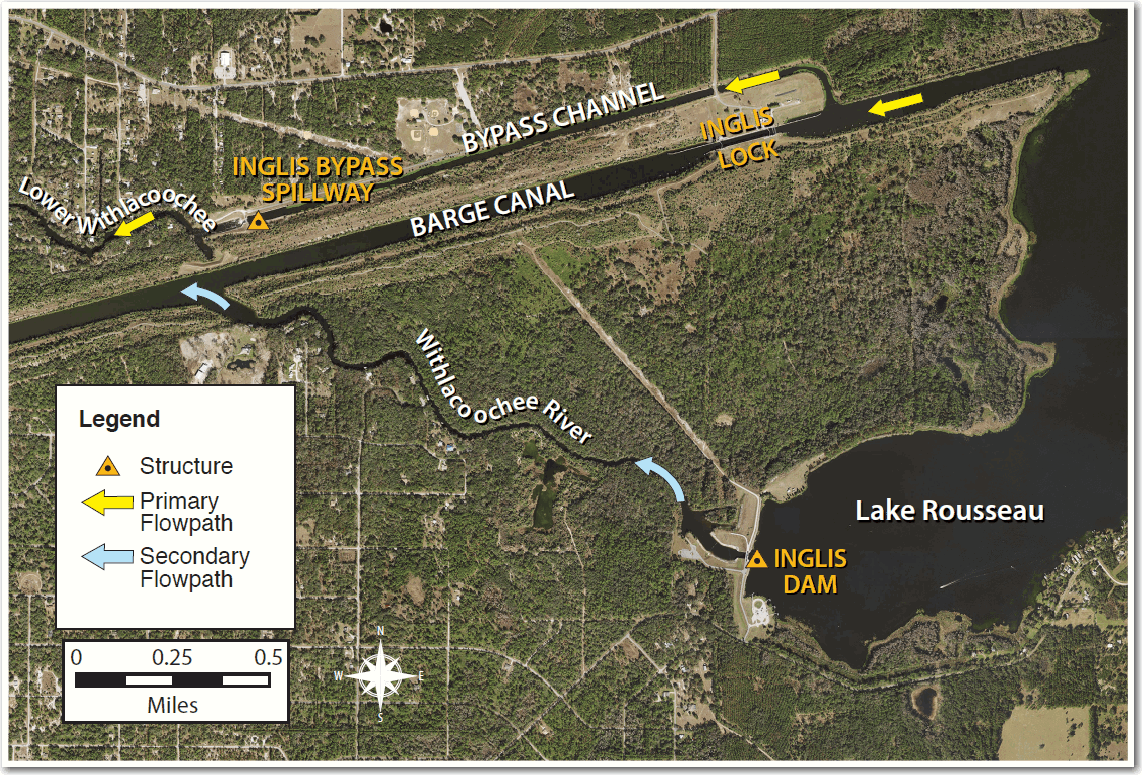
- The primary outlet from Lake Rousseau is through the Inglis Bypass Spillway to the Lower Withlacoochee River (see maps below).
- When the Bypass Spillway reaches its capacity, the Inglis Main Dam is opened to discharge excess flows to the Barge Canal.
- Currently, the Bypass Spillway is flowing at around 60% of its 900 MGD capacity, which is 41% more flow than a year ago.
- The Inglis Main Dam remains closed and won’t be open again until the Bypass Spillway reaches its capacity.
- Freshwater flow from Lake Rousseau to the Lower Withlacoochee River declined by 24% in April.
Best regards,
Mark
Mark Fulkerson, Ph.D., P.E.
Chief Professional Engineer
Water Resources Bureau
Southwest Florida Water Management District
(352) 269-6073 (office)
(352) 279-4493 (cell)
|
|
|
|
|
|
|
|


|
Southwest Florida Water Management District | 2379 Broad Street, Brooksville, FL 34604-6899 |
|
If you do not want to continue receiving emails about these projects, click Unsubscribe. To manage your Southwest Florida Water Management District subscriptions, click Manage Preferences. |