Withlacoochee River System Update - 11/1/2021
Southwest Florida Water Management District sent this bulletin at 11/01/2021 05:41 PM EDT
 |
River Flows Declining; Isolated Flooding Remains
Rainfall:
- Overall, 2021 has been a wet year, especially for the District’s northern counties.
- Average rainfall is about 54 inches a year (Jan-Dec).
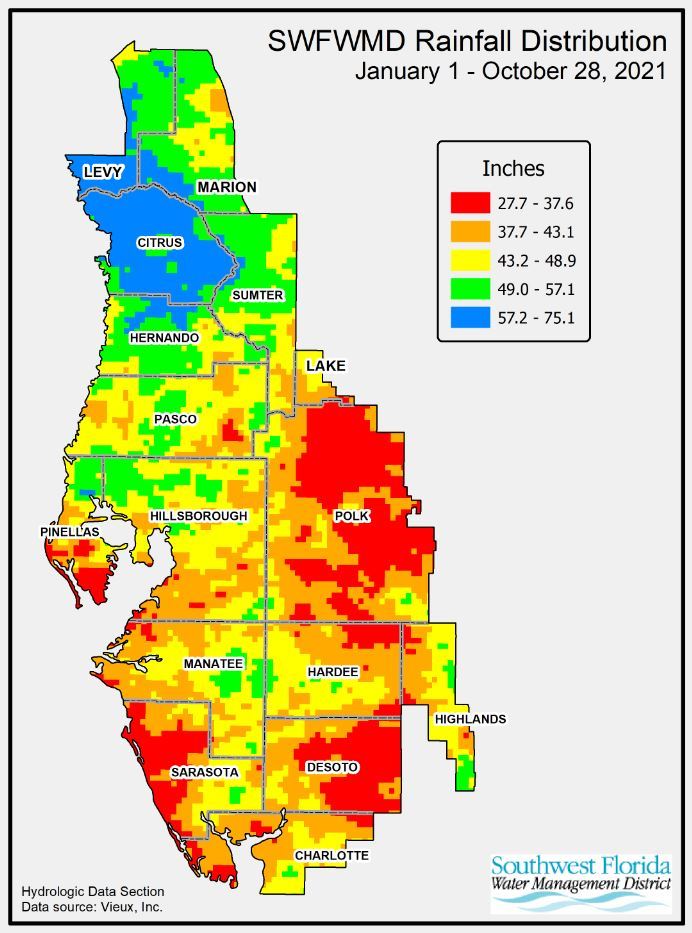
- Since January 1st, our entire region has received an average of 58 inches of rainfall, with some areas reporting upwards of 75 inches so far this year.
- Area springs are still flowing strong, thanks to above average rainfall that has significantly raised aquifer levels in our more northern counties this summer.
- Region-wide aquifer (groundwater) levels are currently in the 87th percentile, well above average and much higher than they were a year ago (57th percentile).
- Our dry season is now underway, and we typically only receive about 2-4 inches of rain per month from October through May.
- The image below shows rainfall totals for 2021. Areas in green and blue have received above average rainfall so far this year.
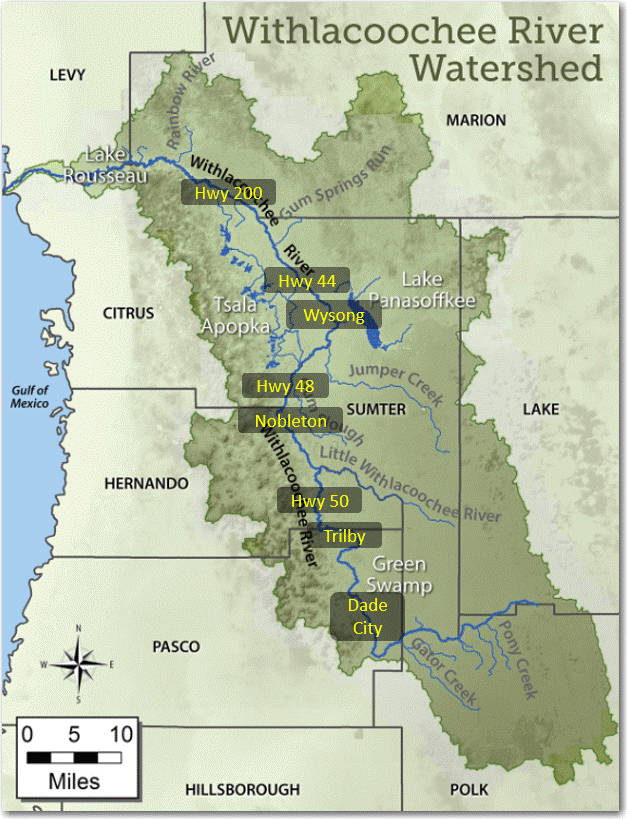
Withlacoochee River (from the Green Swamp downstream past Hwy 200):
- Each year, water levels rise along the Withlacoochee River as rainfall fills wetlands and increases flow from numerous tributaries throughout the watershed.
- Lack of rainfall has the opposite effect.
- This year, the wet season started early causing river levels and flows to increase sharply in June.
- As the summer progressed, upstream portions of the river (including the Green Swamp) received far less rainfall.
- As a result, the Withlacoochee River peaked in July/August, a couple months earlier than normal.
- Since then, river levels and flows have been up and down, but have generally declined for the past couple months.
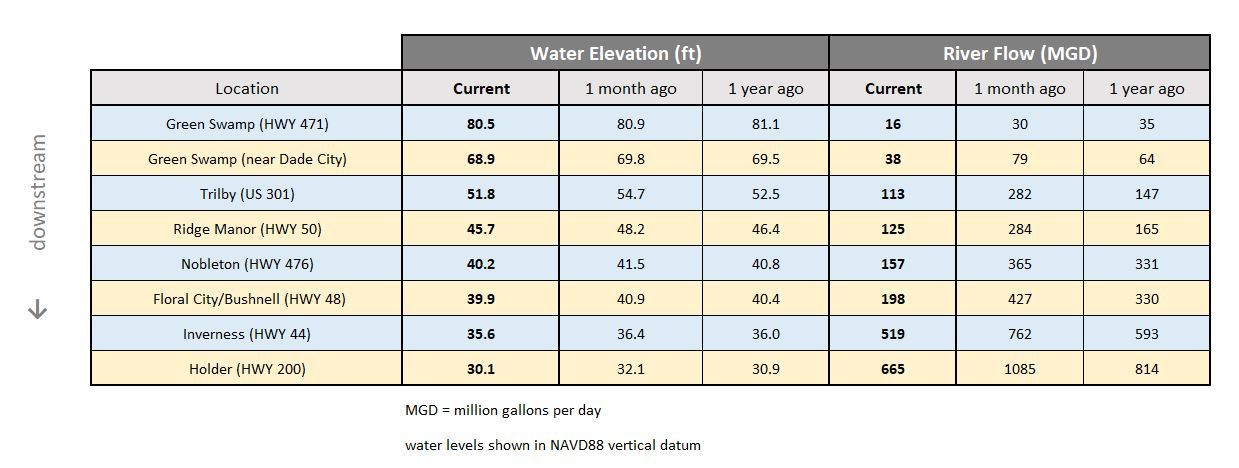
- In the last 30 days, the river has dropped about 8 inches in the Green Swamp, nearly 3 feet at Hwy 50 and Trilby (US301), and 1-2 feet between Nobleton and Hwy 200.
- During this time, flows have declined an average of 50% along the entire river, a trend that is normal for this time of year.
- The table below compares current river conditions to what they were last month and a year ago.
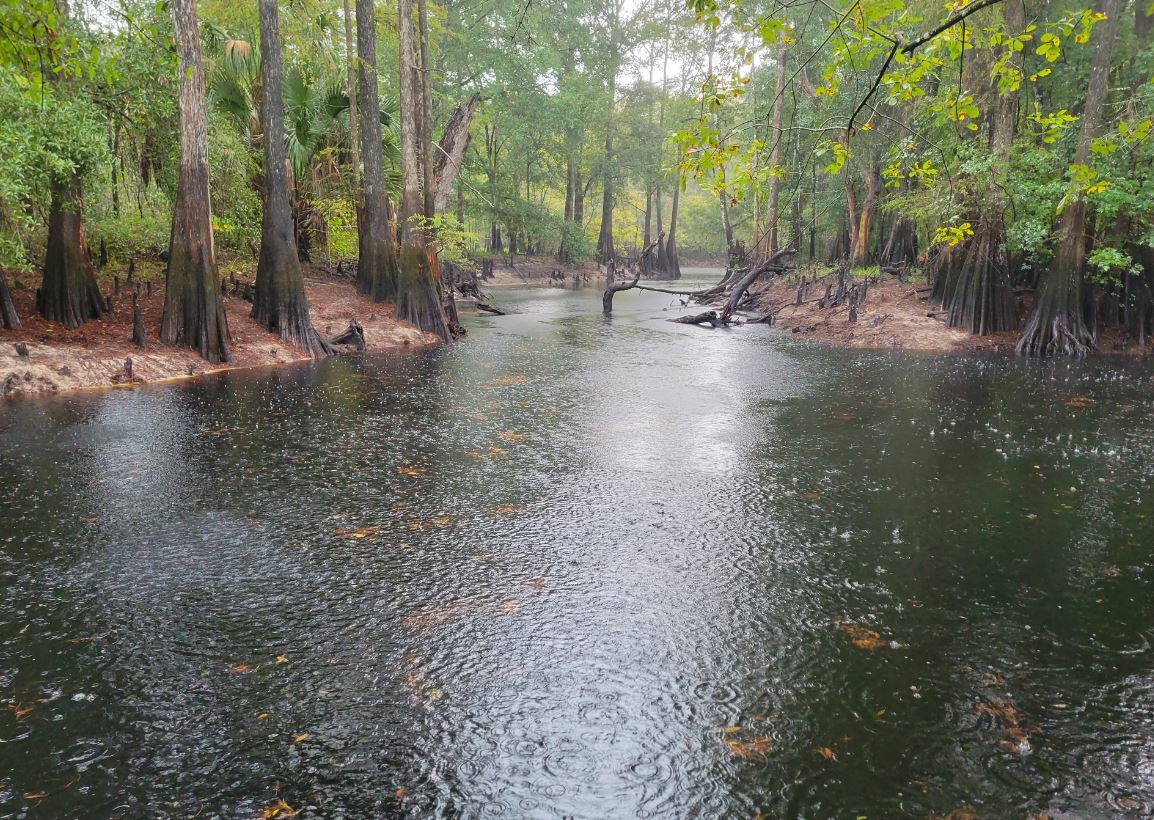
Rain Falls on the Withlacoochee River in the Green Swamp (October 2021)
Tsala Apopka Chain of Lakes:
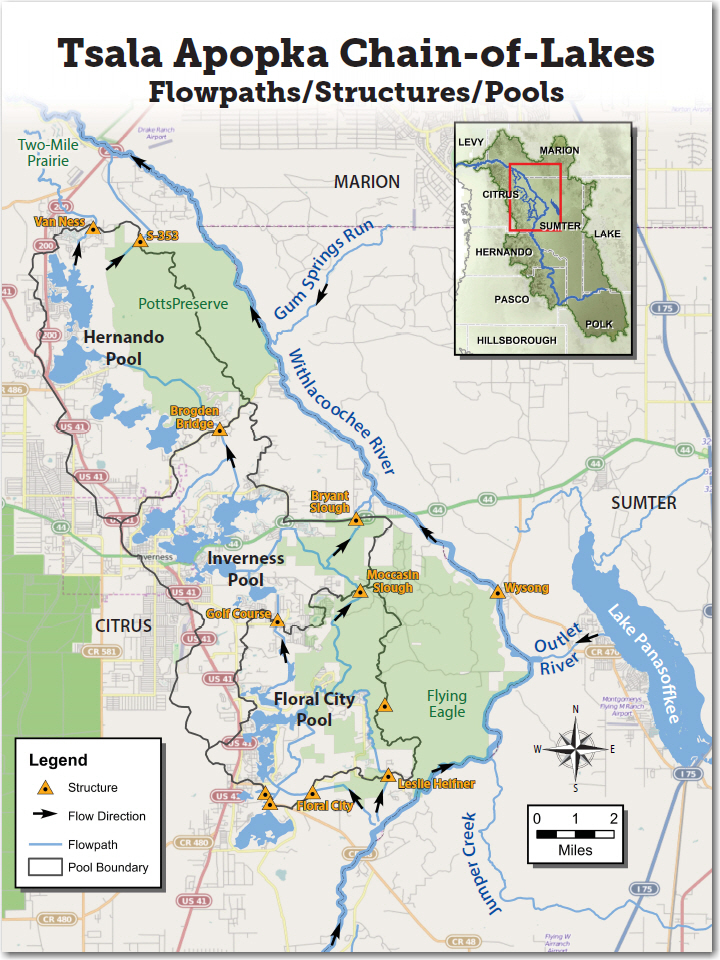
- Lake levels rise each summer from wet season rainfall and contributions from the Withlacoochee River (that are controlled by canals/structures).
- Lake levels typically drop during the dry season (Oct-May) when natural losses (evaporation and downward leakage to the aquifer) exceed rainfall/inflows.
- This year, rain filled the lakes so fast that very little river inflow was needed.
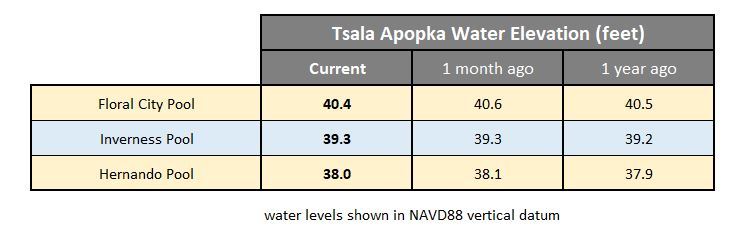
- Over the past month, water levels in all three pools of the lake chain have held relatively steady due to some rain and elevated aquifer levels that are limiting downward leakage.
- All the water control structures (aka “locks”) remain closed, helping to conserve water in all three pools.
- As our dry season continues, water levels are expected to slowly decline.
- Currently, water levels in all three pools are very close to what they were a year ago.
Lake Panasoffkee and Wysong:
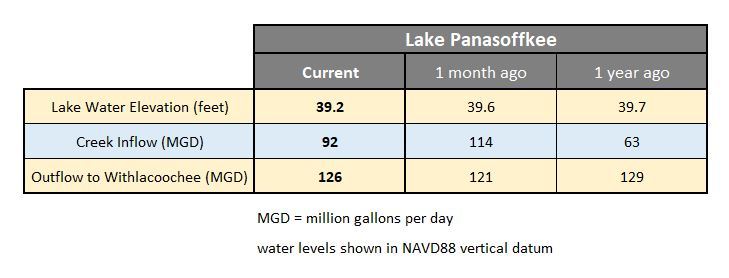
- The water level on Lake Panasoffkee rises and falls each year due to changing flows into and out of the lake.
- Inflows to the lake from Little Jones Creek and Shady Brook have been steadily declining in recent weeks and are 19% lower than they were a month ago.
- Outflows from the lake to the Withlacoochee River have been relatively steady over the past month, as both lake and river levels continue to naturally drop this time of year.
- The water level on Lake Panasoffkee fell about 5 inches in October.
- The brownish color you may have noticed in certain parts of the lake is the result of a non-toxic algae bloom. Typically, these blooms run their course, but our water quality staff have been in contact with other state agencies to monitor the situation.
- The main gate of the Wysong structure remains partially raised, helping to conserve water upstream, although outflows from the lake remain strong.
- Flows along the river at Wysong are about 15% lower than they were a year ago.
- Lake Panasoffkee is currently about 6 inches lower than it was a year ago.
Lake Rousseau and the Lower Withlacoochee River (from Dunnellon to the Gulf of Mexico):
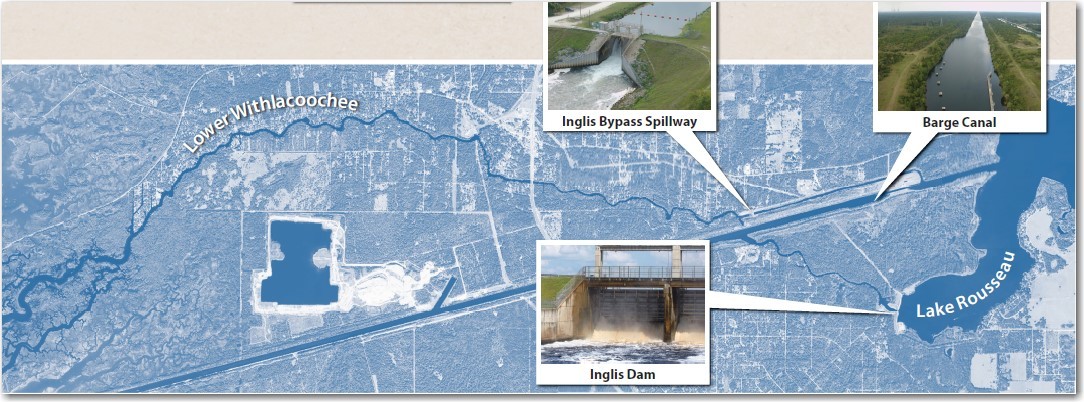
- Downstream from Dunnellon, the Withlacoochee River is influenced by water control structures on Lake Rousseau.
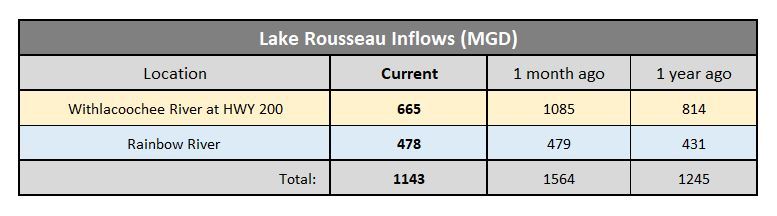
- Inflow to Lake Rousseau includes combined flows from the Withlacoochee and Rainbow Rivers.
- Withlacoochee River flow (which depends on rainfall and runoff from adjacent lands) decreased sharply over the past month.
- Flow in the Rainbow River (which reflects changes in aquifer levels) remained steady over the past month.
- Overall inflows are about 8% lower than they were a year ago.
- Currently the Rainbow River is contributing 42% of the total flow entering Lake Rousseau.
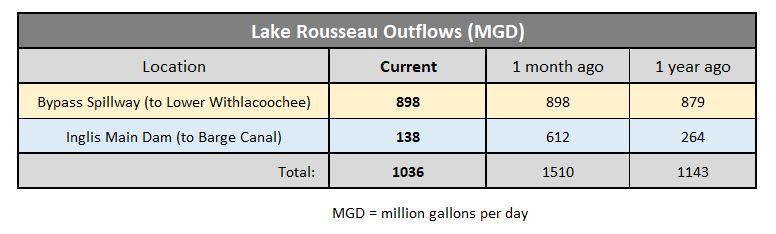
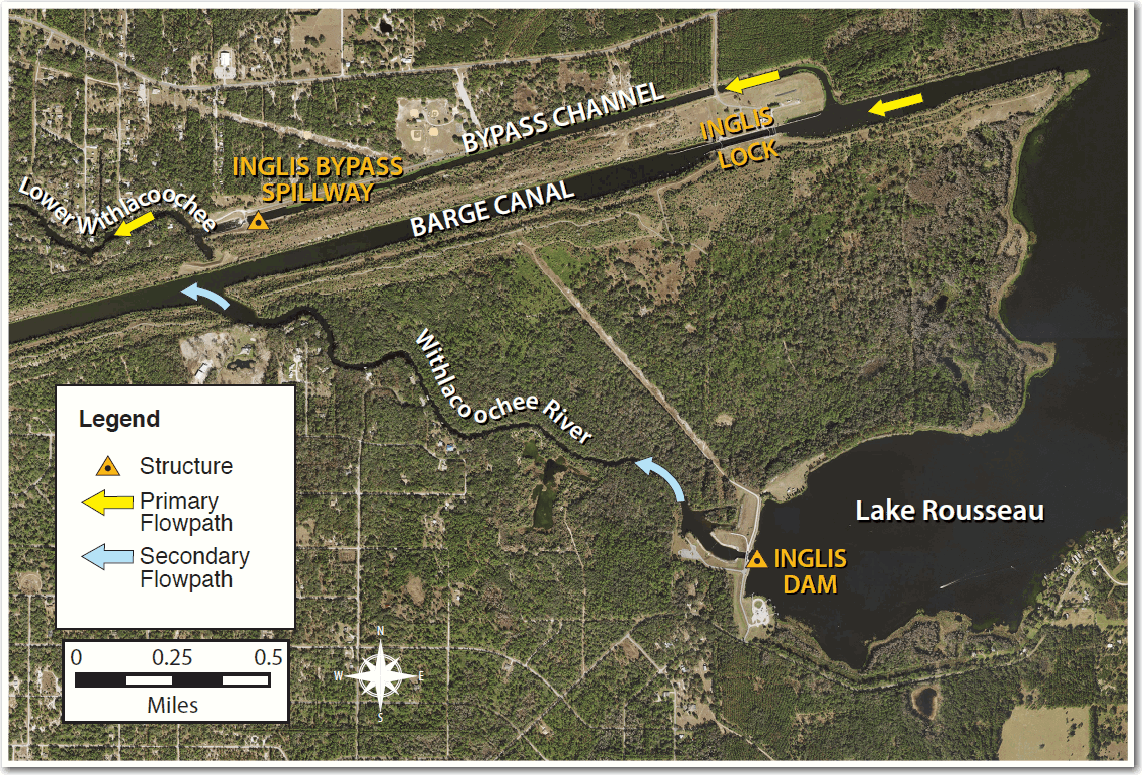
- For much of the year, all flows exiting Lake Rousseau pass through the Inglis Bypass Spillway to the Lower Withlacoochee River.
- In early July, the Bypass Spillway reached its capacity, prompting the opening of the Inglis Main Dam.
- The Inglis Bypass Spillway is still flowing at capacity, providing 900 million gallons of freshwater per day to the tidally influenced Lower Withlacoochee River.
- The Inglis Main Dam continues to discharge excess flows from Lake Rousseau to the Barge Canal and into the Gulf of Mexico. This structure is expected to close in the coming weeks as upstream river flows continue to decline.
- There are many isolated, low-lying areas south of Lake Rousseau (towards Crystal River) that continue to experience flooding.
- These areas are not directly connected to the lake and cannot be lowered by opening the Inglis Dam further.
Enjoy the cooler weather!
Mark
Mark Fulkerson, Ph.D., P.E.
Chief Professional Engineer
Water Resources Bureau
Southwest Florida Water Management District
(352) 796-7211, ext. 4410
(800) 423-1476 (FL only)
(352) 279-4493 (cell)
|
|
|
|
|
|
|
|


|
Southwest Florida Water Management District | 2379 Broad Street, Brooksville, FL 34604-6899 |
|
If you do not want to continue receiving emails about these projects, click Unsubscribe. To manage your Southwest Florida Water Management District subscriptions, click Manage Preferences. |