Withlacoochee River System Update - 5/3/2021
Southwest Florida Water Management District sent this bulletin at 05/03/2021 03:41 PM EDT
 |
April Rainfall Helps Counteract Dry Season Declines
Rainfall:
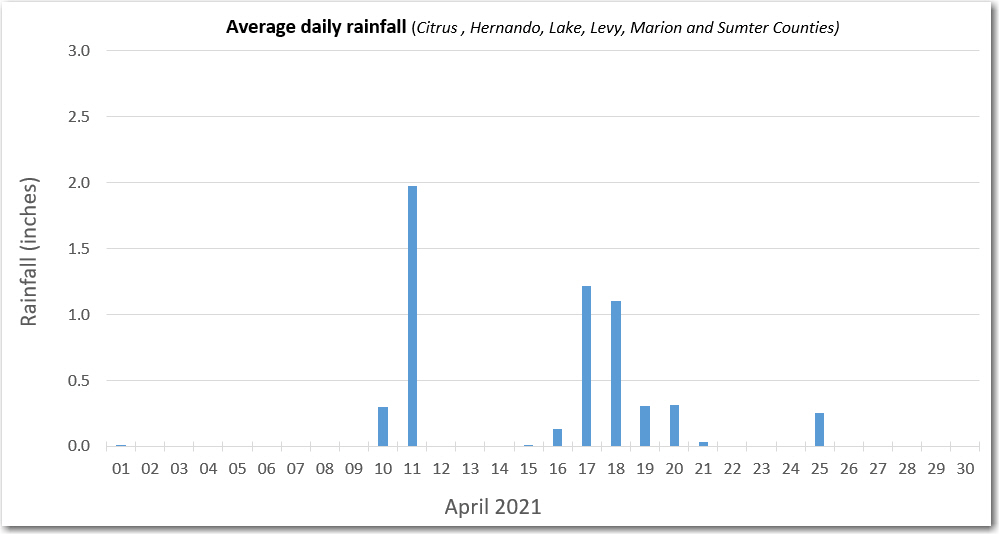
- A few days of rain last month gave our region’s water resources a much-needed boost…or at least prevented a sharper decline.
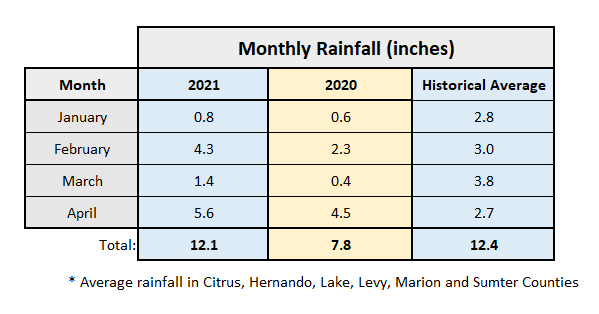
- In April, our region received an average of 5.6 inches of rain, more than twice the historical average (2.7 inches) for that month.
- As a result, area lakes and rivers saw water levels rise for a brief time, helping to counteract the declines that typically occur this time of year.
- So far this year, we’ve received about 12.1 inches of rain, close to the historical average (12.4 inches) for January through April.
- Over the past 12 months, we’ve received 51.7 inches of rain, which is 1.8 inches below average (53.5 inches) for that time.
- Aquifer (groundwater) levels are currently in the 52nd percentile, about average for May and lower than where they were a year ago (59th percentile).
Withlacoochee River (from the Green Swamp downstream past Hwy 200):
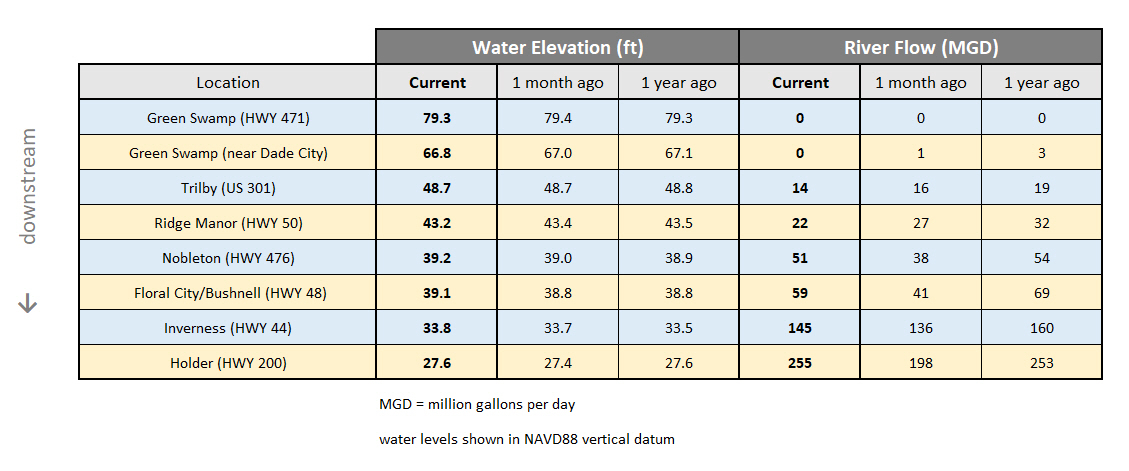
- Rainfall in mid-April increased levels and flows along the Withlacoochee River, but a more recent lack of rainfall has caused conditions to drop right back down again.
- Water levels and flows are currently very close to what they were a month ago.
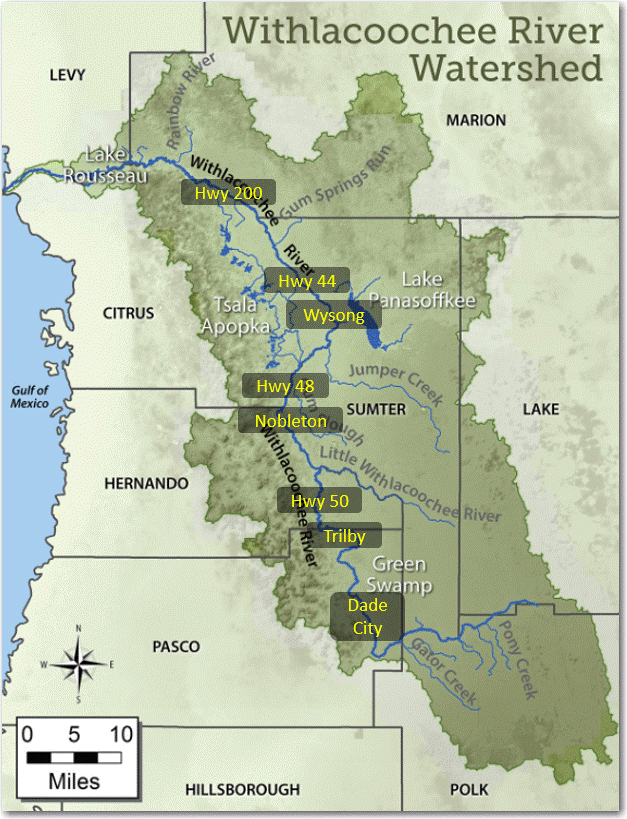
- For its first 40 miles, Withlacoochee meanders through the Green Swamp, a vast landscape of wetlands, uplands and flatwoods that has been largely protected from development.
- The Withlacoochee River, and several of its tributaries, emerge from this region which provides large volumes of water during the rainy season.
- For now, these streams are either stagnant or dry in the Green Swamp and will remain that way until summer rains fill the adjacent watershed again.
- Currently, most of the flow along the remainder of the Withlacoochee is originating from connections with the underlying aquifer (i.e., springs).
Main Channel of the Little Withlacoochee River in the Green Swamp (April 2021)
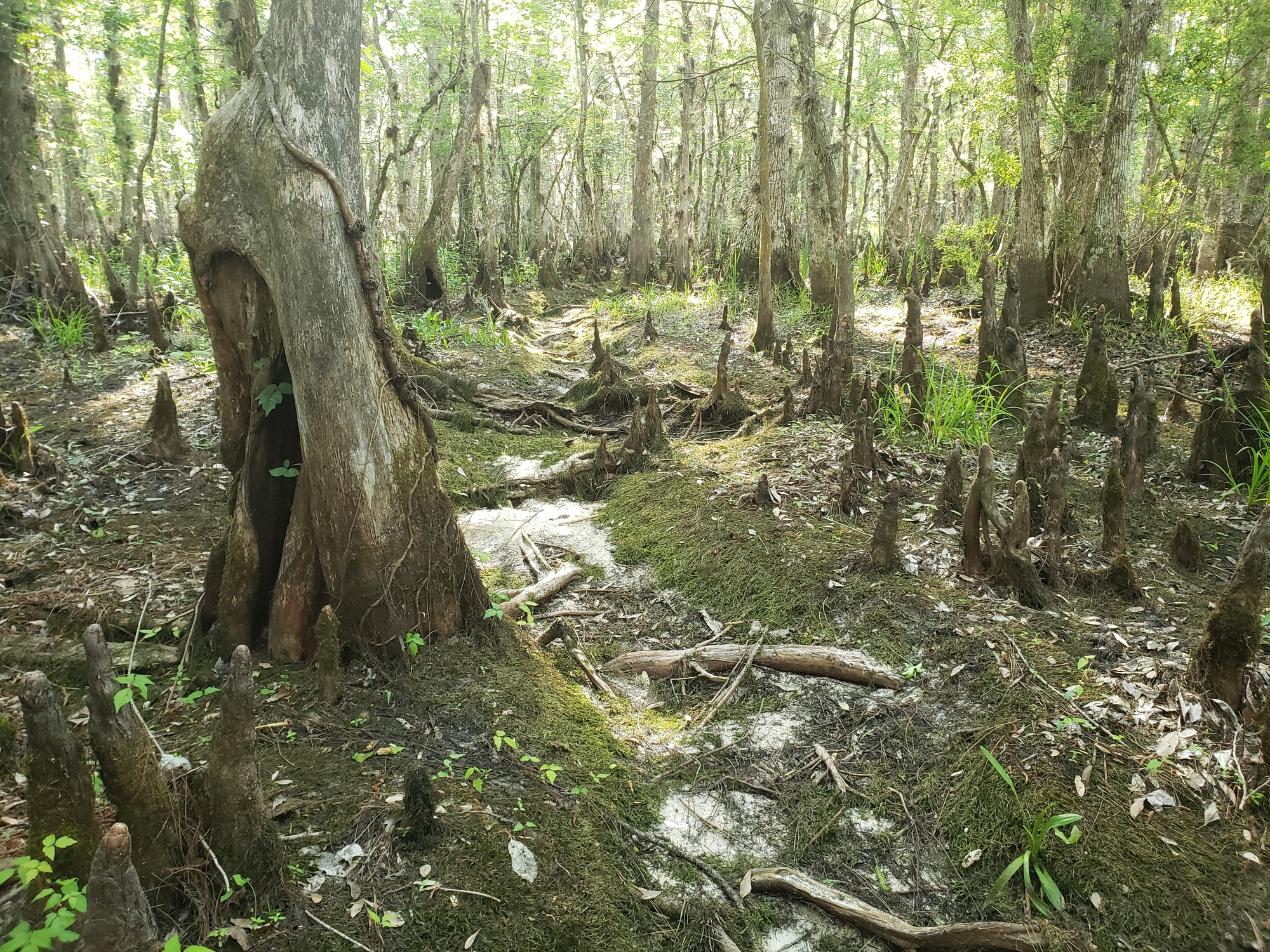
(If you look closely you can see a “bigfoot” track…😊)
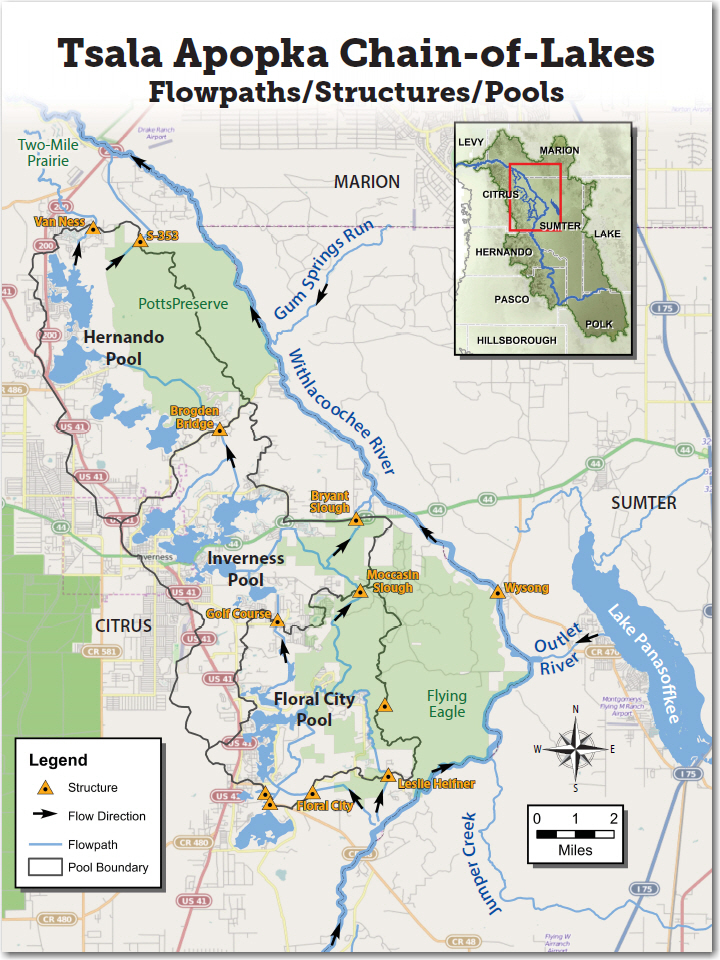
Tsala Apopka Chain of Lakes:
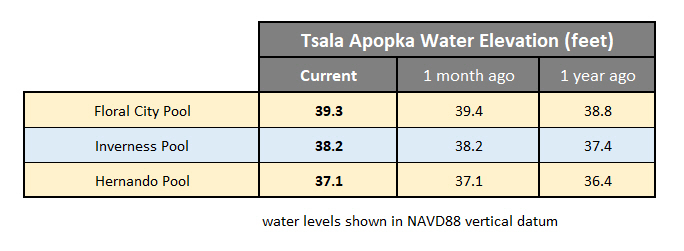
- Water levels in the lake chain typically decline about 1-2 inches a week this time of year (due to natural losses).
- This past month was different though, due to above average rainfall.
- Overall, there was essentially no net loss in water levels in April thanks to nearly 6 inches of rainfall on the lakes.
- The water control structures (aka “locks”) remain closed, helping to conserve water in the lakes, canals, and marshes of Tsala Apopka.
- Water levels are currently about 8 inches higher than they were a year ago.
- In general, lake levels should continue to naturally drop until about mid-June, due to rainfall patterns.
Lake Panasoffkee and Wysong:
- Across the Withlacoochee River, Lake Panasoffkee is a much different lake than the Tsala Apopka chain because it is spring-fed.
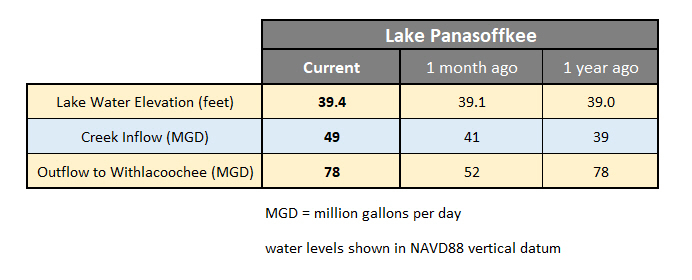
- Panasoffkee saw a 4-inch rise in water levels over the past month.
- This was not only due to several inches of rainfall on the lake, but also increased flows in the creeks which continually feed the lake.
- Lake Panasoffkee is now about 5.3 inches higher than it was a year ago.
- The Wysong structure (on the Withlacoochee River) remains raised, helping to conserve water immediately upstream and in Lake Panasoffkee.
- River flow at Wysong increased by 25% over the past month, mostly due to greater flows exiting Lake Panasoffkee.
Lake Rousseau and the Lower Withlacoochee River (from Dunnellon to the Gulf of Mexico):
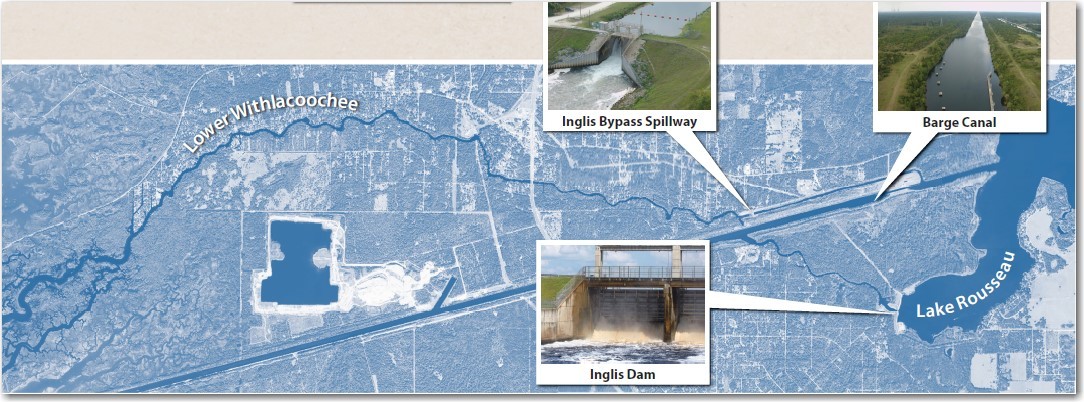
- Lake Rousseau is an in-stream reservoir, created 112 years ago (1909) when the original Inglis Dam was built on the Withlacoochee River.
- The influence of the Inglis Dam extends just upstream of Dunnellon, where the Rainbow River contributes constant flow to the Withlacoochee.
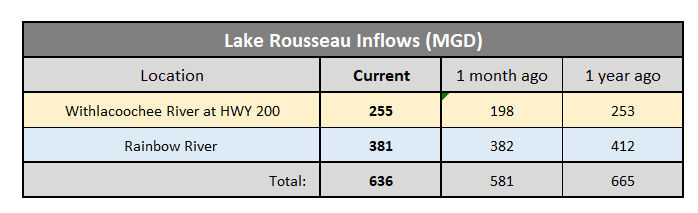
- Over the past month, Withlacoochee River flows increased by 29% (due to April rainfall); while Rainbow River flows remained steady.
- The Rainbow River is currently providing 60% of the total flow entering Lake Rousseau.
- Overall, inflows to Lake Rousseau have increased by about 10% over the past month but are 4% lower than they were a year ago.
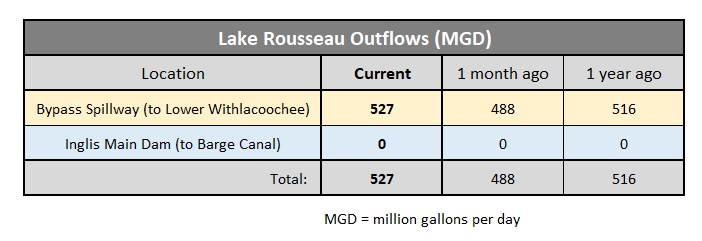
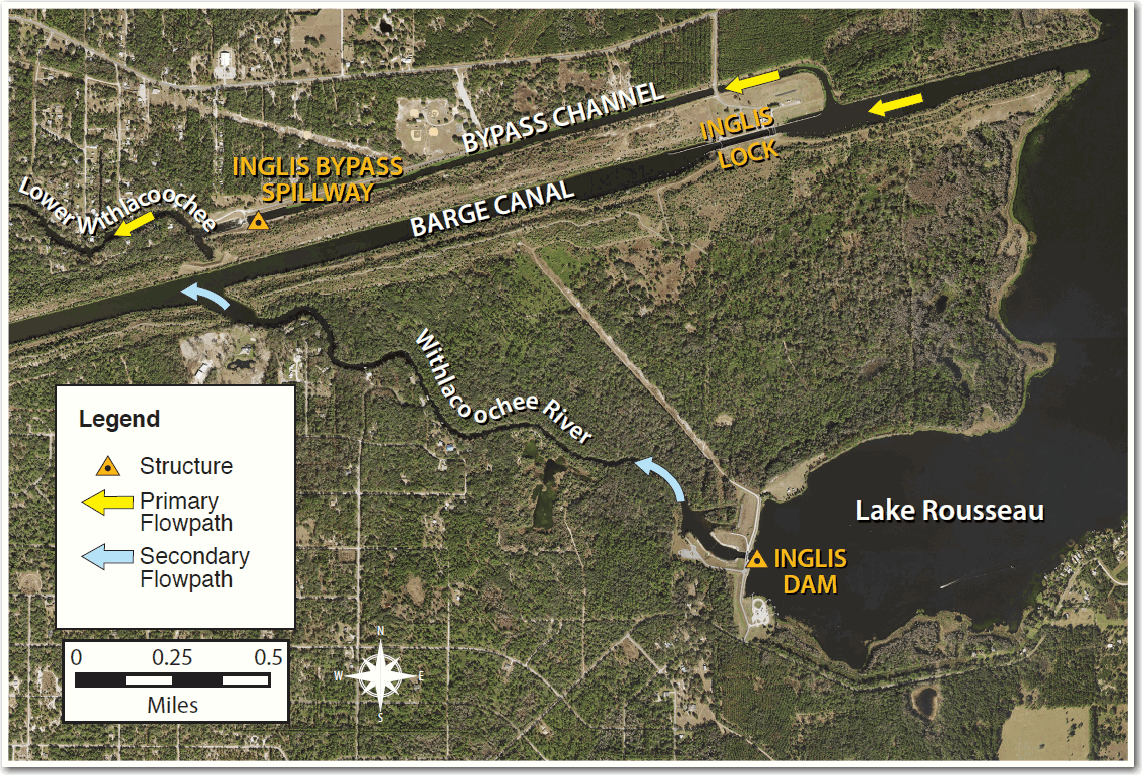
- Outflows from Lake Rousseau are controlled by the Inglis Main Dam (to the Barge Canal) and the Inglis Bypass Spillway (to the Lower Withlacoochee River).
- The Inglis Main Dam remains closed, and all flow is passing from Lake Rousseau to the Lower Withlacoochee River.
- The Inglis Bypass Spillway is currently flowing at about 60% capacity.
- After summer rains bring increased flow to the Withlacoochee River, the Bypass Spillway will again reach its capacity and the Inglis Main Dam will be re-opened.
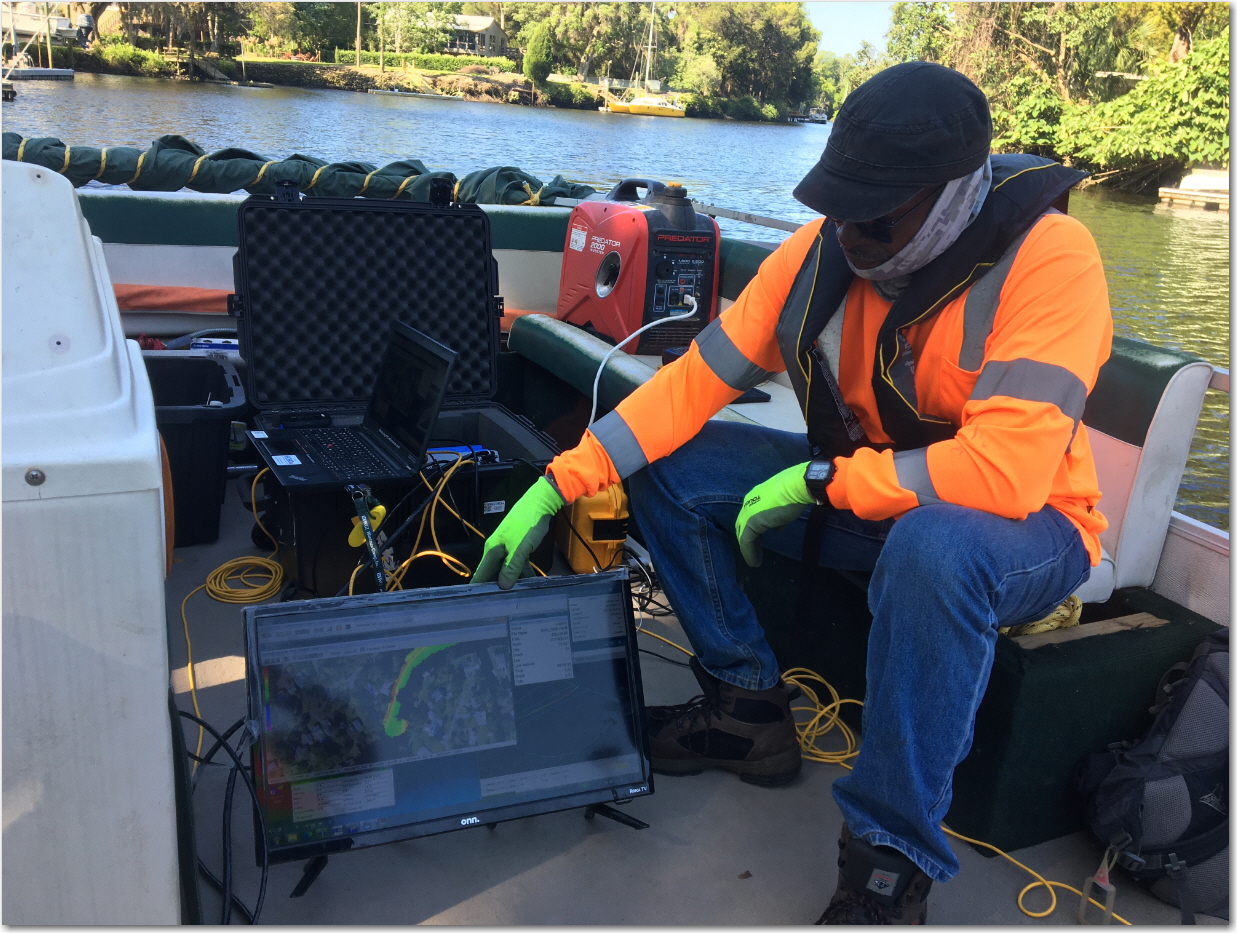
- In April, survey crews worked to map the bottom of the entire Lower Withlacoochee River to support the ongoing minimum flows and levels (MFL) study.
Survey Crews Map the Bottom of the Lower Withlacoochee River near Yankeetown (April 2021)
Have a wonderful week and try to stay cool!
Mark
Mark Fulkerson, Ph.D., P.E.
Chief Professional Engineer
Water Resources Bureau
Southwest Florida Water Management District
(352) 796-7211, ext. 4410
(800) 423-1476 (FL only)
(352) 279-4493 (cell)
|
|
|
|
|
|
|
|


|
Southwest Florida Water Management District | 2379 Broad Street, Brooksville, FL 34604-6899 |
|
If you do not want to continue receiving emails about these projects, click Unsubscribe. To manage your Southwest Florida Water Management District subscriptions, click Manage Preferences. |