Withlacoochee River System Update - 7/1/2020
Southwest Florida Water Management District sent this bulletin at 07/01/2020 06:10 PM EDT
 |
It’s Been Hot and Dry But Rains Are On The Way
Rainfall:
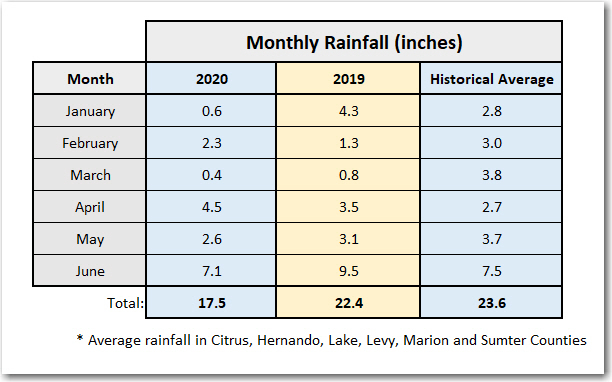
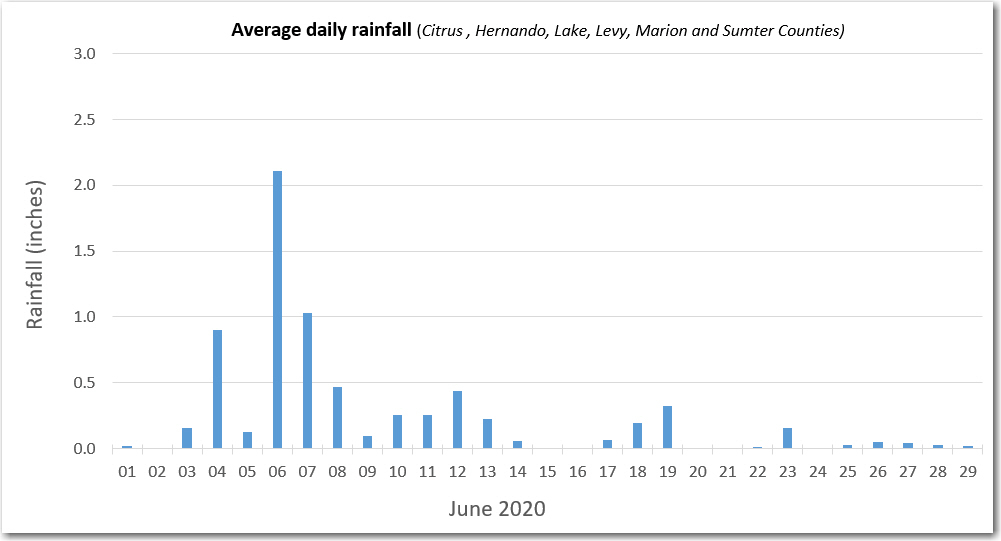
- Our region received an average of 7.1 inches of rainfall in June, close to the historical average (7.5 inches) for that month.
- Most of June’s rainfall occurred early in the month, however, and things have been relatively dry since then.
- Aquifer (groundwater) levels, which rise and fall from rainfall, are in the 62nd percentile, still above average but lower than this time last year (81st percentile).
- Our lakes and rivers are also lower than they were this time last year, a result of less rainfall in recent months.
- So far this year (January to June), our region has received about 17.5 inches of rainfall, 6 inches less than the historical average for that period and 5 inches less than what we had received from January through June of last year.
- Rain chances appear to be increasing for early July and its only a matter of time before we have more rainfall than we need.
- Rainfall amounts during the summer months are typically 6-8 inches but can easily reach double digits like we saw last year.
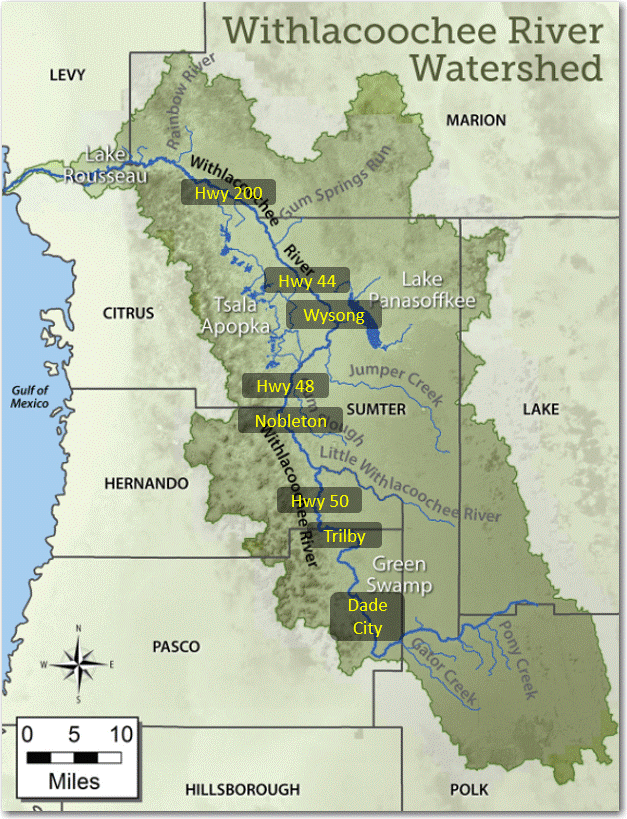
Withlacoochee River (from the Green Swamp downstream past Hwy 200):
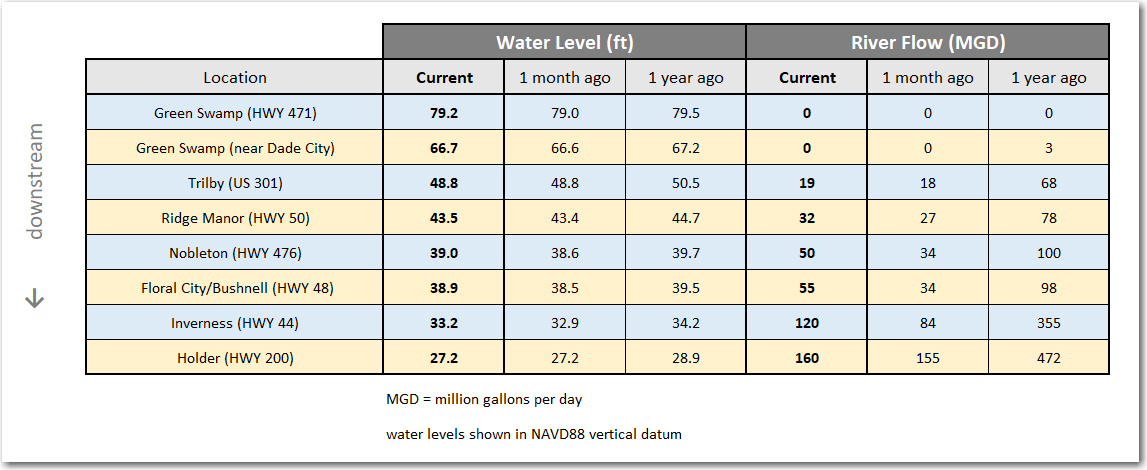
- Heavy rainfall in early June ended the continuous decline of river levels and flows that we had seen since January.
- River levels and flows increased for a short time in June, but lack of recent rainfall has lowered levels and flows back near where they were at the start of the month.
- All along the river, water levels and flows are currently lower than they were a year ago, a direct result of less rainfall so far in 2020 compared to 2019.
- On average, river levels are about a foot lower than they were at this time in 2019 and river flows are about 60% less.
- There is still no flow exiting the Green Swamp (where the river begins).
- Once our region receives enough rainfall this summer to saturate soils and fill adjacent swamplands, we’ll see a steady climb in water levels and flows again.
- Exactly when that will occur is anyone’s guess…it all depends on how much rain falls and where.
- The table below compares current river levels and flows to what they were last month and last year.
Tsala Apopka Chain of Lakes:
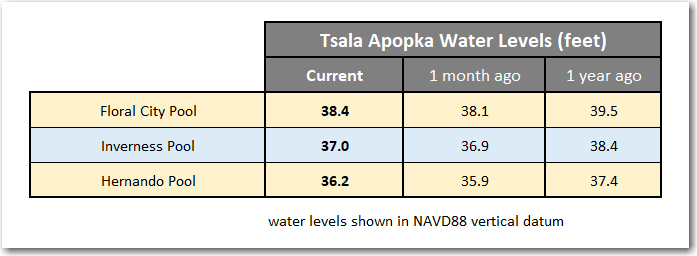
- Early June rainfall raised lake levels about 6 inches.
- Since then lake levels have been steadily declining but remain slightly higher than they were a month ago.
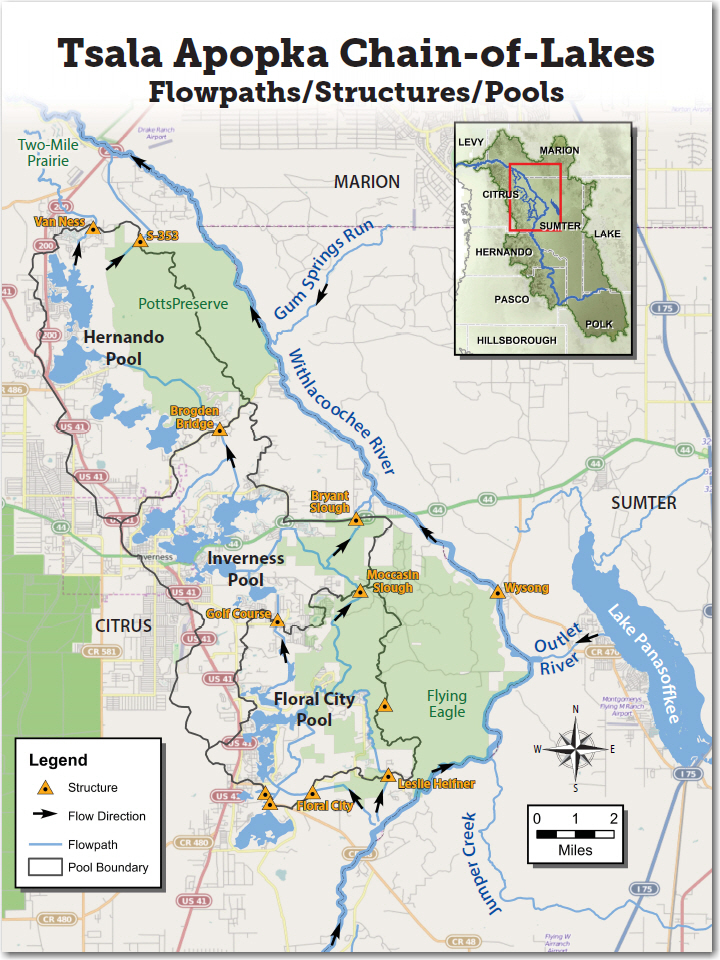
- Several water control structures, which were opened in mid-June, remain open allowing river water to flow equally into all three pools of the lake chain (see map below).
- River inflows are minimal and not enough to offset the natural losses occurring due to evaporation and leakage to the aquifer, so lake levels continue to decline.
- On the Floral City Pool, the Floral City and Leslie Heifner structures are open fully allowing boat traffic to and from the Withlacoochee River.
- The Golf Course and Moccasin Slough structures are also fully open allowing a portion of the river water to enter the Inverness Pool.
- The Brogden Bridge structure is also open sending a portion of the river water to the Hernando Pool.
- No structures are currently open that would send water out of the lake chain back to the Withlacoochee River.
- All three pools remain 2 to 2 ½ feet below their high guidance levels.
- The table below compares current water levels to what they were last month and last year.
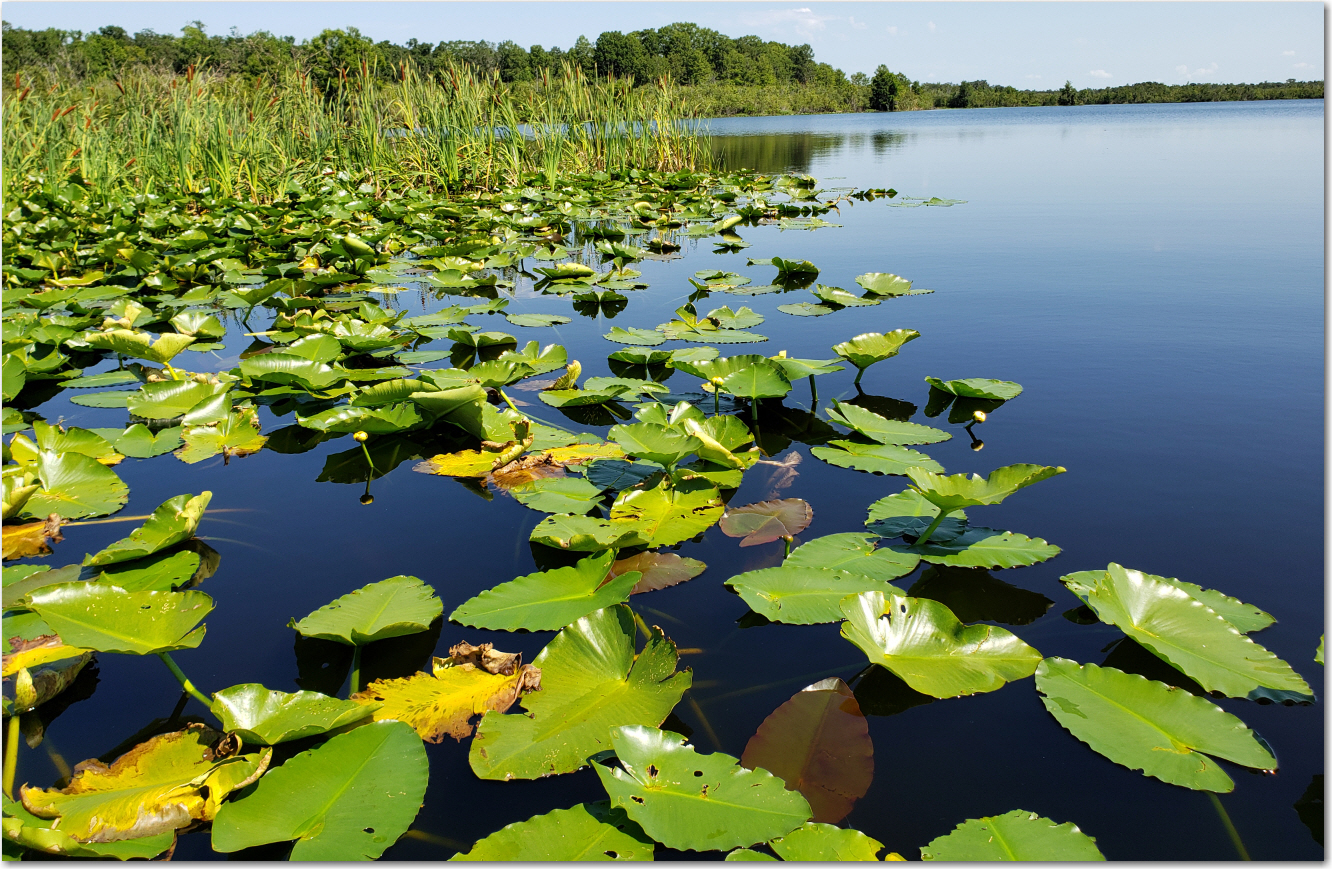
Tussock Lake in the Floral City Pool (June 2020)
Lake Panasoffkee and Wysong:
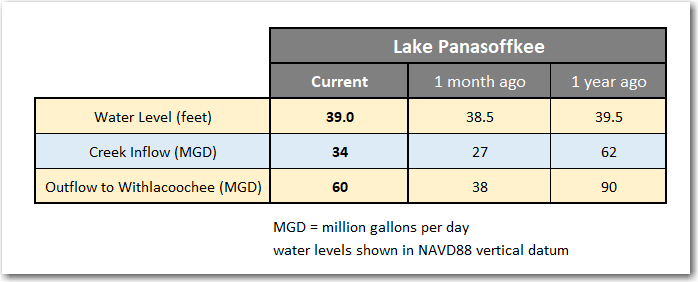
- Water levels on Lake Panasoffkee rise and fall each year from changing rainfall patterns that affect inflows to and outflows from the lake.
- In June, the lake rose about 5 inches mostly due to heavy rainfall at the start of the month.
- Inflow from the lake’s largest tributaries (Little Jones Creek and Shady Brook) increased by 29% over the past month.
- Outflow from the lake to the Withlacoochee River also rose significantly over the past month, a result of higher lake levels.
- Despite higher levels, Lake Panasoffkee is currently 6 inches lower than it was last year at this time.
- You may recall very high lake levels last August, which were the result of above average rainfall and heavy vegetation in the Outlet River (blocking outflow).
- This spring, FWC and the District worked with the Univ. of FL to remove vegetation growth in the outlet river again to help prevent similar conditions this summer.
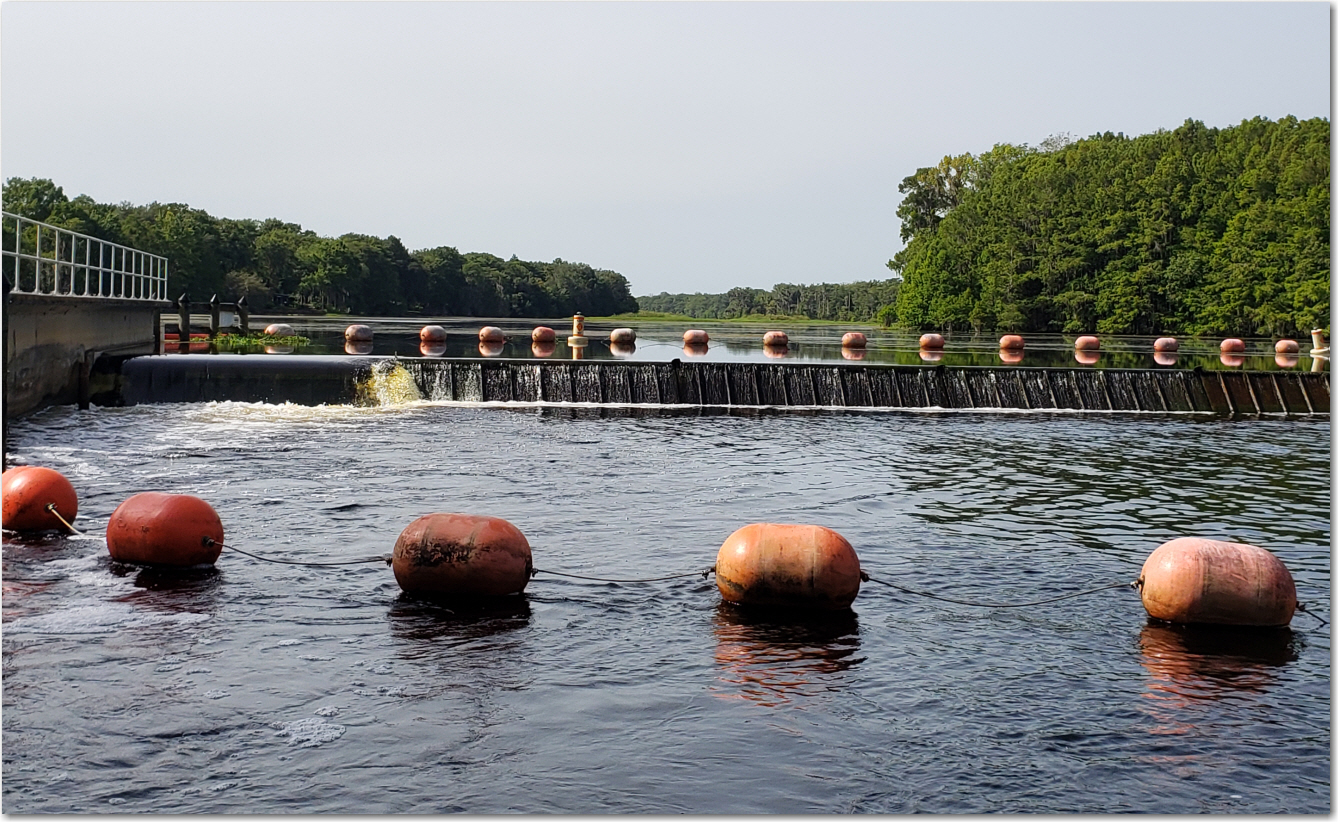
- The Wysong Water Conservation Structure remains raised, helping to conserve water upstream and in Lake Panasoffkee.
- The main gate (220 ft wide) is currently fully raised while the independent gate (19 ft wide) is partially lowered.
- The table below compares current lake levels and flows to what they were last month and last year.
Withlacooche River at Wysong Structure (June 2020)
Lake Rousseau and the Lower Withlacoochee River (from Dunnellon to the Gulf of Mexico):
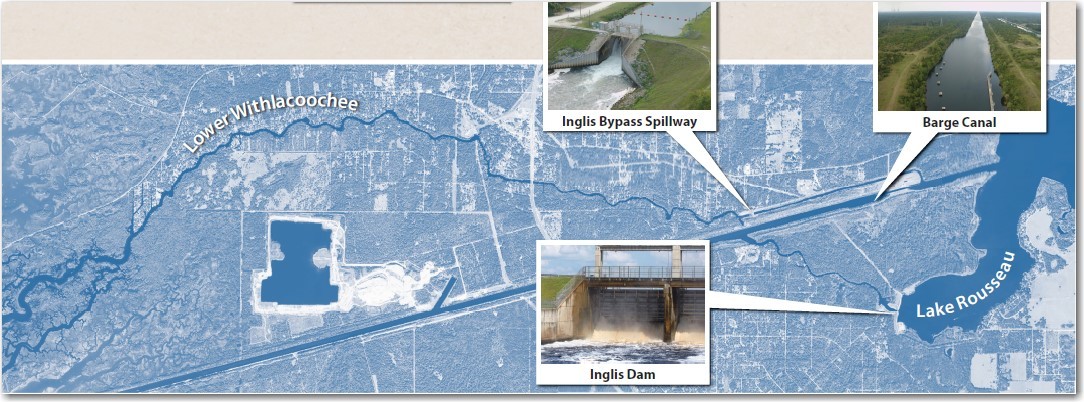
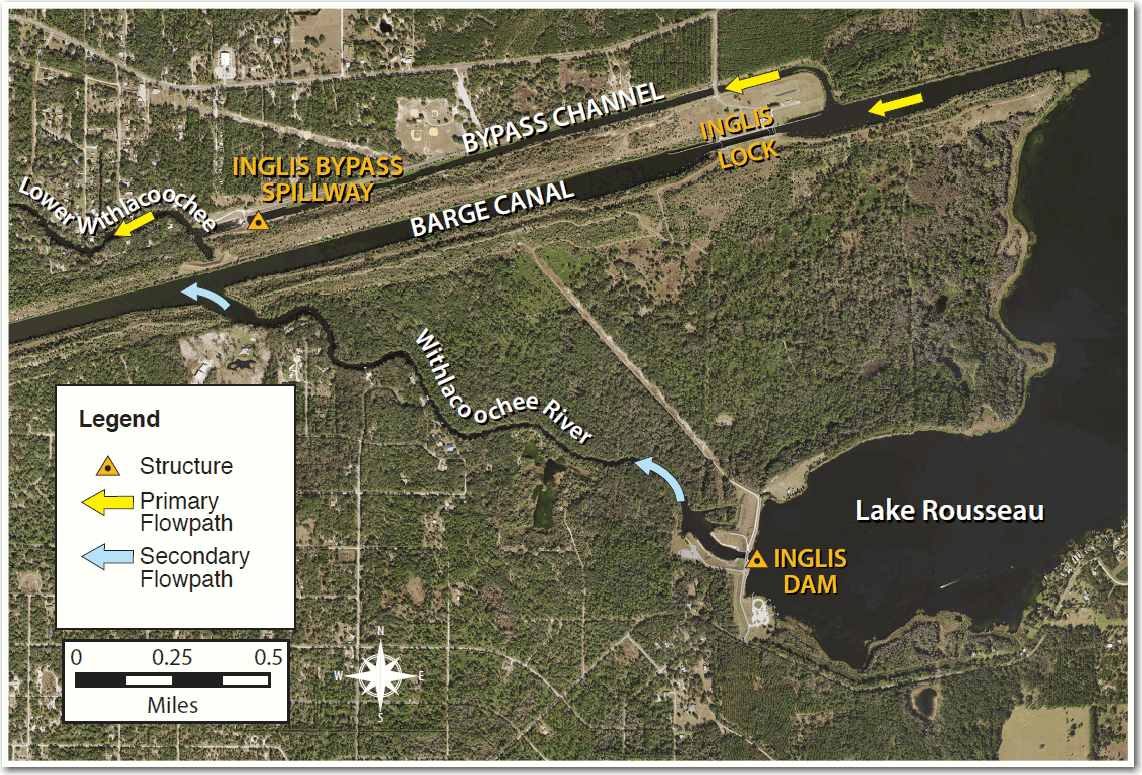
- Downstream from Dunnellon, the Withlacoochee River is influenced by water control structures on Lake Rousseau.
- Inflows to Lake Rousseau include combined flows from the Withlacoochee and Rainbow Rivers.
- Withlacoochee River flows (which depend on rainfall and runoff from adjacent lands) increased by 3% over the past month.
- Flow in the Rainbow River (which reflects changes in aquifer levels) increased by 2% over the past month.
- The Rainbow River is currently contributing more than twice as much flow to Lake Rousseau as the Withlacoochee River is.
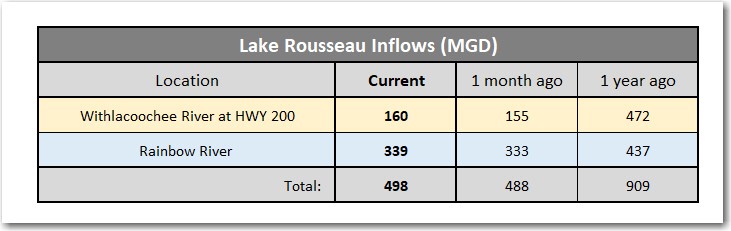
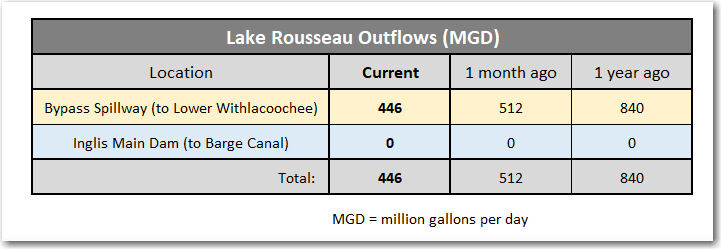
- Outflows from Lake Rousseau have decreased slightly over the past month and remain quite a bit lower than they were at this time last year.
- All flow exiting the lake is still passing through the Inglis Bypass Spillway to the Lower Withlacoochee River.
- Scheduled maintenance was performed in June on both the Inglis Bypass Spillway and the Inglis Main Dam.
- The Inglis Main Dam, which conveys excess flow to the Barge Canal, has been fully closed for the past few months.
Have a safe and happy 4th of July and God Bless America!
Mark
Mark Fulkerson, Ph.D., P.E.
Chief Professional Engineer
Water Resources Bureau
Southwest Florida Water Management District
(352) 796-7211, ext. 4410
(800) 423-1476 (FL only)
(352) 279-4493 (cell)
|
|
|
|
|
|
|
|


|
Southwest Florida Water Management District | 2379 Broad Street, Brooksville, FL 34604-6899 |
|
If you do not want to continue receiving emails about these projects, click Unsubscribe. To manage your Southwest Florida Water Management District subscriptions, click Manage Preferences. |