|
 |
|
Summer 2025
|
|
|
Summer of Environmental Learning |
|
 |
|
|
The City of Melbourne's ECO Division Partners with Club Esteem for Environmental Summer Program
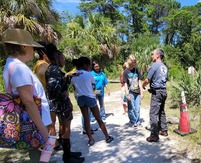
This summer, the City of Melbourne’s Environmental Community Outreach (ECO) Division is teaming up with Club Esteem to inspire and educate students about our natural areas and the role they can play in protecting them—now and in the future. We’re proud to collaborate with Jane Higgins of the Conradina Chapter of the Florida Native Plant Society to enrich the program with expert knowledge on Florida’s native flora.
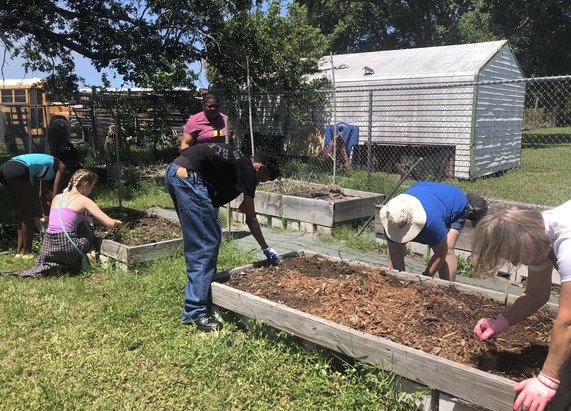
The program includes hands-on activities such as planting native plants and exploring their importance to pollinators like butterflies and bees, our local water systems, and conservation efforts. Students also enjoy educational field trips to two local parks, deepening their understanding through direct engagement with nature.
So far, participants have created bird feeders, planted Seminole Pumpkin seeds, and gone birdwatching around Eddie Lee Taylor, Sr. Community Complex. The camp will conclude with an exciting visit from the Florida Wildlife Hospital staff, where students will meet owls and learn about Florida’s native wildlife.
Together, we’re growing future environmental stewards—one seed, one bird, one experience at a time.
|
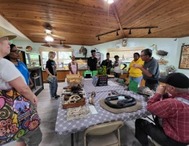
For more information about the many programs that the ECO Division has, please call Cheryl Caldwell, Environmental Programs Coordinator, at 321-608-5082. Programs can be presented at schools, libraries, communities, and private groups within Melbourne’s water distribution area. Let’s make learning about our environment fun!
|
|
|
BEEB Awards Green Gables for Landscaping |
|
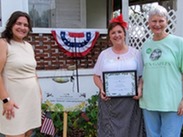
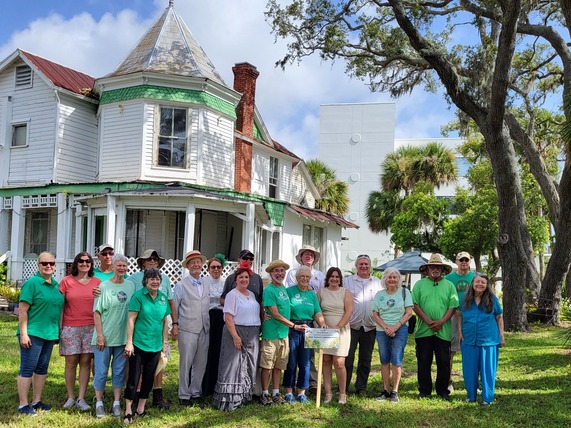
Green Gables at Historic Riverview Village has been recognized for its native and Florida-friendly landscaping, historic preservation of oaks and sabal palmettos and a host of lagoon-friendly practices. The City of Melbourne and its Beautification and Energy Efficiency Board (BEEB) presented the Diamond Gems Award on Saturday, June 28. The Gems Award recognizes homes and businesses for the beauty of their landscaping and also for their environmental practices. Green Gables met the award’s criteria in many ways, including using native plants, rain barrels, composting, and following proper fertilizing and irrigation techniques.
|
|
|
Melbourne's Annual Water Quality Report Now Available
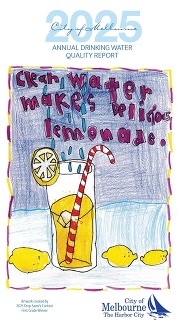
There is a link provided to all the Melbourne utility bills being sent out during the summer for the City’s annual water quality report, also known as the consumer confidence report (CCR). The report covers the results of water testing during 2024. To view the report online, go to www.melbourneflorida.org/waterqualityreport. If you would like a paper copy of the report, please call 321-608-5080 or email your request to waterqualityreport@mlbfl.org. They are also available at Melbourne’s City Hall, other city halls in the water distribution area, civic centers and many of the area's libraries. The cover artwork was created by one of our first grade 2025 Drop Savers winners from Surfside Elementary School.
|
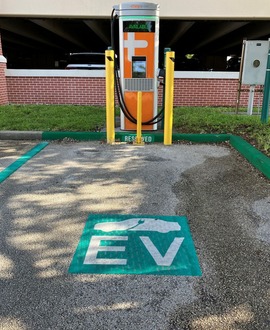 EV Charger at City Hall Ready for Use
The Level-3 ChargePoint EV charger at City Hall is now fully functional and available for customers. The first customer to use it was on June 30th. The cost to charge a car includes a $2 flat fee plus $0.155 per kilowatt hour (kwh). The charging station has the capability to charge all types of vehicles. There is a designated space for use in front of the charger. Only one car can charge at a time.
Jeff Whitehead and Dave Lindsay with the City of Melbourne Facilities Department and David Rentos, IT Network Administrator patiently and closely worked with the installer, ChargePoint, and the inspector through the entire process.
|
|
Summer Fertilizer Ban in Effect from June 1 - September 30
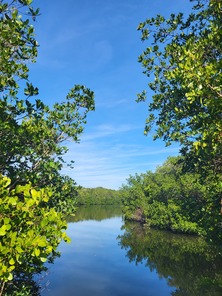
The summer rainy season ban on fertilizer use in the City of Melbourne went into effect June 1. The ban lasts until September 30. This regulation was enacted in order to keep nutrients found in fertilizer from washing off lawns into storm drains and ultimately into the Indian River Lagoon during the rainy summer season. These heavy nutrients contribute to harmful algal blooms and eutrophication which kill seagrasses and other marine life. In the summer months, heavy rains wash off any fertilizer applied to lawns and gardens before it can be absorbed by plants and soil. The City of Melbourne ordinance Sec. 50-144 states, “Fertilizer shall not be applied within 15 feet of any surface waters, pond, stream, watercourse, lake, canal, or wetland as defined by the Florida Department of Environmental Protection (F.A.C. ch. 62-340) or within 15 feet from the top of a seawall.” This is called the "fertilizer free zone". This restriction applies year-round, not just in the summer. If you fertilize your own yard, please follow these rules. If your yard is fertilized by a residential landscape company make sure they are licensed in Brevard County, which requires them to be trained on chemical applications to lawns and landscape. Homeowners are reminded that it is also illegal to blow grass clippings into streets or stormwater drains in the City of Melbourne at any time of the year. Instead, clippings should be blown back into yards or composted.
|
How to Keep Your Yard Looking Great Without Fertilizer
 |
|
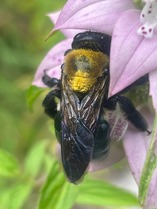
One of the most important actions we can take is to practice environmentally responsible lawn and garden care. That means using fertilizers sparingly. It’s not always necessary to fertilize your plants or lawns, and too much fertilizer can weaken a plant, promote disease, and invite unwanted insects, in addition to wasting money and harming our environment.
It's important to select native plants that are adapted to the local climate and soil and being mindful of how and when we water (since over-watering can wash nutrients into storm drains, which then lead to rivers and oceans).
|
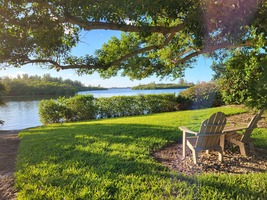
It’s also helpful to keep in mind that soil health is a huge factor here. Healthy, nutrient-rich soil can reduce the need for chemical fertilizers in the first place. Using organic matter or mulch can often provide the necessary nutrients in a much more sustainable way. Mulch also retains water for plant health. If you have an oak or pine tree, collect the leaves and needles for free mulch. Leaves also provide great habitat for caterpillars, beetles and other insects that birds and other wildlife rely on for food. |
|
 |
Follow these tips, and your yard and garden will look like the pros:
-
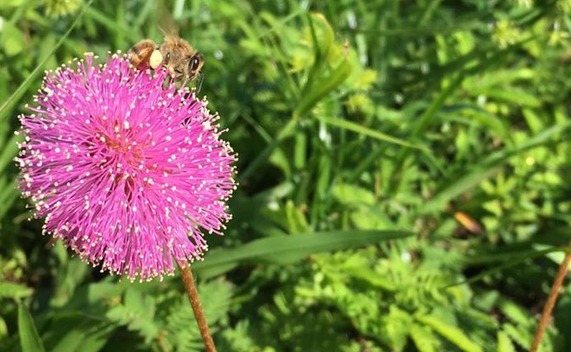
Get better plants. Native and Florida-friendly plants are adapted to Florida’s hot, humid climate, need less water and little to no fertilization. In Florida, grasses like St. Augustine (Stenotaphrum secundatum) are popular choices, as they are well-suited to the heat and occasional dry spells but there are also native alternatives like Sunshine Mimosa (Mimosa strigillosa) and Frog Fruit (Phyla nodiflora). You can even mix them together for more biodiversity.
- Ask your local garden centers and native landscaping businesses, such as Native Butterfly Flowers or the Brevard County Extension office about how to be Florida-friendly. You’ll reduce your water bill and save money on fertilizer and other chemicals.
- Healthy soil supports healthy lawns, and one of the best ways to keep your lawn pest-free without chemicals is to encourage natural predators. Ladybugs, lacewings, and predatory beetles can help keep harmful insect populations in check.
- Water wisely. Water deeply, but infrequently. Rather than frequent light watering, aim to water early in the morning or late in the evening (to reduce evaporation) and make sure the lawn gets about 1–1.5 inches of water per week. This will encourage deep root growth and make the grass more drought-tolerant.
-
Put your lawn on a diet and give the pollinators a proper buffet. Replace a corner of your lawn with native shrubs, small trees, wildflowers, or a native groundcover like Sunshine Mimosa (Mimosa strigillosa), Frog Fruit (Phyla nodiflora) or Perennial Peanut (Arachis glabrata)
|
|
City of Melbourne Public Works & Utilities Department
Environmental Community Outreach (ECO) Division |
|
|
|
|