|
November 14, 8 a.m.-10:30 a.m. (CST) - Second Saturday Shorebird Survey at Big Sabine Point, Escambia County, FL
The Florida Fish and Wildlife Conservation Commission (FWC) is gathering interest in IBNB Permitted Monitor Experiences across the state. The Experiences typically consist of three days of surveying for imperiled beach-nesting birds alongside FWC biologists and other experts from partner organizations to fulfill the requirement for obtaining an IBNB Permitted Monitor permit. IBNB Permitted Monitors are dedicated individuals with proven shorebird and seabird identification skills and avian survey experience. They are qualified to assist FWC Incidental Take Permittees with minimizing and avoiding harm or harassment of imperiled beach-nesting birds during project activities. More information can be found on the FWC IBNB website. If you are interested in attending an experience for the summer of 2027, please fill out the survey above with your contact information, and we will email you if an experience is being hosted in your area.
Florida Shorebird Successes in 2026
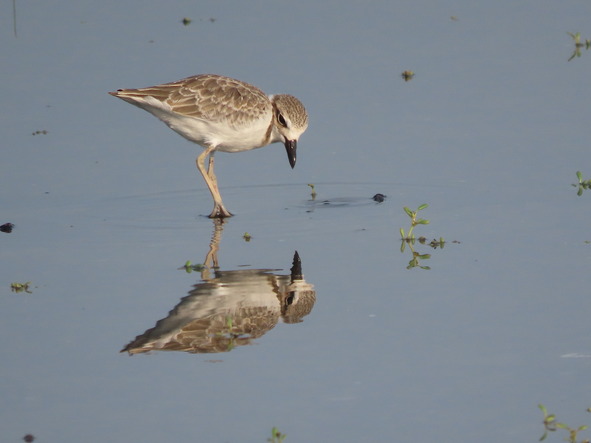 Wilson’s plover, St. Marks National Wildlife Refuge in Wakulla County. Photo by Ezra Thompson, FWC
In the October Wrack Line issue, we celebrated some of the seabird successes documented across Florida, highlighting how persistence and partnership can yield remarkable wins. This month, we are spotlighting a selection of shorebird stories from the 2026 breeding season, representing just a portion of the positive outcomes recorded statewide. While solitary bird numbers are modest compared to Florida’s seabird colonies, we know that every bird counts towards recovery, especially for imperiled species like the American oystercatcher, snowy plover, and Wilson’s plover. Each nest protected, each chick fledged, and each small conservation gain represents meaningful progress for species populations that rely on our continued efforts.
Drought conditions created an unexpected opportunity for Wilson’s plovers in Wakulla County. At St. Marks National Wildlife Refuge, receding water levels exposed habitat in Mounds Pool 3 that previously had long-term flooding, creating favorable nesting conditions and supporting over 50 fledglings.
Lanark Reef in Franklin County had an exceptional season for American oystercatchers, fledging multiple chicks for the first time since monitoring began in 2011. As part of protection efforts, chick shelters were used to offer shorebird chicks shade, reduce heat stress, and provide hiding cover that helps prevent predation.
St. George Island Causeway Critical Wildlife Area had a notably productive season for American oystercatchers as well, with nearly every nest successfully producing a fledgling. This one‑mile stretch of the old causeway is closed to the public from March 1 to September 30 and provides essential protected habitat where thousands of birds nest and roost each year.
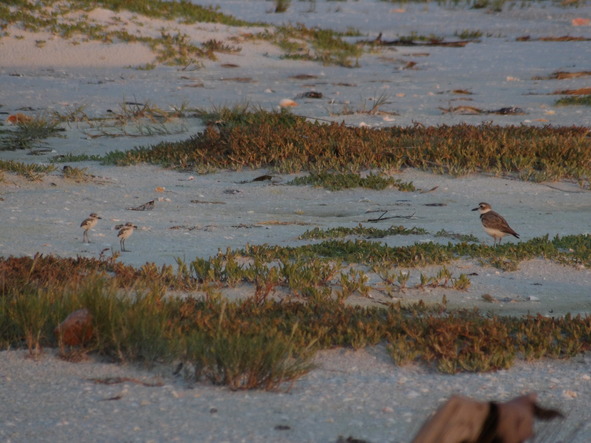 Wilson’s plover chicks at Fort De Soto County Park. Photo by Anna Yu
Fort De Soto County Park had a strong season for Wilson’s plovers, with multiple fledglings documented throughout the park. One of the season’s standout successes was the protection of a family group at the park’s "East Tip", where park staff and Audubon stewards worked together to help chicks stay safe as they navigated a busy roadway. This marked the second consecutive year chicks were produced in the area following storm-related road closures, demonstrating how shorebirds can quickly take advantage of new opportunities when disturbance is reduced.
Anastasia State Park stood out this season, hosting nearly 70 percent of all Wilson’s plover nests documented within the St. Johns Shorebird Partnership. For just a four‑mile stretch of beach, this high concentration of nesting activity reinforces the park’s importance as a breeding site for this species.
These stories capture only a handful of the many encouraging shorebird outcomes documented across Florida this season. Together, they show that even in a year full of challenges, shorebirds continue to benefit from thoughtful management, dedicated stewardship, and strong community support. Each nest that hatches, each chick that fledges, and each nesting site that receives careful attention contributes to the broader population recovery of these vulnerable species. Thank you to all the Florida Shorebird Alliance partners that contributed. Your commitment makes a real difference for Florida’s shorebirds.
|
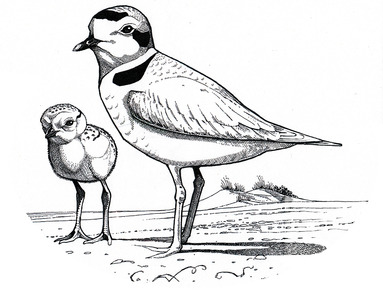
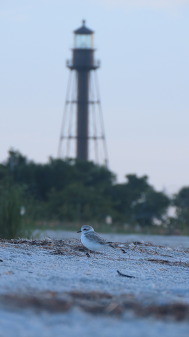
Photo: Snowy plover. Credit: Sanibel Captiva Conservation Foundation
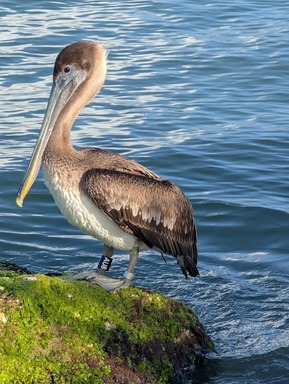
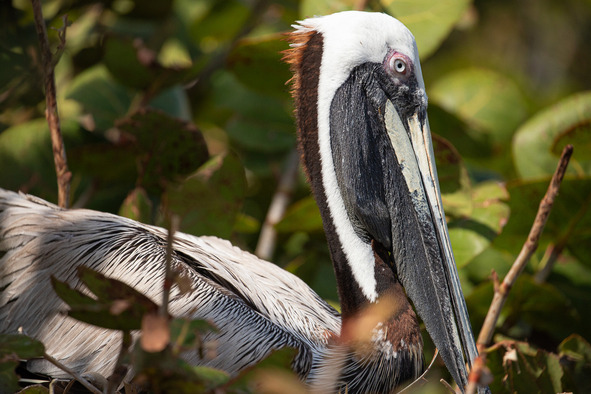
The Florida Wildlife Hospital (FWH) in Brevard County has long served as a critical care center for thousands of native wildlife patients each year. Brown pelicans are admitted nearly every week, often due to human-related causes such as vehicle strikes and injuries from fishing gear. Over a five-year period (Jan. 1, 2019 - Dec. 31, 2023), FWH admitted 586 brown pelicans. One-third of the birds were found at Sebastian Inlet State Park (SISP), located in south Brevard County. Over half of the pelicans admitted to the hospital were hooked and entangled. Traditionally, rehabilitated birds are released back at the site where they were found. However, the high rate of repeat injuries at SISP has prompted a new initiative to better understand post‑release outcomes and evaluate the effectiveness of releasing pelicans in alternative sites.
To address these concerns, a brown pelican banding program was launched in January 2026. Before release, each rehabilitated pelican is banded with a USGS numbered aluminum leg band and one black plastic band with a unique white alpha numeric code on the opposite leg. All banding is conducted under Federal Permit #21980. These markers make it possible to passively track individual birds after release from the hospital and determine whether the same individuals return to SISP suffering from repeated injuries.
A coalition of observers, including NGOs and volunteers, monitor at SISP to gather band-resight data for FWH banded pelicans to inform survival of released birds, document movement patterns, and assess reinjury rates. Understanding where pelicans go after rehabilitation, whether they return to high‑risk areas, and how often they become re‑injured will help inform land management decisions, species management plans, and sustainable recreation practices. Ultimately, this information will guide actions that support healthier coexistence between recreators and wildlife.
Matthew Anderson, a Florida Shorebird Alliance Partner and Indian River Lagoon Aquatic Preserves Manager with Florida Department of Environmental Protection, is a project collaborator. Since January, he has banded 25 pelicans. Four pelicans released at alternate sites have not returned to SISP and of the 21 remaining pelicans released in the park, only a few have stayed.
Photo: Brown pelican. Credit: Stephanie Henderson
|
 It’s Data Review Season!
Data entry in the FSD has closed for the 2026 breeding season and now the FSD quality control team is diving deep into data review season. Over the next several months, the quality control team will reach out to partners for clarification as needed. Please be on the lookout for emails from the quality control team and know that this is a normal part of the quality control process! These conversations ensure your data will most effectively guide conservation, research, and management of these species. Additionally, partners can provide site-specific context regarding the shorebirds & seabirds that are breeding within a given region. This is invaluable information! Thank you in advance to all partners involved in the data review process.
If you have any questions, need assistance, or have additional information to provide about the data you’ve entered for 2026, please email us at FLShorebirdDatabase@MyFWC.com.
2026 American Oystercatcher Working Group Meeting
The 2026 American Oystercatcher Working Group Meeting will be held December 2-3 at Saint Christopher Camp and Conference Center on Seabrook Island, South Carolina. There is also a virtual option via Zoom. Register here!
Important registration deadlines:
-
In‑person meeting registration deadline: November 9
- Virtual meeting registration deadline: November 30
The mission of the American Oystercatcher Working Group is to support range‑wide research and management efforts that advance the conservation of American oystercatchers and their habitats. Through collaborative initiatives and guidance from its membership, the group works to strengthen both individual and partnership-based conservation actions.
You can help shorebirds by using best practices for shorebird-friendly photography: How to Be a Shorebird-friendly Photographer.
|