Southeast Florida Reef Review Newsletter January 2023
 In this issue:
-
Top actions to take this month to help our reef:
-
Find and share our new Coral ECA signage
-
Attend our Virtual BleachWatch Training
-
Submit reports to SEAFAN
-
Disturbance response monitoring wraps up for 2022!
-
Positive outcomes of a collaborative fishery stakeholder engagement process
-
Making Coral Connections across Southeast Florida!
 Top actions to take this month to help our reef
1. Find and share our new Coral ECA signage!
- Taylor Tucker, Reef Resilience Coordinator
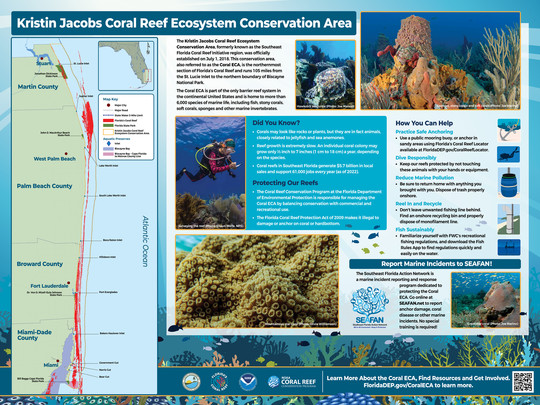
The Coral Reef Conservation Program created new informational coral reef-related signage to install at marinas, parks, and boat ramps throughout Martin, Palm Beach, Broward, and Miami-Dade counties. The goals of this redesign project were to spread awareness on the new name designation of the northern reef as the Kristin Jacobs Coral ECA, replace outdated signage, provide resources for the public to learn more about our local coral reef ecosystem, and increase engagement in ocean stewardship.
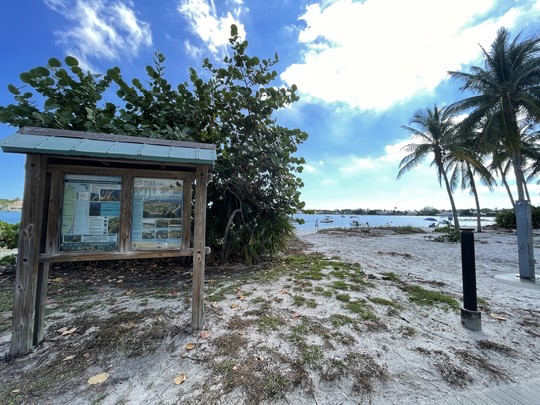
 We are happy to announce that signage installation has begun, and the first two installments were at Blue Heron Bridge and Peanut Island, which are popular locations for snorkeling, boating, and scuba diving in Palm Beach County!
2. Attend our Virtual BleachWatch Training!
Recreational, commercial and scientific divers are encouraged to become part of the BleachWatch Observer Network by participating in a training session. This two-hour virtual training will include a short lesson on coral biology, an overview of coral bleaching and disease, a description of the BleachWatch Early Warning Program, and how to properly assess coral condition, record observations and submit reports.
WHAT: Virtual BleachWatch Training
WHEN: January 25, 2022, 6-8 PM
HOW: Register here for the webinar
|
3. Submit reports to SEAFAN
- Lara Bracci (Associate Coordinator)
This year, the Southeast Florida Action Network (SEAFAN) responded to multiple Marine Incident reports, some of which were recorded during our 11th Annual Southeast Florida Reef Cleanups where we partnered with 9 dive shops from Miami-Dade, Broward, and Palm Beach counties.
Aside from Marine Debris, our citizens have reported Anchor Damage and Vessel Groundings, Fish Kill and Disease, Invasive Species, Coral Bleaching and Disease, Sea Urchin/Diadema Disease, Derelict Traps, and other Marine-Related Incidents. One incident response example was for a large marker buoy washed ashore on Jupiter beach that was tracked and returned to its home in Dry Tortugas National Park. We've been in contact with FWC, the USCG, NOAA, local counties, and other agencies and facilities to help coordinate responses and solutions for each incident reported.
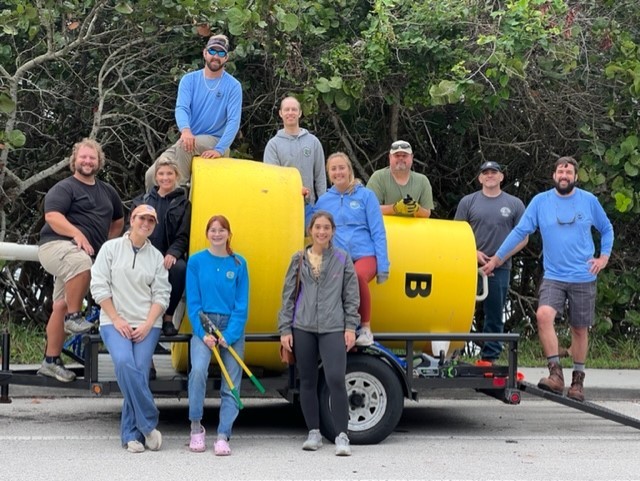
A large marker buoy was reported as washed ashore on Jupiter beach, then tracked and returned to its home.
SEAFAN has recently collaborated with MOTE to share online dashboards and to increase reporting capacity to include Monroe County. Now citizens of Monroe County can learn about and utilize the reporting system to submit SEAFAN reports in the Florida Keys. All 5 southeast Florida counties can now submit reports to SEAFAN.
Be sure to visit the SEAFAN dashboard to see a live map of all the SEAFAN submissions (including any you report!), along with the number of reports per county and the percentage of individual incidents by type.
  Disturbance Response Monitoring Wraps up for 2022
- Taylor Tucker (Reef Resilience Coordinator) & Jessica Price (Reef Injury Prevention & Response Coordinator)
This year the Coral Reef Conservation Program (CRCP) completed monitoring surveys at 28 randomly selected reef sites in Broward and Miami-Dade counties. CRCP staff also assisted with surveys in Palm Beach County to ensure coverage across the region. These surveys were completed in partnership with the Florida Reef Resilience Program (FRRP) as part of the Disturbance Response Monitoring (DRM) program, which is a collaborative inter-agency effort to monitor the health of Florida’s Coral Reef over time. This monitoring effort occurs annually across the entirety of Florida’s Coral Reef within an eight to ten-week period to facilitate adaptive management in a changing environment. This was a record season with 454 sites surveys by all partners combined along Florida’s Coral Reef.
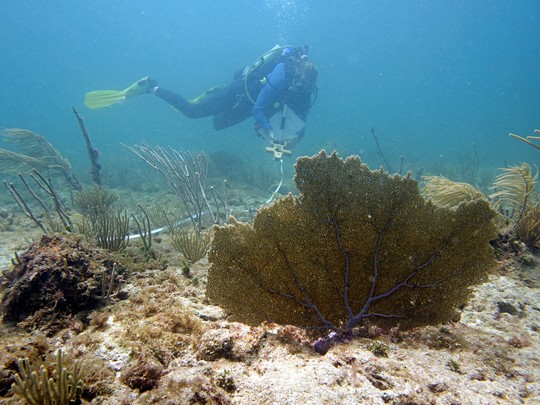 |
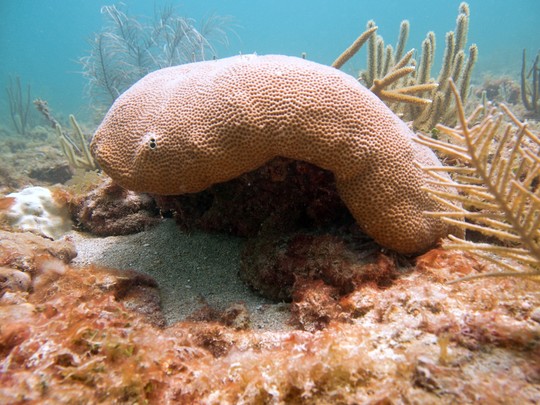
Reef Resilience Coordinator, Taylor Tucker, completed additional monitoring surveys at 12 pre-determined sites in the western Marquesas Islands, an island chain between the Dry Tortugas National Park and Key West. The surveys were completed in early October, after Hurricane Ian, to monitor the disturbance impact on offshore coral reef ecosystems. Taylor was able to work directly with DEP’s partnering agency, the Florida Fish and Wildlife Research Institute, on the R/V Makai for this effort.
 Positive Outcomes of a Collaborative Fishery Stakeholder Engagement Process
- Katie Lizza (Fishing, Diving & Other Uses Coordinator)
In November 2022, a fishery stakeholder engagement process completed its more than two-year run. This process was conducted in partnership with Florida Fish and Wildlife Conservation Commission and the National Oceanic and Atmospheric Administration, and as a stakeholder-supported Southeast Florida Coral Reef Initiative (SEFCRI) Local Action Strategy Project called FDOU 52: Data Needs for Fisheries Management.
The success of this process, and any stakeholder engagement process, relied on building trust and establishing effective collaboration and coordination among stakeholders and management agencies. The University of Florida team contracted to facilitate this process successfully created an environment where relationships and trust could be built among both committee members and the participating government agencies.
The Committee
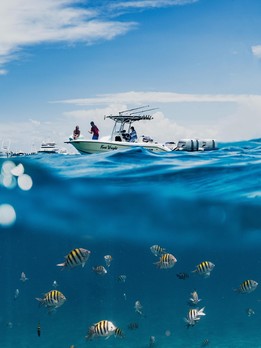
The fisheries committee represented the recreational, charter, commercial, spearfishing, and marine industry sectors. These committee members have 50-plus years of combined experience in our local waters where they have directly observed changes to fish populations and the coral reef ecosystem; thus, providing additional stakeholder expertise and perspectives that are valuable in resource management decision-making. The hard work, dedication, and commitment of the members was shown through their passionate in-depth discussions on a variety of environmental issues and concerns surrounding water quality, habitat degradation, and restoration, and fisheries-related topics - and also through their willingness to discuss topics where there wasn't a consensus among the group.
Expanding Input with a Survey and Public Meetings
This process aimed to ensure that the committee’s recommendations received input from the wider fishing community, the general public, and other stakeholder groups – this was accomplished through a survey and public meetings in addition to committee meetings.
The survey examined the perceptions of the current condition of marine resources and the support for specific management ideas. Respondents were also asked to consider the importance of a broad range of measures to improve both the conservation of the coral reef ecosystem and fishing quality. A comparison of these perceptions and support was made among survey respondents, which included representative samples from recreational, charter, and commercial anglers as well as from other stakeholders in both the committee members and SEFCRI networks. Some findings from the survey were:
- Broad similarities in the perceptions among the different survey respondent groups in their perceived importance of the factors impacting the coral reef ecosystem, which included factors such as water quality, ocean acidification, invasive species populations, coastal development, fishing pressure, and fish nursery habitat.
- That all groups perceived an improvement in water quality as most important to improving fishing quality and the coral reef ecosystem, which is also in alignment with the emphasis and importance the fisheries committee placed on addressing water quality issues.
Evaluating the support for the committee’s management actions was another key component of this process and was an important assessment that informs management agencies' understanding of the similarities and differences among the stakeholder groups in their level of support for various management recommendations. There was broad, shared support among all groups for many water quality and habitat management actions. Concerning fisheries management actions, the protection of spawning aggregations emerged as a high priority shared between fisheries community groups and the SEFCRI network.
|
54 Recommended Management Actions Developed
The committee developed 54 recommended management actions, which will supplement the existing recommendations developed during an earlier stakeholder engagement process called Our Florida Reefs (OFR). Limited involvement from the fishing community during the OFR process and resulting recommended management actions led to in a gap in fisheries-specific knowledge and feedback, which was part of the basis for creating a fishing stakeholder committee in 2020.
|
|
 |
Next Steps
These management recommendations will be reviewed by the SEFCRI team and relevant agencies to determine each recommendation’s incorporation into future work plans and the ongoing development of a formal management plan for the Coral ECA.
Understanding the level of support for various management options is important information we will use in future resource management decisions to better conserve the marine resources within the Coral ECA. We look forward to continuing to engage and work with all stakeholder groups as we address the complex social, economic, and ecological nature of the challenges facing the fragile coral reef ecosystem and the fisheries it supports.
Making Coral Connections across Southeast Florida!
- Rachel Skubel (Awareness & Appreciation Coordinator)
This past fall, CRCP partnered with SEFCRI volunteers and Friends of Our Florida Reef to conduct outreach at several events throughout the Coral ECA region.
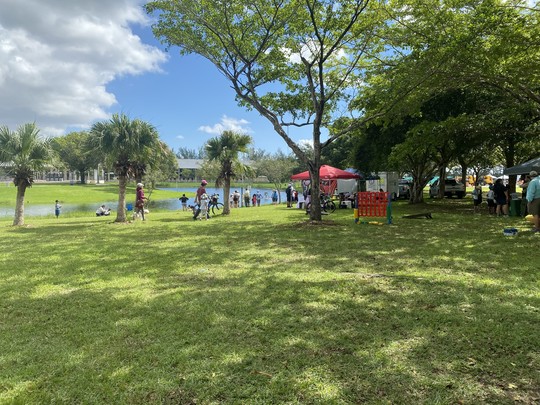
Lagoonfest is a popular event for families held each November to celebrate the Lake Worth Lagoon, and it's incredible ecosystem values, which are enjoyed by the local community and visitors. Staff from CRCP were joined by DEP staff from other departments, as well as members of our SEFCRI stakeholder team, to chat with event attendees about coral reefs, coastal resilience, and opportunities to get involved with education and citizen science.
In mid-October, staff from the Miami and West Palm Beach offices joined the annual “Vamos-A-Pescar!” event led by Miami-Dade County Eco-Adventures in partnership with the Florida Fish and Wildlife Commission (FWC). The yearly event at Tropical Park is an opportunity for families to learn how to fish and meet with local environmental and education organizations. Attendees of all ages were excited to learn about how coral reefs near Miami help maintain healthy fish populations and protect our shorelines.
 CRCP Staff Updates
|
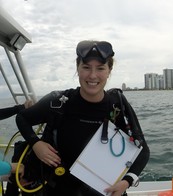
Mollie Sinnott is the Southeast Regional Administrator
Former CRCP manager Mollie Sinnott has transitioned into an exciting new role as the Southeast Regional Administrator! Mollie has been with DEP for eight years, previously holding the CRCP Manager, CRCP Assistant Manager and the Reef Injury Prevention and Response Coordinator positions. Prior to joining DEP in mid-2014, she received her bachelors of science in Biology from Wake Forest University and worked in Miami-Dade County’s coastal permitting office before completing her master's at Nova Southeastern University.
|
|
 |
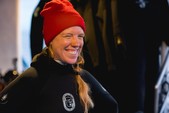
Meet our new CRCP Manager: Dr. Rachel Skubel
As Mollie has moved into her new position, Dr. Rachel Skubel is excited to take on management of the Coral Reef Conservation Program! Rachel joined CRCP as the Awareness and Appreciation Coordinator in September 2021 after graduating with a Ph.D. from the University of Miami, where she worked with South Florida fishing, research, advocacy, and management communities to study climate change impacts on shark fisheries and associated ecosystems. Prior to studying and working in Miami, Rachel completed her B.Sc. and M.Sc. in Ontario, Canada.
|

|