In Focus: Taking a Closer Look at Brownfield Redevelopment

florida department of environmental protection in focus

DEP's Brownfield Redevelopment Program

The Florida Department of Environmental Protection’s Brownfield Redevelopment Program empowers communities, local governments and other stakeholders in economic development to collaboratively prevent, assess, clean up and reuse brownfields – properties which have known or perceived environmental contamination. Most commonly, brownfields are sites that were once used for industrial purposes, such as auto repair facilities, factories, gas stations and dry cleaners, and may be contaminated by the discharge of dry cleaning solvents, petroleum products, hydraulic fluids or other hazardous waste. 

Based upon economic and regulatory incentives, the program uses private revenue to clean up and redevelop sites, create jobs and enhance the local economy while also reducing public health and environmental hazards. In order for communities to have access to the program's incentives, a local government must first designate a brownfields area by resolution. 

Since the program’s inception in 1997, 101 contaminated sites have been cleaned up, approximately 65,800 confirmed and projected direct and indirect jobs have been created and $2.7 billion in capital investment is projected in designated brownfield areas. There are currently 427 designated brownfield areas statewide, and as of June 2017, 295 Brownfield Site Rehabilitation Agreements have been executed. Additionally, in 2016, more than $32 million in projected new capitol investment was attributed to the program. 

Brownfield Redevelopment Success Story: Tampa International Center - IKEA

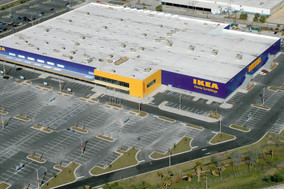
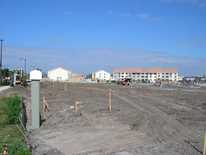
IKEA Brownfield

IKEA opened its third Florida store on the Tampa International Center property in May 2009.

As a result of successful remediation under the state’s Brownfield Redevelopment Program, this formerly contaminated 29-acre site now contains a
353,000-square-foot store, a 350-seat restaurant and approximately 1,700 parking spaces. The IKEA project created 500 construction jobs and 400 in-store jobs. 

The International Center property originally operated as a cannery from 1936 until 1981. Environmental testing performed at the site in 2005 revealed elevated levels of arsenic in the soil, as well as aluminum and iron in the groundwater. In 2007, the site was designated a brownfield area by the city of Tampa. 

Remediation efforts, which began in 2008, included the removal of tanks, railroad tracks and contaminated soil and the use of engineering and institutional controls. Additionally, institutional controls were implemented to ensure protection of public health and safety. Cleanup was completed in 2009.

Learn more about statewide Brownfield Redevelopment success stories.

DEP Hosts Two Regional Brownfield Conferences 

BrownfieldBrownfield


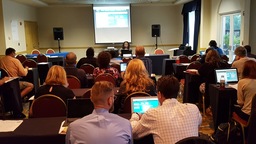
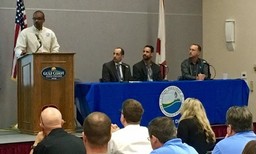
DEP recently hosted two regional brownfield conferences: the fifth annual Northwest Florida Brownfields Redevelopment Forum in Panama City, and the fifth annual South Florida Regional Brownfield Symposium in Sebring. Both conferences engaged communities, local governments and other stakeholders on recent updates to Florida laws governing brownfields, successful brownfield sites across the state, as well as available assistance from the department.

Additionally, the conferences featured presentations from industry experts, including grant-writing seminars and the latest brownfield technology and cleanup processes. DEP program staff provided a course on mastering DEP's online date tools and navigating the contaminated site locator database

EPA Grants Announced, Benefiting Six Florida Communities

EPA recently announced the Regional Brownfields Assessment and Cleanup Grant recipients, awarding six applicants in Florida with $1.7 million in total funding. The grants will assist local governments in redeveloping vacant, unused properties and revitalizing communities and local economies. The five communities receiving EPA grant funding include the Eastern Panhandle, DeLand, Gadsden County, Pensacola and Tallahassee. Learn more about Florida's grant recipients.  

Additionally, DEP received a State and Tribal Response Program (SRP) Grant from EPA in the amount of $653,608, to fund staff and contractors that provide brownfields services at eligible sites for local governments, non-profit organizations and other eligible applicants. These services include site-specific assessment and limited cleanup of source areas. This is the 13th year in which DEP has received an SRP grant, with funding totaling $10.1 million. Since the inception of the SRP grant, DEP has assisted 92 applicants with 112 projects on contaminated or potentially contaminated sites. 

The Benefits of Brownfield Redevelopment 

Brownfield


  • Reduces impacts to public health and safety
  • Encourages community revitalization
  • Creates jobs 
  • Promotes voluntary cleanup
  • Raises property value