2024 Florida Severe Weather Awareness Week - Friday (Temperature Extremes & Wildfires)
Florida Division of Emergency Management sent this bulletin at 02/09/2024 09:51 AM EST
This update is intended for government and emergency response officials, and is provided for informational and situational awareness purposes only. Forecast conditions are subject to change based on a variety of environmental factors. For additional information, or for any life safety concerns with an active weather event please contact your County Emergency Management or Public Safety Office or local National Weather Service forecast office.
Florida’s Severe Weather Awareness Week takes place from February 5-9, 2022. Severe Weather Awareness Week is an opportunity for Floridians to learn about the various weather hazards that frequently impact the state and how families and businesses can prepare for these natural events.
Friday’s topic is Temperature Extremes and Wildfires.
Surrounded by the Atlantic Ocean and the Gulf of Mexico, Florida is always influenced by tropical moisture, especially in the summer. When hot temperatures combine with high humidity, our body feels like it is hotter than it really is – this is called the Heat Index. When the heat index reaches higher than 105-degrees Fahrenheit, conditions can become dangerous for both people and animals. When the combination of heat and humidity causes the heat index to reach dangerous levels, the National Weather service will issue Heat Advisories and Excessive Heat Warnings. The hottest temperature ever recorded in Florida was 109-degrees Fahrenheit on June 29, 1931, in Monticello. In 2010, a heat index of 124-degrees Fahrenheit was observed at the Apalachicola Airport! To help protect yourself against the hot summer heat, make sure to wear lightweight and light-colored clothing. Try to avoid doing or scheduling outdoor events during the hottest parts of the day. Drink plenty of water or other non-alcoholic and non-caffeinated beverages. Check on the elderly, young children, and animals during periods of prolonged heat. Apply sunscreen before exposure to the sun.
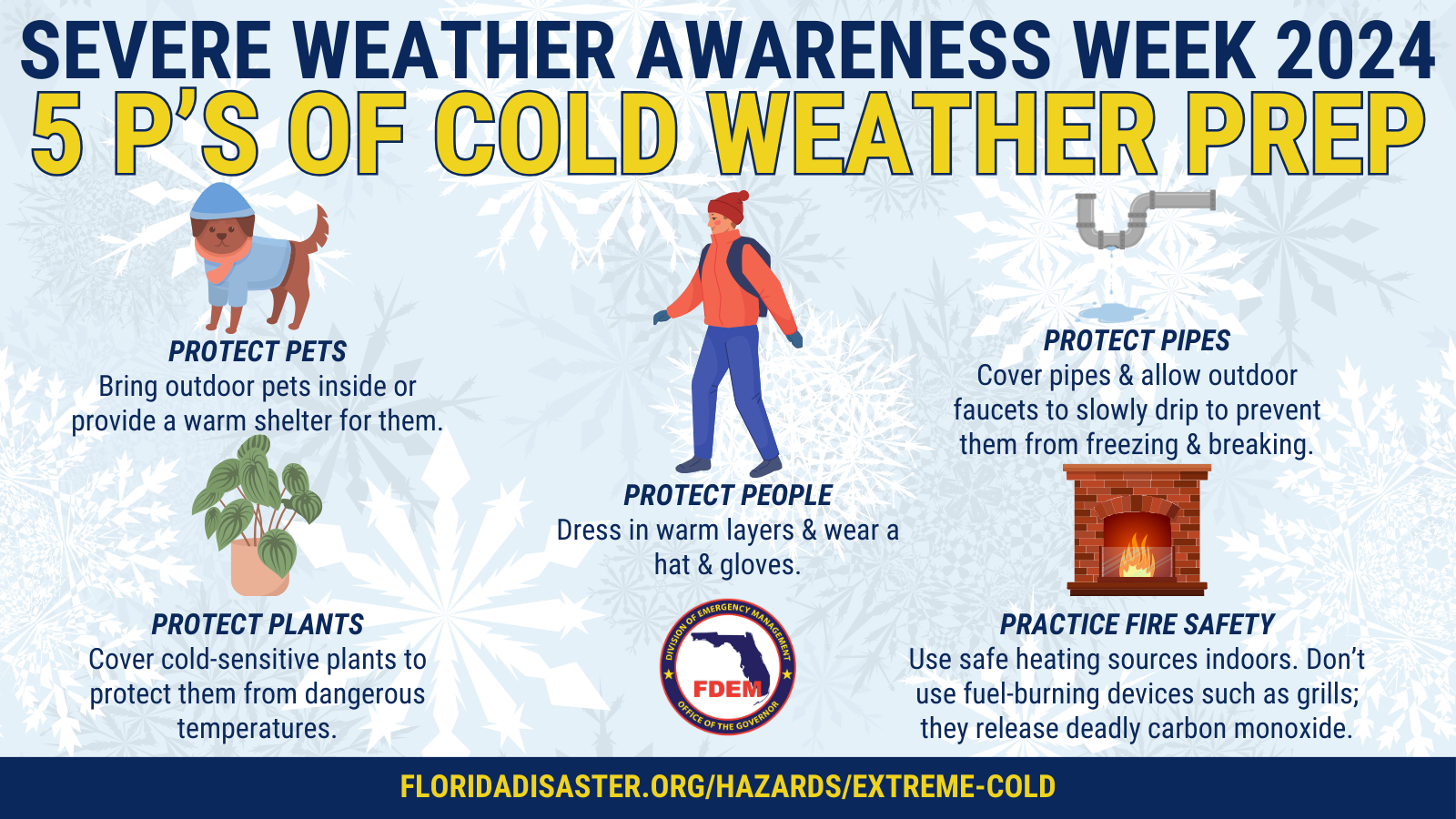
Though many people head south to escape the cold temperatures in the winter, it is not always warmer in Florida. Numerous severe cold outbreaks have affected the state with snow or ice, below freezing temperatures, and strong winds that produce bitterly cold wind chills. Strong winds can also make the air “feel” colder than it really is by removing the heat from our skin that our bodies generate. This is called the Wind Chill. Like high heat, very cold temperatures can also endanger humans. The National Weather Service will issue Wind Chill Advisories, Freeze Watches or Warnings, Hard Freeze Watches or Warnings, and Winter Weather Advisories and Winter Storm Warnings if cold and/or wintry weather will threaten an area. The coldest temperature recorded in Florida was -2-degrees (2-degrees below 0) Fahrenheit in Tallahassee on February 13, 1899! Floridians should remember the “Five Ps of Cold Weather Preparedness”: protecting people, plants, pets, exposed pipes, and practicing fire safety.
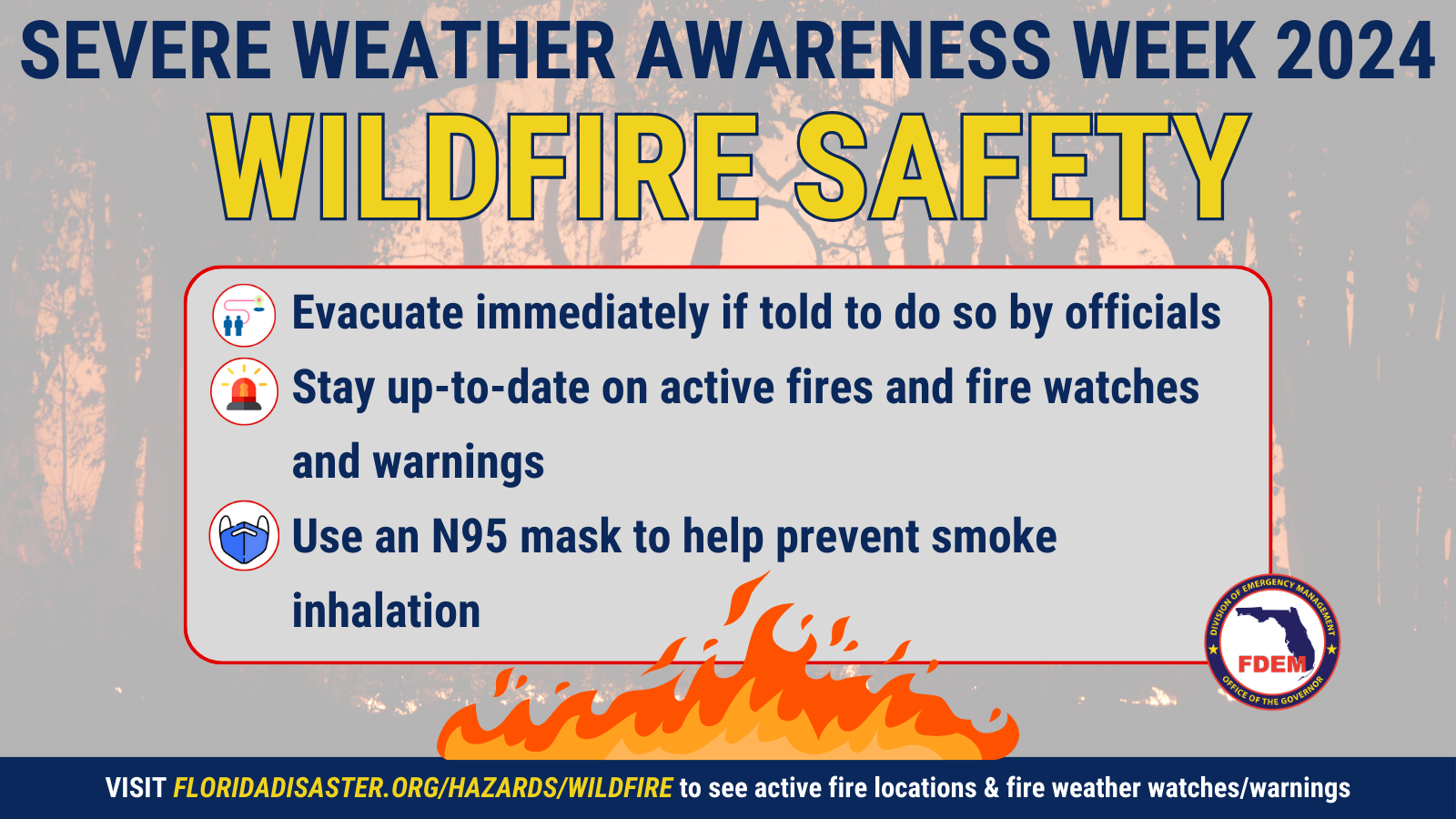
Not only should practicing fire safety be considered when trying to heat your home during the winter, but residents and visitors should practice fire safety outdoors since wildfire season in Florida is 12 months long. While wildfires can start at any time of the year, the State sees a peak of activity during the early, drier part of the year – beginning in January and continuing until the onset of more frequent rain, usually in early to mid-June. Fire Weather Watches and Red Flag Warnings are issued by the National Weather Service to alert people and land managers to potentially hazardous burning conditions that may add to wildfire danger and lead to the loss of control of a fire. A typical year in Florida will see over 3,000 fires burn nearly 163,500 acres of land. In 2023, there were 2,724 wildfires across the state burning nearly 103,000 acres. Reduce your risk by preparing now, before wildfire strikes. Meet with your family to decide what to do and where to go if wildfires threaten your area.