Welcome to the DC 2050 Insider! Get the latest on what we’ve been up to and what’s coming up.
The DC Office of Planning (OP) has been working alongside DC residents, community organizations, businesses, and elected officials to develop DC 2050, the District's next Comprehensive Plan.
In this edition:
 |
|
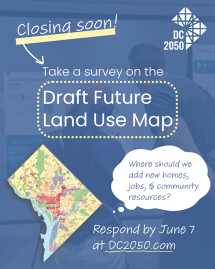
If you haven’t shared your input in our online tool, please do so before it closes on June 7.
You can review proposed land use changes for the full District and each individual ward and respond to questions to tell us what you think. We are also seeking input for our new approach to small area plans.
|
Next, we’ll be stepping back from engagement to assess the input we’ve received, revise the draft future land use map, and coordinate across DC Government to draft the full plan. Our next public comment period will begin in September.
Focus Groups
When we hold events and post surveys online, we hear mostly from highly involved residents who face less barriers to participation. So, we are going directly to the people we’re not hearing from to hold focus group discussions.
We’ve held a total of 20 focus groups with communities underrepresented in our workshops and online surveys, with 17 of those taking place in the last two months. We’ve met with:
- Older adults
- District residents with disabilities, caregivers, and service providers
- Adult learners
- Aspiring homeowners
- Teens
- Renters in Ward 7
- Current and former public housing residents of Ward 1 and public housing residents in Ward 6
- Families living in short-term family housing
- Spanish and Amharic speakers with limited English proficiency
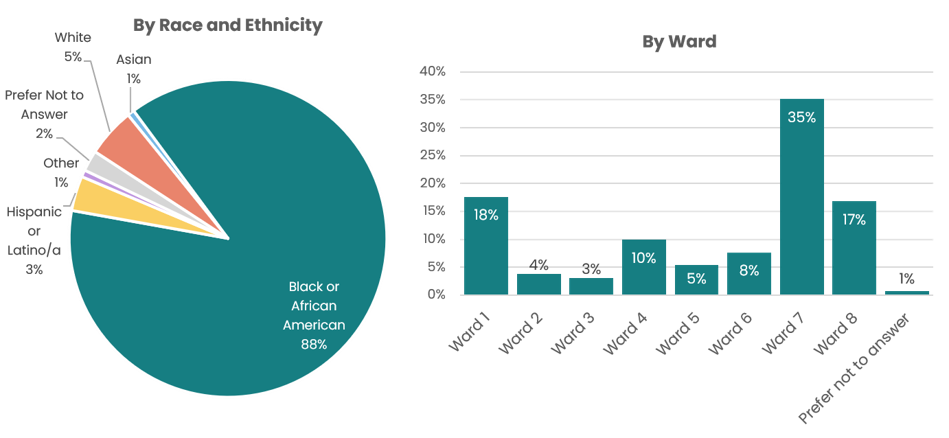
Because we’re intentionally partnering with organizations that serve underrepresented groups, the demographics of focus group attendees are very different from our other engagement forums. Here’s a look at how the race and ward of focus group participants compares with everyone we’ve engaged during this phase, from September 2025 through now.
Who We’ve Reached Overall in Phase 2
Total: 2,800 people
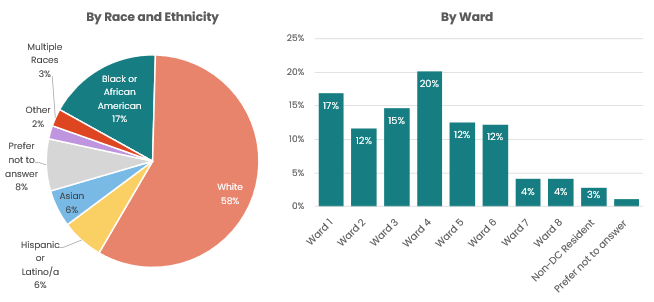 Who We’ve Reached Through Focus Groups
Total: 131 people
Grant Activities
We awarded three grants to nonprofits to expand our engagement reach. Here’s a look at what they’ve been up to since they began supporting DC 2050 in March.
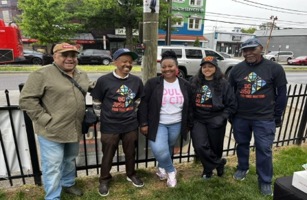
Congress Heights Community Training and Development Corporation
-
Leading outreach to: Ward 8 residents in Congress Heights, Shipley Terrace, Bellevue, Anacostia, and Buena Vista
-
Using: trained community liaisons, pop-up events, street outreach, and focus groups
-
Accomplishments: 10 trained liaisons holding events and canvassing in community gathering spaces
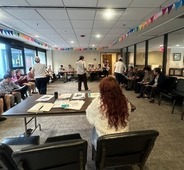
Many Languages One Voice
|
-
Leading outreach to: residents with limited English proficiency, especially Spanish, Chinese and Amharic speakers
-
Using: multilingual listening sessions, focus groups, and an education campaign
-
Accomplishments: five events that have introduced DC 2050 to brand new audiences
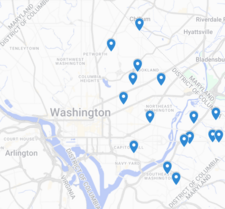
The Coalition
|
-
Leading outreach to: neighbor networks in Wards 5 and 7
-
Using: front porch conversations led by recruited and trained hosts that connect lived experience to comprehensive plan policies (see map of events to the right)
-
Accomplishments: recruited and trained hosts for 19 scheduled events
|
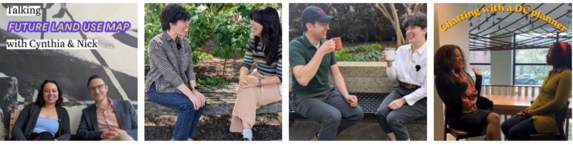
We’ve been taking our Director and staff to social media to answer some frequent questions we hear. Check out this series on our social media feeds or finds links at DC2050.com!
Topics we’ve covered so far include: what the future land use map is and does, transit-oriented planning and development (in collaboration with DDOT), how we calculate future housing estimates, and why people should participate in comprehensive planning. What do you want our planners to talk about next? Send us an email at opcomms@dc.gov!
We’re working to release the full draft of DC 2050 in September, which will be open to the public for input. Here’s what we’re focusing on over the next few months to get there:
-
Now through August
- We are assessing all feedback, revising and reviewing the future land use map to understand potential impacts of different scenarios, and coordinating proposed land use policies across DC Government.
- We’ll also continue to table at select events throughout the summer. See the list at the bottom of this email and follow us on social media for new schedule additions.
-
Mid-September – We plan to publish the full draft of DC 2050 and open our public comment tool.
-
Late September through October – We’ll hold a series of public meetings and other forms of engagement to speak with residents about the plan.
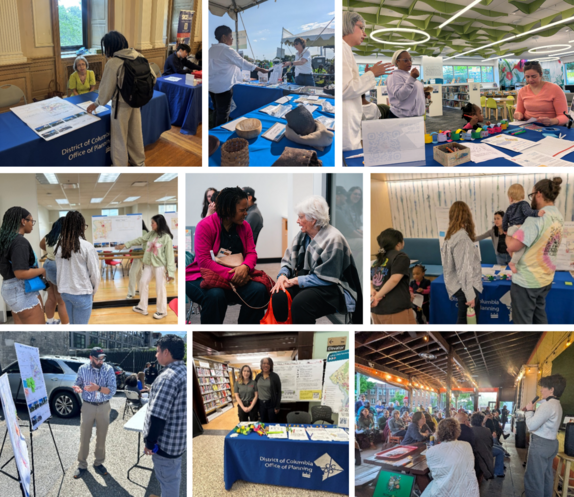
Since our last newsletter two months ago, we’ve held 17 focus groups, visited two high schools, tabled at 12 events, and presented to 24 organizations, including ANCs, civic associations, and other stakeholder groups. See a list of upcoming events below followed by snapshots from recent events.
Neighborhood Library Tabling Series (“Meet Us At the Library”)
-
June: 6/29 at Rosedale Library (1701 Gales St NE) – 4-5:30pm
-
July: 7/28 at Woodridge Library (1801 Hamlin St NE) – 3:30-5pm
-
August: 8/13 at Takoma Park Library (416 Cedar St NW) – 3:30-5pm
-
September: 9/24 at Tenley-Friendship Library (4450 Wisconsin Ave NW) – 3:30-5pm
 In this section of our newsletter, we share questions we've heard from residents.
Question: How are our population and job estimates calculated and how often are they updated?
Answer: Our office works with jurisdictions across the region through the Metropolitan Washington Council of Governments to forecast long-term population, household, and job growth numbers. We update the forecast about every two years and generally err on the side of optimism, so we don’t under-plan for potential growth. This report provides the latest growth forecasts for the region including the District. We have also published a detailed explanation of the methodology used in the forecasting process on our website.
Many people have asked why we are not updating the projections to account for federal job losses, increased unemployment, and decreased tax revenues in the District. During periods of significant uncertainty, we sometimes cautiously revise or hold off on revising our forecast until trends settle, as we did during the COVID-19 pandemic. While populations and jobs can fluctuate in the short term, short-term patterns don’t always last and recovery often follows. We’re analyzing the data as we develop DC 2050 to better understand if a long-term shift is occurring and how quickly recovery may happen. Our analysis indicates that the District will continue to grow over the comprehensive plan’s 20-25-year time horizon, based on employment trends and domestic and international migration.
If you have a question on DC 2050, please email it to us at dc2050@dc.gov.
|