|
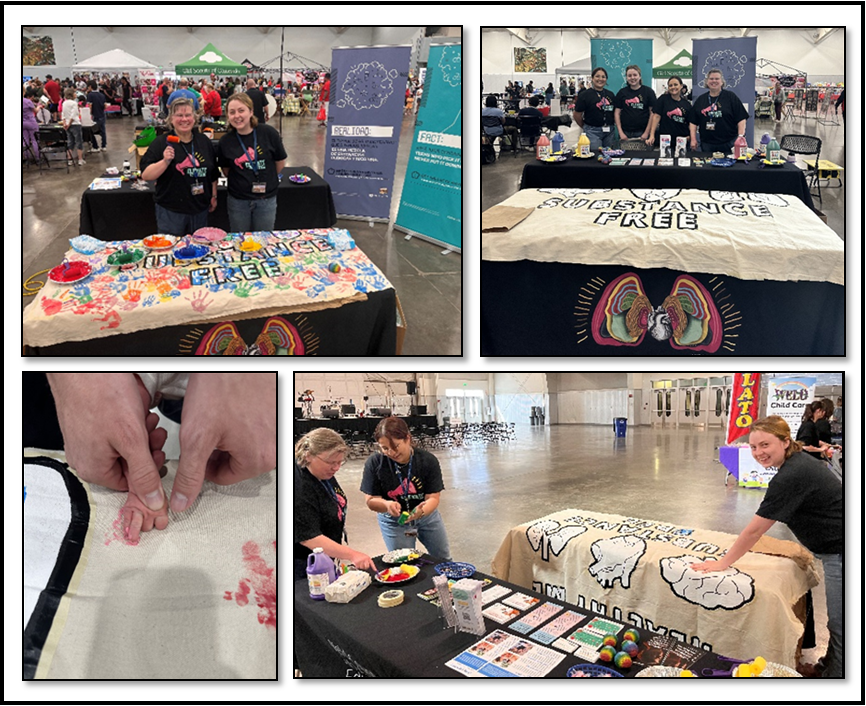
On April 12, the Weld County Tobacco Education and Prevention Program joined families at the Annual Northern Colorado Children’s Fest at Island Grove Regional Park, hosted by United Way of Weld County.
This event brought together dozens of community partners with a shared mission: to help every Weld County child thrive. Designed for kids ages up to eight years old, the festival featured games, play-based learning, and hands-on activities for the whole family.
Our team hosted a fun, interactive art project, a 5ft x 3ft canvas filled with colorful handprints from children and their parents. The message: “Healthy Me, Substance Free.” It's not just about avoiding harmful substances but making choices that protect our lungs, our minds and our hearts.
Even our tiniest participant, just three weeks old, got in on the fun!
Denver’s plan to ban the sale of most flavored nicotine products is now on hold. A group of tobacco and vape retailers gathered enough verified petition signatures in May to challenge the ordinance, pushing the final decision to Denver voters this November.
The delay gives the tobacco industry more time to continue targeting youth with flavored products. Research shows 81% of youth and 86% of young adults start using nicotine with flavored products. But it’s not just the taste — marketing plays a major role, too.
Flavored nicotine products often come in appealing blends like cool cucumber or mysterious names like “Unicorn Poop” and “Blue Dream.” These so-called "concept flavors" make it difficult for enforcement agencies to determine whether a product meets the legal definition of flavored.
Many of these products also contain volatile organic compounds linked to health issues like eye and throat irritation, nausea, headaches — and at certain levels, damage to the liver, kidneys and nervous system. Some flavors even contain diacetyl, a chemical tied to a serious and irreversible lung disease known as popcorn lung.
As Denver prepares for a November vote, the conversation continues about how to protect young people from the harms of flavored nicotine products.
Sources:
 Before you quit smoking, you can start preparing yourself to increase your chances of success. Each time you reach for a tobacco or nicotine product, consider what specific trigger is prompting you to use it:
-
Feeling stressed
-
Finishing a meal
-
Drinking coffee
-
Experiencing a craving
Then, start brainstorming what you could replace tobacco with—or how to change the habit you may have reinforced thousands or even millions of times over the years:
-
Feeling stressed: Try deep breathing, jumping or dancing around for a few seconds, rolling your shoulders or calling someone to talk.
-
Finishing a meal: Immediately pop a piece of gum or hard candy into your mouth to introduce a different flavor you don’t associate with tobacco, brush your teeth or grab a fidget toy to keep your hands busy.
-
Drinking coffee: Try drinking your coffee in a place where you don’t smoke or vape, switch to iced coffee instead of hot or change the flavor of your coffee to start altering your associations. (Just a note: It’s usually not recommended to quit caffeine at the same time as nicotine!)
-
Experiencing a craving: Practice waiting five minutes when a craving hits. This helps you prove to yourself that the urge will fade, and then you can decide whether to smoke or to reduce your nicotine use as you approach your quit date.
Planning ahead is important. Once you quit, you’ll need to problem solve throughout the day to manage your triggers, and nicotine withdrawal doesn’t exactly make problem solving easy. The more strategies you have in place beforehand, the more prepared you’ll be to stay tobacco-free.

Here are some quick and fascinating facts about the brain and heart — two vital organs affected by tobacco use:
Your brain isn’t fully developed until your mid-to-late 20s.
That’s why teens are more likely to take risks or make impulsive decisions, the part of the brain that helps with planning and impulse control (the prefrontal cortex) is still developing.
Your brain generates enough electricity to power a 25-watt lightbulb.
That’s some serious brainpower!
Your heart pumps about 2,000 gallons of blood every single day.
It keeps your entire body running, let’s give it the support it deserves.
Understanding how powerful your body really is can help remind you why it’s worth protecting, especially from things like nicotine, which interfere with both brain and heart health.
Sources:
|
On May 18, communities across the nation observed No Menthol Sunday, an annual day of action held every third Sunday in May to raise awareness about the impact of menthol tobacco on Black communities.
Menthol and other flavored tobacco products have long been used as tools of predatory marketing, disproportionately targeting Black neighborhoods and youth. No Menthol Sunday brings together faith leaders, public health advocates and community members to speak up, educate and push for meaningful change, including laws to remove menthol and other flavors from tobacco products.
While the final decision on removing menthol from the market is still pending at the White House, now is the time to support culturally competent education, outreach and access to resources that protect Black health and lives.
How Can You Still Participate?
-
Partner with community groups to share information on tobacco-free policies and the harms of flavored tobacco.
-
Offer free Nicotine Replacement Therapy (NRT) to support those ready to quit.
-
Promote the Colorado QuitLine: 1-800-QUIT-NOW
For more information, visit:
More than 26 million Americans live with asthma, a chronic lung disease that causes inflammation and makes it difficult to breathe (American Lung Association, 2025).
During Asthma Awareness Month, we’re reminding everyone that clean air matters. Smoking and exposure to secondhand smoke can trigger asthma attacks, worsen symptoms and even lead to the development of asthma, especially in children.
This month is a chance to take small steps that make a big difference. Quitting smoking, reducing indoor allergens and supporting tobacco-free environments can help people with asthma breathe easier and live healthier lives.
Want to learn more? Visit the American Lung Association for tools and resources.
|