|
Letter from the director
As we navigate one of the most challenging regulatory landscapes the oil and gas industry has ever faced in Colorado, it’s more important than ever to lead with facts, collaboration and a shared vision for our future.
Weld County remains committed to responsible energy development — not just because it's part of our economy, but because it funds what matters most: our schools, roads, public safety and the future of our communities. Oil and gas routinely contributes over $600 million to K through 12 education and higher in Colorado, according to the Colorado Oil and Gas Association. These are real, tangible benefits — especially in rural counties where every tax dollar makes a difference.
That’s why events like the Energy Symposium in Rifle, which Weld County attended in April and you can read about in this issue, are so important. They offer a rare space for open dialogue between regulators, operators and local governments. We’re not just talking about regulations — we’re tackling real-world implementation challenges: electrification, permitting delays, produced water recycling and evolving emissions standards.
Weld County is proactively proposing to update our code to ensure consistency with the Energy and Carbon Management Commission (ECMC), not to increase burden but to bring predictability and practicality to a system under strain. We're committed to science-based regulation that balances environmental protection with economic reality.
Together, we can lead — not just defend. And if we want Colorado to continue benefiting from safe, responsible energy, we must define that path forward — before it's defined for us.
Let’s keep leading the way.
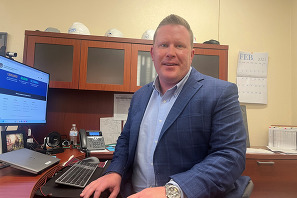
Brett Cavanagh, Director of the Weld County Oil and Gas Energy Department
|
|
|
|
By Baker Geist, Weld County Communications Specialist
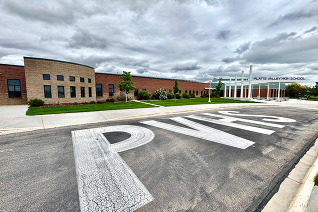
When Darren Horn thinks about how far the technology and computer sciences program at Platte Valley High School has come over his 25-year career, he can’t help but laugh. As he’s set to retire, his reflection brings both surprise and appreciation.
“It wasn’t always like this,” he said, thinking how the facility he’s taught a variety of subjects in has evolved over two decades. “The computers, I have 3-D printers, I have large layout printers, a laser engraver — all these things have grown over time.”
The latest evolution literally took flight this year, with a drone program. Twelve students learned to fly a drone, gaining hours they can use to earn certification through Aims Community College, an accomplishment that can give them a head start toward a college degree in an aspect of computer science.
|
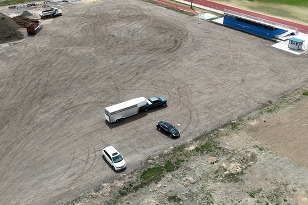
The start-up costs of the new program could’ve proven prohibitive — the curriculum, the six months of training Horn needed to teach the class and the purchase of 12 drones, five of which totaled $1,500 each. But it was all possible thanks to the continued contribution of both the oil and gas industry and residents in the RE-7 school district over the years.
Platte Valley’s current assessed value for Fiscal Year 2025 is just over $3.1 billion, with 93% of that coming from oil and gas, a figure that Platte Valley Superintendent Jeremy Burmeister said can turn an idea, like a drone program or the growth of a computer sciences program, into reality.
“It makes it possible,” Burmeister said. “We have the basics we have to provide, and when you have additional resources, it allows you to expand above and beyond those basics to provide better services and opportunities for our kids and our families.”
The drone program is only one of the byproducts of oil and gas’s contribution to Platte Valley. What’s been referred to as a partnership between oil and gas and residents has allowed for the passage of many bonds and mill levy overrides (MLOs), which Burmeister said have been utilized since the late 1990s.
MLOs have allowed for the hiring of more staff, meaning smaller class sizes. Numbers on Platte Valley's website show the district having an average student-to-faculty ratio of 14-to-1, well below the state’s average of 17-to-1. The individualized attention and specialized courses these small class sizes allow have helped students excel. Burmeister said graduation rates have stayed consistently in the high 90% range, SAT scores have outperformed state averages and students have received distinguished scholarships — an even more impressive feat considering the high school has an enrollment of just over 300 students.
|
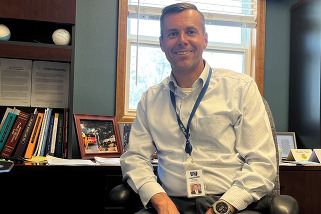
“We’ve had a Daniels Fund or Boettcher’s Scholar winner in six of the last seven years,” Burmeister said. “I’ve been at much larger schools, I’m talking 1,300-plus (students), that didn’t have one.”
While MLOs have assisted with operations, bonds have allowed Platte Valley to upgrade facilities, do needed HVAC replacements and fund the construction of a new middle school, all with a small impact on residents in the district, due to oil and gas’s assessed value picking up a large portion of the tax implications — an action Horn has seen repeated throughout his career.
“In the early years, we were in this crossroads of not passing a bond issue, and then oil and gas steps up when we do,” he said. “Our property values go up, but the tax burden basically stays the same for most people.”
For all its benefit, oil and gas can be a somewhat unstable commodity, greatly affecting assessed values from year to year, something Weld County occasionally experiences in its budget. Just as Weld County budgets carefully, Burmeister said Platte Valley follows suit, with careful and and strategic planning, which has allowed the district to comfortably carry on when oil and gas production dips.
Ever the optimist with belief in staff and students, Burmeister's grateful for the significant impact and contributions of the oil and gas industry. Those contributions, along with the support of the community, have raised the district to new heights.
The drone program is just the latest example.
|
|
|
|
By Baker Geist, Weld County Communications Specialist
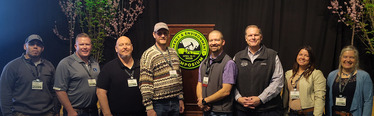
In August 2019, when Weld County opened its Oil and Gas Energy Department (OGED), it was a move that turned heads and raised questions about the county’s ability to regulate surface site permitting.
Fast forward nearly six years later, and the move — along with state-leading oil and natural gas production — is one that’s established the county as an expert. Every year, by attending the Energy and Environment Symposium in Rifle, the county gets to share its knowledge with others, while learning about the challenges that might be facing energy as a whole.
Call it Weld County serving as a resource beyond its borders, it’s an opportunity that excites Weld County Commissioner Jason Maxey every April.
“Being able to talk to industry partners, being able to talk to other local governments and other jurisdictions like fire districts, even state agencies — that type of networking is invaluable,” Maxey said, reflecting on his attendance since 2019. “You (meet) operators or staff and make that connection.”
Those connections are made over the course of two days, when representatives from counties, municipalities, state agencies and the oil and gas industry are treated to several panel discussions on a variety of topics. Discussions at the 2025 symposium ranged from regulatory updates from Colorado’s Energy and Carbon Management Commission to how the economics of oil and gas may impact state revenue. One discussion, which Maxey participated in as a panelist, focused on challenges surrounding permitting, before evolving into a discussion about the impact of artificial intelligence (AI) on permitting or how to maximize staff to perform various functions.
“We’re meeting with our IT director fairly routinely to talk about AI implementation and how it could be used in certain things such as permit intake or review of certain pieces of the application. … It’s a matter of knowing what efficiencies you can gain,” Maxey told the panel.
|
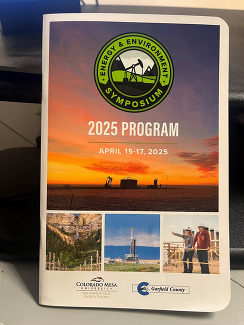
The goal of panel discussions isn’t to seek agreement but rather provide possible solutions for counties, municipalities or agencies experiencing similar issues. Brett Cavanagh, Weld County OGED Director, said the conversation often continues during networking breaks throughout the event, where people can have face-to-face discussions, which further connections, and educate and facilitate understanding.
“Having those open dialogues allows us to work through things,” Cavanagh said. “You get more insight into what they’re thinking about and how they’re handling issues.”
The connections made during the symposium don’t end after the event. In fact, questions raised at the symposium about how Weld County handles various aspects of permitting have since led Cavanagh to touch on various aspects of what the OGED does at operator and planning meetings. Those aspects can include elements of permitting or highlighting how Weld County can assist municipalities through intergovernmental agreements, like the ones signed with Evans and Keenesburg in 2022 and 2023, respectively.
The information shared has allowed the OGED to become an even greater resource. Cavanagh said officials from Frederick are making plans to shadow the department’s inspectors and learn more about county processes, and he continues to have discussions with counties, like Arapahoe, when the county has questions about oil and gas code.
|
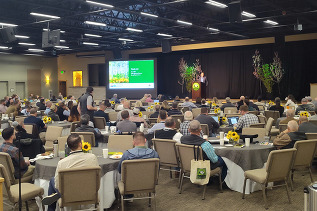
“All this came from Rifle (and from) understanding the importance of open dialogue, open discussions and building out these relationships,” Cavanagh said.
Maxey, who served as the director of the OGED prior to becoming a commissioner, has seen the symposium grow for several years. He’s enjoyed the event and being accompanied by fellow commissioners, members of the OGED, the Weld County Office of Emergency Management and Weld County Department of Public Health and Environment.
What’s most enjoyable to both he and Cavanagh, however? That’s easy: seeing Weld County lead in an important industry and the opportunity for the OGED to be beneficial in many ways.
View panel discussions from the 2025 Energy and Environment Symposium.
|
|
|
|
Q: When I see oil and gas in the news, I often hear about flowlines and gathering lines. What's the difference?
A: A flowline refers to segment of pipe transferring oil, gas, condensate, water or geothermal resources from a well head or processing equipment to a gathering line or approved pipeline for disposal, discharge or use.
A gathering line focuses on transporting just the gas from a production facility to a natural gas processing plant or transmission line or main line.
Have more questions about energy in Weld County? Reach out to the OGED.
|
|
REMEMBER: CONTACT 811 BEFORE DIGGING |
|
 |
|
Contact 811 before digging even a few inches underground. It can help ensure personal safety and the integrity of underground utilities. Learn more at Colorado811.org. |
|
|
|
|
|