|
By Brian Hughes, Communications Specialist |
|
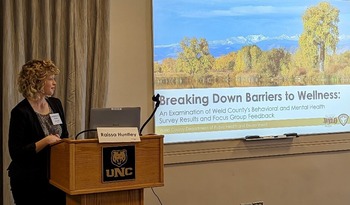
Every three years, thousands of Weld County residents receive an envelope in the mail with an invitation to share their experiences, concerns and health habits. This is the Weld County Community Health Survey, and while the survey itself takes just minutes to complete, the work behind it spans years — and few people understand that process better than Raissa Huntley.
Huntley, the Senior Health Data Analyst for Weld County, plays a central role in bringing the survey to life. From its design to data collection, analysis and final reporting, she and her team ensure every response contributes to a clearer picture of public health in the region. But for Huntley, this work is more than statistics — it’s a deeply personal journey shaped by her passion for storytelling, public health and making a difference.
From words to numbers
Unlike many in her field, Huntley didn’t start out in public health. With a background in literature and a love for narratives, she was drawn to how stories shape public understanding.
“I really like thinking about the way that the stories we tell affect how we treat and prevent disease and what resources are allocated to that,” she recalled.
Her path took a turn during the early days of the COVID-19 pandemic. As she pursued a master’s degree in public health, she found herself in the thick of real-world crisis response, working as an intern managing data for Weld County’s COVID-19 dashboard.
“It was chaotic, stressful and an awful time for so many,” she said. “But working with data gave me purpose and a way to help.”
That experience led her to switch her concentration of study to epidemiology and when a full-time position with the county opened, Huntley seamlessly stepped into the role, eager to build on the legacy of community-driven data collection.
A survey built for the community, by the community
|
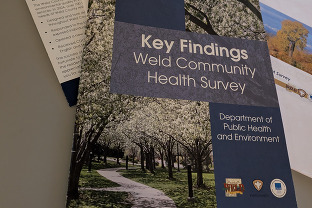
Since 2007, the Community Health Survey has been a cornerstone of public health efforts in Weld County. Conducted by the Weld County Department of Public Health and Environment (WCDPHE), the survey is distributed every three years to a randomly selected sample of households.
The survey’s findings serve multiple purposes. They help identify health priorities, provide evidence to support policy changes and increase public awareness of how individuals, organizations and local leaders can create a healthier Weld County. Above all, the survey fosters an ongoing dialogue about health concerns, ensuring that public health initiatives are aligned with residents’ real-world experiences.
Designing the Community Health Survey is no small task. The process begins with conversations with stakeholders — lots of them. Huntley and her team meet with local organizations, healthcare providers, and community groups to identify emerging health concerns.
"We hold stakeholder meetings with organizations that we regularly work with or who we know use our data — the Thriving World Coalition, Sunrise, North Range Behavioral Health, Intermountain Health, the Department of Human Services and many other organizations,” Huntley said. “We ask them what emerging concerns do you have that you want to see addressed? Which of these measures are you no longer using, et cetera. It's always driven by what people are telling us they need or want to know.”
Questions must meet a rigorous standard before making it into the final survey. One of Huntley’s team members, Health Data Specialist Carter Vogel, explained that the team goes through a series of internal checks before a question can be considered.
“One of our first things we ask, is it something that can even be measured or asked on a survey? Is it something that is useful? Is somebody going to be able to use the results of this question and do something with it?," Vogel said.
Turning data into action
|

This year, 20,000 households will receive the survey, and Huntley hopes to exceed the 11% response rate from previous years.
“The more responses we get, the better we can understand our community,” she emphasized.
Once responses are collected, the work is not even close to being finished. The data collected is then compared to census data and weighted to reflect the county’s demographics, minimizing bias that might influence the results, to try to get even representation from all kinds of people throughout the county.
“We can’t survey every single resident, so we use statistical weighting to ensure our sample accurately represents the community,” she explained. “For example, if we get fewer responses from young adults, we adjust to make sure their experiences are properly reflected.”
Then the data team will generate layers of data from every single question that's on the survey. “We are generating output for each variable and then within each variable for every single demographic group,” Huntley said. “Then we are conducting a test of significance using a chi-square test to prioritize reporting on differences between groups that are statistically significant. And so that's what feeds into our reports and our presentations.”
The results shape Weld County’s Community Health Assessment and Community Health Improvement Plan and identify key insights influencing everything from grant funding to public health initiatives. Organizations like North Range Behavioral Health have used the data to fine-tune outreach efforts, while county programs adjust services and outreach efforts based on identified needs.
“We had data come back telling us that cost was still a huge barrier for seeking mental health care and that people were not aware of low-cost sliding scale services that are available. So North Range took that information, and they decided to boost their outreach, specifically advertising that they have sliding-scale services available. So it goes into our entire health ecosystem as far as program planning and where dollars are directed.” Huntley said.
The power of local data
For Huntley, the most rewarding part of her job is knowing that her team’s work supports those on the front lines of public health. “We’re not the ones providing direct health care or planning air quality outreach,” she said with a laugh. “But we help the people who do those jobs by giving them the information they need to make smarter, more effective decisions. It's really gratifying, and it makes our position super interesting.”
In anticipation of the current survey cycle, Huntley hopes more residents will recognize the value of participating.
“When you fill out this survey, you’re not just answering questions,” she said. “You’re shaping the future of public health in Weld County. Your voice matters.”
And thanks to Huntley and her team, it will be heard.
To learn more about the Community Health Survey and access previous reports, visit www.weldhealth.org.
|
|
|
The Weld County Community Health Survey, conducted every three years, gathers vital data from residents to guide public health policies and programs. |
The survey is designed through extensive collaboration with WCDPHE partner organizations to identify emerging health concerns and ensure the questions are actionable and relevant. |
Participation in the survey is important as the results directly influence local health efforts and resource allocation based on identified community concerns. |
|
|
miscellany: a group of or collection of different items.
-
Weld County is working on improving the way we serve you! We want to hear from you about how we can make our programs, services and engagement efforts better. Your feedback is vital in helping us create a roadmap for making our community stronger and more connected by helping the county understand what you need in housing, government services and transportation safety. Take a few minutes to complete our surveys below and make your voice heard! Your input matters and will guide future decisions for a brighter Weld County. https://www.weld.gov/Go/Input
-
The first issue of the Weld County Energy Line debuts tomorrow, April 2. Meet the director of Weld County’s Oil and Gas Energy Department, learn how and why the department came to be and how it serves as a meaningful conduit between residents and the energy industry. The first issue is just a glimpse of what’s to come in this bimonthly energy-focused newsletter. Subscribe to it on the county’s newsletter sign-up page. Simply enter an email address and select “Weld County Energy Line.”
-
April is National Volunteer Month. Weld County has several ways to get involved, including joining one of 19 advisory boards and commissions. To learn more about open positions, visit https://www.weld.gov/go/BoardOpenings. The Area Agency on Aging also has volunteer opportunities at senior nutrition sites across Weld County. Learn more by contacting Donnica Fagan at DFagan@weld.gov or by calling (970) 400-6132.
-
Weld County is rolling out a new application process, inviting qualifying organizations to submit letters of interest for the 2025 Private Activity Bonds (PABs). These tax-exempt bonds are designed to support projects that will help expand affordable housing, boost the local economy and promote community development right here in Weld County. PABs provide private businesses and nonprofits with a way to secure financing, with the county acting as the issuer. The key thing to note is that the county doesn't take on any debt, so there’s no impact on taxpayers. Letters of interest are being accepted through May 2, 2025. For more details, visit weld.gov and search for "Private Activity Bonds."
|
|
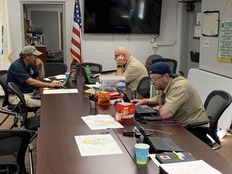
Resiliency, planning, communication and coordination. These traits, combined with the effort of a Weld County Office of Emergency Management employee, helped one South Carolina city in its response to Hurricane Helene in 2024. Learn more in the next issue of County Roots.
|
|
|
|
Welcome to County Roots, the official newsletter of Weld County Government. For those of us who work in county government, we think what we do is pretty interesting. So the goal of this newsletter is to highlight some of the partnerships, technology and efficiencies we are using to make government stronger and more effective for its residents.
Our goal is to establish regular communication with residents, spur interest in county projects, highlight county accomplishments and provide meaningful information to the public. In fact, our goal is to live up to the name “County Roots.” Want to know more about the meaning behind the name? Please visit our webpage, where you can also find previous editions of this newsletter.
|
|
|
|
|