|
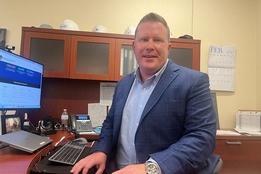
Welcome to our first edition of the Weld County Energy Line!
This publication will highlight the critical issues surrounding energy production, sustainability efforts and the importance of health, safety and welfare within the county concerning surface permitting and locations. We'll also share valuable insight and details about the work we are doing to support both the local economy and the environment.
In the ever-evolving world of oil, gas and energy, staying informed and committed to sustainable practices is essential for ensuring a prosperous future. The work that the Oil and Gas Energy Department (OGED) does plays a crucial role in shaping the energy landscape for our county, benefiting our community, workforce and the economy.
One of our key focuses is education, which helps bridge the gap between energy development and the people we serve in the county. By providing valuable insight into the energy industry, we empower the community with knowledge about the benefits, challenges and environmental impacts of oil and gas production.
Sustainability is at the heart of our mission. As we look to meet the growing demand for energy, we remain committed to practices that minimize both environmental harm and impacts to the health and safety of the people of Weld County. We also advocate for policies that support all energy, ensuring a balanced approach to our county's long-term energy needs.
Through this newsletter, we hope to provide you with the knowledge you need to better understand how energy impacts your life and why education, innovation and safety are at the forefront of our department's mission. Whether you're a local resident, an industry professional or just someone interested in the future of energy, this newsletter will keep you informed and engaged.
Thank you for joining us on this journey to a brighter, more sustainable energy future.
Brett Cavanagh, Director of the Weld County Oil and Gas Energy Department
|
|
|
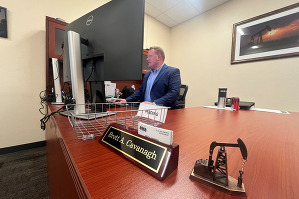
By Baker Geist, Weld County Communications Specialist
Passion.
It’s the one thing Brett Cavanagh has never lacked. It’s fueled a career spanning more than 16 years working in and advocating for the energy industry.
So, when he saw an opportunity to take a take on a new challenge — leaving the private sector to become the new director of Weld County Government’s (OGED) — he let his passion make the decision.
“I saw a need, an opportunity to bring my experience. I love the industry, it’s a passion of mine, and I don’t want to see it go away,” Cavanagh said. “In all aspects, energy is life … it’s the jobs it provides and the economy it provides. We wouldn’t be Weld County without oil and gas.”
The roles he’s had throughout his career are vast and reflect a deep skillset — one that understands the positive impact of energy and the ability of the OGED to meet its original mission: serving as a conduit between residents and the industry. Cavanagh will now work to find solutions that work for all.
He’s worked as a land director/manager for many different companies, doing everything from helping acquire land to working with landowners to negotiate leases. He’s familiar with transmission and right-of-way acquisition, as previous roles saw him coordinate efforts among landowners, legal counsel, real estate support services and other project stakeholders. He’s also familiar with Weld County’s Oil and Gas Location Assessment (WOGLA) process, which debuted when he was working for Western Midstream (formerly Anadarko). Each position held speaks to experience and an understanding of the need to work with residents — skills that caught the eye of Weld County leadership when Cavanagh was initially hired last year, before becoming director in December.
“Brett brings experience that can blend nicely with the department to show its benefit while protecting our land use processes and the health, safety and welfare of our residents, just like our code requires,” Weld County Commissioner and former OGED Director Jason Maxey said.
“It’s about safety; that’s something very important to me,” Cavanagh added, alluding to it being a priority in current and future Weld County Code requirements. “There are certain things we’re going to be tough on, things like safety and preserving the environment … The rules and regulations (the board approves) I want to be proud of those.”
The balance of overseeing the WOGLA process, ensuring the state’s regulations aren’t duplicative or burdensome to the industry and preserving health, safety and welfare of the public and environment is already underway. Since becoming director, Cavanagh’s spent time researching the state’s priorities related to oil and gas development, knowledge that is critical to understanding changing regulations and the challenges facing development in Weld County.
While its a lot to manage, Cavanagh said he’s looking forward to the challenge, viewing it as an opportunity to continue Weld County’s rich energy history and the benefit of the OGED through effective permitting, education and resourcefulness to residents.
Keeping the local in local control
The local control given to governments as part of Senate Bill 181’s passage in 2019 had one major effect. It allowed local governments expanded control over surface impacts of oil and gas operations.
To some counties, that meant the ability to adopt stronger requirements than SB-181 required, effectively creating a moratorium on oil and gas production.
To Weld County Government, it meant taking a positive step forward in favor of oil and gas; it meant solidifying its own permitting process, taking local control over land use in unincorporated Weld County and backing an industry critical to Weld County’s economy — one that routinely accounts for 60% or more of Weld County’s Government’s assessed value, funds millions to education and employs thousands of people countywide.
“We are simply doing what Senate Bill 181 allows us to do. We are claiming our 1041 authority to site land use for oil and gas,” Weld County Commissioner Scott James said in July 2019. “I am in agreement with Governor Polis in the fact that the best government is the government that is closest to home, and therefore this government, which is the closest to your homes, will take that authority and will continue to support the economic vitality of Weld County.”
Accepting local control required fully establishing the county's 1041 process through a three-reading process and doing something unusual for Weld County: growing government with the addition of a new department.
|
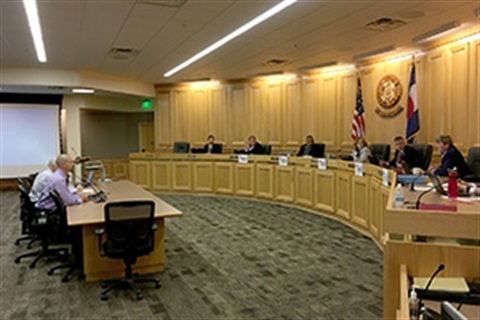
Opening the OGED on Aug. 5, 2019, was a step in firmly establishing local control over oil and gas permitting and land use. It’s opening also put pressure on the state to move permits forward, an action that stalled while work was done to change the mission of the Colorado Oil and Gas Conservation (COGCC) Commission (now the Energy and Carbon Management Commission). Despite the county signing an intergovernmental agreement with the COGCC later in August, requiring it to grant, deny or give a response on Weld County permits within 60 days of receiving them, in October, about six months after SB-181 passed, 5,530 well permits were waiting at the state level, 75% of those being from Weld County.
That very delay showed the need for a department like the OGED, as local agencies better understand the benefits and impact of oil and gas versus a state agency. Local government is also better equipped to serve as a resource for residents, something the OGED does by answering questions and educating the public about various aspects of production and sighting.
Over the years, the OGED has solidified its permitting process and worked effectively with landowners and the industry to ensure health, safety, and welfare. It’s work and accomplishments like those that Cavanagh hopes to build on.
|
|
|
By Baker Geist, Weld County Communications Specialist
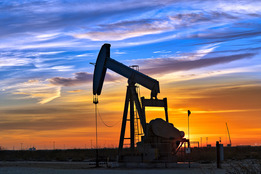
Weld County is the state’s leading energy-producing county, consistently responsible for more than 80% of the state’s oil and gas production and more than 50% of its natural gas production.
Breaking it down even further, about four-fifths of all of Colorado's crude oil production — eight out of every 10 barrels produced — comes from Weld County, according to the U.S. Energy Information Administration. In 2023, Colorado was the nation's fourth-largest oil producing state nationwide and eighth nationally in natural gas production.
Beyond the numbers, which show Weld County energy production fueling the state and nation, the energy industry is critical for many other reasons:
- It employs thousands in Weld County, and those who live and work here contribute to the local economy by supporting local businesses.
- Oil and gas is a top economic driver in the county. Although the exact number varies year to year, oil and gas routinely accounts for over 60% of Weld County Government’s assessed value, money that aids in providing many services to residents - be that maintenance and improvements on a transportation structure stretching more than 2,800 miles, award-winning 911 dispatch service, critical human and public health services and much more.
- A large portion of oil and gas revenue funds education statewide. In 2022, the figure was approximately $432 million, according to the Colorado Oil and Gas Association — a huge benefit to K-12 education.
Understanding the industry’s importance, Weld County Government has taken many actions in recent years to promote opportunity in the energy industry, pushing back against burdensome regulation while developing standards that promote the health, safety and welfare of the public and environment.
|
“Pushing back” came through the work of the Weld County Board of Commissioners in 2019 opposing Senate Bill 181, which the board believed disregarded the positive impact of oil and gas development across many sectors throughout the county and placed burdensome regulations on operators, which would lead to decreased production an various economic hardships. The board also argued the state’s championing of health, safety and welfare concerning oil and gas development was overreach, and that counties were in a better position to establish perimeters for both surface permitting and health, safety and welfare.
Local control eventually came through as an amendment to SB-181, which allowed local governments to regulate surface impacts of oil and gas including “the location and sighting of oil and gas facilities as well as oil and gas locations.”
While this addition allowed counties to enforce even stricter regulations than the state, it also allowed them to adopt their own rules and permitting process, something Weld County did by accepting 1041 authority, granted through House Bill 1041, passed in 1974. Such authority allowed the board to establish its own permitting process with regard to surface locations and health safety and welfare. This led to the creation of the Oil and Gas Energy Department (OGED) to oversee surface permitting and serve as a resource to residents and the industry with questions.
“What we’ll be able to do is put (our process) in place and maintain the certainty and stability of the oil and gas industry,” then Weld County Commissioner Pro Tem Mike Freeman told Denver 7 in 2019. ”We’ll also be able to make sure that we protect the health safety and welfare of the citizens, which we truly believe we can do better at the local level.
“We’re the elected officials that are accountable to the citizens of Weld County, not a state agency.”
Below is a recap of a few of the steps taken to support the industry, assert 1041 authority and create the OGED.
-
Commissioners oppose Proposition 112 – Calling it “reckless,” “devastating” and “unnecessary,” the Weld County Board of Commissioners opposed Proposition 112 in September of 2018. The failed proposition proposed a setback requirement of 2,500 feet, which in the eyes of the commissioners and the industry, would create a harmful burden on production, leading to lasting negative economic impacts.
-
Board accepts 1041 Authority – In June of 2019, the board formally accepted 1041 authority, giving the county local control over mineral resources in unincorporated Weld County.
Key highlights for the department
Although the department is still relatively young, it has accomplished a lot in its short history, both in terms of being an educational resource and streamlining its process with the state for a more seamless permitting process for energy exploration. A few big moments for the department include:
Streamlining its permitting process – In 2021, a memorandum of understanding was signed to reduce duplication and permitting timeframes as well as better streamline the permitting process between the Weld County Oil and Gas Location Assessment process and the state’s Oil and Gas Development Plan (OGDP).
Assisting communities with their permitting processes – Just as Weld County has 1041 authority and local control over mineral resources in unincorporated Weld County, the OGED as also helped municipalities implement their own 1041 regulations regarding oil and gas development. Intergovernmental agreements were signed with Evans in 2022 and Keenesburg in 2023.
Bringing further clarity to oil and gas permitting – In continuing to bring greater efficiency to the WOGLA process, the board approved changes to Chapter 21 of the Weld County Code in July of 2024. The changes clarified the approval process for solar energy facilities greater than 10 acres in size and submittal requirements for comprehensive development plans. The changes also gave the OGED the ability to review permitting for Class II, or injection wells, which were previously under the Department of Planning and Zoning, and Class VI (carbon sequestration) wells.
|
|
|
|
Q: I've heard the term wells and rigs? What's the difference?
A: Simply, a rig is a tool used to drill a well. A well is the hole in the ground serving as the entry point to extract minerals underground. A rig is temporary and removed once the well is drilled. A well remains throughout production and extraction of minerals.
As of the end of January 2025, there 15,502 active wells in Weld County. As of March 5, there are nine active rigs in the state, six of which are in Weld County.
Q: What steps are taken to ensure oil and gas companies operate with respect to lighting and noise so as to not disturb homes or businesses?
A: Per Chapter 21 of the Weld County Code, as part of the application process for a WOGLA permit, an operator must establish a noise mitigation plan subject to many different standards including time of day, distance from an exterior building unit and more. During the application process, acceptable noise levels may differ based on proximity to building units or input from the owners or occupants of those building units.
Similar consideration is given to lighting, with the operator required to submit a lightning plan explaining plans to mitigate the effect of lighting at a site. The OGED director can recommend different lighting requirements during construction and production of site by assigning different lighting zones based on many different factors.
Learn more about these requirements in the Weld County Code.
Q: There's much written about the impact of oil and gas in Weld County. What are a few of those important stats to keep in mind in terms of production.
A: As production of oil and natural gas is critical to Weld County in many different ways, those stats are important. Here's a look at production so far this year.
As production of oil and natural gas is critical to Weld County in many different ways, those stats are important. Here's a look at how production ended in 2024, and how it's started in 2025.
2024 totals
- Active wells: 15,564
- Oil produced: 180,619,367 barrels
- Natural gas produced: 137,878,752 BOE (Barrels of Oil Equivalent)
2025 numbers - As of the end of January.
- Active wells: 15,502
- Oil produced: 180,619,367
- Natural gas produced: 137,878,752 BOE
Have more questions about energy in Weld County? Reach out to the OGED.
|
|
REMEMBER: CALL 811 BEFORE DIGGING |
|
 |
|
Calling 811 before digging even a few inches underground can help ensure personal safety and the integrity of underground utilities. Before digging click or call 811. Learn more at Colorado811.org. |
|
|
|
|
|