|
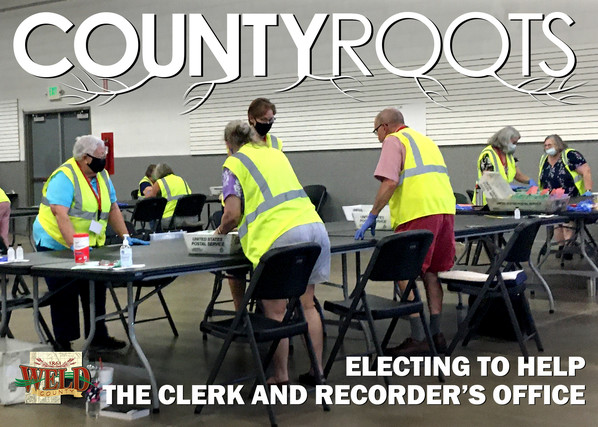
On a June day at the Weld County 4-H Building, Cathi Allred looks at thousands of voter signatures.
Armed with a mask and gloves, amid the COVID-19 pandemic, Allred is tasked with matching signatures on ballots to previous signatures from each voter as part of the Signature Verification Board. This small piece of the election pie helps the Weld County Clerk and Recorder’s Office ensure the primary election runs smoothly and is a secure event.
Allred serves as one of many volunteer election judges whose efforts were and continue to be invaluable in ensuring ballots are received and counted. Weld County Clerk and Recorder Carly Koppes is thankful for the help volunteers bring to the election process.
“I’m very proud of what my staff and these volunteers partner to do during each election and that the integrity of each election is maintained,” Koppes explained. “We had 124 election judges for this year’s primary and expect to have at least 500 for the upcoming general election in November.”
To help this process, and to have a fair election, judges are brought in to be unbiased, bi-partisan handlers of ballots each election day during the primary and general elections.
Ballots pass through the hands of each judge serving on one of four boards – the Receiving Board, Signature Verification Board, Opening Board and Counting Board.
Six hundred ballots per box start their journey at the Receiving Board. Similar to how UPS ensures mail is delivered correctly, these judges make sure ballots are transferred properly from the different voting locations to the Election Office via a chain of custody as well as date stamping return ballot envelopes. After being received, ballots enter the internal auditing process to see how many ballots the Election Office received.
When Allred receives a ballot at the Signature Verification Board, she’s continuing a process she’s participated in for several years. She now is the Signature Verification Board supervisor. Allred oversees a two-tier process where judges review signatures on a computer and mark it on the screen for verification. If a signature is rejected, the ballot escalates to the second tier. At this level, election judges review the signature again and make a final decision to accept or reject the signature.
“If the signatures don’t immediately match up against past ones, we hunt until we find something that matches,” Allred said. “If we don’t find a match, we send a letter to the individual asking them to come sign to verify their signature. If they don’t respond, their ballot is maintained, it just isn’t counted as a vote and the ballot is stored in the election archives.”
After Signature Verification, ballots make their way to the Opening Board. This is the secret service of the entire operation where judges open the envelopes, separating the return envelope from the voted ballot. They also make sure no damage has befallen the returned ballot. Koppes has seen her fair share of ballot mishaps. Back in 2016, a voter called in explaining that her cat ate her ballot. Coffee stains, food stains and drawings have also graced the sacred cardstock. To ensure the smoothness of processing ballots on Election Day, Koppes encourages residents to keep ballots away from Fido or the pot of spaghetti being cooked for dinner.
What happens next is a team effort between the ballot scanner and Counting Board. Ballots are run through the scanner. Properly scanned ballots are internally audited via the scanner while ballots that can’t be read — where the voter hasn’t clearly chosen a candidate, strikes through a candidate or stains the ballot — are duplicated and reviewed. Judges then manually tell the system how the ballot was marked. A replacement ballot is then created to be scanned. Ballots, including duplicated ones, are housed at a secure location for two years after each election.
At the end of the day — which can last until midnight — all the work put into Election Day and helping the Clerk and Recorder’s Office is worth it to Allred.
“If the Clerk and Recorder’s staff will have me back, I’m on board to help out with any election they need me to,” Allred chuckled. “I really like working with all the election judges and being a part of a team that is both conscious and careful when it comes to handling voter ballots.”
By Shaley Dehner, Weld County Communications Specialist
|