|
“Support agriculture 100 percent.” “Fix the potholes on county roads!”
Those are examples of just some of the feedback that can assist the Weld County Board of Commissioners in adopting updated comprehensive and transportation plans — frameworks that will guide commissioner and staff decisions related to growth, development and transportation in the future.
While COVID-19 halted commissioners’ plans to engage with residents directly at various town festivals and events over the summer, it hasn’t stopped their commitment to updating these plans this year or their desire to have as much public input as possible — something that can be achieved when visiting www.Weld2020vision.com by September 1 and filling out two quick surveys.
“While each plan has different objectives, both aim to create a county that reflects what our residents want to see whether it be increased industrial development, more attention to agriculture or improvements on county roads,” Weld County Commissioner Chair Mike Freeman said. “Our residents’ thoughts are critical to the process.”
It’s not only that Weld County is going to change sometime in the future, but that it is already changing. Still one of the nation’s best in agricultural production, Weld County has also seen tremendous urban growth and job growth earning the Greeley Metropolitan Area, which represents all of Weld County, recognition as the No. 20 “best performing large city” in the country, according to the most recent study by the Milken Institute. With the state demographer predicting nearly 710,000 people in Weld County by 2050, accommodating that growth is even more critical.
“There are challenges with compatibility that come with growth, such as preserving our agricultural areas and the pressing need for more industrial space,” said Tom Parko, Director of the Weld County Department of Planning Services. "Trying to figure out how to accommodate growth, as more people move to Weld County, in a way that makes sense from a land use perspective is the goal of the comprehensive plan.”
County Commissioners have continued to engage the public while developing a rough draft of the comprehensive plan. Residents who filed a land use case with the Department of Planning Services in the past five years were mailed a postcard encouraging them to take the surveys online. Meetings were held with municipalities and will be held with consultants from agriculture and real estate this week to get their feedback. More recently, posts on the county’s social media pages have reminded residents that their input is important in determining what they want to see in Weld County from a development perspective.
The expected growth and development arriving in Weld County puts added importance on Weld County’s transportation system to safely and efficiently meet increased demand. The system does not include CDOT roads or municipal roads, but rather 2,189 miles of gravel roads and 744 miles of paved roads the county maintains.
“Whether creating a residential subdivision or industrial park, you’re going to greatly impact traffic,” said Evan Pinkham, Transportation Planner for the Weld County Department of Public Works. “We’re trying to identify the areas of the county that will see growth and development and plan now for future impacts to our network.”
While Public Works’ priority is maintaining the existing transportation system, ensuring its safety through engineering is also important. Using metrics like crash data, daily traffic rates and road capacity, Public Works prioritizes road and bridge projects that need immediate attention and brings them to the Board of Commissioners yearly as part of the department’s five-year Capital Improvement Plan. The transportation plan digs deeper, looking at what Weld County’s transportation needs will be in 2045. This is done by using those same metrics already mentioned and combining them with statistics like land use and population growth through transportation modeling. As all projects must be budgeted – some involve state and federal grants – this planning ensures Weld County Government is ready to meet changing transportation needs before they become a major issue.
“What we do is very data driven, but it’s important to hear from the public who drive these roads daily,” Pinkham said. “Some things residents desire like increased shouldering or a greater focus on our gravel roads may not be picked up by metrics. Safety is always our greatest concern when developing the plan.”
Although COVID-19 has created different hurdles we all must work through, the focus placed on completing both the transportation and comprehensive plans shows that growth, development and transportation will not be one of those hurdles. Yes, the county will change moving forward.
Feedback from residents will help determine to what extent.
By Baker Geist, Weld County Communications Specialist
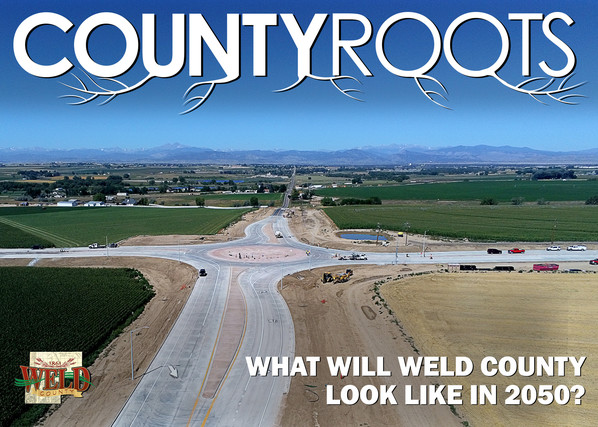
Photo by Tina Booton, Weld County Public Works
|